Upgrade your laptop’s RAM if its exact model supports a compatible memory upgrade and your workload is running short of memory. Replace the laptop if it cannot meet your software or workload needs, has multiple failing components, or would cost too much to repair compared with replacing it. The right choice depends on the cause of the slowdown, not just the laptop’s age.
When upgrading RAM is the better choice
RAM is the computer’s short-term working memory for apps and files in use. Microsoft Support explains that having more memory can let a device do more at once without performance slowdowns. That makes a RAM upgrade worth considering when you regularly run out of memory while multitasking or using demanding applications, and the laptop otherwise works reliably.
As an Amazon Associate I earn from qualifying purchases.
- Your laptop slows down when several apps or large files are open at the same time.
- The exact model has replaceable memory and supports a capacity that suits your workload.
- The processor, graphics capability, storage, and software support are otherwise adequate.
- The price of compatible memory and any installation is reasonable for the laptop’s condition and likely remaining useful life.
More memory is not a general speed upgrade. If the actual constraint is the processor, graphics, storage, or another system limitation, adding RAM may make little difference. There is no reliable universal percentage by which a laptop will speed up after a RAM upgrade; the result depends on whether memory capacity is the limiting factor and what you do on the computer.
When replacing the laptop makes more sense
Replacement is more plausible when the computer cannot handle the applications or workload you need, its memory is soldered or cannot be expanded enough, or several important components are failing. A memory upgrade cannot make an inadequate processor or graphics system suitable for a demanding workload; many laptop processors are integrated with the motherboard and cannot be upgraded separately.
#1 Best Overall

- Boosts System Performance: 32GB DDR5 RAM laptop memory kit (2x16GB) that operates at 5600MHz, 5200MHz, or 4800MHz to improve multitasking and system responsiveness for smoother performance
- Accelerated gaming performance: Every millisecond gained in fast-paced gameplay counts—power through heavy workloads and benefit from versatile downclocking and higher frame rates
- Optimized DDR5 compatibility: Best for 12th Gen Intel Core and AMD Ryzen 7000 Series processors — Intel XMP 3.0 and AMD EXPO also supported on the same RAM module
- Trusted Micron Quality: Backed by 42 years of memory expertise, this DDR5 RAM is rigorously tested at both component and module levels, ensuring top performance and reliability
- ECC Type = Non-ECC, Form Factor = SODIMM, Pin Count = 262-Pin, PC Speed = PC5-44800, Voltage = 1.1V, Rank And Configuration = 1Rx8
Compare the actual cost of the proposed repair and upgrade with the cost of a replacement that meets your needs. Also weigh whether the laptop supports the software you rely on and whether other parts are in good condition. There is no fixed repair-cost percentage that applies to every laptop: get real quotes and judge them against the device’s condition and expected useful life.
Compare the two options against your situation
| What to check | RAM upgrade is more plausible when… | Replacement is more plausible when… |
|---|---|---|
| Cause of slowness | Your workload is constrained by memory capacity or multitasking. | Processor, graphics, storage, or broader system capability is inadequate. |
| Upgrade path | The exact model has replaceable memory and supports the capacity you need. | Memory is soldered or the supported configuration cannot meet your needs. |
| Device condition and support | The laptop works reliably and supports the software you need. | Multiple components are failing, software support is inadequate, or the workload exceeds the machine. |
| Cost | Compatible memory and installation are reasonable relative to the laptop’s condition and value. | Repair and upgrade costs compare poorly with replacement; compare actual quotes. |
How much RAM do you need?
Microsoft Support’s broad guidance recommends 8 GB for keeping a device running long term, while noting that photo and video editing or other high-performance projects may suit 16 GB or more. These are general recommendations, not universal minimums: the right amount depends on the applications you use, your workload, and the laptop’s supported configuration.
Rank #2

- A-Tech 32GB RAM Kit (2 x 16GB Modules), DDR4 SO-DIMM 260-Pin, 2666MHz / 2667MHz PC4-21300 (PC4-2666V)
- Non-ECC Unbuffered, JEDEC DDR4 Standard 1.2V Operating Voltage
- Compatible with select DDR4 SODIMM capable Laptop, Notebook, Mini PC, and All-in-One (AIO) computer systems. Please verify your system's memory type, form factor, and maximum supported capacity before purchasing
- Not compatible with desktop (DIMM), DDR2, DDR3, DDR5, ECC Registered (RDIMM), ECC Load Reduced (LRDIMM), or ECC Unbuffered (ECC UDIMM) memory types
- Increases available memory capacity to enhance system responsiveness, application performance, and multitasking capabilities.
Maximum capacity is model-specific, not a universal laptop limit. For example, Intel’s 2021 documentation describes configurations supporting up to 128 GB for 11th Generation Core H-Series laptop processors. That figure applies to supported configurations in that processor family; it does not establish what any other laptop can accept.
Recommended Free Tools
Check compatibility before buying memory
- Identify the exact model and configuration. Laptop names often cover multiple configurations, so use the full model information for your machine.
- Check the manufacturer’s specifications or service documentation. Confirm whether memory is soldered or replaceable, its type and supported speed, the maximum capacity, and how many slots are populated or available.
- Cross-check the model. Kingston’s system and model finder can help identify compatible memory, but the laptop maker’s documentation is the authority for that machine.
- Match the supported configuration. Check for population rules or paired-module requirements. Intel advises consulting the laptop’s technical documentation; an unsupported configuration may fail to boot.
Buy a RAM module only after confirming compatibility with the exact laptop. A generic module recommendation cannot establish that it will fit or work in your machine.
Rank #3

- [Specs] DDR3L / DDR3 1600MHz PC3L-12800 / PC3-12800 204-Pin Unbuffered Non ECC 1.35V CL11 Dual Rank 2Rx8 based 512x8
- [Size] Module Size: 16GB KIT(2x8GB Modules) Package: 2x8GB
- [Voltage] JEDEC standard 1.35V, this is a dual voltage piece and can operate at 1.35V or 1.5V
- [Compatibility] Compatible with DDR3 Laptop / Notebook PC, Mini PC, All in one Device
- [Color] PCB Color is green
Make the decision in order
- Decide whether the workload points to memory. If slowdowns mainly occur with many apps or large files open, memory capacity may be relevant. If the computer remains slow in other situations, consider other system limits too.
- Verify that an upgrade is possible. Use the manufacturer’s documentation for the exact model and configuration.
- Check whether the supported capacity would meet your needs. Compare it with the applications and workload you actually use, rather than treating a broad recommendation as a guarantee.
- Compare costs and condition. Consider memory, installation, other needed repairs, software support, and the likely useful life of the laptop. Compare actual quotes with a replacement that fits your needs.
Microsoft Support describes RAM as “the device’s short-term memory” and says more memory can let a device do more at once without slowdowns. The key is whether that short-term working space is the problem your laptop actually has.
Quick Recap
Best Value
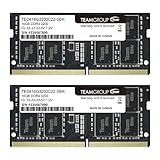
- Actual memory speed may vary depending on the system, CPU, motherboard, BIOS settings, and supported memory configuration. DDR4 3200MHz modules may operate at lower speeds such as 2933MHz or 2666MHz when supported by the host system. Please check your device specifications and compatibility before purchase.
- Adherence to JEDEC and compliance to RoHS with respect to environmental protection regulation, production and manufacturing
- All new generation product of DRAM module. Strict test and verification procedures are performed for products
- Lifetime warranty and Free technical support
- Installation video is attached in product image. ※Refer to the latest version on the official website. In case of discrepancies, the official website prevails.
Rank #4

- Capacity – 32GB RAM KIT (2 x 16GB Modules) Speed up to 2666MHz Non-ECC Unbuffered 260-Pin 1.2V SODIMM.
- Specs – PCB Color (Green or Black) and Rank (1Rx8 or 2Rx8) may vary depending on production batch. Performance and quality remain consistent across all Timetec products.
- Compatibility – Designed for selected DDR4 Laptop, Notebook, Mini PCs, and All-In-One systems(AIO) that support 260-Pin SODIMM memory. NOT compatible with Desktop DIMM slots.
- Installation – Plug-and-Play Upgrade, Quick and Easy to Install, no expertise required (please refer to your system's manual for guidelines).
- Warranty – All Timetec products are high-quality and rigorously tested to meet stringent standards. Backed by Timetec Limited Lifetime Warranty and professional technical support based in the United States.
Product prices and availability are accurate as of the date/time indicated and are subject to change. Any price and availability information displayed on Amazon at the time of purchase will apply.




