The Tool Desk
Outbyte Driver Updater FREEFix the driver behind crashes, sound loss and screen glitchesFind Drivers →Outbyte PC Repair FREEClear out junk files and repair common Windows errorsFree Scan →You can lower your grocery bill without relying on less nutritious food: plan meals around what you already have, compare unit prices, choose affordable produce in the form you’ll use, and prevent waste. The key is to compare the whole value of an item—not just its sticker price—including nutrition, usable portions, preparation time, and whether it will be eaten before it spoils.
How do you save on groceries without compromising nutrition?
Start with a simple sequence: check your kitchen, plan realistic meals, make a list, then shop for ingredients that fit the plan. Keep variety across fruits, vegetables, grains, protein foods, and dairy or fortified soy alternatives. Lower-cost foods can be part of balanced meals; saving money does not require excluding a food group.
As an Amazon Associate I earn from qualifying purchases.
- Inventory your fridge, freezer, and pantry. Note ingredients that need using, what you already have enough of, and staples that are running low.
- Plan meals for the week. Choose meals that suit your household’s tastes, time, and equipment. Include snacks and beverages, and plan to use leftovers.
- Write a shopping list from the plan. Add only the ingredients you need, grouped in a way that makes shopping easier.
- Compare similar products. Check shelf unit prices and nutrition labels, then account for shelf life, preparation, and the amount you expect to use.
- Store food so it gets eaten. Use the most perishable fresh items first; freeze useful portions or keep longer-lasting frozen and shelf-stable foods for later.
USDA MyPlate advises planning meals before shopping to get organized, save money, and choose healthy options. Its guidance also recommends using food already on hand and planning larger dishes when leftovers can become another meal.
Free tools Windows power users keep installed
One-click scans. No signup required.
How do I make a grocery list on a budget?
Plan around what you already own
Before choosing recipes, check the refrigerator, freezer, and cabinets. Build meals around ingredients that need using, and check package dates. This reduces the chance of buying another item you already have or letting food spoil while you wait to use it.
#1 Best Overall

- #1 Brand Pick for Meal Prep Containers: Bentgo is the top pick for meal prep containers!* This lightweight, portable 20-piece set includes tennmnnmake portioning easy to support balanced, healthy meal plans. Clear, stackable lids help keep food fresh and organized in your fridge or pantry.
- Perfect for Portion-Control: Each container’s 4-cup capacity and embossed measurements make portioning easy to support balanced, healthy meal plans. Clear, stackable lids help keep food fresh and organized in your fridge or pantry.
- Durable & Reusable: Made from tough, PFAS- and BPA-free materials, these meal prep containers are built to last through repeated use. Say goodbye to single-use plastics with these reusable containers you can take to work, school, or the gym.
- Microwave, Freezer & Dishwasher Safe: Easy to heat, store, and clean! Safely reheat food from fridge or freezer—microwave trays only. Top-shelf dishwasher safe for hassle-free cleanup; hand-wash lids for best results.
- What You Get: 10 one-compartment trays, 10 custom-fit lids, and caring customer support.
Choose meals that fit your week
A low-cost plan is only useful if it fits your schedule and household. Choose a few meals that share ingredients—for example, cooked beans or rice that can be used in more than one dish—and identify how planned leftovers will be served. Account for snacks and beverages so they do not become unplanned additions to the bill.
List only what the plan requires
Write down the missing ingredients, check quantities, and organize the list by where you will find items in the store if that helps you shop efficiently. Paper, a phone app, or a free template works; no special planner is necessary. Review weekly flyers or store offers against the list, rather than changing the plan for a discount that would leave you with food you cannot use.
Rank #2
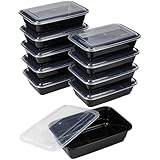
- REUSABLE MEAL PREP CONTAINER SET: Includes 10 pre-portioned containers and 10 lids, perfect for lunches and snacks
- LABELED COMPARTMENT: Features a versatile single compartment embossed with 4 cup volume measurements to make portion control a breeze
- VERSATILE: Durable, Dishwasher, Freezer and Microwave Safe so you can store, reheat, and serve all-in-one, and they are stackable for convenient storage in the refrigerator or freezer
- COORDINATING LIDS: Help keep food fresh so you can prepare snacks in advance, and their domed shape does not compress food during storage
- NON-TOXIC: Made without BPA and Guaranteed Unconditionally plastic construction is dishwasher-safe to make clean up quick and easy
How should you compare grocery prices?
Use the shelf label’s unit price—such as price per ounce, pound, or other standard measure—to compare similar products and package sizes. Package sticker prices alone can mislead: a larger package may cost more overall but less per unit, while a small package may be the better choice if it prevents waste.
Unit price is a starting point, not the whole decision. Compare products with similar contents, and consider:
Rank #3

- 🍱SINGLE 1 COMPARTMENT MEAL PREP CONTAINERS, LEAK PROOF, STRONG DURABLE CONSTRUCTION – Advance meal prep containers, diet portion control, healthy nutritious meals and to-go meals are super convenient to prepare in these durable FOOD STORAGE CONTAINERS for meal prepping. The hard-plastic construction will ensure no cracks or breaking along the way. The leak proof lids will tightly seal the food containers for meal prepping, preventing any annoying leaks or spills in your bag or freezer.
- 🍱 FREEZER SAFE FOOD STORAGE BOX - Prepare and package up your meals ahead of time. These safe to freeze food containers ensure that your prepared cooked meals retain their flavor, color, and texture. These plastic boxes with lids will prevent freezer burn and any absorbing of other odors from the freezer.
- 🍱 MICROWAVE SAFE FOR WARMING FOOD – Enjoy the ease and efficiency of using a microwave safe meal prep container. Whether you are in a rush at home, or warming up food in the microwave at the office or in your college dorm room, make your life simple by preparing, packaging and warming up your food all in the same dish. From the freezer to your hungry belly all in one serving container.
- 🍱 SAFE MATERIAL - REUSABLE - RECYCLABLE - BPA-Free and Food-Grade Safe PP material. You can reuse these durable to go containers as many times as you like. Clean these portion control boxes easily by placing on the top rack of the dishwasher. If you don’t want to reuse them you can simply throw these containers into a recycling bin or trash.
- 🍱 PACK OF 50 TAKE-OUT BENTO BOXES BULK PACK, ONE COMPARTMENT MEAL PREP FOOD CONTAINERS, GREAT FOR CATERING SERVICES – These stackable serving containers are perfect for packaging food at your deli, kiosk, food truck, catering service or restaurant for to-go meals. they stack neatly on top of each other allowing for completely mess free transportation and making all your customers happy as well.
- Nutrition: Check sodium, added sugars, and saturated fat, as well as nutrients relevant to your needs.
- Usable yield: Account for peels, bones, drained liquid, or other parts you will not eat.
- Preparation: Consider cooking time, equipment, and whether the item needs additional ingredients.
- Shelf life and household fit: A bargain is not a saving if the food spoils, does not suit dietary needs, or comes in an impractical quantity.
Weekly flyers, discounts, and loyalty offers can help you find lower prices, where available. Choose sale foods that fit your meals and storage capacity; avoid buying more perishables than you can use.
What are the cheapest healthy foods to buy?
There is no single cheapest list for every location or household, and affordability depends on dietary needs, allergies, preferences, and local prices. USDA budget guidance includes examples such as beans, oatmeal, brown rice, peanut butter, potatoes, carrots, onions, broccoli, spinach, green beans, chicken, tofu, canned tuna, and lower-fat milk or yogurt. Use these as flexible options, not a required menu.
Rank #4

- GLASS MEAL PREP CONTAINERS 10 PACKS: Buying our versatile glass containers sets (10 plastic lids & 10 glass containers) size: 30 Oz, you'll have a set of 10 food storage containers. Ideal for both meal prepping and storing leftovers, snacks, using for gym, office lunches, travel, picnics and more.
- BOROSILICATE GLASS: Our glass meal prep containers are made of premium borosilicate glass, which is stronger than cheaper glass food storage containers, can go straight from the refrigerator to the microwave or oven to the table. And easy to clean without absorbing stains or smells, you can use them over and over again.
- FOOD GRADE : Convenient to use and easy to take care of, as these glass storage containers can be used in the microwave, freezer, dishwasher, and oven. Take off the plastic lids before placing in dishwasher, oven and microwave for better maintenance (lids on the top rack or hand wash).
- AIRTIGHT SNAP LOCKING LIDS: KOMUEE Glass food storage containers use snap lock plastic lids that comes with silicone seals to ensure your meal prep food will last much longer than normal plastic food storage containers, prevent the food from spilling. These lids are easy to open, shut and will stop leaking. These lids will not easily break off.
- PORTION CONTROL: With a 30oz capacity, these meal prep containers provide you space for portioned meals, allowing you to maintain control over your serving sizes and promote healthier eating habits.
Beans, oats, rice, and other whole grains can provide an affordable base for meals. Pair them with vegetables and a protein food that fits your household. Frozen vegetables can make it easier to keep vegetables on hand, while seasonal produce or foods on sale may be good choices when they suit your plan.
Keep variety across fruits, vegetables, grains, protein foods, and dairy or fortified soy alternatives. A lower price should not be the only criterion: choose foods you like and can prepare, and compare their labels when there are meaningful differences.
Best Value

- 【Sturdy & Reusable】Made of premium thick plastic and strong construction, Dealusy meal prep containers with lids ensure no cracks for your take out meals. They can also be easily cleaned for reuse with hand wash or on the top rack of the dishwasher.
- 【Leakproof & Stackable】: These food prep containers come with tight sealed lids, you can easily stack them and won’t worry that the food would leaks or spills.
- 【Microware Safe & Freezer Safe】: Made of premium food grade plastic, these BPA-free disposable food containers can withstand a temperature from -4℉to 248℉, totally Microware Safe & Freezer Safe.
- 【Convenient Use】: With the pre-set volume of these disposable food containers, you can easily pack your healthy meals, vegetables and fruits without measuring your portions. Great for taking your meals out for school, work, gym or a camping trip.
- 【50 Value Package】: This value package includes 50 pack (100-Piece) 24 oz meal prep containers with lids. They are the perfect choice for your daily meal preparation.
Can frozen vegetables be as healthy as fresh?
Frozen vegetables can be nutritious and are often useful because they last longer than fresh produce. They are a practical base for meals, especially when you choose options without added sauces or butter. Fresh is not a requirement for a nutritious diet.
Canned produce can also be useful. For canned fruit, MyPlate advises choosing fruit packed in water or 100% juice. For canned vegetables, look for low-sodium or no-salt-added options when appropriate. Check packaged foods for sodium, saturated fat, and added sugars, and choose the form that works for the recipe, your health needs, and your household.
How can you make food last longer and reduce waste?
- Plan a second meal for leftovers, or freeze portions you will not eat soon.
- Use fresh produce that spoils sooner before longer-lasting items.
- Keep frozen and shelf-stable ingredients for meals later in the week.
- Buy rice, oats, dried beans, or lentils in larger quantities only when you have storage space and expect to use them.
- Choose package sizes based on likely use, not just the lower unit price.
These habits make it easier to use what you buy, while keeping ingredients available for more than one meal.
What do USDA food-plan budgets tell you?
USDA publishes four food plans—Thrifty, Low-Cost, Moderate-Cost, and Liberal—as reference frameworks with successively higher costs. The Thrifty Food Plan is based on current food prices, food-composition data, consumption patterns, and dietary guidance. Its market basket and cost levels were last updated in 2021; higher costs for Alaska and Hawaii were published in 2023. USDA updates the cost levels for all four plans monthly for inflation.
These plans are reference budgets, not a prediction of what a particular household will spend. For current monthly dollar amounts and details, consult the USDA Food Plans.
Quick Recap
Product prices and availability are accurate as of the date/time indicated and are subject to change. Any price and availability information displayed on Amazon at the time of purchase will apply.




