Do these 3 things before closing this tab:
1Repair Windows errors before they cause bigger problems2Scan for outdated or missing drivers - takes under a minute3Clear out junk files and repair common Windows errorsYou can save for a child without opening a Trump Account. The right alternative depends on the job for the money: a 529 plan is usually the clearest fit for qualified education costs, a Roth IRA can work for a child who has taxable compensation and is building retirement savings, a custodial account can hold flexible assets for a child, and an ordinary savings account suits near-term cash needs.
Those accounts are not interchangeable. Before choosing one, decide when the money may be used, what it may pay for, who should control it, and whether you want a federal or state tax benefit. The choices below are U.S. accounts and tax rules; state incentives and custodial-account rules can change the answer.
As an Amazon Associate I earn from qualifying purchases.
What opting out of a Trump Account actually means
A Trump Account is a federal account type built on a traditional IRA with special rules. Choosing not to use one does not remove a benefit that must be replaced with an identical account; it means selecting a different legal structure for your child’s money.
Crashes, No Sound, or Screen Glitches?
Random freezes, missing sound and display glitches usually trace back to one bad driver. Find and replace yours safely.Free scan · under a minutePC Slower Than It Used to Be?
A free scan shows the junk files, broken settings and background clutter dragging Windows down - then fixes them in one click.Free scan · Windows 10 & 11The Internal Revenue Service’s Trump Account overview currently describes eligibility for a child who has not turned 18 before the end of the election year and has a valid Social Security number. It says a $1,000 Treasury pilot contribution may be available, after the required election, for qualifying U.S. citizen children born from January 1, 2025, through December 31, 2028. The IRS instructions say contributions could not be made before July 4, 2026. The pilot is conditional, not a payment every child automatically receives.
#1 Best Overall

- CREATE YOUR OWN SECRET PASSCODE: Every kid dreams of having a vault only they can open! With the KiddieVault, they can create and use their very own passcode to lock and unlock their savings. It’s empowering, interactive, and makes them feel like they’re in charge of their own mini bank.
- AUTOMATIC MONEY FEEDER – JUST INSERT & WATCH! Slide a bill into the slot and watch it get pulled in automatically, accompanied by flashing lights and cool sounds! It makes saving money feel magical and high-tech – no boring piggy banks here. It's like having a futuristic ATM in your room.
- LIGHTS & SOUNDS MAKE SAVING A BLAST: Every time your child deposits a bill, the vault responds with vibrant lights and fun sounds! It celebrates their savings and keeps them coming back again and again. Kids stay engaged, excited, and proud of every cent they stash.
- REAL VAULT EXPERIENCE – PRESS, TWIST, UNLOCK: This isn’t just a box – it’s a vault! With a turning knob, keypad, and secure door, the KiddieVault opens like a real mini safe. The realistic design adds a whole new layer of adventure and encourages pretend play that’s both fun and educational. Requires 3 AA batteries (not included).
- ULTIMATE GIFT FOR KIDS WHO LOVE TO SAVE: Whether for birthdays, holidays, or just because, this electronic money bank makes the perfect gift. It’s unique, interactive, and teaches kids the value of saving while making it feel like a game. Bonus points: it keeps their treasure stash safe from sneaky siblings! (Manufacturer Minimum Required Age 36 Months)
The September 2026 Internal Revenue Bulletin 2026-38 describes the account as a traditional IRA with special restrictions during the growth period, which ends on December 31 of the year the beneficiary turns 17. Distributions generally are not allowed during that period, eligible investments are restricted, and the general annual contribution limit is described as $5,000, subject to inflation adjustment. That bulletin includes proposed regulations, so statutory requirements, final guidance and proposed rules should not be treated as identical.
These limits and restrictions may be exactly why a family prefers another account. A 529 can keep the parent or another purchaser in control while targeting education. A Roth IRA is designed for retirement and requires compensation. A custodial account can be broader but transfers control under state law. A bank account is simple cash storage, without the tax treatment of a 529 or Roth IRA.
Choose by purpose, timing and control
Start with the outcome rather than the account name. Use this decision guide as a first screen, then read the relevant section for the rules and trade-offs.
| If your priority is | Consider first | Main trade-off |
|---|---|---|
| Qualified education spending | 529 plan | Federal tax benefits depend on qualified uses, and plan and state features vary. |
| Retirement saving for a working teen | Roth IRA | The child needs taxable compensation, and distributions follow retirement-account rules. |
| Flexible assets held for a child | Custodial account category | Ownership, control, transfer age, tax and financial-aid treatment depend on state law and account documents. |
| Cash for a near-term expense | Ordinary savings account | Access is straightforward, but it is not the same tax-advantaged investment structure. |
For a sound choice, compare six questions: the intended use, the date money may be needed, who owns and controls the account, how contributions and withdrawals are taxed, any state incentive, and the account’s fees and investment menu. Also ask what happens if the child does not follow the original plan.
Option 1: A 529 plan for education
What a 529 is
A 529, or qualified tuition program, is established and maintained by a state or an eligible institution. Programs may be prepaid tuition plans or savings plans. A savings plan generally invests contributions for future qualified expenses; a prepaid plan addresses tuition under that program’s terms.
Rank #2
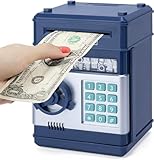
- 【High Quality Materials】:ABS plastic;Safe simulation design,no odor and sturdy and not break easily;An interesting piggy bank specially designed for children.(Applicable Batteries: 3 * 1.5V AA Batteries (not included).)
- 【Password Piggy Bank】:Four electronic password protection,if you press the wrong password, it will be issued.Only be opened when you enter the 4 digit correct password,the green light will turn on then you can turn the knob clockwise and open the door.(Default: 0000,Changable passwords as you like).
- 【High-capacity Money Saving Box】:This piggy bank can store 600 pieces of coins or 100 pieces of paper money.Make children to plan to store pocket money,greatly helping children develop a good habit of saving money.
- 【Automatic Paper Money Scroll】:Insert the paper money into the slot on top of kids ATM money bank, it can be rolled into the ATM machine automatically.Easy for kids to use.(But it doesn't work if the paper is too old or too soft) .
- 【A Perfect Gifts】:Kids will love to receive this Cool money saving bank.It's fun and educational and teaches the importance of saving.It's the best gift for your birthday Gift,Christmas Gift,New Year's Gifts,prize, reward, or any other holiday gift.(Recommended for ages 3+ Year Old.)
Under the IRS explanation of 529 plans, earnings are generally not subject to federal income tax when a distribution pays qualified education expenses. Contributions are not federally deductible. A state may offer a deduction, credit or other incentive, and state tax treatment can differ from federal treatment, so check the state where you file taxes and the plan’s disclosure documents.
What the money can cover
IRS materials describe qualified uses that go beyond four-year college. They include higher-education expenses and certain K–12 tuition. The IRS Q&A states a $10,000 annual K–12 tuition limit; verify the current federal rule and your state’s conformity before relying on that amount. Qualified treatment is tied to the expense category, not simply to the fact that the beneficiary is a child.
Who controls the account
The purchaser (often a parent or grandparent) controls the account until a withdrawal is made. The beneficiary can generally be changed to another family member, which can help if the original beneficiary receives a scholarship, chooses another path or does not need all the money. A beneficiary change still has to meet the program and federal requirements.
The 529-to-Roth IRA safety valve
Federal rules allow a limited direct trustee-to-trustee rollover from a 529 to a Roth IRA for distributions after 2023. The 529 must have been open at least 15 years. The rollover counts toward the recipient’s annual Roth contribution limit, has a $35,000 lifetime cap, and cannot include amounts contributed—or earnings attributable to contributions—during the preceding five years. This is a conditional way to repurpose some unused education savings, not a general-purpose withdrawal option.
When a 529 is a poor match
- You expect the money to pay ordinary living costs, a vehicle or another nonqualified purchase.
- You want the child to control the assets immediately rather than have a purchaser manage withdrawals.
- Your state offers an incentive only for a particular in-state plan and you have not compared that benefit with other plans’ investment costs and choices.
Option 2: A Roth IRA when the child has taxable compensation
The eligibility gate
A Roth IRA is a retirement account, not a general child savings account. The IRS says an IRA contributor must have taxable compensation. A child therefore needs compensation that qualifies under IRS rules for the contribution year. Do not assume that chores, gifts or a regular allowance automatically qualify; the reviewed IRS material does not establish that conclusion.
Rank #3

- 【High Quality Materials】:ABS plastic;Safe simulation design,no odor and sturdy and not break easily;An interesting piggy bank specially designed for children.(Applicable Batteries: 3 * 1.5V AA Batteries (not included).)
- 【Password Piggy Bank】:Four electronic password protection,if you press the wrong password, it will be issued.Only be opened when you enter the 4 digit correct password,the green light will turn on then you can turn the knob clockwise and open the door.(Default: 0000,Changable passwords as you like).
- 【High-capacity Money Saving Box】:This piggy bank can store 600 pieces of coins or 100 pieces of paper money.Make children to plan to store pocket money,greatly helping children develop a good habit of saving money.
- 【Automatic Paper Money Scroll】:Insert the paper money into the slot on top of kids ATM money bank, it can be rolled into the ATM machine automatically.Easy for kids to use.(But it doesn't work if the paper is too old or too soft) .
- 【A Perfect Gifts】:Kids will love to receive this Cool money saving bank.It's fun and educational and teaches the importance of saving.It's the best gift for your birthday Gift,Christmas Gift,New Year's Gifts,prize, reward, or any other holiday gift.(Recommended for ages 3+ Year Old.)
Read the IRS guidance in Topic no. 451, Individual retirement arrangements and keep records supporting the child’s compensation. A contribution cannot be justified merely because a parent wants to put money aside.
What’s actually slowing this PC down?
Pick the symptom - the matching free tool is one click away.
Tax treatment and withdrawals
Roth contributions are not deductible. Qualified distributions can be tax-free. The IRS generally requires the five-year period plus age 59½ or another qualifying event for a distribution of earnings to be qualified. Taking money out under other circumstances can make earnings taxable and may trigger additional consequences.
Because contributions (but not necessarily earnings) have different withdrawal treatment, a Roth should be treated as long-term retirement money. It is not a convenient substitute for a 529 when the family expects to pay tuition soon.
When it can make sense
A working teenager with documented taxable compensation can use a Roth IRA to begin retirement saving while allowing decades for potential tax-free growth. A parent or other adult may provide the cash for the contribution, but the contribution still cannot exceed the child’s eligible compensation and the applicable annual IRA limit.
When it does not
- The child has no taxable compensation for the year.
- The family expects to need the investment earnings for education or another near-term goal.
- The account would be funded without records that support the compensation and contribution amount.
Option 3: A custodial savings or investment account
Why families consider one
A custodial account can hold cash or investments for a child outside an education-only framework. It may be attractive when the family wants the money associated with the child but wants an adult to manage it while the child is a minor.
The Tool Desk
Outbyte Driver Updater FREEScan for outdated or missing drivers - takes under a minuteDriver Scan →Outbyte PC Repair FREEClear out junk files and repair common Windows errorsFree Scan →Rank #4

- High-Tech Password and Face ID Unlocking Function: This ATM futuristic piggy bank combines password protection and playful facial recognition tech—just let them punch in their secret 3-digit code and scan their smile under the blinking Indicator light to access their stash. A secure, interactive way to teach responsibility while keeping their prized coins, toys, or treasures safe. Watch their eyes light up as they become mini security experts—saving has never been this cool or high-tech(Default: 000,Changable passwords as you like)
- High Quality Material|Durable and High Capacity: Made from ABS plastic; Safe simulation design,no odor and sturdy and not break easily; piggy bank can store 600 pieces of coins or 100 pieces of paper money. Make children to plan to store pocket money,greatly helping children develop a good habit of saving money (Applicable Batteries: 3 * 1.5V AA Batteries (not included).)
- Automatic Paper Money Scroll: Insert the banknote into the cash deposit slot of the children's ATM money box, and the banknote will be automatically rolled into the ATM machine. Accompanied by flashing lights and cool sounds! It makes saving money feel magical and high-tech. (But it will not work if the banknote is too old or too soft)
- Best Gifts for Kids: The Ultimate Gift Kids Go Gaga For! Super cool money-saving bank that turns saving into a FUN, educational adventure! Teaches priceless money skills while they stash cash. Perfect for birthdays, Christmas, New Year, rewards—or any other holiday gift (Recommended for ages 3+ Year Old.)
- Budget-Friendly Money Management: These piggy banks often feature cute designs, come with 3 decorative stickers and an instruction manual. Cute patterns appeal to children to grab their attention and inspire their interest in saving. A budget-friendly way to teach money management, this piggy bank for kids combines learning with play.This helps develop their sense of financial responsibility and savings
Why the details cannot be generalized
UTMA and UGMA accounts are governed by state law. The state can affect who owns the property, what the custodian may do, when control transfers to the child, how income is taxed and how the assets are treated for financial-aid purposes. Those rules were not verified here, and they should not be inferred from the rules for a custodial IRA.
Before opening one, read the account agreement and the law that applies in your state. Ask the provider, in writing, who is the legal owner, what events end the custodianship, whether the transfer age differs for the account type, and how the institution reports income. A financial professional familiar with your state can explain consequences that a generic account description cannot.
Control and goal fit
A custodial structure is not a way to guarantee that a parent will control the money indefinitely. If the family needs an education-purpose account with the purchaser retaining control, compare a 529 first. If the family needs unrestricted use but is not ready to hand the child direct control, verify the custodial rules before contributing.
Independent reader supportYour contribution helps us test, update, and keep practical guides available for everyone.Option 4: An ordinary savings account for cash goals
A standard bank savings account is the simplest option for a near-term expense such as a laptop, camp fee or emergency reserve. It avoids the qualified-use restrictions of a 529 and the compensation and retirement rules of a Roth IRA.
Recommended Free Tools
It is not a substitute for those tax-advantaged investment structures. The materials used here do not compare bank interest rates, fees, deposit insurance or availability, so check those terms directly with an insured institution. Decide whether the account should be in the adult’s name, the child’s name or a state-law custodial form; ownership can affect taxes, control and aid applications.
Best Value

- Multiple Award-Winning 3 In 1 Moneybox: Moonjar Has A Trio Of Diamond Shaped, Tin Canisters That Have Either Save, Spend, Or Share Printed On The Side
- Perfect For Small Hands: The Moonjar Canisters Are Diamond Shaped And Unbreakable To Enable Small Hands To Safely And Easily Grab And Maneuver Them
- Color-Coded Acrylic Lids: Each Canister Lid Is Color-Coded To Make It Easier To Identify The Save, Spend Or Share Containers. Lids Have A Money Slot Measuring 1.5" Long X 5/16" Wide So They Can Easily Deposit Their Allowance, Both Coins And Folded Bills, In The Money Container Of Their Choice
- Easy To Separate And Play With: An Acrylic Band, That Is Easy To Remove, Holds The 3 Canisters Together When Not In Use. Once Separated, Each Individual Canister Can Be Dumped Out So Children Can Count Or Move Funds Between The Tins Or Safely Carry Specific Canisters To The Bank Or Elsewhere
How to decide without personal tax advice
Step 1: Write the spending deadline
Separate goals by time horizon. Money needed within a few years generally calls for a cash-focused solution and a risk level appropriate to that deadline. A goal several years away may tolerate an investment account, but the account’s withdrawal rules still matter.
Step 2: Define the permitted use
For tuition and other qualified education expenses, evaluate a 529. For retirement, evaluate a Roth only after confirming taxable compensation. For a broad purpose, compare a custodial account with an adult-owned savings account and understand who ultimately controls the money.
Step 3: Decide who should control withdrawals
With a 529, the purchaser generally controls withdrawals and can usually change the beneficiary within the family. A Roth belongs to the child, even when an adult helps fund it. A custodial account follows state transfer rules. A bank account’s control follows its ownership registration.
Free tools Windows power users keep installed
One-click scans. No signup required.
Step 4: Check federal and state tax treatment
Read current IRS guidance and your state’s rules together. Federal treatment does not guarantee a state deduction or matching treatment. This matters especially for 529 contributions, K–12 expenses and custodial-account income.
Step 5: Compare costs and investments
Review annual account fees, underlying fund expenses, available investments, minimums, transaction charges and any state-plan incentive. A tax benefit can be outweighed by high costs or an unsuitable investment menu.
Step 6: Plan for a changed future
Ask what happens if the child receives a scholarship, skips college, earns no compensation, needs the cash earlier or has a different goal. A 529 beneficiary change and the limited 529-to-Roth rollover may provide flexibility, but neither makes every withdrawal tax-free. A Roth remains retirement-oriented, and a custodial account may transfer to the child under state law.
Common mistakes to avoid
- Treating the $1,000 pilot as guaranteed: the Trump Account contribution requires eligibility and an election, and the IRS rules may change as guidance develops.
- Calling a 529 a general savings account: federal tax-free treatment depends on qualified expenses.
- Promising an unlimited 529-to-Roth rollover: the 15-year account-age rule, five-year contribution exclusion, annual Roth limit and $35,000 lifetime cap all apply.
- Opening a child Roth without compensation: confirm eligible taxable compensation and retain records.
- Assuming UTMA or UGMA rules are universal: transfer age, ownership, tax and aid treatment are state-dependent.
- Ignoring state differences: a plan’s state deduction, credit or tax treatment may not match federal rules.
- Putting a short-term goal in a volatile investment: match the account and investment risk to when the money will be spent.
A practical selection checklist
- Write the child’s age, your state and the intended use of the money.
- Record the earliest likely withdrawal date and whether the date is flexible.
- For a Roth, document the child’s taxable compensation for the contribution year.
- For a 529, compare your state’s incentive, plan fees, investment choices and qualified-use rules.
- For a custodial account, obtain the state-specific ownership and transfer terms before funding it.
- For a bank account, verify the institution’s rate, fees, insurance and registration options.
- Keep contribution, compensation and withdrawal records with your tax documents.
- Revisit the choice when the child’s education, work or cash needs change.
Bottom line: the best alternative depends on the goal
Use a 529 when qualified education spending is the central objective and you want the purchaser to retain control. Use a Roth IRA only for a child with eligible taxable compensation and a genuine retirement objective. Investigate a custodial account when flexibility is more important than education-only treatment, but verify your state’s rules before contributing. Use an ordinary savings account for accessible cash and accept that it does not provide the same tax advantages.
No single account replaces every feature of a Trump Account. The responsible choice is the structure whose purpose, control, tax treatment and access rules match your family’s actual plan. For a household-specific decision, provide your tax adviser or financial planner with your state, the child’s age, intended use, expected timing and any compensation information.
Quick Recap
Product prices and availability are accurate as of the date/time indicated and are subject to change. Any price and availability information displayed on Amazon at the time of purchase will apply.




