The right financial advisor is not necessarily the most famous, cheapest, or highest-rated professional. It is the person or firm that can solve your specific problem, is properly registered or licensed, clearly explains the capacity in which they act, discloses every important cost and conflict, and puts the relationship in writing.
Before you hire anyone, define the help you need, compare at least three candidates, verify both the individual and the firm through official databases, read the required disclosures, and understand where your money will be held. This guide focuses on the United States; rules and licensing requirements differ in other countries and can vary by state.
As an Amazon Associate I earn from qualifying purchases.
Start with the problem—not the title
“Financial advisor,” “financial planner,” and “wealth manager” are not enough to tell you what a professional is qualified or legally obligated to do. FINRA notes that these may be generic job titles rather than specific credentials or licenses. A person using one of them might provide comprehensive planning, manage investments, sell securities, sell insurance, or do only one narrow task.
The first question is therefore not “Who is the best financial advisor?” It is:
#1 Best Overall

- Effective Budget Planning - Take control of your finances with the budget account book. This comprehensive planner allows you to plan and track your income, expenses, savings, and financial goals in one convenient place. With its intuitive layout and easy-to-use sections, you can stay organized and make informed decisions to achieve financial success.
- User-Friendly Layout - The budget planner features a user-friendly layout designed for easy navigation and organization. Each month, you'll find dedicated budget pages where you can set financial goals, track your income, and plan your expenses. Additional sections include debt trackers, savings goals, bill payment trackers, and more, making it simple to stay on top of your finances.
- Undated Monthly Calendar & Bonus Stickers - Featuring undated calendar each month, you'll have ample space to mark paydays, bills due, appointments, and important dates. Say goodbye to difficult writing spaces. Plus, we've included 3 cute sticker sheets that allow you to personalize your financial organizer and make budgeting more fun. Dates are not pre-printed and are completed by the user.
- Reliable and Convenient Design - Our monthly budget planner is designed for your convenience and built to last. The elastic band keeps everything securely in place, and the dual-sided pocket provides extra storage. Experience a budget planner that combines practicality and durability.
- Master Budgeting with Ease - Our financial planner includes a complete guidebook that provides valuable insights and instructions for optimal usage. From setting financial goals to tracking expenses, this guidebook offers step-by-step guidance and practical tips. Whether you're new to budgeting or an experienced user, this resource will help you make the most of your budget planner, empowering you to achieve financial success.
What decision or ongoing problem do I need help solving, and what type of professional is authorized and experienced to help?
Avoid universal rankings. A retiree deciding how to withdraw money from several accounts may need a different specialist from a business owner with concentrated company stock or a young household trying to establish a basic investment plan.
Titles alone do not establish a fiduciary duty, comprehensive-planning ability, or government licensing. You can review FINRA’s explanation of professional designations and credentials before treating a credential or title as meaningful.
Outdated Drivers Are Slowing You Down
One free scan finds every outdated or missing driver and matches the right update for your exact hardware.Free scan · exact hardware matchPC Slower Than It Used to Be?
A free scan shows the junk files, broken settings and background clutter dragging Windows down - then fixes them in one click.Free scan · Windows 10 & 11Do you need an advisor at all?
Hiring an advisor is not automatically better than managing your finances yourself. The relevant test is whether the advisor solves a problem whose value exceeds the total cost of the relationship.
You may be comfortable without an ongoing advisor if you have a relatively simple financial situation, can use diversified and low-cost investments, understand your account types and tax implications, can maintain an appropriate risk level, and will follow your plan during market declines. You might still pay for an occasional second opinion or one-time plan.
Professional help is more likely to be useful when you:
- Have multiple account types, complicated tax issues, or unusual income.
- Are approaching retirement or beginning to draw portfolio income.
- Own stock options, concentrated company stock, a business, or other illiquid assets.
- Are receiving an inheritance or another large lump sum.
- Are considering a retirement-plan rollover.
- Need insurance, estate, tax, charitable, or retirement-income planning coordinated across professionals.
- Want accountability or behavioral support during volatile markets.
- Lack the time, knowledge, or confidence to build and maintain a plan.
Investor.gov’s guide to working with an investment professional is a useful starting point for deciding whether professional help fits your situation.
What’s actually slowing this PC down?
Pick the symptom - the matching free tool is one click away.
Choose the type of professional that matches your need
| Your need | Likely fit |
|---|---|
| A one-time decision, financial checkup, or second opinion | An hourly or project-based financial planner |
| A coordinated plan covering investments, retirement, insurance, taxes, and estate issues | A CFP® professional or other comprehensive financial-planning specialist |
| Ongoing portfolio management | A registered investment adviser, investment adviser representative, or advisory program |
| Trade execution or purchase of a securities product | A broker or registered representative |
| Life, disability, long-term-care insurance, or annuity coverage | A properly licensed insurance professional, with careful review of compensation and product costs |
| An automated diversified portfolio with limited human interaction | A robo-advisor |
| Social Security, retirement-income, tax, and withdrawal planning | A planner with demonstrated retirement-income and tax-planning experience |
| Business succession, equity compensation, or concentrated stock | An advisor with relevant specialty experience who coordinates with tax and legal specialists |
| Wills, trusts, powers of attorney, or other legal structures | An estate-planning attorney, coordinated with the advisor |
| Tax returns, complex filings, or tax opinions | A CPA, enrolled agent, or tax attorney, coordinated with the advisor |
“Financial planner” is particularly broad. Some planners address saving, investing, insurance, taxes, retirement, and estate planning; others can recommend only a limited range of financial products. Investor.gov explains the range in its financial planner glossary entry.
Understand the labels and legal capacities
Broker or registered representative
A broker or registered representative is generally associated with a broker-dealer. Compensation may come from commissions, markups, transaction charges, product payments, or other arrangements. When a broker-dealer makes a securities recommendation to a retail customer, Regulation Best Interest applies, but the specific obligation depends on the service and capacity involved.
Investment adviser and investment adviser representative
An investment adviser is typically a person or firm providing investment advice or portfolio management for compensation. A registered investment adviser, often called an RIA, is the firm; an investment adviser representative, or IAR, is an individual who provides advice on the firm’s behalf. A registered investment adviser owes a fiduciary duty under the Investment Advisers Act when acting as an investment adviser, including duties of care and loyalty.
Registration does not guarantee competence, performance, or good judgment. It tells you where to look for disclosures and regulatory information.
Dual-registered professional
Some professionals are both brokers and investment advisers. That can be convenient, but it makes the capacity question especially important. Ask which role applies to each recommendation, account, and product.
The SEC says dually registered professionals must consider reasonably available account alternatives, including brokerage and advisory accounts, rather than simply recommending the account that produces more compensation. See the SEC’s explanation of account recommendations to retail investors.
Rank #2
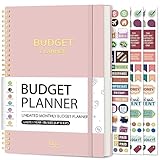
- Effective Budget Planning - Take control of your finances with the budget account book. This comprehensive planner allows you to plan and track your income, expenses, savings, and financial goals in one convenient place. With its intuitive layout and easy-to-use sections, you can stay organized and make informed decisions to achieve financial success.
- User-Friendly Layout - The budget planner features a user-friendly layout designed for easy navigation and organization. Each month, you'll find dedicated budget pages where you can set financial goals, track your income, and plan your expenses. Additional sections include debt trackers, savings goals, bill payment trackers, and more, making it simple to stay on top of your finances.
- Undated Monthly Calendar & Bonus Stickers - Featuring undated calendar each month, you'll have ample space to mark paydays, bills due, appointments, and important dates. Say goodbye to difficult writing spaces. Plus, we've included 3 cute sticker sheets that allow you to personalize your financial organizer and make budgeting more fun. Dates are not pre-printed and are completed by the user.
- Reliable and Convenient Design - Our monthly budget planner is designed for your convenience and built to last. The elastic band keeps everything securely in place, and the dual-sided pocket provides extra storage. Experience a budget planner that combines practicality and durability.
- Master Budgeting with Ease - Our financial planner includes a complete guidebook that provides valuable insights and instructions for optimal usage. From setting financial goals to tracking expenses, this guidebook offers step-by-step guidance and practical tips. Whether you're new to budgeting or an experienced user, this resource will help you make the most of your budget planner, empowering you to achieve financial success.
CFP® professional
CFP Board certification can be a useful screening signal. CFP® professionals must meet education, examination, experience, and ethics requirements, and must act as fiduciaries when providing financial advice under CFP Board’s Code and Standards. You can review the competency standards, Code and Standards, and verify a CFP® professional tool.
CFP Board is a private certification organization, not a federal or state regulator. Certification does not guarantee the quality of a particular engagement, investment result, or absence of conflicts.
The Tool Desk
Outbyte PC Repair FREERepair Windows errors before they cause bigger problemsFix Now →Outbyte Driver Updater FREEScan for outdated or missing drivers - takes under a minuteDriver Scan →Fee-only, fee-based, and commission-based
These terms describe compensation, not overall quality.
- Fee-only: Under NAPFA’s definition, the professional is compensated solely by the client and receives no compensation contingent on buying or selling a financial product. Review the NAPFA fee-only definition.
- Fee-based: Under CFP Board terminology, the professional receives fees plus sales-related compensation. It should not be presented as fee-only. Review CFP Board’s compensation terminology guidance.
- Commission-based: Compensation is tied partly or wholly to transactions or products.
- Hybrid: Different services may use different models, such as a planning fee plus commissions or an AUM fee for investment management.
Fee-only can make the payer easier to identify, but it does not guarantee low cost, competence, independence, or the absence of every possible conflict. An AUM advisor may have incentives to gather assets, retain them, or recommend that a rollover move money into a managed account.
Build a shortlist of three to five candidates
Start with candidates who appear to serve people with circumstances similar to yours. Useful sources include:
- Personal referrals from people with comparable needs—not merely friends who liked an advisor’s personality.
- CFP Board’s verification and search resources.
- NAPFA’s fee-only advisor resources.
- Investor.gov’s investment-professional search and the SEC’s Investment Adviser Public Disclosure database, or IAPD.
- FINRA BrokerCheck for brokers and brokerage firms.
- Your state securities regulator and, if insurance is involved, your state insurance department. The National Association of Insurance Commissioners’ state directory can help you find the appropriate department.
- Professional organizations relevant to a specialty, such as retirement income, business succession, or special-needs planning.
Directories are lead-generation tools, not endorsements. A listing does not replace independent verification.
Do these 3 things before closing this tab:
1Clear out junk files and repair common Windows errors2Fix the driver behind crashes, sound loss and screen glitches3Repair Windows errors before they cause bigger problemsVerify both the person and the firm
Do this before sharing sensitive documents or transferring money.
1. Search the individual
Use the IAPD database for investment advisers and IARs, and BrokerCheck for brokers and brokerage professionals. Check the claimed CFP® certification through CFP Board and verify insurance licenses through your state insurance department when applicable.
Investor.gov’s Ask and Check guidance explains how to research registration, qualifications, employment history, fees, business practices, conflicts, and disciplinary information.
2. Search the firm
Do not stop after finding a clean record for the individual. Review the firm’s registration, business model, Form CRS, Form ADV, affiliates, outside business activities, disciplinary information, and compensation arrangements.
Free tools Windows power users keep installed
One-click scans. No signup required.
Confirm that the person and firm are currently authorized to serve clients in your state and that the claimed credentials are current. A professional may have changed firms, changed capacities, or lost a credential since an old web page or referral was created.
3. Interpret complaints rather than counting them
A complaint is not automatically proof of misconduct. Read the allegation, date, resolution, and whether it was denied, settled, or resulted in an award. Consider the professional’s career length, the number and similarity of complaints, whether there is a pattern, and whether the firm or individual contributed to a settlement.
Repeated or similar complaints deserve closer scrutiny even when no single record proves wrongdoing. FINRA explains how to interpret customer complaints on BrokerCheck.
Rank #3

- Effective Budget Plan Book – Take control of your finances with the SUNEE budget account book. This all-in-one budget planner allows you to plan and track your income, expenses, savings, and financial goals. Its intuitive layout and easy-to-use sections help you stay organized and make smart decisions to reach financial success. Our financial planner also included a comprehensive guidebook with valuable tips and instructions to help you get the most out of your budgeting planner.
- Full-Page Calendars – Each month’s full-page calendar provides plenty of space to track paydays, bills due dates, appointments, and important events. No more cramped boxes or tight writing areas, you can easily plan and organize your schedule at a glance.
- Colorful Pages Layout and Tabs – This vibrant budget planner features a user-friendly design for easy navigation and organization. Each month includes dedicated budget pages to set financial goals, track income, and plan expenses. Additional sections like debt trackers, savings goals, and bill payment trackers make managing your finances a breeze. The colorful backgrounds on each page offer clear, instant visibility.
- Bonus 4 Stickers and Convenient Design – This monthly budget planner is built for convenience and durability. Water-resistant cover protects against spills, while the elastic band keeps everything secure, and the dual-sided pocket offers extra storage. Plus, we’ve included 4 adorable sticker sheets to personalize your planner and make budgeting more enjoyable. Experience a budget planner that combines practicality with lasting quality.
- UNDATED DESIGN & 1 YEAR USE - Undated finance books start with 1 page-financial goals, 1 page-Mind Map, 1 page-Financial Strategy, 1 page-Tactics, 2 pages-Important Dates, 4 pages-Bill Tracker, 4 pages-Saving Tracker, 8 pages-Debt Tracker, followed by 12 Months(10 pages per month, 1 unique color for each month). 2 pages-Christmas Budgeting, 2 pages-Yearly Summary, 2 pages-Check Register and 12 pages-Notes(dotted). It is UNDATED, so you could start at any time, suitable for 1 year use.
Request and read these documents
Ask for the documents before the second serious meeting, not after you have already decided to hire the advisor.
- Form CRS: A concise relationship summary covering services, fees, conflicts, standards of conduct, disciplinary history, and questions to ask.
- Form ADV Part 2A brochure: The firm’s advisory business, fees, conflicts, methods, risks, other business activities, and disciplinary information.
- Form ADV Part 2B brochure supplement: Background information about the specific person providing advice.
- Written advisory or planning agreement: Scope, fees, billing, discretion, custody, responsibilities, termination, and services excluded.
- Complete fee schedule: Account, investment, transaction, platform, transfer, and termination charges.
- Investment policy or sample portfolio explanation: If investment management is included, including how risk and rebalancing are handled.
- Insurance disclosures and illustrations: If the advisor recommends life insurance, annuities, disability coverage, or long-term-care insurance.
Investor.gov’s Form CRS resources explain what the relationship summary is intended to disclose. The SEC also provides Form ADV information.
A refusal to provide these documents, an insistence that verbal explanations are enough, or a fee arrangement that cannot be described clearly is a strong reason to remove the candidate from consideration.
Compare the total cost in dollars
Common compensation structures include hourly fees, flat project fees, retainers or subscriptions, assets-under-management fees, commissions, and hybrids. No single model is best for every client.
Convert percentages into annual dollars. For example:
- 1% of $100,000 is $1,000 per year.
- 1% of $1 million is $10,000 per year.
- 0.75% of $500,000 is $3,750 per year.
Those figures may not include fund expense ratios, trading costs, account or platform fees, insurance charges, tax-preparation fees, or legal fees. A percentage can also compound as the portfolio grows even when the advisor performs the same amount of work.
Ask for a good-faith estimate of your first-year and ongoing annual cost, expressed in dollars. Ask whether the fee applies to:
- Cash and uninvested balances.
- Retirement accounts.
- Assets held outside the advisor’s custodian.
- Only managed assets or your entire household relationship.
Also ask whether the fee is billed in advance or arrears, whether there are account minimums or tiers, what happens when the balance falls below a minimum, and whether there are termination, transfer, or transaction fees.
Look for mutual-fund, ETF, separately managed account, annuity, insurance, proprietary-platform, revenue-sharing, referral, 12b-1, trail, and bonus payments. Ask whether planning is included in the AUM fee or charged separately. Investor.gov provides additional guidance on how fees and expenses affect investment portfolios.
Quick wins for a faster PC:
Repair Windows errors before they cause bigger problemsFix Now →Scan for outdated or missing drivers - takes under a minuteDriver Scan →Clear out junk files and repair common Windows errorsFree Scan →Ask precise questions in the interview
Services and scope
- What exactly will you do for me?
- Is this a one-time plan or an ongoing relationship?
- Do you provide financial planning, investment management, or both?
- Which areas are outside your expertise?
- Do you coordinate with my CPA, attorney, or insurance professional?
- Who will actually perform the work?
- How often will we meet, and who will answer questions between meetings?
- What happens if you leave the firm?
Legal capacity and fiduciary duty
- Will you act as a broker, investment adviser, insurance agent, or more than one?
- In which capacity will you act for each service and recommendation?
- Are you and the firm fiduciaries for all advice I receive, or only for specified services and periods?
- Will that obligation be stated in the engagement agreement?
- Are you licensed to sell the insurance or securities you recommend?
A useful answer identifies the person, service, capacity, and time covered. “I always put clients first” is not a substitute for understanding the legal and contractual relationship. The SEC explains the difference between an investment adviser’s fiduciary duty and a broker-dealer’s Regulation Best Interest obligation in its investment-adviser fiduciary interpretation and Regulation Best Interest FAQ.
Compensation and conflicts
- How will you and the firm be paid?
- What will I pay in dollars during the first year? What could I pay in later years?
- What fees are deducted from my account, and what fees are paid to third parties?
- Do you or an affiliate receive commissions, referral fees, revenue sharing, bonuses, trails, or other payments?
- Do you recommend proprietary or affiliated products?
- Do you have sales quotas, preferred products, or compensation incentives?
- Do you have outside business activities?
- How else does the firm make money from my relationship?
Investment approach
- What is your investment philosophy?
- How do you choose investments and manage risk?
- How often do you rebalance?
- Do you use leverage, options, private funds, annuities, or alternative investments?
- What are the main risks and costs?
- What would cause you to change the strategy?
- Can you explain the proposed portfolio in plain language?
Experience and fit
- How many clients have circumstances like mine?
- How much of your practice involves retirees, business owners, inheritances, divorce, special-needs planning, or equity compensation?
- What is your minimum client size?
- Can you provide references, subject to privacy rules?
- How do you communicate during market declines?
- What would make you decline to work with me?
These questions overlap with the SEC’s questions for hiring an investment professional and FINRA’s investor guidance.
Choose a payment and service model that fits
AUM advice
Assets-under-management fees can provide continuing portfolio management and planning access. They may be reasonable when the advisor is actively providing valuable ongoing service, but they can be expensive for a large portfolio or excessive when you need only occasional advice. AUM pricing can also create an incentive to gather or retain assets.
Hourly, flat-fee, or project planning
These models may fit someone who wants a plan but will implement it independently, wants a second opinion, has substantial assets but does not need ongoing management, or needs help with one decision such as Social Security, a rollover, or stock options.
Recommended Free Tools
Rank #4

- EFFECTIVELY MANAGE YOUR MONEY - Our budget planner helps you take control of your finances by providing sections for financial goals, savings, debts, daily expenses, monthly budget, monthly budget review. This finance planner is a good finance book and will help you manage your money effectively.
- PREMIUM QUALITY - Our budget planner is made with high-quality 100gsm paper that reduces ink leakage, fraying, and shade issues. The sturdy and flexible cover,, helps protect the pages. The metal lay-flat twin-wire binding ensures durability and longevity.
- ORGANIZED MONTHLY GOALS & BUDGETS - Our 12-month budget planner helps you set monthly goals, budgets, reviews, and develop good monetary habits, strategies, and action plans. Write down monthly financial goals, put reminders of bills and payments on the calendar, plan your monthly budget in each category, track daily expenses, and review the monthly budget at the end of the month.
- FLEXIBLE USAGE - Our undated finance planner allows you to start at any time and place, making it convenient to use. It has a perfect size of 8.6x5.9 inches and fits in every bag, so it's always at hand.
- CREATE FINANCIAL FREEDOM - Our budget planner is your chance to develop monthly habits, monetary strategies, and action plans to start your journey to long-term financial freedom. It allows you to track monetary flow and review each area for improvements. With this 1-Years budget book, you can take the first step towards financial freedom.
Retainer or subscription planning
A recurring retainer can provide access without tying the fee directly to the amount invested. Ask what services and meeting frequency are actually included and whether investment management, tax work, insurance, and implementation cost extra.
Commission-based or hybrid advice
Commission compensation may be appropriate for a specific transaction or insurance product, or for a client who does not want ongoing planning. The trade-off is that compensation can vary with the product or transaction. Ask whether the recommendation solves your problem or pays the professional more.
Robo-advice
A robo-advisor may offer automated, diversified portfolio management at a lower cost and with limited human interaction. It may not be sufficient for complex taxes, business interests, estate structures, concentrated stock, or emotional support during a crisis.
For a small portfolio or limited budget, consider hourly planning, a fixed-fee plan, a one-time portfolio review, a robo-advisor, employer-provided financial planning, nonprofit debt or budgeting counseling, or self-directed investing with occasional professional consultations. You do not need to accept an AUM relationship simply because it is the first option presented.
Quick wins for a faster PC:
Clear out junk files and repair common Windows errorsFree Scan →Scan for outdated or missing drivers - takes under a minuteDriver Scan →Repair Windows errors before they cause bigger problemsFix Now →Special situations that require extra scrutiny
Retirement-plan rollovers
Do not approve a rollover because someone says an IRA has “more investment options.” Compare the employer plan and proposed IRA on:
- Investment and advisory expenses.
- Available investments and services.
- Advice quality and service level.
- Creditor or legal protections.
- Withdrawal rules and required minimum distribution treatment.
- Tax consequences.
- Conflicts created when assets move into an account that generates ongoing compensation.
The SEC says rollover and transfer recommendations require consideration of costs, risks, rewards, and reasonably available alternatives. As of August 10, 2026, the Department of Labor’s current page states that the 2024 Retirement Security Rule and related prohibited-transaction amendments were vacated by court orders, including a notice of court vacatur dated March 20, 2026. Do not describe that vacated rule as currently operative nationwide. SEC, ERISA, state, and other rules may still apply depending on the person, account, recommendation, and transaction. Check the DOL’s current retirement-rule information for updates.
Inheritance or large lump sum
Slow down. You may need coordinated tax, estate, investment, and insurance advice rather than an immediate portfolio purchase. Avoid anyone who uses urgency to push you into an annuity, private investment, or large transfer before your objectives and tax position are understood.
Business owners and equity compensation
Look for demonstrated experience with business succession, restricted stock, stock options, liquidity events, concentrated positions, cash-flow variability, and coordination with a CPA and attorney. Ask whether the advisor has an incentive to recommend selling, borrowing against, or retaining a particular position.
Insurance and annuities
Insurance can be appropriate, but a professional who recommends it should be properly licensed. Request the policy illustration, surrender charges, ongoing expenses, commission or trail compensation, guarantees, exclusions, and alternatives. A “free” planning meeting may lead to compensation through the product.
Divorce, special-needs planning, and elder financial decisions
These situations may require an attorney, tax professional, or specialist in addition to an advisor. Confirm who is responsible for legal documents, tax filings, benefits, trust administration, and investment implementation. Be particularly cautious if an advisor asks to become your beneficiary, trustee, executor, attorney-in-fact, or another person of trust.
Check custody and protect your money
Ask where assets will be held and who sends the statements. Prefer a transparent custody arrangement in which money is sent to the established custodian or brokerage firm—not to an individual advisor’s personal account.
Ask:
- Is the custodian an independent qualified custodian?
- Who sends account statements and trade confirmations?
- Can the advisor withdraw money, or can the advisor only deduct disclosed fees?
- What authorization is required for transfers?
- What protections apply if the brokerage firm fails?
SEC-registered advisers with custody obligations generally use qualified custodians subject to custody-rule safeguards. SIPC protection is not protection against market losses; it generally protects eligible securities and cash if a member brokerage firm fails, subject to statutory limits. FDIC insurance applies to eligible deposits, not ordinary stocks, bonds, mutual funds, annuities, or other non-deposit investments. See the SEC’s custody guidance, SIPC’s coverage explanation, and the FDIC’s list of products not insured.
Free tools Windows power users keep installed
One-click scans. No signup required.
Red flags: when to pause or walk away
Stop and verify independently if a candidate:
- Guarantees returns or promises high returns with little or no risk.
- Pressures you to act immediately.
- Requests secrecy.
- Refuses to provide Form CRS, Form ADV, a fee schedule, or a written agreement.
- Requests money sent to a personal account or to an individual.
- Uses personal email or an unapproved messaging channel for investment instructions.
- Is not registered or licensed for the service being offered.
- Recommends unexplained proprietary products.
- Offers “free” advice that leads directly to a high-commission product.
- Recommends a rollover solely because the new account offers more investment choices.
- Uses a one-size-fits-all portfolio without understanding your goals, taxes, cash needs, and risk.
- Cannot explain the strategy, risks, or fees in plain language.
- Asks to borrow money or asks to become a beneficiary, trustee, executor, or attorney-in-fact.
- Provides account statements that do not come from the custodian.
- Cannot convert fees into understandable dollar amounts.
- Gives an evasive answer to “How else do you or your firm make money?”
FINRA discusses warning signs including concerning professional behaviors and investment red flags. The SEC also provides guidance on protecting your money from fraud.
Best Value

- Effective Budget Planning - Take control of your finances with the budget account book. This comprehensive planner allows you to plan and track your income, expenses, savings, and financial goals in one convenient place. With its intuitive layout and easy-to-use sections, you can stay organized and make informed decisions to achieve financial success.
- User-Friendly Layout - The budget planner features a user-friendly layout designed for easy navigation and organization. Each month, you'll find dedicated budget pages where you can set financial goals, track your income, and plan your expenses. Additional sections include debt trackers, savings goals, bill payment trackers, and more, making it simple to stay on top of your finances.
- Undated Monthly Calendar & Bonus Stickers - Featuring undated calendar each month, you'll have ample space to mark paydays, bills due, appointments, and important dates. Say goodbye to difficult writing spaces. Plus, we've included 3 cute sticker sheets that allow you to personalize your financial organizer and make budgeting more fun. Dates are not pre-printed and are completed by the user.
- Reliable and Convenient Design - Our monthly budget planner is designed for your convenience and built to last. The elastic band keeps everything securely in place, and the dual-sided pocket provides extra storage. Experience a budget planner that combines practicality and durability.
- Master Budgeting with Ease - Our financial planner includes a complete guidebook that provides valuable insights and instructions for optimal usage. From setting financial goals to tracking expenses, this guidebook offers step-by-step guidance and practical tips. Whether you're new to budgeting or an experienced user, this resource will help you make the most of your budget planner, empowering you to achieve financial success.
Use a one-page comparison before deciding
Put every candidate in the same comparison grid:
- Individual and firm name.
- Registration, licenses, and capacity for each service.
- Verified credentials.
- Services included and excluded.
- Minimum account size.
- Fee model and estimated dollar cost.
- Investment expenses and other third-party charges.
- Commissions, referral payments, revenue sharing, or affiliated products.
- Custodian and account-access arrangements.
- Disciplinary history and unresolved questions.
- Relevant specialty experience.
- Meeting frequency and communication standards.
- Termination and transfer terms.
- Your biggest remaining concern.
The best candidate is not automatically the one with the lowest quoted fee. Compare the total cost with the actual scope of work, complexity of your situation, quality of communication, conflicts, and likely value.
Hire only after the relationship is in writing
Read the final advisory or planning agreement before signing. It should identify:
- The exact scope of advice.
- Who makes investment decisions.
- Whether the advisor has discretionary authority.
- Fees, billing timing, minimums, and all additional costs.
- Services that are specifically excluded.
- Conflicts and outside compensation.
- The custodian and account-opening process.
- Termination, transfer, and refund procedures.
- Privacy and data-handling practices.
- Who is responsible for tax, legal, insurance, and implementation work.
Before verification, do not provide account passwords, transfer money, or disclose more sensitive information than necessary. When opening an account, confirm the custodian’s contact details independently rather than relying only on a link or phone number supplied in an email.
Do these 3 things before closing this tab:
1Clear out junk files and repair common Windows errors2Scan for outdated or missing drivers - takes under a minute3Repair Windows errors before they cause bigger problemsMonitor the relationship after hiring
Hiring an advisor is not the end of the process. At least periodically:
- Review account statements and trade confirmations.
- Verify that fees match the agreement.
- Confirm that transactions and withdrawals were authorized.
- Read updated disclosures and notices.
- Tell the advisor about changes in income, employment, family status, health, goals, risk tolerance, and time horizon.
- Revisit the plan after retirement, divorce, inheritance, a business sale, a major tax change, or another significant event.
- Recheck registration, licensing, and disciplinary information when concerns arise or on a regular schedule.
Investor.gov recommends reviewing statements promptly and objecting in writing to unauthorized or incorrect activity. Keep copies of statements, agreements, emails, disclosures, and written complaints.
If something goes wrong
Begin by contacting the firm’s compliance department in writing and keep proof of delivery. State the facts, dates, amounts, documents, and remedy you are requesting.
Depending on the professional and the issue, you may also contact:
What’s actually slowing this PC down?
Pick the symptom - the matching free tool is one click away.
- FINRA for a broker-dealer or registered representative issue.
- The SEC or your state securities regulator for an investment-adviser or securities matter.
- Your state insurance department for an insurance or annuity licensing or sales issue.
- CFP Board for alleged violations by a CFP® professional.
Regulators and professional organizations have different jurisdictions and remedies. A complaint record, settlement, or regulatory inquiry is not itself a final determination in every case, so preserve the documents and describe the issue accurately.
Frequently Asked Questions
What is the single most important question to ask a financial advisor?
Ask, “In what capacity will you act for me for each service, how are you paid, and what conflicts or third-party compensation apply?” Then require the answer in the engagement documents. “Are you a fiduciary?” is useful but incomplete because the duty may apply only to particular services or periods.
Is a fee-only financial advisor always better?
No. Fee-only describes how the advisor is compensated, not competence, cost, investment quality, or fit. It can make the source of compensation easier to understand, but review the advisor’s Form ADV, affiliates, custody arrangements, asset-gathering incentives, and total expenses.
How many financial advisors should I interview?
Three to five candidates is a practical shortlist. Use the same questions and comparison grid for each one, and independently verify both the individual and firm before sharing sensitive information.
Should I move my 401(k) into an IRA when an advisor recommends it?
Not without comparing total costs, investment options, services, legal and creditor protections, withdrawal rules, required minimum distributions, taxes, and conflicts. A rollover can create ongoing compensation for the advisor, so ask why leaving the employer plan is better for your specific situation.
Can a financial advisor guarantee investment returns?
No legitimate advisor can guarantee the performance of ordinary market investments. Promises of high returns with little or no risk, pressure to act quickly, secrecy, or requests to send money personally are serious warning signs.
The Bottom Line
Find the right financial advisor by matching the professional to your actual problem, then verify the person and firm before you hire. Read Form CRS and Form ADV, identify the advisor’s capacity and fiduciary obligation, calculate every fee in dollars, investigate conflicts and complaints, confirm independent custody, and sign only a clear written agreement. The right relationship may be ongoing AUM management—or it may be a one-time plan, hourly consultation, robo-advisor, or no advisor at all.
Quick Recap
Product prices and availability are accurate as of the date/time indicated and are subject to change. Any price and availability information displayed on Amazon at the time of purchase will apply.
Recommended Free Tools




