To trace a Bel Air property’s ownership and sale history, first identify its parcel in the Los Angeles County Assessor Portal, then use the County Registrar-Recorder/County Clerk’s recorded real-estate records to verify transfers. The Assessor’s assessment display is not a complete deed history, and the County says its real-estate indexes are not available online. Without the property’s street address or Assessor’s Identification Number (AIN), you cannot establish a specific owner, transfer date, or sale price.
Start by identifying the parcel
Search the Los Angeles County Assessor Portal using the property’s street address or AIN. Confirm that the result is the correct parcel before relying on it; an address can be ambiguous, and a property may be associated with more than one parcel.


The portal is the official starting point for parcel and assessment information. Its retrieved assessment records showed an effective date of September 11, 2026. Note the effective date displayed for the parcel you look up: assessment information describes the record as of that date, not every deed or transfer in the property’s history.
Use the right record for the question
| Record | How to access it | What it can establish |
|---|---|---|
| Assessor parcel and assessment information | Search online by address or AIN in the Assessor Portal. | Identifies the parcel and provides assessment information; it is not a complete recorded-transfer history. |
| Recorded real-estate instruments and index | Request copies online through the County’s stated online request route, or arrange to view the records in person. | The recorded instruments are the evidence to inspect when tracing transfers. The County says its real-estate index is not available online. |
| Property tax bills and payment history | Use the Los Angeles County Treasurer and Tax Collector property-tax services. | Adds tax and payment context; it does not substitute for the recorded instrument documenting a transfer. |
These sources answer different questions. Assessment values and tax payments may help you understand a parcel’s public-record context, but neither should be treated as proof of a particular sale or as a complete chain of title.
What’s actually slowing this PC down?
Pick the symptom - the matching free tool is one click away.
#1 Best Overall
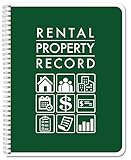
- This Wire-O book contains spaces for you to keep track of tenants, performed and upcoming maintenance, income & expense per property, etc.
- There is enough space for landlords and property managers to track 5 rental properties and 34 tenants
- 100 Pages, Wire-O, 8.5" x 11" - Reorder SKU: LOG-100-7CW(RentalProperty
- Made in USA, Proudly Produced in Ohio. Veteran-Owned.
- Made in the USA: Proudly produced in Ohio by a veteran-owned business; commitment to quality and American craftsmanship
Find recorded real-estate records through the County
The Los Angeles County Registrar-Recorder/County Clerk states: “This office does not provide online access to our real estate records or indexes via the internet.” That means an online Assessor search, a general web search, or a commercial listing page should not be presented as the County’s complete official transfer index.
Request copies online
The County directs users to its online real-estate-record request service, which routes copy requests through LexisNexis. The Recorder’s service page states that orders are processed within 20 working days. This is the County’s copy-processing estimate, not a guarantee of how long it will take to research an entire property history. Confirm the current request route and fees before ordering.
View the records in person
The Recorder offers appointment-based viewing at its Norwalk headquarters. Its viewing information says records dated 1851–1957 are available on the lower level, while records from 1958 onward are on the second floor. Check the County’s real-estate viewing page for appointment availability and current procedures before visiting.
Read each deed rather than relying on its label
When you obtain a record, capture the instrument details directly from the copy: document type, names of the parties, recording date, and identifying instrument information. The County Department of Consumer and Business Affairs describes a grant deed as transferring real property from one person or entity to another. A quitclaim deed releases the grantor’s interest and passes that interest to a grantee. Those labels describe different forms of transfer, but a label alone does not explain every legal or financial consequence of a transaction. For questions about what a specific deed means for ownership or rights, consult a qualified property lawyer.
Keep tax history separate from sale history
The Treasurer and Tax Collector provides property tax bill and payment-history services. Those records can add context, but tax billing or payment information does not establish that a sale took place, who received title, or the terms of a transfer. Use the recorded instrument for transfer evidence.
Quick Recap
Best Value
A practical sequence for researching a Bel Air property
- Get the address or AIN. Without one of these identifiers, you cannot reliably connect records to a particular Bel Air parcel.
- Search the Assessor Portal. Use the address or AIN, verify the parcel match, and note the assessment record’s effective date.
- Request or view recorded records. Use the County’s online copy-request route or book an in-person appointment to consult the real-estate index and records.
- Build a transfer timeline from the instruments. For each relevant document, record the parties, document type, recording date, and instrument details shown on the copy.
- Use tax records only as supporting context. Do not treat assessment values or tax payments as proof of a deed transfer.
Product prices and availability are accurate as of the date/time indicated and are subject to change. Any price and availability information displayed on Amazon at the time of purchase will apply.




