The Tool Desk
Outbyte Driver Updater FREEScan for outdated or missing drivers - takes under a minuteDriver Scan →Outbyte PC Repair FREERepair Windows errors before they cause bigger problemsFix Now →Spotify moved its backend from company-operated data centers to Google Cloud Platform (GCP) in stages, not in one shutdown. It announced the migration in February 2016, had fully routed traffic to GCP by May 2017, and retired its four on-premise data centers between December 2017 and 2018. Spotify said it wanted to spend less engineering effort running infrastructure and more on its products; that is the company’s stated rationale, not proof that cloud hosting is always cheaper or better.
Why did Spotify move to Google Cloud?
Spotify said that operating its own facilities and infrastructure consumed time and effort that it wanted engineers to devote to the product. The company evaluated several approaches before choosing to rely on one cloud provider. That decision addressed Spotify’s own operational priorities; the available company accounts do not establish a universal cost or performance advantage for cloud hosting.



Spotify began exploring a cloud strategy in early 2015 and decided that year to move away from its physical machines. In a March 2016 engineering post, it described the management challenge of a fleet of about 12,000 servers across four data centers. That figure is a snapshot of its on-premise fleet at the time, not a measure of its later cloud capacity. Spotify Engineering’s account of managing its machines.
The alternatives Spotify considered
Spotify’s 2019 retrospective says it weighed three broad choices:
Free tools Windows power users keep installed
One-click scans. No signup required.
- Multi-cloud: distribute workloads among multiple cloud providers. This can reduce dependence on a single provider, but means teams must manage more than one platform.
- Hybrid: combine cloud services with company-owned facilities. This retains some direct control of infrastructure, while leaving teams responsible for both environments.
- One cloud provider: consolidate on a single platform. This lets teams standardize their work around that provider, but concentrates reliance on it.
These are tradeoffs inherent in the options, not outcomes Spotify quantified in its public accounts. The company’s retrospective explains its decision and lessons from moving to Google Cloud Platform.
What moved, and how?
Google and Spotify announced the backend migration in February 2016. Google described two workstreams: services and data. Its announcement named Cloud Storage and Compute Engine among the Google Cloud products involved. The move concerned the infrastructure hosting Spotify’s backend; it did not mean Spotify stopped providing its consumer music service. Google’s February 2016 announcement.
Spotify later characterized its initial approach as “lift and shift”: it moved existing services while mostly preserving their architecture and relationships with the underlying infrastructure. In other words, the first phase was primarily about relocating the existing system, not rebuilding every service from scratch. Spotify described that approach in a 2023 engineering post about fleet management.
When did Spotify shut down its data centers?
Moving traffic and closing facilities were separate milestones. Spotify’s retrospective says traffic was fully routed to GCP by May 2017. The first of the four on-premise data centers closed in December 2017; the other three were retired in 2018. The company therefore completed the transition in stages after the migration was announced, rather than closing all its facilities at once. Spotify’s migration retrospective.
Rank #3
How large was the migration?
Spotify’s published figures convey the scale of the work, but they are historical company-reported context—not independently audited comparisons of cost, speed, reliability, or environmental impact.
| Measure | Reported figure | Context |
|---|---|---|
| Servers | About 12,000 | Spotify Engineering’s March 2016 description of its fleet across four data centers. |
| Services | About 2,000 | Spotify Engineering’s 2019 retrospective describes the scale its on-premise database clusters had grown to support before the move. |
| Data-pipeline runs | 20,000 per day | Pre-migration scale reported by Spotify Engineering in 2019. |
| Data volume | More than 100 petabytes | Pre-migration scale reported by Spotify Engineering in 2019. |
The service, pipeline, and data figures come from Spotify’s 2019 retrospective; the server count is from its 2016 engineering post. The public accounts cited here do not provide a comparable, audited before-and-after total cost, latency, availability, or emissions figure, so these scale numbers should not be read as evidence of savings or improved performance.
Quick Recap
Best Value

- A new type of connected system that replaces your router for seamless wifi coverage throughout your home, helping eliminate dead zones and buffering
- Network assist technology keeps your connection fast by always selecting the clearest channel and fastest band for your devices; WiFi throughput: 1200 MPBS.
- A simple app gets you set up quickly and allows you to see what's connected, prioritize devices, and pause the WiFi on kids' devices
- A single WiFi point covers up to 1,500 square feet, a set of three covers homes up to 4,500 square feet WiFi points work together so you can add more if you need additional coverage
- 24/7 phone support from google; 1 year warranty; material: plastic
Rank #4
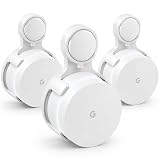
- 📶 FITS ORIGINAL GOOGLE WIFI — For Google Wifi AC1200, including GA00157-US. Not for Nest Wifi or Nest Wifi Pro.
- ⚡ PLUG & PLAY — Plugs directly into a wall outlet. No tools, drilling, or screws.
- ✨ CLEAN CABLE SETUP — Hides extra cord neatly behind the mount.
- 🏡 SAVE YOUR SPACE — Keeps Google Wifi off desks, shelves, and floors.
- 📦 3-PACK — Three white mounts for your whole-home WiFi setup.
Product prices and availability are accurate as of the date/time indicated and are subject to change. Any price and availability information displayed on Amazon at the time of purchase will apply.




