Recommended Free Tools
You can run an ecologically minded farm profitably, but a “green” identity does not guarantee customers or higher prices. Start with a market people will pay for, budget each farm enterprise—including labor—and choose sales channels whose returns justify their costs and workload. The steps below are geared to U.S. small and mid-scale farms; local demand, regulations, land costs, and labor will shape the numbers.
What makes an ecological farm profitable?
Profitability depends on the gap between what a farm earns and what it costs to produce and sell its products. Cash left after paying current bills is not necessarily true profit: equipment wear, capital, unpaid owner labor, and the value of land can change the picture. Track each major crop, animal, or other enterprise separately so a strong seller does not conceal a loss elsewhere.



Ecological practices can be part of the farm’s mission and production approach, but they do not automatically create a price premium. Confirm that customers want what you plan to produce and that the price and volume can cover the full cost of getting it to them.
How to build a farm business that can pay
-
Set goals and income needs
Decide how much income the farm needs to provide, how much time you can commit, what ecological practices matter to you, and how much risk or startup spending you can manage. These choices help rule out enterprises and sales channels that do not fit your life or resources.
What’s actually slowing this PC down?
Pick the symptom - the matching free tool is one click away.
Special offer. See more information about Outbyte and uninstall instructions. Please review EULA and Privacy policy.#1 Best Overall
-
Research buyers before choosing what to grow
Talk with likely customers and buyers. Find out what they purchase, when they need it, what quality or packaging they expect, what competing farms offer, and how they prefer to buy. Consider whether you can reach those customers directly or need a buyer such as a retailer, restaurant, or institution.
-
Write a plan and test conservative assumptions
Use a written plan to define products, customers, operating costs, sales assumptions, and financing needs before making major investments. USDA Farmers.gov’s new-farm planning guidance is a starting point. Forecast cautiously: an attractive sales estimate is not useful if expected yields, prices, or buyer demand are uncertain.
-
Budget every major enterprise
For each product or activity, record expected revenue and costs such as seed or feed, supplies, hired and owner labor, equipment use, packaging, delivery, and losses. Allocate shared costs consistently and state how you do it. SARE’s Enterprise Budgets for Diversified Farms guidance, announced March 24, 2026, recommends enterprise budgets, careful records, and partial-budget analysis for comparing changes on diversified farms.
-
Start at a manageable scale and compare results
Record actual sales, costs, and hours, then compare them with your budget. When considering a change—such as adding a crop, switching outlets, or buying equipment—use a partial budget to estimate what will be added, saved, lost, and gained. Expand only when results and capacity support it, not simply because one season’s sales look promising.
Quick wins for a faster PC:
Clear out junk files and repair common Windows errorsFree Scan →Fix the driver behind crashes, sound loss and screen glitchesFind Drivers →Special offer. See more information about Outbyte and uninstall instructions. Please review EULA and Privacy policy. -
Check rules before selling
Verify local permits, food-handling and processing requirements, and any relevant business obligations for your location and products. If you plan to use an organic claim in the United States, check current USDA rules and speak with an accredited certifier before labeling products.
Which sales channel fits your farm?
A high retail price does not necessarily mean a higher net return. Compare each channel after production, harvest, packing, selling, transport, and labor costs. Also consider payment timing, customer demand, reliable volume, risk, and the type of work you want to do. A mix of channels may help, but it still needs a clear plan for capacity and costs.
| Channel | Potential advantage | Costs and constraints to weigh |
|---|---|---|
| CSA | Members may pay for shares in advance, helping make sales and cash flow more predictable. A SARE project found CSA among strategies associated with stronger net cash-to-gross ratios in its sample. | You must plan a share that delivers consistent value and account for packing and distribution labor. The study does not establish that CSA is best for every farm. |
| Farmers markets, farm stands, online sales, or pick-your-own | Direct selling can build relationships with customers and give the farm a chance to capture more of the retail value. | Marketing and selling take time and money, and sales can vary, including with weather. |
| Wholesale | Higher volume may create economies of scale and reduce per-unit costs. | Prices are typically lower. Buyers need dependable supply and quality, while larger-volume sales can require stronger harvest, sorting, packing, storage, and shipping systems. |
| Restaurants, retailers, or institutions | These outlets can diversify sales and reach customers beyond farm-gate channels. | Cost buyer specifications, delivery, pricing, and labor before committing. An available outlet is not automatically a profitable one. |
SARE’s introduction to scaling a vegetable farm for wholesale markets explains the tradeoff between direct selling and wholesale. USDA Forest Service’s 2025 Direct Marketing for Agroforestry Producers also discusses direct-sale considerations. USDA Economic Research Service research published in 2021 examines local-food marketing practices and financial performance; its findings are not a guarantee for an individual farm.
Independent reader supportYour contribution helps us test, update, and keep practical guides available for everyone.Can a CSA make a small farm profitable?
A CSA can support more predictable sales because members often pay for shares before the season, but it requires a dependable plan for what members receive and the labor to pack and distribute it. Judge it by the net return and workload for your farm—not by the channel’s reputation or gross sales alone.
PC Slower Than It Used to Be?
A free scan shows the junk files, broken settings and background clutter dragging Windows down - then fixes them in one click.Free scan · Windows 10 & 11Outdated Drivers Are Slowing You Down
One free scan finds every outdated or missing driver and matches the right update for your exact hardware.Free scan · exact hardware matchBest Value

- Storey books
- Language: english
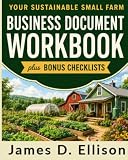
- Book - making your small farm profitable
A SARE farmer-led project conducted from 2002 to 2004 offered historical illustrations, not current forecasts: it described a hypothetical six-acre CSA serving 150 to 200 member households, with $80,000 in gross sales and around $40,000 in net cash income. That net cash figure excluded depreciation, opportunity costs, prescribed machinery-use values, and land values. The report also said a 20-acre CSA vegetable farm might supply as many as 600 households. These examples are tied to that project’s period and assumptions; they are not modern benchmarks or expected results for another farm. Read the SARE project report.
What does “organic” mean for a farm business?
In the United States, “organic” is a regulated labeling term, not just a description of a farmer’s values or methods. USDA Agricultural Marketing Service says, “Organic is a labeling term for food or other agricultural products that have been produced according to the USDA organic standards.” Producers and handlers must meet USDA standards to use the term or seal. Certification costs vary with the operation’s size and complexity. See USDA AMS guidance on transitioning to organic and confirm requirements with an accredited certifier.
USDA’s National Agricultural Statistics Service page on organic agriculture surveys described 2021 as the latest survey covered and scheduled new results for October 30, 2026. As of October 8, 2026, those scheduled results were not yet published, so the page does not provide a current national price or profit benchmark.
How to decide whether an enterprise is worth keeping
- Does it have identifiable buyers and realistic sales assumptions?
- After including labor, equipment, packaging, delivery, and losses, does it return enough for the resources it uses?
- Can you produce the required quantity and quality reliably?
- Does the sales channel fit your schedule, skills, and preferred way of working?
- Do actual records support the budget, or is a change needed before you scale?
Use a farm budget notebook or another consistent recordkeeping system to capture hours, expenses, quantities, and sales. Consistent records make it possible to compare seasons and channels instead of relying on memory.
Quick Recap
Product prices and availability are accurate as of the date/time indicated and are subject to change. Any price and availability information displayed on Amazon at the time of purchase will apply.




