Taiwan’s startups are working on the engineering that makes AI usable beyond a model or computing platform: fitting it to sensors, devices, factories, vehicles and other real environments. Susan Hong’s EE Times coverage of CES 2026 describes this work as a bridge between large technology platforms and deployable products—where latency, power limits, integration, regulation and existing systems can determine whether an AI application works.
Who makes AI platforms work in the real world?
AI platforms provide computing, models and ecosystems, but deployment requires additional engineering. Systems must connect to sensors and hardware, fit within limits on size and power, communicate reliably and work alongside existing equipment. In industrial and physical settings, those integration tasks can be as consequential as the model itself.
EE Times frames Taiwan’s contribution around that implementation layer, drawing on the region’s information and communications technology manufacturing and integration experience. The report is about the practical path from technology to usable systems, not a ranking of AI models or a comparison of independently tested products.
What did Taiwan bring to CES 2026?
EE Times reported that 57 Taiwanese startups exhibited at Eureka Park at CES 2026, alongside 83 local supply-chain partners. The report grouped their work across generative AI and edge computing, precision healthcare and health monitoring, smart manufacturing and automation, and green energy and sustainability. These are figures reported by EE Times, not independently verified census totals.
Recommended Free Tools
#1 Best Overall
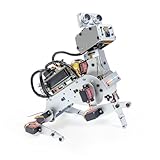
- AI-Powered Raspberry Pi Robot Dog — PiDog: Powered by Raspberry Pi (5/4B/3B+/3B/Zero 2W), OpenClaw, and multi-LLMs like ChatGPT, Gemini, Grok, DeepSeek, Qwen & Ollama. With 12 servos, camera, gyroscope, hearing & touch sensors, PiDog can see, listen, talk, move, and interact intelligently. Supports OpenCV, MediaPipe, TTS & STT, app control, FPV & Python. A great STEM robotics gift for students, makers & tech enthusiasts—perfect for birthdays and holidays. (Raspberry Pi not included)
- Realistic Dog-like Movements: PiDog's 12 powerful servos enable 32 dog-like actions, including walking, sitting, standing, shaking its head, wagging its tail, and performing playful tricks, closely mimicking a real dog and providing an engaging experience. This is an AI development robot product designed for engineers, suitable for ages 15 and above
- Rich Sensor Suite for Interactive Experiences: PiDog features ultrasonic, touch, gyroscope, sound, camera, speaker and microphone. These provide it with advanced hearing, vision, and touch, enabling it to see, detect obstacles, respond to touch, and recognize sounds, making interactions highly engaging
- AI-Powered Interactions with OpenClaw & Multi-LLMs. PiDog combines voice, vision, and gesture recognition for immersive AI experiences. Powered by OpenClaw and multi-LLMs like ChatGPT, Gemini, Grok, DeepSeek, Qwen, Doubao, and Ollama (local LLMs), it can understand questions, respond naturally through TTS & STT, recognize math problems, interpret hand gestures, and hold smart conversations. OpenClaw also enables customizable AI behaviors and personalized robotics development, helping users create their own intelligent robotic companion
- Comprehensive Learning Resources and Support: PiDog offers detailed online documentation, video tutorials, prompt technical support, and an active forum community, ensuring beginners can easily complete all projects and enjoy a great experience
The breadth matters because “AI deployment” can mean very different things: processing data close to a sensor, fitting a system into a vehicle cabin, adding monitoring to a building, or translating a biological sample into an automated workflow. The featured companies illustrate those different constraints rather than a single product category.
How do local supply-chain partners help startups?
The EE Times feature presents established partners as a route to manufacturing capacity, credibility and access to markets. A startup may bring a specialized technology or faster product development; a larger partner can contribute production expertise, distribution relationships or system integration. A named collaboration is evidence of a business relationship, however, not proof of commercial scale or independently validated performance.
Rank #2

- Optimized AI Arm Kit for LeRobot & Hugging Face Projects – The SO-ARM101 is an upgraded low-cost robotic arm servo motor kit designed for AI robotics enthusiasts and developers. Fully compatible with LeRobot and Hugging Face frameworks, it supports imitation learning and reinforcement learning, making it ideal for real-world robotics applications. (3D-printed parts not included.)
- Enhanced Wiring & Performance – Compared to the SO-ARM100, the SO-ARM101 features improved wiring to prevent disconnection at joint 3 and eliminates range-of-motion limitations. The leader arm uses optimized gear ratio motors for smoother performance—no external gearboxes required.
- Real-Time Leader-Follower Functionality – New real-time tracking allows the leader arm to follow the follower arm, enabling human intervention and correction during reinforcement learning (RL) training. Perfect for hands-on AI robotics development and research.
- Open-Source, DIY-Friendly & Nvidia-Compatible – Developed by TheRobotStudio, this open-source AI Arm kit integrates seamlessly with the LeRobot platform, offering PyTorch-based datasets, simulation, training, and deployment tools. Fully compatible with Nvidia Jetson edge devices, including reComputer Mini J4012 Orin NX 16 GB.
- Comprehensive Learning Resources – Includes detailed open-source assembly and calibration guides, testing tutorials, and deployment instructions. From wiring to AI training, get everything you need to start building, teaching, and optimizing your robotic arm for grasping and placing tasks.
- iStaging and Innolux: iStaging, which began with virtual-reality technology and worked with international luxury brands, collaborated with Innolux on immersive hybrid display experiences.
- Millilab and Innolux: Millilab’s radar is described as part of Innolux’s smart-cockpit system. EE Times also reports relationships with Socionext and European automotive suppliers, including MAXI-COSI.
- Otowahr and Motech Electronics: The feature links Otowahr’s compact MEMS speaker work with Motech Electronics.
- ible and Foxconn: ible develops air-purification modules and dedicated control ICs; the report describes a Foxconn partnership involving audio and Bluetooth connectivity.
What problems are the featured systems designed to solve?
| Company or system | Deployment setting | Reported engineering focus | What the report establishes |
|---|---|---|---|
| Millilab | Vehicle cabin | 60-GHz millimeter-wave radar intended to detect occupant vital signs through obstructions | EE Times describes integration into Innolux’s smart-cockpit system and names other industry relationships; it does not provide independent performance testing. |
| Otowahr | Earbuds, with potential extensions to hearing aids and head-mounted devices | Ultra-compact MEMS speakers | EE Times reports the technology and Motech Electronics relationship. “Clinical-grade” is the article’s description, not an independently assessed finding. |
| Epic Tech Taiwan | Building or facility sensing | A plug-and-play sensing tag intended to reduce installation friction and support ESG-related needs | The Taiwan edition’s caption says users can scan a QR code to make calls and that the tag can replace intercoms and wiring. |
| ible Technology | Wearables and audio devices | Air-purification modules, control ICs, audio and Bluetooth connectivity | The Taiwan edition depicts a wearable combining personal air purification and true-wireless audio; it gives no retail model or purchasing route. |
| AIRA | AI systems and facial recognition | System integration | The Taiwan edition identifies AIRA as a facial-recognition vendor and names Jorjin, Intel and Network Optix among technology partners. The US edition describes it more generally as an AI and systems-integration startup. |
| HUA TEC International | Healthcare testing | Nano CAST semiconductor biochip and automated cancer-detection platform | EE Times relays the company’s claims about sample volume and tumor-cell capture; the report does not establish clinical validation. |
What should readers make of the technical and health claims?
Some of the examples are described at the level of a showcase or intended application; others include named partners. Neither category should be confused with an independent test, a broadly deployed product or proof of regulatory compliance. The EE Times accounts are useful for understanding what the companies are building and how they describe their partnerships, but they do not provide comparative performance testing.
Millilab’s automotive application
EE Times says Millilab’s radar is intended to detect vital signs through obstructions when integrated into Innolux’s smart-cockpit system. The US edition connects the system to upcoming EU Child Presence Detection requirements. That phrasing does not establish the current legal status or precise scope of any regulation, so it should not be read as legal guidance.
What’s actually slowing this PC down?
Pick the symptom - the matching free tool is one click away.
Rank #3
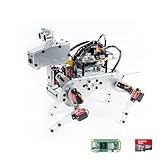
- Raspberry Pi AI Robot: powered by Raspberry Pi (5/4B/3B+/3B/Zero 2W), features 12 servos and sensors for vision, hearing, and touch. Integrated with ChatGPT-4o, it responds to complex queries. With app control and FPV, users can manage and see its view in real-time. It supports Python programming
- Realistic Movements: 12 powerful servos enable 32 actions, including walking, sitting, standing, shaking its head, wagging its tail, and performing playful tricks, closely mimicking a real and providing an engaging experience
- Rich Sensor Suite for Interactive Experiences: features ultrasonic, touch, gyroscope, sound, camera, speaker and microphone. These provide it with advanced hearing, vision, and touch, enabling it to see, detect obstacles, respond to touch, and recognize sounds, making interactions highly engaging
- Engaging Interactions with ChatGPT-4o: with ChatGPT-4o enables voice interactions and visual recognition, making it smarter and more responsive. Users can have natural conversations, solve math problems via the camera, and interpret gestures, creating diverse and fun interactions
- Comprehensive Learning Resources and Support: offers detailed online documentation, video tutorials, prompt technical support, and an active forum community, ensuring beginners can easily complete all projects and enjoy a great experience
HUA TEC’s Nano CAST claims
The feature says HUA TEC’s Nano CAST biochip platform requires 16 mL of blood and achieves over 90% tumor-cell capture. These are company claims as relayed by EE Times, not independently validated clinical results. The article does not establish diagnostic accuracy, clinical utility or product availability.
Independent reader supportYour contribution helps us test, update, and keep practical guides available for everyone.What role does Taiwan Tech Arena play?
EE Times describes Taiwan Tech Arena (TTA) as supporting startup showcases, incubation and partner matching—one route for moving research and development toward external validation and international exposure. The US edition reports that TTA had incubated 1,069 startup teams since 2018 and that those teams attracted nearly US$400 million in investment. The Taiwan edition reports the investment figure as nearly NT$40 billion. These are edition-specific figures reported by EE Times; the two currency amounts should not be treated as interchangeable audited totals.
Rank #4
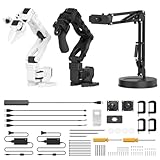
- 【End-to-End Imitation Learning】Hiwonder SO-ARM101 robot arm is an embodied intelligent hardware platform compatible with the Lerobot open-source framework. It provides developers with streamlined access to shared code, templates, and pre-trained models to explore the latest advancements in AI research.
- 【Dual-Camera Vision System】Equipped with both a gripper-mounted camera and an external camera, the system supports both precise manipulation and environmental awareness for accurate imitation learning.
- 【Hiwonder High-Performance Bus Servos】Featuring 12 high-torque bus servo motors with magnetic feedback, the Hiwonder SO-Arm101 robotic arm delivers smooth, stable motion, eliminating issues like power deficiency and jitter.
- 【Professional Control & Debugging】Integrated with the Hiwonder BusLinker V3.0 debugging board, the system supports servo scanning, real-time status monitoring, and trajectory control. The professional PC software simplifies device calibration and debugging, making it accessible for both researchers and hobbyists.
- 【Open-Source Compatibility】The SO-ARM101 robotic arm is designed to be fully compatible with the LeRobot open-source project. We acknowledge the contributions of the open-source community; all trademarks and copyrights belong to their respective owners.
Lin Der-Sheng, director general of the National Science and Technology Council’s Academia-Industry Collaboration and Science Park Affairs Department, told EE Times: “Now is a critical moment for Taiwanese startups to scale internationally.” The statement captures the report’s emphasis on international growth, but it does not by itself establish how many startups have achieved sustained overseas sales.
How to assess the opportunity without overreading the examples
The examples are best understood by asking what environment a system must operate in, how it connects to production, and what kind of evidence supports its claims. A named partner can point to a route for integration or market access; it does not establish shipment volume, customer adoption or technical performance. Likewise, a prototype or exhibition demonstration can illustrate an engineering approach without proving that it is ready for routine deployment.
Windows Errors? Fix Them Before They Spread
Repair common Windows errors and clear accumulated junk for a smoother, more stable PC - no reinstall needed.Free scan · no reinstallCrashes, No Sound, or Screen Glitches?
Random freezes, missing sound and display glitches usually trace back to one bad driver. Find and replace yours safely.Free scan · under a minuteQuick Recap
- Identify the deployment setting: vehicle, wearable, building, healthcare, manufacturing or energy applications impose different requirements.
- Look for the integration path: distinguish a named partner or system integration from a general intention to enter a market.
- Separate reported claims from verified results: company figures and descriptions relayed by EE Times are not independent validation.
- Check the relevant edition and date: the US EE Times page is dated April 6, 2026, while the Taiwan version is dated January 22, 2026; both cover CES 2026 and differ in some details.
Product prices and availability are accurate as of the date/time indicated and are subject to change. Any price and availability information displayed on Amazon at the time of purchase will apply.




