Lumber prices can influence what timberland companies earn and what homebuilders pay, but neither effect is automatic or one-for-one. Higher lumber prices may encourage mills to bid more for logs, potentially lifting stumpage prices; builders may face higher wood-product costs, but whether those costs reach homebuyers depends on contracts, timing, and market conditions.
Why lumber and timber prices are not the same
Lumber is a milled product. Stumpage is the price paid for the right to harvest standing timber. A delivered-log price is different again: it reflects logs brought to a mill, including transportation and other delivery costs. These prices describe separate points in the supply chain, so a lumber-price change does not translate directly into an equal change in what a landowner receives.
The relationship depends on factors such as region, species, mill capacity and competition, harvesting and delivery costs, and the market cycle. Even price series labeled “timber” may measure different things. The USDA Forest Service cautions that regional reported prices and estimates derived from residual values are not interchangeable observations.
How a lumber-price change can reach timberland owners
Mill demand connects lumber markets to stumpage
When demand for housing and wood products strengthens, lumber prices may rise. Mills can then have more reason to compete for logs, which may increase bids for standing timber. How much of a lumber-market gain reaches a timber owner depends on local mill competition and costs, among other conditions.
Do these 3 things before closing this tab:
1Scan for outdated or missing drivers - takes under a minute2Repair Windows errors before they cause bigger problems3Fix the driver behind crashes, sound loss and screen glitches#1 Best Overall
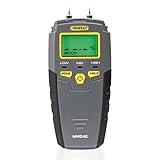
- HUMIDITY SENSOR: Our handy meter tool can quickly determine what level of remediation is needed to keep your family safe from black mold. High levels of dampness that go untreated are the leading cause of harmful fungus growth in the home.
- WATER LEAK DETECTOR: Finding the moisture content in your wood or drywall is the first step in early prevention. Continuously check and test suspicious water stains around the house so you can determine whether the area is wet or has already dried. Low, medium and high moisture tones and on-screen icons, Reading HOLD button
- MOISTURE READER: The mold test features large 0.3" high digits in a backlit LCD for quick and easy detecting. Our mildew scanner includes extra 8mm stainless steel pins, a protective cap that doubles as a calibration checker, and a “9V” battery.
- MOLD TESTER: For an accurate test read, stick the stainless steel pins into the surface of what you're measuring. The gauge has a broad range of 5 - 50% for wood and 1.5 - 33% for building materials such as concrete and drywall.
- GENERAL TOOLS: We're a recognized leader in designing and developing specialized precision tools dedicated to delivering exceptional customer service. We encourage artisans and DIYers to work smarter, measure better, and repair more productively.
A 2025 peer-reviewed study of the U.S. South examined lumber–timber price relationships from 1999 through 2023. It found that the price gap shifted significantly around 2015–16 and 2019–22, and that external shocks—especially changes in the housing market—affected the gap differently across economic conditions. The result points to a relationship that changes over time, not a universal rule for every region or timberland company.
Mill efficiency can change who captures the benefit
A 1998 USDA Forest Service hardwood-market summary describes one possible mechanism: after a lumber-market recovery, surviving efficient mills may compete more strongly for stumpage. That competition can pass some short-term benefit from mill efficiency to timber owners and narrow the gap between lumber and stumpage prices over repeated cycles. It is a historical explanation of how the market can work, not a forecast of current prices.
Rank #2
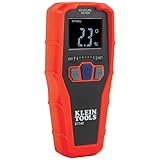
- WATER LEAK DETECTOR detects relative moisture content from leaks and flooding
- PINLESS MOISTURE METER measures relative moisture content in building materials
- NONDESRUCTIVE DETECTION up to 3/4-Inch deep using Electromagnetic field (EMF) technology
- USE ON DRYWALL, MASONRY, HARDWOOD, AND SOFTWOOD; calibrated for these materials only
- REVERSE-CONTRAST DISPLAY for easy viewing of reading and nine LED bars to indicate moisture range
What lumber prices mean for timberland companies
A timberland company’s results are not simply a bet on the lumber benchmark. Its exposure depends on where its timber is located, which species and products it sells, local mill demand, export and industrial outlets, harvesting and delivery costs, and the terms of its contracts. A company that also operates mills, distributes building products, or makes building components has different exposures from a company primarily selling timber.
To assess a particular company, read its segment and geographic disclosures rather than inferring exposure from a national lumber-price move. Check what each quoted price measures—stumpage, delivered logs, or lumber—and the associated species, region, grade, date, and methodology.
Free tools Windows power users keep installed
One-click scans. No signup required.
Rank #3

- 🌲【Accurate and fast measurements reveal hidden water leaks】: It has 2 high-precision pins that can penetrate the surface to be tested and quickly measure moisture content to estimate potential moisture increase throughout the home. COCZOW moisture meter is the ideal tool for measuring moisture.
- 🌲【Professional Wood Moisture Meter】: 6 calibrated scales. Our moisture meter is a great tool for manufacturers, floorers, inspectors and wood suppliers to quickly and easily measure moisture content (% Mc). You can quickly determine if the moisture content is low (5-12%), medium (12-17%) or high (17-60%). Checking moisture content prevents wood from cracking and warping.
- 🌲【Widely Used】: PM6811A moisture meter is ideal for carpentry, building construction, agricultural restoration and floor laying. Measure moisture content of wood products such as hardwood floors, cabinets, furniture, lumber, lath, beams, plywood, panels, composite boards, window frames, forestry wood, coils, building materials, etc.
- 🌲【User-friendly】: With LCD backlight, the backlight color is divided into three types of green, yellow and red, or display the moisture content of different measurement types. Hold function, maximum/minimum moisture measurement function and 5-minute automatic shutdown function (no power supply required).
- 🌲【Why choose COCZOW Wood Moisture Meter】: LED display function, large measuring range (wood: 2.0%-75.0%. Building materials: 1.5-30%), durable stainless steel needle, heat insulation, light weight and easy to carry. Get professional and accurate results with Peakmeter Wood Moisture Tester.
How lumber prices affect homebuilding costs
Wood products are inputs to home construction, so a rapid increase can raise builders’ material costs and squeeze margins if selling prices or customer charges do not adjust as quickly. The effect on an individual builder depends on its purchasing arrangements, inventory, project timing, and ability to change prices.
Builders FirstSource says it sometimes passes short-term changes in material and freight costs on to customers, but not always; delays in passing through increases may adversely affect operating results. In its 2025 Form 10-K, filed with the SEC in 2026, the company stated: “Prices of building materials, including wood products, are subject to cyclical market fluctuations, which may adversely impact operating income when prices rapidly rise or fall within a relatively short period of time.”
Rank #4

- FIND HIDDEN WALL MOISTURE EARLY — Check suspicious drywall and building surfaces after a leak, water stain, or other moisture concern. Detect abnormal moisture before a small issue develops into more extensive damage and costly repairs
- CHECK BEFORE YOU REPAIR — Don't rely on a wall looking or feeling dry. Use the moisture meter to check questionable areas before painting, repairing, or covering the surface, helping you make decisions based on actual moisture readings.
- CHECK FIREWOOD BEFORE YOU BURN — Test firewood before placing it in your fireplace or wood stove. Knowing the moisture level of your firewood helps you choose wood that is ready for burning and avoid relying on appearance alone.
- PIN-TYPE TESTING FOR DIRECT MEASUREMENTS — The contact pins penetrate the material to measure moisture inside wood and building materials. This makes it useful for checking areas where surface conditions may not tell the whole story.
- ONE TOOL FOR TWO IMPORTANT HOME CHECKS — Keep it ready for two practical jobs: checking walls for hidden moisture and checking firewood before burning. A simple way to make informed decisions before a moisture problem becomes expensive or wood goes into the fireplace.
That evidence supports the possibility of higher input costs or margin pressure, not a fixed pass-through rate to buyers. It does not establish how many dollars a lumber-price change adds to a typical home or how much of a change a homeowner ultimately bears.
Independent reader supportYour contribution helps us test, update, and keep practical guides available for everyone.What the latest cited indicators show—and what they do not
Builders FirstSource reported the following U.S. market comparisons for 2025 versus 2024 in its 2026 filing:
Quick wins for a faster PC:
Clear out junk files and repair common Windows errorsFree Scan →Scan for outdated or missing drivers - takes under a minuteDriver Scan →Best Value

- Easy to Read with Large LCD Screen: This wood moisture meter is easy to get an accurate reading from the surface of materials and displays accurate moisture readings on the 2.25" big screen. Use this handheld meter to check the moisture content in firewood or drywall, it can stand up on the table, the moisture content is displayed with a bar graph and percentage (_%RH) on the screen. Date Hold and Max/Min function is used to freezes readings, useful for writing down data
- Tricolor Backlight Display, Easy to Use: TopTes Moisture Meter TS-630 features an HD tri-color backlight to easily know if the wood/wall humidity is Dry, Moist, or Wet. Green backlight for Low moisture, orange backlight for middle moisture, and red moisture for high moisture. After selecting the mode, and putting pins into the firewood, easy and quick to get a visible alert from the clear screen
- Seven Calibration Scales, Two Material Mode: It is designed with built-in characteristic parameters of 7 calibration scales for wood and building material, ranging from 0.0% to 57%. This humidity meter is perfect for woodworking, water damage restoration, building construction, and home renovation. Easily Check and test suspicious water leaks around the wall/floor so you can quickly determine what level of remediation is needed
- Pin Type & Battery Operated: TopTes TS-630 moisture meter is a pin-type moisture meter and operates on batteries. With a high precision multi-material sensor, DON’T need calibration. It’ll support an accurate reading after inserting the stainless steel pins into the surface of the wood or building materials. It will auto shut off after 10 minutes of non-use to help save energy. A low-battery indicator will appear on the screen when the battery is running out
- What's in the Box: One TS-630 Moisture Meter, three AAA Batteries, one User Manual, one Carry Pouch, one Pair of Test Pins, one Mini Wrench
| Indicator | 2025 change versus 2024 | What it measures |
|---|---|---|
| Average composite lumber prices | Up 6% | Company-reported composite lumber benchmark |
| Average composite panel prices | Down 17% | Company-reported panel benchmark, a distinct product category |
| Total U.S. housing starts | Down 1% | Housing construction activity |
| U.S. single-family housing starts | Down 7% | Single-family construction activity |
These are dated market indicators, not estimates of lumber’s contribution to the cost of a particular home. Composite panels are not dimensional framing lumber, and a benchmark price is not a retail quote or a measure of the lumber quantity in a home. The figures alone also do not establish that lumber-price changes caused the reported movement in housing starts.
Why hardwood markets may tell a different story
Hardwood used in cabinets, flooring, and millwork serves different end markets from structural softwood framing lumber. Residential construction can affect demand for these products, but exports and industrial uses matter as well. A change in softwood framing prices should therefore not be treated as a direct guide to hardwood timber demand or prices.
How to compare timber and lumber prices
- Identify the product: distinguish lumber, panels, stumpage, and delivered logs.
- Match the market: compare the same region, species, and grade where possible.
- Check the time period: note the observation date and whether prices are nominal or inflation-adjusted.
- Check the methodology: determine whether a figure is a reported transaction or an estimate, and what its geographic coverage includes.
- Match the measure to the company: separate exposure through timberlands from exposure through mills, distribution, or building components.
For historical context, the USDA Forest Service Northwest resource combines series on production, timber harvest, prices, and trade. Its latest listed bundle was updated March 27, 2025, and contains data through 2023; its geographic scope and end date matter when using it to compare with newer or national market figures.
Quick Recap
Product prices and availability are accurate as of the date/time indicated and are subject to change. Any price and availability information displayed on Amazon at the time of purchase will apply.
What’s actually slowing this PC down?
Pick the symptom - the matching free tool is one click away.




