Yes—freezing your credit is free. As of August 10, 2026, federal law lets any U.S. consumer place, temporarily lift, or permanently remove a security freeze at Equifax, Experian, and TransUnion without paying a fee. You do not need to wait for a data breach or confirmed identity theft.
A freeze is one of the simplest ways to make it harder for an identity thief to open a new credit card, personal loan, auto loan, mortgage, or other credit account in your name. The important catch is that you must freeze all three nationwide credit reports separately. Freezing Equifax does not freeze Experian or TransUnion.
As an Amazon Associate I earn from qualifying purchases.
This guide explains exactly what a freeze does, what it cannot protect, how to place and verify all three freezes, and how to thaw them when you need to apply for credit.
The short version: Go to the official freeze page for Equifax, Experian, and TransUnion. Place a security freeze with each bureau, confirm that each status says it is active, and save the confirmations. Use a temporary lift—not a permanent removal—when a lender needs to review your credit.
#1 Best Overall

- SHIELD YOUR PRIVACY WITH THE ID DEFENDER ROLLER STAMP: Tired of worrying about your personal information falling into the wrong hands? The ID Defender Roller Stamp offers a simple yet effective solution. With a unique wide camouflage pattern, it quickly and easily conceals sensitive data on a variety of surfaces.
- PRIVACY PROTECTION: useful not only as an ADDRESS BLOCKER or ID POLICE, but also keeps away preying eyes from invoices, authority documents, checks, bank statements and many more.
- SIMPLE TO USE: Just remove the cover and swipe. The wide swipe makes it easy to cover sensitive information.
- VERSATILE APPLICATION: Ideal for a variety of documents, including contracts, court documents, shipping labels, tax returns and more.
- LONG-LASTING INK: The high-quality ink works on both glossy and standard paper and provides up to 330 feet of coverage.
Information verified August 10, 2026. Bureau phone numbers, addresses, account screens, and procedures can change, so use the linked official pages as the final authority before submitting personal information.
What is a credit freeze?
A credit freeze, also called a security freeze, restricts a consumer-reporting company from disclosing your credit report to most prospective creditors unless you lift or remove the freeze. Since lenders commonly review a credit report before approving a new account, the restriction can disrupt an identity thief’s attempt to borrow or open credit using your personal information.
A freeze does not literally lock your credit score. Your score is calculated from the information in your reports, and that score can still change as payments, balances, late payments, account activity, and other information are reported. The act of placing a freeze does not itself lower or otherwise directly change your score. The Consumer Financial Protection Bureau explains the distinction.
A freeze remains in place until you temporarily lift it or permanently remove it. “Permanent” removal is not irreversible; you can request a new freeze later.
Why freeze your credit if you have not experienced fraud?
You do not need a known breach, stolen Social Security number, or identity-theft incident to request a freeze. The Federal Trade Commission says anyone can place one for any reason.
That makes a freeze a useful preventive cybersecurity control:
- It targets new-account fraud. It can block or disrupt applications for new credit when the lender needs access to a frozen report.
- It is free. The federally protected freeze is free to place, temporarily lift, and permanently remove. Optional credit-monitoring services and commercial credit locks may have different terms or fees.
- It is reversible. You can schedule a lift for a specific period or remove the freeze when necessary.
- It does not interfere with ordinary use of existing credit cards. You can generally continue using accounts that are already open.
- It stays active until you change it. You do not have to renew it annually.
The trade-off is administrative friction. Before applying for a mortgage, car loan, credit card, or another product, you may need to learn which bureau the lender will check and temporarily lift the corresponding freeze.
Recommended Free Tools
What a credit freeze can—and cannot—stop
What it can help prevent
A freeze can usually block the credit-report access needed for a thief to apply for:
- New credit cards
- Personal loans
- Auto loans
- Mortgages and home-equity products
- Some buy-now-pay-later products and other lending accounts, if the provider relies on a frozen report
The correct promise is “can help prevent new-account credit fraud,” not “nobody can commit identity theft.” Some lenders may use other information sources, and federal law permits certain types of access even when a report is frozen.
What it does not necessarily stop
A freeze is mainly a control for new credit. It does not automatically stop:
- Unauthorized charges on an existing credit card
- Bank-account takeover or unauthorized withdrawals
- Debit-card fraud
- Tax-return or tax-refund theft
- Medical identity theft
- Employment-related identity theft
- Utility, cable, or cellphone-account fraud
- Fraud involving a lender or service that does not use the frozen report
- Fraud involving specialty consumer reports that are not covered by the three nationwide bureaus
The FTC’s credit guidance and the CFPB’s list of consumer-reporting companies are useful reminders that your identity and financial information exist in more places than the three major credit files.
Windows Errors? Fix Them Before They Spread
Repair common Windows errors and clear accumulated junk for a smoother, more stable PC - no reinstall needed.Free scan · no reinstallOutdated Drivers Are Slowing You Down
One free scan finds every outdated or missing driver and matches the right update for your exact hardware.Free scan · exact hardware matchWho can still access a frozen report?
A freeze does not make your file invisible to everyone. Depending on the permissible purpose and the bureau’s procedures, access may remain available to you, existing creditors and card issuers, debt collectors, certain government agencies, child-support agencies, landlords or tenant-screening users, employers when you authorize the report, some insurance-related users, prescreening or marketing users, and entities acting under court orders, warrants, or other legal authority. The exact exceptions vary by legal purpose and bureau; see the CFPB explanation and Experian’s current guidance.
Rank #2

- Protect Your Privacy Effectively: you can use this identity protection roller stamp to flip personal information in under 2 seconds and save time and effort, effectively hiding and protecting your personal information, such as phone numbers, social security numbers, bank statements, shipping addresses, tax documents,data, billing addresses and many more
- Ideal Replacement for Shredder: if you are still using a shredder to shred cards or papers that are printed with your personal information, this security stamper roller will be an alternative tool to block out your privacy effectively and easily
- Refillable and Long Term Use: this confidential stamp can cover a total length of up to 100 meter/ 109 yards, approximately 3,200 prints are covered, pattern width is about 0.78 inches; When ink runs out, you can refill the security stamp with ink
- Easy to Use: just continuous roll the address blocker roller stamp to conceal information, and roll on a second layer for maximum protection, works on paper, envelopes, folders, address labels, etc., please note that may not work on smooth surfaces
- How to Refill the Ink: there are 4 pieces of ID stamp refills, each is about 1.5 ml, you just need to unscrew the cap of the ink bottle (not disposable, you can close the cap for next time of use), then insert it into the hole on the side of the stamp, then turn it upside down, about 5 minutes later, the most of the ink will be replenished to the security roller stamp
Will a freeze affect a job, apartment, or insurance application?
A big-three credit freeze does not prevent you from applying for a job, renting an apartment, or buying insurance. Federal guidance also says the free-security-freeze law does not apply in the same way to requests connected with employment, tenant screening, or insurance.
Still, ask the organization which consumer report it will use. An employer, landlord, or insurer may rely on a specialty employment, tenant-screening, insurance, or other report rather than a standard Equifax, Experian, or TransUnion credit report. Freezing the big three does not automatically freeze those specialty reports.
How to freeze your credit at all three bureaus
Set aside about 15 to 30 minutes and handle the bureaus one at a time. Before you begin, have the following available:
Quick wins for a faster PC:
Repair Windows errors before they cause bigger problemsFix Now →Scan for outdated or missing drivers - takes under a minuteDriver Scan →- Your legal name
- Your current address and, if requested, previous addresses
- Your date of birth
- Your Social Security number
- An email address
- A unique password for each bureau account
- A secure place to save confirmation emails, screenshots, account-recovery details, and freeze status
Use only the official bureau pages below. Avoid sponsored search results that imitate bureau websites, links in unsolicited emails or text messages, and third-party “identity protection” services offering to place a supposedly free freeze. The FTC warns that impostor sites can collect personal information or steer consumers into unwanted services.
1. Equifax
Open Equifax’s official security-freeze page.
- Create or sign in to a free myEquifax account.
- Choose the option to manage or place a security freeze.
- Complete the identity-verification prompts.
- Confirm that the resulting status shows the freeze is active.
- Save the confirmation and account-recovery information.
Equifax says consumers can place, temporarily lift, or permanently remove a freeze online, by phone, or by mail. The current official phone number listed for freezes is 888-298-0045. If you use mail, download the current security-freeze form and address from Equifax’s official instructions rather than relying on an old address copied from another article. Equifax’s security-freeze instructions describe the current options.
2. Experian
Open Experian’s official freeze page.
- Create or sign in to a free Experian account.
- Place the security freeze through the account dashboard.
- Check the account afterward to confirm the status is frozen.
- Save the confirmation and your recovery details.
Experian currently says a PIN is no longer required for online management; the free account is used instead. It also says online freezes and unfreezes are processed in real time. The current phone number listed for freeze assistance is 888-397-3742.
For mail requests, Experian lists: Experian Security Freeze, P.O. Box 9554, Allen, TX 75013. Check the official Experian page for the documentation instructions in effect when you mail your request.
3. TransUnion
Open TransUnion’s official credit-freeze page.
- Create or sign in to a free TransUnion Service Center account.
- Select the credit-freeze option.
- Complete the identity-verification steps.
- Confirm that the account displays a frozen status.
- Save your confirmation and account-recovery details.
To schedule a temporary lift online, TransUnion’s current instructions say to choose “Temporarily Lift Freeze” and enter the start and end dates. TransUnion says its online system can schedule removal up to 15 days in advance.
The current automated freeze phone line is 888-909-8872. TransUnion also lists 800-916-8800 for general freeze support. For an ordinary mail request, its current instructions list TransUnion, P.O. Box 160, Woodlyn, PA 19094. Protected-consumer requests use a different address and documentation. Check TransUnion’s mail-and-phone instructions before sending anything.
The three-freeze verification checklist
- Place the freeze with Equifax.
- Place the freeze with Experian.
- Place the freeze with TransUnion.
- Open each account again and confirm that the status is active.
- Save confirmation emails or screenshots from all three bureaus.
- Store each login and recovery method securely.
- Turn on multifactor authentication where the bureau account offers it. CISA explains why MFA adds protection.
- Set a calendar reminder to review your status, especially before applying for credit.
Do not stop after the first successful confirmation. Equifax, Experian, and TransUnion operate separate systems. One successful freeze does not propagate automatically to the other two. USAGov confirms that consumers must contact each bureau separately.
How long does a credit freeze take?
Federal timing rules currently cited by USAGov and the CFPB are:
Do these 3 things before closing this tab:
1Clear out junk files and repair common Windows errors2Fix the driver behind crashes, sound loss and screen glitches3Repair Windows errors before they cause bigger problems| Request method | Place the freeze | Lift or remove the freeze |
|---|---|---|
| Online or toll-free phone | Within one business day | Within one hour |
| Within three business days | Within three business days |
These are statutory processing deadlines or maximum periods, not a promise that every lender will recognize the change instantly. Online bureau systems may process an action faster, but if you are applying for credit soon, lift the relevant freeze before the lender submits its request and confirm the status first.
A bureau must send written confirmation of placement no later than five business days after the freeze is placed. Keep that confirmation with your records.
Rank #3

- The id defender roller is the ultimate tool for guarding your personal data at home or in the office. Prevent identity theft by quickly masking sensitive information on mail, documents, or labels, giving you confidence that your details remain private and secure with Vantamo id theft protection.
- Effortlessly block out sensitive text with the label cover up identity protection, designed for quick, one-handed use. No more scraping off all shipping labels or doing a lot of swipes with a marker! Even first-time users will find the process intuitive and straightforward, making it a practical label eraser roller for anyone!
- Vantamo wide rolling privacy marker is fully refillable and arrives with 6 ink refill for self inking stamps ensuring lasting performance. Don't run out when you need it the most. The ink is specially designed for hiding information.
- Our address blackout stamp not only protects your privacy but also helps the environment. After using the roller on your documents, the paper is ready to be safely recycled, making this address eraser a smart alternative to shredding or tossing documents.
- Here at Vantamo, we are creating products that people love! We are committed to providing excellent customer service on every black out stamp. If you ever have questions or concerns, our team is here to help, ensuring your id defender delivers reliable protection and peace of mind every time.
How to thaw or lift a freeze before applying for credit
A temporary lift, often called a thaw, allows a lender to access your report for a specified period or date range. A permanent removal ends the freeze until you request a new one. For most applications, a temporary lift is the safer choice.
- Ask the lender which bureau it will check. A lender may use Equifax, Experian, TransUnion, more than one bureau, or a specialty reporting company.
- Lift only the necessary bureau or bureaus if the lender confirms exactly what it uses.
- Lift all three if the lender will not disclose which report it checks or may pull multiple reports.
- Choose a date range or temporary lift when the bureau provides that option.
- Wait for confirmation that the lift is active before authorizing the credit application.
- Ask the lender to submit the application while the lift is active.
- Refreeze the reports after the application or credit check is complete.
- Save confirmation of the new frozen status.
A freeze can block a legitimate application just as it can block a fraudulent one. The FTC warns that a lender may be unable to access your report while it is frozen, and Experian’s current instructions explain how to unfreeze or schedule a thaw.
Credit freeze vs. credit lock vs. fraud alert
These tools are related but not interchangeable:
| Tool | What it does | Cost | How many bureaus? | Duration |
|---|---|---|---|---|
| Security freeze | Restricts most prospective-credit access to the report | Free | All three separately | Until lifted or removed |
| Credit lock | Offers a similar practical restriction, generally managed through a bureau account or commercial service | May be included with a paid product; terms vary | Usually separately by bureau | Depends on the product |
| Initial fraud alert | Requires creditors to take reasonable steps to verify your identity; it does not block report access | Free | One bureau; that bureau must notify the other two | One year |
| Extended fraud alert | Provides a stronger identity-verification requirement after identity theft | Free | One bureau or as instructed | Seven years |
| Active-duty alert | Provides identity-verification and related prescreening protections for eligible deployed service members | Free | One bureau | One year, renewable during deployment |
The CFPB says credit locks are no more effective than security freezes, which are free and protected by federal law. If your goal is the free legal restriction, choose the option specifically labeled security freeze or credit freeze, not a paid monitoring or lock upgrade.
Which tool should you choose?
- You are not planning to apply for credit soon and want the strongest free barrier against new-account credit fraud: Freeze all three nationwide credit reports.
- You are applying for credit soon and want an identity-verification flag without blocking report access: Consider an initial fraud alert.
- Identity theft has already occurred: Freeze all three reports, consider an appropriate fraud alert, and follow the recovery process at IdentityTheft.gov.
- You are an active-duty service member: Review active-duty-alert protections in addition to deciding whether a freeze is appropriate.
This is a practical risk-management recommendation, not an individualized financial rule. Your timing, application needs, and type of suspected fraud matter.
What to do after a data breach or confirmed identity theft
If you only received a breach notification and have not found fraudulent activity, placing all three freezes and monitoring your reports is a sensible starting point. If someone has already used your identity, a freeze is containment—not the entire recovery plan.
- Contact the fraud department of the company where the fraud occurred.
- Ask the company to close or freeze the affected account and stop additional charges.
- Change affected passwords and PINs. Do not reuse passwords across financial accounts.
- Place a fraud alert and obtain all three credit reports.
- Report the identity theft at IdentityTheft.gov.
- Use the FTC Identity Theft Report to request that fraudulent information be blocked where applicable. Review your rights at IdentityTheft.gov.
- Dispute fraudulent accounts with both the credit bureau and the company that furnished the information.
- Contact the IRS if tax-return or refund fraud is involved.
- File a police report when a creditor requires one or when the circumstances warrant it.
If someone is using your Social Security number, the Social Security Administration’s guidance can help identify the appropriate next steps.
What’s actually slowing this PC down?
Pick the symptom - the matching free tool is one click away.
Children and other protected consumers
Parents, guardians, conservators, and other authorized representatives can request a protected-consumer freeze for:
- Children under 16
- Incapacitated adults
- People for whom a guardian or conservator has been appointed
If a child has no existing credit file, a nationwide bureau may create a record solely so it can be frozen. That record is not supposed to be used for ordinary credit purposes. Each bureau must be contacted separately, and the representative generally must provide proof of identity and proof of authority.
Do not assume a child’s process is the same as an adult’s online freeze. Equifax, Experian, and TransUnion use separate documentation procedures, often involving mail. Start with each bureau’s current protected-consumer instructions through its official website. The CFPB, FTC, and TransUnion provide background and current procedural links.
A freeze does not replace monitoring
A freeze can reduce the chance of new-account fraud, but it will not alert you to every type of misuse. The three nationwide bureaus currently provide free weekly online credit reports through AnnualCreditReport.com, which the FTC identifies as the only authorized source for federally mandated free credit reports.
The Tool Desk
Outbyte PC Repair FREEClear out junk files and repair common Windows errorsFree Scan →Outbyte Driver Updater FREEScan for outdated or missing drivers - takes under a minuteDriver Scan →Review all three reports because their information may differ. Look for:
- Unfamiliar accounts
- Hard inquiries you do not recognize
- Unknown addresses
- Collection accounts
- Late payments that are not yours
- Incorrect personal information that could signal misuse
Continue checking your bank, credit-card, investment, insurance, and medical statements. A freeze cannot prevent an attacker from using an account that is already open.
Rank #4
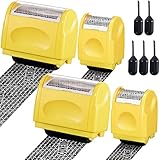
- Personal Information Protection: there are 4 pieces of address blocker roller stamps in 2 different sizes, and 5 pieces of 1.5 ml inks, a total of 9 pieces. Mainly applied to hide information such as social security numbers, bank statements, billing addresses, shipping addresses, tax documents and so on, protecting your personal information
- Re Inking Unlimitedly: the information blocker stamp can cover information of the length about 100 meters. And each security stamper roller has an oil hole, so you don't have to worry about you having to throw away the roller stamps when the ink runs out. They can be refilled with oil for repeated use, saving time and energy
- Cover Fast: our identity protection rollers come in 2 different sizes, and you can choose different sizes according to different areas of information to cover large amounts of private information in a fast and clean way, avoiding identity theft and rejecting privacy disclosure harassment
- Easy to Use: just remove the lid on the ID stamp blocker roller and open it, and then gently slide it on the place where the information needs to be covered. It is suitable for most ordinary paper with black words, and can protect your personal privacy in time
- Save Time and Energy: compared with the shredder, the personal confidential stamp has a small size, easy to carry, can be applied anytime and anywhere. Compared to the marker, it covers a larger area and can be quickly covered with a single swipe. There is no need to worry about whether you can not protect your privacy in time
Through December 31, 2026, consumers may obtain up to six additional Equifax reports during a 12-month period under the Equifax settlement program. If this article is republished after 2026, verify whether that date or benefit has changed by checking the CFPB’s Equifax information.
Independent reader supportYour contribution helps us test, update, and keep practical guides available for everyone.Do you need to freeze specialty consumer reports?
“The three bureaus” does not mean every company that maintains consumer information. Specialty reporting companies provide reports used for purposes such as:
Free tools Windows power users keep installed
One-click scans. No signup required.
- Bank-account and check screening
- Telecommunications and utilities
- Tenant screening
- Employment
- Insurance claims
- Medical information
- Retail-return risk
- Supplementary credit and fraud data
A big-three freeze does not automatically freeze these reports. The CFPB’s consumer-reporting-company list identifies specialty agencies, including Innovis and the National Consumer Telecom and Utilities Exchange, and explains which companies offer reports or freeze options.
Do not freeze dozens of reports indiscriminately. Instead:
- For ordinary new-credit fraud: Start with Equifax, Experian, and TransUnion.
- For bank-account, check, utility, employment, insurance, or tenant-screening concerns: Identify the relevant specialty report and review its freeze or disclosure options.
- If an application is denied: Read the adverse-action notice. It should identify the reporting company that supplied information used in the decision, subject to the applicable notice requirements.
Common problems and how to recover
I froze only one bureau
Problem: You assumed one freeze covered all three reports.
Fix: Return to the official Equifax, Experian, and TransUnion pages. Place the missing freezes and confirm each status individually.
My legitimate loan or credit-card application failed
Problem: The lender could not access a frozen report.
Fix: Ask which bureau or bureaus the lender uses. Temporarily lift the relevant freeze, wait for confirmation, and ask the lender to retry. If the lender may use multiple bureaus, lift all three and refreeze them after the application.
I cannot log in to a bureau account
Fix: Use the bureau’s official account-recovery process or the official phone number listed on its current website. Do not pay a third party to “unlock” your file. Keep records of your attempts. If a bureau fails to place or remove a legally requested freeze, document the interaction and submit a complaint through the CFPB complaint portal.
I see a paid lock or monitoring offer instead of a freeze
Fix: Go back to the bureau’s official page and look specifically for security freeze or credit freeze. Do not assume a paid lock is more secure. A lock is a bureau-specific commercial product with its own terms; the legally protected security freeze is free.
PC Slower Than It Used to Be?
A free scan shows the junk files, broken settings and background clutter dragging Windows down - then fixes them in one click.Free scan · Windows 10 & 11Outdated Drivers Are Slowing You Down
One free scan finds every outdated or missing driver and matches the right update for your exact hardware.Free scan · exact hardware matchI expected the freeze to stop every kind of fraud
Fix: Pair the freeze with bank and card alerts, statement reviews, strong unique passwords, multifactor authentication, and an IdentityTheft.gov recovery plan if fraud has occurred.
I mailed documents to an old address
Fix: Use the current form and mailing address linked from the bureau’s official page on the day you submit the request. Prefer online or phone management when available. If you mail a request, send only the documentation the bureau asks for, retain copies, and consider proof of delivery.
Best Value

- Personal Information Protection: there are 4 pieces of address blocker roller stamps in 2 different sizes, and 5 pieces of 1.5 ml inks, a total of 9 pieces. Mainly applied to hide information such as social security numbers, bank statements, billing addresses, shipping addresses, tax documents and so on, protecting your personal information
- Re Inking Unlimitedly: the information blocker stamp can cover information of the length about 100 meters. And each security stamper roller has an oil hole, so you don't have to worry about you having to throw away the roller stamps when the ink runs out. They can be refilled with oil for repeated use, saving time and energy
- Cover Fast: our identity protection rollers come in 2 different sizes, and you can choose different sizes according to different areas of information to cover large amounts of private information in a fast and clean way, avoiding identity theft and rejecting privacy disclosure harassment
- Easy to Use: just remove the lid on the ID stamp blocker roller and open it, and then gently slide it on the place where the information needs to be covered. It is suitable for most ordinary paper with black words, and can protect your personal privacy in time
- Save Time and Energy: compared with the shredder, the personal confidential stamp has a small size, easy to carry, can be applied anytime and anywhere. Compared to the marker, it covers a larger area and can be quickly covered with a single swipe. There is no need to worry about whether you can not protect your privacy in time
A practical maintenance checklist
- Freeze Equifax, Experian, and TransUnion separately.
- Verify all three statuses instead of assuming completion.
- Use a unique password for each bureau account.
- Turn on multifactor authentication where available.
- Save confirmation emails, screenshots, and recovery instructions.
- Check all three credit reports at AnnualCreditReport.com.
- Monitor existing financial accounts and statements.
- Before applying for credit, ask which bureau the lender will use.
- Schedule a temporary lift when possible.
- Refreeze the report after the lender finishes its credit check.
Frequently Asked Questions
Does freezing my credit hurt my credit score?
No. Placing a security freeze does not itself lower or directly change your score. Your score can still change normally when lenders report payments, balances, late payments, new accounts, or other information.
Do I need to freeze all three credit bureaus?
Yes, if you want the broadest protection from new-account credit fraud. Equifax, Experian, and TransUnion are separate companies, so a freeze at one does not automatically freeze the other two.
What’s actually slowing this PC down?
Pick the symptom - the matching free tool is one click away.
Can I still use my existing credit cards after freezing my credit?
Generally, yes. A freeze mainly restricts prospective creditors from accessing your report for new credit. It does not ordinarily prevent you from using accounts that are already open, although it also does not stop fraud on those accounts.
How long does a credit freeze last?
It remains in place until you temporarily lift it or permanently remove it. Permanent removal is reversible because you can request a new freeze later.
Do I have to unfreeze my credit for a job, apartment, or insurance application?
A big-three freeze does not prevent you from applying for a job, renting an apartment, or buying insurance. Ask the organization which report it will use, however, because employment, tenant, insurance, utility, and other specialty reports may be separate from Equifax, Experian, and TransUnion.
Is a credit lock the same as a credit freeze?
They can have a similar practical effect, but they are different products. A credit lock is generally managed through a bureau account or commercial service and may be bundled with paid products. The federally protected security freeze is free, and the CFPB says a lock is no more effective than a freeze.
What if my lender cannot pull my report?
Ask which bureau or bureaus it uses, temporarily lift those freezes, wait for confirmation, and ask the lender to retry. If the lender will not say which bureau it uses or may check multiple bureaus, lift all three and refreeze them after the application.
Can I freeze my child’s credit?
Yes. A parent, guardian, conservator, or other authorized representative can request a protected-consumer freeze for a child under 16 or certain other protected consumers. Each bureau has separate documentation requirements, and the process often involves mail rather than the ordinary adult online process.
Does a credit freeze stop existing-account fraud or tax identity theft?
No. A freeze is primarily a new-credit control. It does not necessarily stop unauthorized charges on existing accounts, bank-account takeover, debit-card fraud, tax-refund theft, medical identity theft, employment fraud, or utility fraud.
What should I do if identity theft has already happened?
Freeze all three credit reports, contact the fraud department of the affected company, close or secure the account, change passwords and PINs, place an appropriate fraud alert, obtain all three reports, and report the theft at IdentityTheft.gov. Dispute fraudulent information with both the credit bureau and the company that furnished it.
Recommended Free Tools
The Bottom Line
Bottom line: A security freeze is free, reversible, and worth considering even if you have never experienced identity theft. To get the benefit, freeze Equifax, Experian, and TransUnion separately, verify each status, and keep the confirmations. Before applying for credit, ask which bureau the lender uses, temporarily lift only what is necessary, and refreeze the reports when the application is complete. Continue monitoring your reports and financial accounts because a freeze protects mainly against new-account credit fraud—not every form of identity theft.
Quick Recap
Product prices and availability are accurate as of the date/time indicated and are subject to change. Any price and availability information displayed on Amazon at the time of purchase will apply.




