Do these 3 things before closing this tab:
1Fix the driver behind crashes, sound loss and screen glitches2Repair Windows errors before they cause bigger problems3Scan for outdated or missing drivers - takes under a minuteThere is no single international “forex licence”. The authorisation a company needs depends on what it actually does: taking the other side of a customer’s trade, executing orders for clients, managing accounts, operating a trading venue, holding client money, or simply providing software.
For traders, this distinction matters. A company can display a regulator’s logo while lacking permission for the products it sells, the countries it targets, or the website customers are using. The safest check is always the regulator’s official register, matched against the exact legal entity and domain name.


What a forex licence actually covers
Forex trading may involve spot currency, rolling spot forex, CFDs, forwards, futures, options, or other derivatives. Regulators classify these products differently, and the licence required can change depending on whether customers are retail, professional, wholesale, or eligible counterparties.
A business may also need authorisation in each country where it solicits residents. Incorporating a company in one jurisdiction does not normally permit it to market financial products everywhere. Japan’s Financial Services Agency, for example, says that an overseas-licensed firm must still obtain Japanese registration before conducting foreign-exchange business with Japanese residents.
Terms such as ECN, STP, liquidity provider, and white label describe commercial or technical arrangements. They do not, by themselves, remove licensing obligations.
Main types of forex licence
1. Retail forex dealer or market-maker
This is generally the relevant authorisation when a firm is the contractual counterparty to retail customers, quotes leveraged OTC prices, accepts customer margin, or internalises trades.
The dealer may hedge customer positions with banks or other liquidity providers, but the customer’s direct legal relationship is with the dealer. That creates substantial market, credit, liquidity, operational, and client-asset responsibilities.
In the United States, the comparable category is generally a Retail Foreign Exchange Dealer (RFED) registered with the Commodity Futures Trading Commission (CFTC) and an NFA member. An NFA Forex Dealer Member (FDM) acts, or offers to act, as counterparty to certain off-exchange, leveraged or margined foreign-currency transactions with customers who are not eligible contract participants.
U.S. requirements are unusually demanding. NFA rules require an FDM to maintain at least $20 million in adjusted net capital, subject to additional calculations in specified circumstances. NFA reported four RFEDs in its membership totals as of June 30, 2026.
2. Agency broker or execution-only firm
An agency broker transmits or executes customer orders without being the principal counterparty. It may route trades to a liquidity provider, exchange, or other venue.
That model still commonly requires permissions for activities such as:
- dealing as agent;
- arranging or transmitting orders;
- executing orders;
- dealing in derivatives;
- providing investment advice; or
- holding or controlling client money.
“We do not take the other side” is therefore not the same as “we do not need a licence.” In the UK, for example, authorisation is based on the regulated activities and investment types the firm performs.
Recommended Free Tools
3. Introducing broker
An introducing broker (IB) typically markets the service and refers customers to an authorised dealer. It generally does not hold customer funds or act as the principal counterparty.
An IB may nevertheless need permission to introduce or arrange investments, give advice, market financial products, manage customer relationships, or receive transaction-based commissions. In the United States, IB registration is a distinct CFTC/NFA category and does not authorise the firm to operate as an RFED.
4. Investment adviser or portfolio manager
A business that gives personalised trading recommendations or manages customer accounts may require an adviser or portfolio-management authorisation. Examples include:
- discretionary managed forex accounts;
- automatically replicated copy trading;
- personalised trading signals; and
- automated allocation of investor funds.
Calling a service “copy trading,” “trade mirroring,” or “signals” does not determine its legal status. The actual level of discretion, personalisation, and control is what matters.
Crashes, No Sound, or Screen Glitches?
Random freezes, missing sound and display glitches usually trace back to one bad driver. Find and replace yours safely.Free scan · under a minutePC Slower Than It Used to Be?
A free scan shows the junk files, broken settings and background clutter dragging Windows down - then fixes them in one click.Free scan · Windows 10 & 11Rank #2
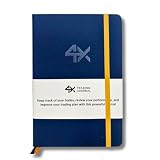
- BUILT FOR YOUR MARKET, FUTURES, STOCKS, FOREX, OPTIONS & CRYPTO: 4X is a mindset and process journal, not a strategy tool tied to one instrument. The plan, the trade log, the deep dive and the weekly review work the same whether you trade ES, EURUSD, SPY or BTC. Traders use it across all five markets every day.
- THE 2026 EDITION, REBUILT FROM TRADER FEEDBACK: Same trusted system, better in every way. An extra daily page for more room to log the session. Weekly reviews now grouped with each week's trades, so no more flipping back and forth. Crisp, darker print that's easy on the eyes after hours on a screen. A Quick-Start QR that scans straight to step-by-step instructions.
- NOT A NOTEBOOK, A COMPLETE 12-WEEK SYSTEM: Start with a one-time 9-part Trading Plan (your market, setups, risk rules and discipline checklist). Then twelve identical weeks: five Daily Logs, five Deep Dive trade pages, and a two-page Weekly Review. 189 guided pages, roughly 80 trades. Guided prompts walk you through every step. You never stare at a blank page.
- RATE YOUR EXECUTION, NOT YOUR RESULT: Your platform tracks the P&L. Nothing tracks the why. Log energy, sleep and mindset before the open; grade every trade A to F on whether you followed your plan, not on whether it won; then face the pattern every weekend with START / STOP / IMPROVE / CONTINUE. That review habit is the edge. You're 42% more likely to hit a goal you've written down.
- BUILT TO LAST, ARRIVES GIFT-READY: Vegan-leather hardcover, 100gsm bleed-resistant paper, two ribbon markers and an elastic closure band. Bound to lay flat so you're not fighting the spine while you write. 189 pages, 5.75" x 8.5", carries in a bag. Ships in a premium gift box: the gift every trader in your life actually wants.
5. Forex fund or pooled investment vehicle
A fund that pools investor money for currency trading is legally different from a broker offering leveraged trades in individual customer accounts. The fund, manager, adviser, administrator, and custodian may each have separate regulatory responsibilities.
Depending on the jurisdiction, the structure may require fund registration or recognition, an investment-manager licence, custody arrangements, offering documents, and specific investor disclosures.
6. Trading venue or matching engine
A business that brings multiple third-party buying and selling interests together may need approval as a regulated market, exchange, multilateral trading facility, organised trading facility, or recognised market operator.
A broker’s internal matching engine is not automatically an exchange. The distinction depends on factors including who can participate, how orders interact, whether the venue has a rulebook, and whether the firm is matching independent third-party interests or simply executing its own customer flow.
7. White-label technology provider
A technology provider may not require a broker licence if it only supplies software, branding, liquidity connections, or back-office services and does not solicit customers, advise them, execute or arrange trades, hold money, or act as principal.
The customer-facing broker remains responsible for the permissions required by its activities. A software or white-label agreement does not transfer that responsibility.
Best forex regulators by market
There is no universal ranking. A regulator that is appropriate for U.S. retail trading may be unsuitable for a wholesale-only business or a firm targeting Japan. The best choice is the authority whose rules cover the firm’s products, customers, custody model, and distribution countries.
United States: CFTC and NFA
Best suited to: firms seeking access to U.S. retail customers and prepared for substantial capital, reporting, supervision, and conduct requirements.
The Tool Desk
Outbyte PC Repair FREEClear out junk files and repair common Windows errorsFree Scan →Outbyte Driver Updater FREEFix the driver behind crashes, sound loss and screen glitchesFind Drivers →Relevant structures include an RFED, an FCM offering retail forex, an Introducing Broker, Commodity Trading Adviser, Commodity Pool Operator, and Forex Dealer Member.
The NFA expects RFED applicants to provide financial filings, capital information, customer-asset arrangements, a compliance framework, and a Chief Compliance Officer who is also listed as a principal. FDMs must maintain assets covering liabilities to retail forex customers at qualifying institutions.
The key consumer point is simple: an “offshore broker” cannot lawfully target U.S. retail customers merely because it is licensed somewhere else. Also, “NFA regulated” is incomplete wording. The firm must have the CFTC/NFA registration category that matches its activity.
United Kingdom: FCA
Best suited to: firms seeking a strong international reputation and access to the UK market under a mature conduct regime.
Quick wins for a faster PC:
Clear out junk files and repair common Windows errorsFree Scan →Scan for outdated or missing drivers - takes under a minuteDriver Scan →Repair Windows errors before they cause bigger problemsFix Now →The Financial Conduct Authority does not issue one product called a “forex broker licence”. A firm applies for specific permissions under the UK’s Financial Services and Markets Act and UK MiFID framework. Possible permissions include:
- dealing in investments as principal;
- dealing in investments as agent;
- arranging deals in investments;
- advising on investments;
- managing investments; and
- holding or controlling client money.
UK retail restrictions apply to CFDs, spread bets, and leveraged rolling spot forex contracts. These include leverage and margin requirements, mandatory risk warnings, and negative-balance protections. The FCA also requires firms offering relevant products to state what proportion of retail CFD accounts lose money.
Do not confuse an FCA authorisation with an EU passport. The UK’s EU passporting framework changed after Brexit, so UK authorisation does not automatically allow unrestricted services throughout the European Economic Area.
Australia: ASIC
Best suited to: firms seeking an Australian Financial Services Licence (AFSL) with clearly defined retail or wholesale permissions.
What’s actually slowing this PC down?
Pick the symptom - the matching free tool is one click away.
An AFSL can cover activities such as financial-product advice, dealing, making a market, custody, derivatives, and foreign-exchange contracts. The relevant authorisations must appear on the licence; holding an AFSL in general is not proof that every forex service is permitted.
ASIC requires licensees to meet licence conditions, competence standards, conduct and disclosure rules, risk-management obligations, and reporting requirements. Retail-facing firms may also need dispute-resolution and compensation arrangements.
ASIC’s CFD product-intervention order is currently scheduled to expire on May 23, 2027, unless it is remade. ASIC’s 2026 timetable said its review work would begin in the third quarter of 2026.
European Union: national regulators under MiFID II
Best suited to: firms needing an EU investment-firm structure and, where available, cross-border services within the EEA.
There is no single EU forex regulator. Authorisations are issued by national competent authorities, including CySEC in Cyprus, BaFin in Germany, the AMF in France, CONSOB in Italy, CNMV in Spain, and the Central Bank of Ireland.
EU retail CFD measures include leverage limits, risk warnings, margin close-out rules, and negative-balance protection. ESMA’s original temporary measure set leverage limits ranging from 30:1 to 2:1 depending on the underlying asset. National regulators have since implemented permanent or continuing measures under their own frameworks.
Country-specific restrictions remain important. Belgium’s FSMA prohibits the distribution to retail consumers through electronic trading platforms of certain leveraged OTC derivatives, including CFDs and rolling spot forex.
A CySEC licence should therefore not be treated as blanket permission to market leveraged forex products to every EU retail customer.
Singapore: MAS
Best suited to: firms targeting Singapore or serving institutional and professional clients from a highly regarded Asian regulatory base.
The relevant authorisation is generally a Capital Markets Services licence for dealing in capital-markets products. The relevant product classification is “Spot Foreign Exchange Contracts for the Purposes of Leveraged Foreign Exchange Trading.”
MAS application materials separately identify business models such as leveraged foreign-exchange dealer, introducing broker, and CFD dealer. The firm’s exact licence and permissions should be checked in the MAS Financial Institutions Directory.
Hong Kong: SFC
Best suited to: firms prepared to meet Hong Kong’s detailed conduct and capital rules.
Free tools Windows power users keep installed
One-click scans. No signup required.
The usual authorisation is Type 3 regulated activity: Leveraged foreign exchange trading. The SFC describes this activity as including rolling spot forex, forwards, and options, generally traded over the counter.
Japan: Financial Services Agency
Best suited to: firms specifically prepared to establish and operate under Japan’s local registration regime.
Japan treats FX margin trading as a derivative transaction under its Financial Instruments and Exchange Act. A foreign licence does not replace Japanese registration when a firm conducts the business with Japanese residents.
Switzerland: FINMA
Best suited to: firms seeking a high-reputation Swiss structure and able to meet substantial prudential requirements.
A Swiss-domiciled online foreign-exchange dealer must hold a banking licence. FINMA also warns that a foreign firm using Swiss addresses or bank accounts can create the appearance of a Swiss branch requiring authorisation.
United Arab Emirates: SCA
Best suited to: firms targeting the UAE mainland under the federal securities regulator.
The UAE Securities and Commodities Authority lists a global markets trading broker activity covering OTC derivatives, OTC commodities contracts, and spot currencies. Its published licensing table specifies paid-up capital of AED 30 million for this category.
This is separate from licences issued by financial-centre regulators such as the DFSA in the Dubai International Financial Centre or the FSRA in Abu Dhabi Global Market.
Free tools Windows power users keep installed
One-click scans. No signup required.
Best Value

- My Trading Journal for Stock Market, Forex, and Crypto: Precisely track and analyze every trade. This log book is essential for improving your trading performance and decision-making skills.
- Comprehensive Day Trading Planner: Record and review 80 guided trades with 8 review sections, perfect for traders aiming to refine their strategies and maximize profits.
- Customizable Trading Setup: Tailor your trading approach by documenting your setups, analyzing results, and adjusting strategies based on market conditions.
- For All Types of Traders: Whether you're trading stocks, forex, or crypto, My Trading Journal supports your unique trading style and helps you achieve consistent success.
- Premium Quality and Durability: Made with high-quality materials, this A5-sized journal is perfect for daily use and designed to withstand the rigors of active trading.
Offshore forex regulators
BVI, Cayman Islands, and Mauritius can be practical for certain international or wholesale structures, but their licences should not be presented as equivalent to the strongest retail regimes.
| Jurisdiction | Relevant framework | Important qualification |
|---|---|---|
| British Virgin Islands | Securities and Investment Business Act investment-business licence | Company incorporation alone is not a forex licence. |
| Cayman Islands | CIMA securities investment business framework | Licensed persons and “excluded persons” do not receive the same regulatory treatment. |
| Mauritius | Investment-dealer categories, including broker, full-service dealer, derivatives, and currency-derivatives activities | The exact category must match the firm’s services and clients. |
An offshore licence does not solve local licensing requirements in the countries where customers live. Its regulatory perimeter and investor protections may also be narrower.
How to verify a forex broker’s licence
- Find the exact contracting entity. Check the legal name in the account agreement, not only the brand name on the website.
- Copy the licence number. Search it directly on the regulator’s official website.
- Check current status. Look for active, suspended, withdrawn, cancelled, or restricted status.
- Read the permitted activities. Confirm that the entry covers dealing, arranging, advising, managing, or custody as applicable.
- Check the products. Permission for securities or payments may not cover leveraged FX derivatives or CFDs.
- Check client categories. A firm permitted for professional clients may not be authorised for retail customers.
- Match the website and trading name. Confirm that the domain and brand are listed or approved.
- Check branches and representatives. An appointed representative or affiliate is not automatically the licensed entity.
- Review restrictions and warnings. Search the regulator’s enforcement and warning notices.
- Confirm who holds your money. The regulated entity named in the register should be the entity contracting with you and receiving funds.
For UK firms, the FCA Financial Services Register is the official public record. For BVI entities, the FSC register shows information such as licence type and status. In Cayman, CIMA distinguishes licensed persons from excluded or registered persons, so a basic company search is not enough.
Regulatory claims that should raise suspicion
- “There is one standard international forex licence.” There is not. Permissions are jurisdiction- and activity-specific.
- “Our offshore licence lets us serve clients worldwide.” Local solicitation and financial-services rules still apply.
- “FCA regulated means EU regulated.” UK authorisation is not an EU MiFID authorisation or automatic EEA passport.
- “STP or ECN means no licence is needed.” Execution terminology does not determine the legal classification.
- “Our company registration is our financial licence.” Incorporation, money-services registration, virtual-asset registration, and investment-services authorisation are different.
- “The regulator’s logo proves we are authorised.” Clone firms copy real names, logos, addresses, and registration numbers.
- “Regulation guarantees profits.” Regulation addresses authorisation, conduct, and prudential controls. It cannot make leveraged forex trading profitable or eliminate losses.
Quick comparison
| Business objective | Regulatory option to investigate |
|---|---|
| U.S. retail forex | CFTC/NFA RFED or FCM structure |
| UK retail forex and CFDs | FCA permissions matching the products and activities |
| EU retail forex and CFDs | Relevant national MiFID regulator, plus country-specific restrictions |
| Australian retail forex | ASIC AFSL |
| Singapore leveraged FX | MAS Capital Markets Services licence |
| Hong Kong leveraged FX | SFC Type 3 |
| Japan retail FX | Japan FSA registration |
| Swiss-domiciled dealer | FINMA banking licence |
| UAE mainland forex | UAE SCA global-markets trading-broker activity |
| Wholesale or institutional business | Depends on products, counterparties, custody, and target countries |
FAQ
Is there one global forex licence?
No. Forex authorisation depends on the firm’s activities, products, customer type, location, and target markets. A licence in one country does not generally authorise solicitation of residents elsewhere.
Do these 3 things before closing this tab:
1Scan for outdated or missing drivers - takes under a minute2Repair Windows errors before they cause bigger problems3Fix the driver behind crashes, sound loss and screen glitchesWhich forex regulator is the best?
For retail credibility, the CFTC/NFA, FCA, ASIC, MAS, SFC, Japan FSA, FINMA, and relevant EU national regulators are among the strongest options. The best regulator for a business is the one whose permissions match its actual model and target customers.
Does an offshore forex licence protect customers?
It may provide some oversight, but the regulatory perimeter, compensation arrangements, capital rules, and enforcement resources can differ materially from major retail regimes. An offshore licence also does not authorise worldwide marketing.
How can I check whether a forex broker is regulated?
Identify the exact legal entity in the broker’s customer agreement, then search that name and licence number in the regulator’s official register. Check the status, approved activities, products, client categories, websites, and any restrictions.
Does an FCA licence cover European Union customers?
Not automatically. UK authorisation is separate from EU authorisation after Brexit. A firm must consider the relevant EU national rules, cross-border permissions, and country-specific product restrictions.
What’s actually slowing this PC down?
Pick the symptom - the matching free tool is one click away.
Does an ECN or STP broker need a licence?
Usually, potentially yes. Whether a firm needs authorisation depends on what it actually does—such as arranging, executing, advising, holding money, or acting as principal—not on its marketing label.
The Bottom Line
The strongest forex licence is not necessarily the cheapest or the most famous. It is the authorisation that accurately covers the firm’s products, execution model, customer type, custody arrangements, and marketing countries.
For consumers, never rely on a logo, licence number, or company-registration certificate alone. Verify the exact contracting entity and its permissions in the regulator’s official register. For businesses, treating an offshore incorporation or white-label arrangement as a substitute for the required financial authorisation can leave a major regulatory gap.
Quick Recap
Product prices and availability are accurate as of the date/time indicated and are subject to change. Any price and availability information displayed on Amazon at the time of purchase will apply.
Quick wins for a faster PC:
Repair Windows errors before they cause bigger problemsFix Now →Scan for outdated or missing drivers - takes under a minuteDriver Scan →Clear out junk files and repair common Windows errorsFree Scan →



