Field peas (Pisum sativum, also called dry peas in some contexts) could help farmers diversify rotations, reduce reliance on applied nitrogen and supply both food and feed markets. They are not a universal fix: the case for growing them depends on local climate, suitable varieties, harvest capacity and a dependable buyer.
Why are farmers considering field peas?
Farmers facing pressure to manage fertilizer costs, water and crop risk are looking at pulses such as field peas as one option within a rotation. Peas can contribute nitrogen to the farming system and provide a break from cereal crops. Whether those benefits translate into lower costs or better returns depends on how the crop performs and what happens after harvest.
The name can be confusing. This article covers field pea, Pisum sativum. In parts of the southern United States, “field pea” can also refer to cowpea (Vigna unguiculata), a different crop.
How do peas affect nitrogen and crop rotations?
As legumes, peas can fix atmospheric nitrogen. Teagasc says this may reduce the need for applied nitrogen in the pea crop and the following crop. The amount of any benefit varies with crop performance, soil, residue management and local practice; these sources do not establish a universal nitrogen credit or fertilizer saving.
Do these 3 things before closing this tab:
1Repair Windows errors before they cause bigger problems2Fix the driver behind crashes, sound loss and screen glitches3Clear out junk files and repair common Windows errors#1 Best Overall
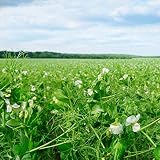
- VERSATILE COVER CROP & GREEN MANURE: Our spring forage peas are ideal for use as cover crops or green manure, enriching the soil by adding nutrients and improving soil structure. These cover crop seeds build soil tilth and humus, making them perfect a field peas, seeds for planting.
- SELF-RESEEDING FOR MULTIPLE HARVESTS: Spring forage peas can be harrowed to reseed once mature, giving you two pea crops for the price of one. This self-reseeding feature helps maximize yield efficiently, reducing the need for replanting. Ideal for maximizing crop output with snap pea seeds, and other cover crops like winter rye.
- NATURAL NITROGEN FIXER & SOIL ENRICHER: Dundale peas are a natural nitrogen fixer, reducing the need for fertilizers and enriching the soil. Their thick foliage breaks down quickly, adding vital nutrients back into the earth. These cover crop seeds are excellent for pea seeds planting, and food plot seeds for deer, supporting both agricultural and wildlife needs.
- MULTI-PURPOSE & HIGH-PROTEIN FORAGE: Perfect for multiple uses, our spring peas are great for forage, wildlife mixes, and green chop. It provides a high-protein option for livestock, while also serving as deer food plot seed or part of cover crop seed mixes. It also produce large amounts of quality biomass and mixes well with cereal grains.
- EASY PLANTING & WILDLIFE ATTRACTION: With a seeding rate of 75-100 lbs per acre or 5 lbs per 1,000 sq. ft., our forage peas are easy to plant and manage. Their fast-growing foliage attracts deer and wildlife, making them an excellent choice for deer food plot seed mixes. Ideal for fall and winter planting in gardens and pastures.
Peas can also act as a cereal break crop. By interrupting some pest and disease cycles, they may benefit crops that follow. That rotational role is one reason to assess peas as part of a sequence of crops rather than as a stand-alone yield or input decision.
Could field peas help in water-limited regions?
In a March 2026 article about Nebraska corn-soybean systems, University of Nebraska–Lincoln researchers describe field peas as early-maturing and relatively low in seasonal water use, with potential as a risk-management option in semi-arid conditions. Those traits may make peas worth considering in some water-limited rotations, but they do not make the crop drought-proof or prove it will outperform alternatives in every dry year.
Rank #2

- Cover Crop - Large premium packet of Austrian Winter Peas (Pisum sativum subsp. arvense) seeds. Winter-hardy and drought-tolerant cover crops can help cover the soil of your home garden beds during the off season. We've included enough seed in one packet to cover an 8' x 4' garden bed. Minimum of 17 g per packet (about 200 seeds).
- Productive - Winter Peas germinate in 7-14 days when soil temps are 55-70°F. Plant 1.5” deep and space 6” apart in an area with full sun. This variety will grow 2-3’ tall with a spread of 6-18”. Pods will mature in 200-210 days (over winter), plant in USDA zones 6-10.
- Soil Health - Austrian Winter Peas are an ideal winter cover crop, withstanding dips in temperatures to 10° F. This rapid growing legume nourishes your soil by fixing nitrogen and adding organic matter. If planted early enough in the fall, pea pods will appear which make for a delicious late-fall-garden snack. Improving soil health through cover crop planting is an easy and low cost way of maintaining your garden from year to year.
- Easy to Grow - Instructions included on each packet. Plus, we are available to answer all your questions. If these seeds don’t germinate, we will happily make it right for you.
- Safe and Sustainable - Our operation is fully solar powered, and Sow Right Seeds has taken the Safe Seed Pledge to sell only fresh Non-GMO heirloom seeds for you and your family.
The regional context matters. The researchers report that 566,667 bushels were harvested from 20,000 acres of Nebraska field peas in 2025, citing a USDA National Agricultural Statistics Service estimate. This is a state-level figure reported by the Extension article, not a direct citation to a NASS table, and it does not establish a broader production trend.
What markets can field peas serve?
Field peas can be grown for animal feed or for human food, but the buyer, grade requirements and processing access must be considered before planting. The UK’s 2024 statistics illustrate the crop’s dual use, not a guaranteed or lasting shift in demand.
Rank #3
- VERSATILE COVER CROP & GREEN MANURE: Our spring forage peas are ideal for use as cover crops or green manure, enriching the soil by adding nutrients and improving soil structure. These cover crop seeds build soil tilth and humus, making them perfect a field peas, seeds for planting.
- SELF-RESEEDING FOR MULTIPLE HARVESTS: Spring forage peas can be harrowed to reseed once mature, giving you two pea crops for the price of one. This self-reseeding feature helps maximize yield efficiently, reducing the need for replanting. Ideal for maximizing crop output with snap pea seeds, and other cover crops like winter rye.
- NATURAL NITROGEN FIXER & SOIL ENRICHER: Dundale peas are a natural nitrogen fixer, reducing the need for fertilizers and enriching the soil. Their thick foliage breaks down quickly, adding vital nutrients back into the earth. These cover crop seeds are excellent for pea seeds planting, and food plot seeds for deer, supporting both agricultural and wildlife needs.
- MULTI-PURPOSE & HIGH-PROTEIN FORAGE: Perfect for multiple uses, our spring peas are great for forage, wildlife mixes, and green chop. It provides a high-protein option for livestock, while also serving as deer food plot seed or part of cover crop seed mixes. It also produce large amounts of quality biomass and mixes well with cereal grains.
- EASY PLANTING & WILDLIFE ATTRACTION: With a seeding rate of 75-100 lbs per acre or 5 lbs per 1,000 sq. ft., our forage peas are easy to plant and manage. Their fast-growing foliage attracts deer and wildlife, making them an excellent choice for deer food plot seed mixes. Ideal for fall and winter planting in gardens and pastures.
| UK dry-pea measure | 2024 figure | Context |
|---|---|---|
| Area | 89,000 hectares | Dry-harvest peas; vining peas are excluded. |
| Average yield | 3.3 tonnes per hectare | UK average in 2024. |
| Estimated production for human consumption | 119,000 tonnes | Compared with 16,000 tonnes in 2023. |
| Estimated production for animal feed | 175,000 tonnes | Some feed volume includes crops intended for human consumption that failed grade. |
These figures are from the UK Department for Environment, Food & Rural Affairs’ Agriculture in the United Kingdom 2024. Weather affected planting and yield that year; early-sown crops and crops on lighter soils fared better in those conditions. That is a description of 2024, not a general planting rule. The change in estimated human-consumption volume between 2023 and 2024 does not, by itself, establish lasting demand or predict prices.
Food-focused winter pea breeding
In December 2022, the USDA Agricultural Research Service announced three winter pea cultivars—MiCa, Dint and Klondike—developed for food uses. The agency described potential processing into protein ingredients, nondairy milk, energy bars, pasta and baked goods. These breeding efforts point to possible food applications; they do not establish current commercial acreage or market share.
Rank #4
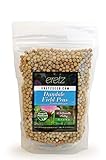
- REVIVES SOIL adding needed attributes, fertile matter, and humus to soil
- DROUGHT TOLERANT and highly adaptable to various soils
- EXCELLENT cover crop, animal food, or till-in green manure
- GOOD FOR BOTH domestic and wildlife food plots yielding high protein content
- AUTHENTIC Willamette Valley, Oregon USA grown seed!
Discussing winter peas in a winter-wheat–summer-fallow rotation, USDA ARS geneticist Rebecca McGee said, “With a typical rotation of winter wheat–summer fallow, farmers really need a broadleaf crop to improve the sustainability of the system.” She also said, “Fall-sown, food quality, winter peas are poised better to fill that gap biologically and economically.” The latter was her assessment at the time of the 2022 release, not evidence of a verified economic outcome today. Read the USDA ARS release.
Independent reader supportYour contribution helps us test, update, and keep practical guides available for everyone.What can prevent field peas from expanding?
A useful crop on paper still has to fit the farm’s calendar, equipment and market. Teagasc’s Irish guidance describes peas as suited to the climate, while identifying wet harvest conditions as a risk: they can reduce harvesting capacity and increase crop losses. Growers may limit the area planted to ensure they can harvest it in time.
Windows Errors? Fix Them Before They Spread
Repair common Windows errors and clear accumulated junk for a smoother, more stable PC - no reinstall needed.Free scan · no reinstallCrashes, No Sound, or Screen Glitches?
Random freezes, missing sound and display glitches usually trace back to one bad driver. Find and replace yours safely.Free scan · under a minuteBest Value

- Top-Set Pods for Clean Harvests: Concentrated pod set on compact, semi-vining plants keeps pods clean to pick. 8" pods turn purple at maturity. Also known as Field peas, cowpeas (purple hull peas seeds) — ideal vegetable seeds for tidy beds.
- Reliable, Fast Production: 65 days to maturity; pods shell easily when full. These peas seeds germinates in 7–10 days at 65°F+. Suits bush purple hull peas growers; heirloom seeds for productive summer rows.
- Sweet, Creamy Flavor: Cream-colored peas with smooth texture and earthy taste. Use fresh, canned, or dried. Standout among crowder peas and cowpeas; versatile garden seed for family meals and markets.
- Space-Smart Planting: Direct sow Purple hull pea seeds for planting 1" deep; seed spacing 3–4". Double rows 6" apart, with 3–4 ft between sets for yield in full sun. Perfect for Peas & Beans lovers.
- Heat & Drought Tolerance: Thrives in warm conditions; drip irrigation helps steady yields. USDA Zones 2–11. Dependable cowpea seeds and field pea seeds — reliable vegetable seed for home or market.
Teagasc also identifies limited human-food markets, harvest challenges and relatively weak breeding and agronomy support as constraints on expanding production in Ireland. Those are Irish conditions and should not be treated as a measure of market availability elsewhere. In any region, a crop’s potential depends on arrangements that exist locally, not merely on the fact that peas can serve both food and feed markets.
How should a grower assess whether peas fit?
Compare the crop with the alternatives available for the same rotation slot. No single cultivar or profitability ranking is established across regions.
- Climate and sowing window: Check local suitability, the timing of sowing and the risk of wet conditions at harvest. Winter hardiness and disease fit vary by cultivar and region.
- Buyer and end use: Confirm whether a processor or feed buyer is accessible, what grade or quality specifications apply, and whether a contract or other reliable route to market is available.
- Rotation and nitrogen: Consider the likely break-crop role and possible nitrogen effects on the pea crop and its successor, without budgeting a fixed saving unsupported by local guidance.
- Harvest capacity: Assess machinery, labor, harvest timing and any drying needs against the farm’s capacity and other crops’ demands.
- Seed and cultivar: Match variety traits to the crop’s purpose, planting window, local disease pressures and market requirements. Confirm regional availability and advice with a qualified local supplier or agronomist.
Field peas also have uses as forage, hay, silage, grain and green manure, as described in the University of California, Davis SARE Field Pea profile. Those options broaden the crop’s potential role, but the profile draws on historical studies; results from any particular study should not be assumed to transfer directly to a modern farm or another region.
Quick Recap
Product prices and availability are accurate as of the date/time indicated and are subject to change. Any price and availability information displayed on Amazon at the time of purchase will apply.
The Tool Desk
Outbyte PC Repair FREERepair Windows errors before they cause bigger problemsFix Now →Outbyte Driver Updater FREEFix the driver behind crashes, sound loss and screen glitchesFind Drivers →



