The Tool Desk
Outbyte Driver Updater FREEFix the driver behind crashes, sound loss and screen glitchesFind Drivers →Outbyte PC Repair FREERepair Windows errors before they cause bigger problemsFix Now →Coinsurance is the percentage of an allowed cost for covered care that you pay, generally after meeting the applicable deductible. For example, with 20% coinsurance on a $100 allowed office-visit amount, you pay $20 and the insurer pays $80 once the deductible is met. Before then, you may owe the full $100 allowed amount. Your plan’s rules, the service, and whether the provider is in network determine how the calculation applies.
How coinsurance works
Coinsurance is your percentage share of the cost of a covered health care service. It is a cost you incur when you use care, not a recurring payment to keep your insurance active. The rate can differ by service or benefit, so a plan’s coinsurance percentage is not necessarily the same for every bill.
As an Amazon Associate I earn from qualifying purchases.
- Check the deductible. You generally pay covered costs up to the applicable deductible before coinsurance begins. Some services are covered before the deductible, and some plans have separate deductibles for particular services or prescriptions.
- Find the applicable allowed amount. Coinsurance is calculated using the amount recognized under the plan’s terms—not automatically the provider’s full billed charge.
- Apply your percentage. If the deductible is met and your share is 20% of a $100 allowed amount, you owe $20 and the insurer’s share is $80.
- Track qualifying spending. Deductibles, copayments, and coinsurance for covered in-network care generally count toward the applicable out-of-pocket maximum. Once you reach it, the plan pays 100% of covered in-network benefits subject to that limit for the rest of the plan year.
HealthCare.gov defines the allowed amount as the maximum the plan will pay for a covered service. A provider may bill more than that amount, and the excess may not count toward your out-of-pocket maximum. Check your plan’s terms for how a particular service and provider are treated. HealthCare.gov: Coinsurance and HealthCare.gov: Allowed amount.
Recommended Free Tools
Coinsurance examples
$100 allowed office visit
HealthCare.gov’s example uses a $100 allowed office-visit amount and 20% coinsurance. After the deductible is met, 20% of $100 is $20, so the member pays $20 and the insurer pays $80. Before the deductible is met, the member pays the full $100 allowed amount in this illustration. These figures explain the arithmetic; your plan may apply different rates or coverage rules. HealthCare.gov: Coinsurance.
#1 Best Overall

- Pack of 500 Sheets - New Health Insurance Claim Forms, 2012 Approved Version
- 1-Part 8-1/2" X 11" Laser Form CMS-1500, Printed in Red Ink
- Required for Healthcare Providers to Bill Patients' Insurance Companies for Reimbursement
- Latest HCFA / CMS 1500 Claim Form (Approved OMB-0938-1197)
- Made in the USA by Next Day Labels TM - 100% Guaranteed
$12,000 in allowable costs
In another HealthCare.gov illustration, the plan has a $3,000 deductible, 20% coinsurance, and a $6,850 out-of-pocket maximum. The member first pays $3,000 toward the deductible. Of the remaining $9,000 in allowable costs, 20% is $1,800, making the member’s deductible-plus-coinsurance total $4,800 before considering other qualifying cost sharing. If qualifying spending reaches $6,850, the member pays no more for covered services subject to that limit for the rest of the plan year. These are example plan terms, not universal amounts. HealthCare.gov: Out-of-pocket maximum/limit.
One visit before and after the maximum
HealthCare.gov also illustrates a Marketplace plan with a $1,500 deductible, 20% coinsurance, and a $5,000 out-of-pocket maximum. In that example, a $125 office visit costs the member $125 before the deductible is met, $25 after it is met, and $0 after the member reaches the maximum, assuming the visit is covered and subject to that limit. Actual charges depend on the service and plan terms. HealthCare.gov: How to save on monthly premiums.
Rank #2
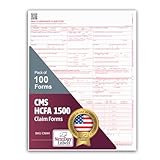
- 1-Part 8-1/2" X 11" Laser Form CMS-1500 printed in red ink
- Required for health-care providers to bill a patient's insurance company for reimbursement.
- New Version 02/12 (APPROVED OMB-0938-1197)
- Medicare now accept this Version 02/12 only.
- For Laser and Inkjet Printers, Made in USA by Next Day Labels TM
Coinsurance, copays, deductibles, and premiums
| Term | What it means | How it relates to coinsurance |
|---|---|---|
| Coinsurance | A percentage of the applicable cost for covered care. | Your share is calculated as a percentage under the plan’s rules. |
| Copayment (copay) | A fixed dollar amount for a covered service. | A copay is not a percentage; plan rules may use copays for some services and coinsurance for others. HealthCare.gov: Copayment. |
| Deductible | An amount you generally pay for covered services before the plan begins sharing costs. | Coinsurance commonly applies after the applicable deductible, though some benefits are covered earlier or have separate deductibles. HealthCare.gov: Deductible. |
| Premium | The amount paid to maintain insurance coverage. | It is separate from cost sharing when you receive care and generally does not count toward the out-of-pocket maximum. HealthCare.gov: Premium. |
What counts toward the out-of-pocket maximum?
The out-of-pocket maximum limits qualifying cost sharing under the plan for covered care. Deductibles, copayments, and coinsurance for covered in-network services generally count toward the applicable limit. After you reach it, the plan pays 100% of covered in-network benefits subject to that limit for the remainder of the plan year.
Quick wins for a faster PC:
Scan for outdated or missing drivers - takes under a minuteDriver Scan →Repair Windows errors before they cause bigger problemsFix Now →Fix the driver behind crashes, sound loss and screen glitchesFind Drivers →Premiums, noncovered services, out-of-network care, and amounts above the plan’s allowed charge generally do not count. Because plan rules and network arrangements matter, verify what counts for the service you expect to use. HealthCare.gov: Out-of-pocket maximum/limit.
Rank #3

- Each Shrink Wrapped Package contains 500 sheets and are completely in compliance with NUCC Standards
- These CMS 1500 Claim Forms are 1 Part 8 1/2"x11" Laser Sheet on laser grade bond/offset paper
- All hcfa 1500 claim forms are Printed in OCR Red ink and will align perfectly with your software
- Our Forms are the Approved OMB-0938-1197 current 02/12 revision and were developed from the NUCC
- Our CMS 1500 Insurance Claim forms are produced in the USA using robust 20# laser and inkjet compatible paper manufactured for high speed processing
How to compare coinsurance when choosing a plan
A lower coinsurance percentage does not by itself mean a plan will cost less over the year. Compare the premium and likely care costs together, including the deductible, copays, service-specific coinsurance, network, and out-of-pocket maximum. HealthCare.gov’s plan example notes that estimated costs depend on the care used. HealthCare.gov: How to save on monthly premiums.
- Monthly and annual premiums.
- Individual and family deductibles, including separate medical or prescription deductibles.
- Coinsurance rates by service, and whether they apply before or after a deductible.
- Copays and services covered before the deductible.
- In-network and out-of-network rules for the providers and facilities you may use.
- Individual and family out-of-pocket maximums, and which costs count toward them.
- Your expected services and prescriptions, rather than one coinsurance percentage in isolation.
Review the plan’s Summary of Benefits and Coverage or ask the insurer what allowed amount, network rules, and cost-sharing terms apply to a service you expect to need.
Rank #4
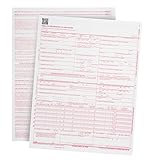
- Easily get reimbursed by insurance companies with Current 02/2012 version CMS-1500 Forms (OMB-0938-1197) that are 100% compliant with HIPAA with all correct content, Red ink, and 1 Part printing style
- All printed fields will our hicfa form 1500 align with the correct boxes when using your templates or billing software with our consistently high quality forms that are manufactured in the USA
- Thick 20 LB paper that easily feeds through both Laser and Ink Jet printers
- 100 % compliant with HIPAA Act with all forms printed in the USA by US government certified printers
- CMS-1500 forms are required for health care providers to receive reimbursements for clients, Medicare begin accepting the NEW 02/2012 version in January of 2014 and now only Accepts this version
What to check on a bill
If your share seems different from a simple percentage calculation, check the explanation of benefits and plan documents for the deductible status, the allowed amount, the coinsurance rate for that service, and the provider’s network status. Also check whether the service was covered and whether another deductible or benefit rule applies. The provider’s billed charge alone may not be the amount to which your coinsurance applies.
Quick Recap
Best Value
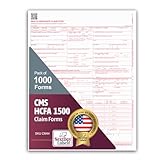
- Box of 1,000 Sheets - New Health Insurance Claim Forms, 2012 Approved Version
- 1-Part 8-1/2" X 11" Laser Form CMS-1500, Printed in Red Ink
- Required for Healthcare Providers to Bill Patients' Insurance Companies for Reimbursement
- Latest HCFA / CMS 1500 Claim Form (Approved OMB-0938-1197)
- Made in the USA by Next Day Labels TM - 100% Guaranteed
Product prices and availability are accurate as of the date/time indicated and are subject to change. Any price and availability information displayed on Amazon at the time of purchase will apply.




