Recommended Free Tools
On a typical U.S. personal check, the routing number identifies the financial institution, the account number identifies the checking account, and the check number identifies the individual check. The other fields state who should be paid, how much, when the payment was issued, and who authorized it.
This guide shows the front and back of a check, explains every visible field, walks through writing and endorsing one, and covers postdated, old, altered, forged, mobile-deposited, and apparently “cleared” checks. Business checks, cashier’s checks, certified checks, payroll checks, Treasury checks, money orders, and checks from other countries can use different layouts, rules, or security features.
How a check works
A personal check is a written order from the account holder to the account holder’s bank to pay a named recipient from the account. In the terminology used for checks:
- Drawer: the person or organization writing and signing the check.
- Payee: the person or organization to be paid.
- Drawee or paying bank: the bank that holds the drawer’s checking account and is asked to pay the check.
- Depositary bank: the bank or credit union where the payee deposits or cashes the check.
- Endorser: a person who signs the back, usually to deposit, cash, or transfer the check.
Under U.S. commercial law, a check generally falls within the legal framework for negotiable instruments, although the exact rules come from state versions of the Uniform Commercial Code. See the Cornell Law School overview of checks and UCC § 3-104 for the legal definitions.
The Tool Desk
Outbyte PC Repair FREERepair Windows errors before they cause bigger problemsFix Now →Outbyte Driver Updater FREEScan for outdated or missing drivers - takes under a minuteDriver Scan →#1 Best Overall

- Superior Stitching Lining: We carefully selected premium leather for this Casmonal checkbook cover. Skilled artisans pour their expertise into every detail, ensuring exceptional quality in each product.
- Functional Slots: This thoughtfully designed checkbook wallet features ample compartments for checks, registers, and bills. Plus, it includes multiple sections to meet your everyday needs.
- Slim Classic Design: With its sleek and straightforward design, this checkbook cover effortlessly complements your daily outfits and suits any occasion, making it a favorite among buyers of all ages.
- Versatile Usage Scenarios: This checkbook cover is perfect for storing credit cards, cash, receipts, checks, and other everyday essentials, making it ideal for your daily travel needs.
- Great Gift Idea: Delight your loved ones with a stylish checkbook cover! Merging elegance with functionality, it’s the perfect gift to keep their checks secure and organized—ideal for those who appreciate both practicality and sophistication.
Annotated anatomy of a typical personal check
The following diagrams are simplified illustrations, not a reproduction of any particular bank’s check. The printed field names and your bank’s instructions take priority over the location shown here.
┌─────────────────────────────────────────────────────────────────────────┐
│ 1  Account holder name and address          2  BANK NAME / LOGO          │
│                                             3  Check no. 1042            │
│ 4  Date: August 10, 2026                                             │
│                                                                         │
│ 5  Pay to the order of:  Example Utilities                             │
│                                                6  $ 125.00              │
│ 7  One hundred twenty-five and 00/100 dollars                           │
│                                                                         │
│ 8  Memo: August service                         9  Signature             │
│                                                                         │
│ 10 Fractional routing number (if printed)                               │
│                                                                         │
│ 11 MICR line:  12 Routing no.  |  13 Account no.  |  14 Check serial no.│
└─────────────────────────────────────────────────────────────────────────┘
┌─────────────────────────────────────────────────────────────────────────┐
│                         ENDORSE HERE                                    │
│                                                                         │
│  Endorsement area:                                                     │
│  For deposit only                                                       │
│  Example Utilities                                                      │
│                                                                         │
│  Bank-processing area: reserved for financial-institution processing    │
│  and endorsements or markings                                           │
└─────────────────────────────────────────────────────────────────────────┘
The back may show wording such as Endorse here, a box for the recipient’s signature, and an area reserved for bank processing. A bank may require different wording for a mobile deposit, so follow the instructions in the bank’s app and deposit agreement.
Parts of the front of a check
| Part | Typical location | Purpose | Usually completed by |
|---|---|---|---|
| Account holder information | Upper left | Identifies the person or organization associated with the account | Printed by the bank or check printer |
| Bank name or logo | Upper left or center-left | Identifies the institution named on the check | Printed |
| Check number | Upper right and sometimes the MICR line | Identifies the individual check for tracking and reconciliation | Printed |
| Date | Upper right | Dates the check | Writer |
| Payee | Center-left | Names the person or organization entitled to payment | Writer |
| Numeric amount | Box on the right | States the amount in figures | Writer |
| Written amount | Long line below the payee | States the amount in words | Writer |
| Memo | Lower left | Records a purpose, invoice number, or other reference | Writer; often optional |
| Signature | Lower right | Authorizes the drawer’s payment order | Authorized signer |
| Routing, account, and check numbers | Bottom MICR line | Directs and identifies the payment during processing | Printed |
For a bank’s typical visual layout, compare the Chase guide to writing a check. Fonts, spacing, logos, and exact placement differ among banks and check printers.
1. Account holder’s name and address
The upper-left area usually contains the account holder’s name and mailing address. Some checks also show a telephone number or other contact information. This information identifies the person or organization connected with the checking account; it is not the account number.
What’s actually slowing this PC down?
Pick the symptom - the matching free tool is one click away.
An old address does not automatically invalidate an otherwise valid check. A bank or payee may use the printed address as one piece of verification, but the account and authorization information are more important to processing.
2. Bank name or logo
The bank’s name or logo helps identify the institution on which the check is drawn. It is not, by itself, proof that the check is genuine, and it is not a substitute for verifying the routing number. The bank printed on the check is also not necessarily the bank where the recipient deposits it: the payee can deposit a check drawn on Bank A into an account at Bank B.
3. Check number
The check number is the serial number assigned to that particular check. It is commonly printed in the upper-right corner and may also appear in the bottom MICR line.
Use it to:
- record the check in a check register;
- match the paper check to an online-banking transaction or statement;
- spot a missing or stolen check in a sequence; and
- identify the item when asking the bank about a stop-payment order.
The check number is not the account number and does not normally identify the bank. Its length and placement vary. A number printed at the top may not appear next to the corresponding check-serial information in the MICR line.
Quick wins for a faster PC:
Fix the driver behind crashes, sound loss and screen glitchesFind Drivers →Clear out junk files and repair common Windows errorsFree Scan →4. Date line
The date line tells the bank and payee when the check was dated or issued. Write a complete, unambiguous date when practical—for example, August 10, 2026 rather than a date format that could be read two ways.
There are three common situations:
- Current-dated check: generally intended for immediate use.
- Postdated check: dated for a future day.
- Undated check: missing a date and potentially subject to bank procedures and applicable law.
A future date does not automatically prevent early payment. The Consumer Financial Protection Bureau explains that a bank or credit union may cash a postdated check before its date. Effective notice to the bank, the bank’s procedures, and state law can matter; do not rely on the date alone to delay payment.
5. Payee line
The words Pay to the order of identify who is supposed to receive the money. Write the recipient’s complete and correct name. For a bill, use the exact payee name requested by the creditor. If you are paying a business, trust, landlord, government agency, or joint payees, ask the recipient how the name should appear.
When a check is payable to two people, wording can matter. A check payable to A and B may require both people’s endorsements, while A or B may be treated differently under applicable law and bank policy. If the wording is unclear, ask the depositary bank before signing or depositing it.
Free tools Windows power users keep installed
One-click scans. No signup required.
Do not leave the payee line blank unless you deliberately understand the risk. Writing Cash, or leaving the payee blank, can make the check bearer-like: whoever possesses it and successfully presents it may be able to negotiate it. Naming a specific person or organization is safer. See Cornell’s explanation of bearer paper.
6. Numeric amount box
Enter the payment amount in figures in the small box on the right. Include a dollar sign if the check does not already print one, a decimal point, and two digits for cents:
$20.00$1,250.50$0.75
Write the digits toward the left side of the box and fill unused space where practical. This makes it harder—but does not make it impossible—for someone to add digits. Never sign a check while this box is blank.
7. Written amount line
Spell out the amount on the long line below the payee. Cents are commonly written as a fraction over 100:
$20.00: Twenty and 00/100 dollars$1,250.50: One thousand two hundred fifty and 50/100 dollars$0.75: Seventy-five cents
The written amount supplies a second representation of the payment and can make a handwritten number easier to interpret. Complete the line carefully and draw through a large unused space when appropriate.
Under the general rule in UCC § 3-114, words prevail over numbers if the two representations conflict. The CFPB gives the same general explanation for consumers. That rule is not a reason to submit a mismatched check: a discrepancy can lead to delay, rejection, a dispute, or a fraud investigation. The writer should void the check and prepare a replacement; the recipient should contact the issuer before depositing it.
Rank #2

- Premium Material: We chose high-quality microfiber synthetic leather for the Casmonal checkbook cover, ensuring it is both durable and soft to the touch.
- Elastic Band: Tired of your checkbook not closing properly? This elastic band design effectively addresses that issue, ensuring the security of your checkbook, register, cash, and other important identification documents.
- Slim Compact Size: Measuring 7.0 x 3.74 x 0.47 inches, this checkbook cover is perfectly sized for standard American checks and registers. It fits easily in briefcases or crossbody bags without taking up too much space, making it ideal for everyday use.
- Multifunctional Design: The left and right sides securely hold standard-sized top and side-tear checks. It features two compartments for your register, cash, or receipts, a central pen holder, and a clear PVC divider to protect the carbon copies of your checks while you fill them out.
- Versatile Usage Scenarios: This checkbook cover is perfect for storing credit cards, cash, receipts, checks, and other everyday documents, making it ideal for your daily travel needs.
8. Memo line
The memo line is usually an optional reference field. You can write:
- a rent month;
- an invoice or account reference;
- the purpose of a reimbursement or gift; or
- an internal bookkeeping note.
The memo is not a replacement for the payee, amount, or signature. Avoid the absolute claim that it can never have legal significance: its effect can depend on the transaction and applicable law. For ordinary household recordkeeping, treat it as a useful reference rather than the operative payment instruction.
9. Signature line
The drawer signs on the front, usually at the lower right. A check generally needs the signature of the account holder or another authorized signer before the bank can pay it. The signature should be consistent with the bank’s records, but banks use their own verification procedures and do not necessarily compare every signature by eye.
Sign only after the payee and both amount fields are complete. Never sign a blank check. A signed check with a blank payee or amount gives another person an opportunity to complete the payment order.
10. Fractional routing number
Some checks show a fractional routing number near the upper-right area. It is an older or alternative representation of the bank’s routing information. The Federal Reserve’s routing-number guidance describes both a fractional form and the nine-digit form printed in the MICR line.
Most consumers do not need to calculate a nine-digit routing number from the fraction. If the MICR line is unreadable or the number is needed for an electronic transaction, confirm it with the bank.
Outdated Drivers Are Slowing You Down
One free scan finds every outdated or missing driver and matches the right update for your exact hardware.Free scan · exact hardware matchWindows Errors? Fix Them Before They Spread
Repair common Windows errors and clear accumulated junk for a smoother, more stable PC - no reinstall needed.Free scan · no reinstallWhat the numbers on a check mean
Routing number: identifies the financial institution
A routing number—also called an ABA routing number or routing transit number—is generally a nine-digit identifier for the financial institution on which the check is drawn. On a common personal check, it is the first nine-digit group along the bottom left.
The routing number directs the payment system to the appropriate institution. It works with the account number to identify where a transaction should be posted, but it does not identify your individual account: many customers can share the same routing number.
There is an important qualification. Federal Reserve rules recognize payable-through checks, where the routing number printed on the check can identify the payable-through bank rather than the institution ultimately responsible for payment. For ordinary consumer checks, “the bank identified by the routing number” is a useful explanation, but “always the final paying bank” is too broad. The Federal Reserve’s routing-number guide explains the exception.
Which routing number should you use?
Do not assume the routing number printed on a check is correct for every kind of electronic transfer. A bank may use different routing numbers for:
- paper checks;
- ACH payments and direct deposits; and
- domestic wire transfers.
Some institutions use the same number for multiple services; others do not. For example, Bank of America lists separate routing-number categories, and Chase explains that wire and checking or savings routing numbers may not be the same. Use the number supplied by your bank for the specific transaction instead of automatically copying the number from a check.
Account number: identifies the checking account
The account number identifies the specific checking account from which the check is drawn. It is distinct from the routing number:
- the routing number identifies the institution;
- the account number identifies the particular account at that institution; and
- the check number identifies the individual paper check.
Account-number length varies by bank. It is commonly the middle group on a check’s MICR line, but it can appear in a different order or be separated by processing symbols. Do not use the number on your debit card as your checking-account number. The debit-card number identifies the card, not the deposit account shown in the MICR line.
Your account number is sensitive financial information. A check exposes it because that information is needed for payment processing. Avoid posting an unredacted check online, and use a secure bank portal—not an open email or public form—when providing account details for direct deposit or electronic payments. Capital One’s explanation of account numbers on checks provides a typical example.
Do these 3 things before closing this tab:
1Clear out junk files and repair common Windows errors2Fix the driver behind crashes, sound loss and screen glitches3Repair Windows errors before they cause bigger problemsCheck number: identifies the individual check
The check number is the serial number assigned to one item in your checkbook sequence. It helps you reconcile your account, identify a missing check, match a transaction to your statement, and describe an item in a stop-payment request.
It is not a bank identifier and is not your checking-account number. The check number commonly appears in the upper-right corner and may also be included at one end of the MICR line. Its position and number of digits vary.
MICR line: the machine-readable line at the bottom
MICR stands for Magnetic Ink Character Recognition. The MICR line is the machine-readable line near the bottom edge of a check. It commonly contains the routing number, account number, and check serial number, and may contain an amount or other processing information.
The Federal Reserve’s definition of the MICR line describes the types of information it can contain. The exact order and special symbols vary by check format, which is why the familiar left-to-right sequence should be treated as typical rather than universal.
Rank #3

- Classic Design: Our checkbook cover is crafted from high-quality PU leather and features a timeless, elegant design, catering to the refined taste of sophisticated men and women who appreciate style and grace.
- RFID Blocking for Security: With built-in RFID blocking technology, this checkbook cover safeguards your sensitive information from electronic theft, providing peace of mind for your personal and financial data security.
- Organized and Practical: The checkbook cover offers multiple compartments, thoughtfully designed to hold checks, registers, and bills. It ensures that everything stays organized and easily accessible for the busy individual on-the-go.
- Compact & Lightweight for Everyday Use: Designed to accommodate standard personal and business checks, our checkbook cover is slim and lightweight, allowing you to carry it effortlessly in your purse or handbag without adding bulk.
- Thoughtful Gift: This elegant and functional checkbook cover makes a perfect gift idea for the discerning people in your life. Surprise them with this stylish and practical accessory on birthdays, holidays, or any special occasion.
The MICR line is normally printed with magnetic ink for automated processing. Under Federal Reserve Check 21 guidance, the rest of the check generally does not need magnetic ink. A smudged or damaged MICR line may cause manual handling, delay, or rejection, but no single mark automatically invalidates every check.
Typical number order—and why it can mislead you
Many personal checks show the groups at the bottom in this approximate order:
021000021    1234567890    1042
routing no. account no.   check no.
The figures above are fictional examples only. The nine-digit group is the routing number in this illustration, the longer middle group is the account number, and 1042 is the check number. However, another check may place the check serial number before or after the account number, include additional processing data, or use spacing that makes the groups difficult to distinguish.
Use these checks instead of position alone:
- Look for the nine-digit group; that is generally the routing number.
- Compare the check number at the upper right with a number in the MICR line.
- Use your bank’s sample or contact the bank to identify the remaining group as the account number.
- For ACH or wire instructions, use the bank’s instructions for that payment type.
Bankrate’s check-number guide also notes that the account and check numbers can change order.
How to write a personal check correctly
- Start with an unused check. Use a blank check from the correct checking account. Do not use one that is damaged, altered, partially completed, or already marked VOID.
- Write the date. Use a complete, unambiguous date. Do not assume a future date will prevent the bank from processing the check early.
- Name the payee. Write the full, correct name of the person or organization. Do not leave the payee blank and do not write Cash unless you intentionally accept the bearer-like risk.
- Enter the numeric amount. Write the dollars and cents in the box, such as
$125.00. Put the digits toward the left and fill unused space where practical. - Spell out the amount. Write the same amount in words on the long line. For $125.00, write One hundred twenty-five and 00/100 dollars. Draw through substantial unused space when appropriate.
- Add a memo. Record the purpose, month, invoice number, or other reference if useful. The memo is commonly optional.
- Sign the check. Sign on the front using an authorized signature. Do this only after the payee and both amount fields are complete.
- Record the payment. Note the check number, date, payee, amount, purpose, and updated running balance in a register or reliable digital record.
For additional examples, see Chase’s check-writing instructions and Capital One’s amount examples.
Completed fictional example
Suppose you owe a utility company $125 for an August bill. A properly completed check would contain:
- Date: August 10, 2026
- Payee: Example Utilities
- Numeric amount: $125.00
- Written amount: One hundred twenty-five and 00/100 dollars
- Memo: August service
- Signature: the authorized account holder’s signature
Do not use real account, routing, or personal information in examples or public photographs.
How to endorse and deposit a check
Endorsement normally happens on the back of the check. Do not sign the back until you are ready to deposit or cash it, because an unrestricted signature makes the check easier to negotiate if it is lost.
Blank endorsement
A blank endorsement is generally the recipient’s signature alone. It is convenient at a teller window or during some deposits, but it is less restrictive: the check may become payable to whoever possesses it and can successfully present it.
Restrictive endorsement
A common restrictive endorsement is:
For deposit only[payee’s signature]
This directs the check toward deposit rather than cashing. Some banks may ask for an account number, but do not add unnecessary sensitive information unless your bank instructs you to do so. Read the bank’s endorsement requirements, particularly for joint payees and checks payable to a business.
Chase illustrates common endorsement types in its guide to endorsing a check.
Mobile deposit
For a mobile deposit:
- Open your bank’s official mobile app.
- Read the app’s endorsement instructions before signing.
- Write the required wording in the endorsement area and sign as instructed.
- Photograph the front and back clearly, with all four corners visible if requested.
- Confirm the deposit account and amount.
- Submit the deposit and save the confirmation.
- Keep the paper check until the deposit has posted and any applicable hold has expired.
- Destroy the paper securely afterward according to your bank’s instructions.
Many institutions request wording such as For mobile deposit only, but that phrase is not a universal requirement. The app and your deposit agreement control. Chase’s mobile-deposit guidance and the CFPB’s mobile-banking safety tips provide examples.
Quick wins for a faster PC:
Fix the driver behind crashes, sound loss and screen glitchesFind Drivers →Clear out junk files and repair common Windows errorsFree Scan →Scan for outdated or missing drivers - takes under a minuteDriver Scan →Never deposit the same check twice. Do not submit it by mobile app after depositing it at a branch, and do not give it to another bank after a successful mobile deposit. A duplicate deposit can result in a returned item, account restriction, or fraud investigation.
Funds being available is not the same as final payment
Federal law regulates when banks generally must make certain deposited funds available, but availability timing is not a guarantee that the check is authentic or that the paying bank has finally honored it. Banks can also apply exception holds based on the deposit, account history, new-account status, or other circumstances.
As of August 10, 2026, the Federal Reserve identifies the current version of Regulation CC as amended effective July 1, 2025. The inflation-adjusted threshold used in certain new-account and large-deposit rules is $6,725. That figure does not mean every check over $6,725 receives the same hold, and it does not create one universal hold time. The applicable timing depends on the deposit type, account age, channel, bank policy, exception rules, and law. See the Federal Reserve’s Regulation CC page, its exception-hold rules, and the July 1, 2025 inflation-adjustment announcement.
The FTC warns that counterfeit checks can appear to clear or show as available and still be identified as fraudulent later. If you send money to someone before that happens, your bank may remove the deposit and require you to repay the shortfall.
Fraud and privacy risks
Recognize the fake-check scam pattern
A common scam works like this:
- An unknown person sends you a check.
- The check is for more than you expected.
- The sender tells you to deposit it and return the excess.
- You send money by wire, gift card, cryptocurrency, cash, or a payment app.
- The check is later rejected or exposed as fraudulent, leaving you responsible for the money you sent.
Fake checks may look like personal checks, business checks, cashier’s checks, money orders, or electronic checks. They can use a real bank’s name or information from a real stolen account. The FTC’s fake-check scam guidance gives the practical rule: never send money, gift cards, cryptocurrency, or a wire transfer in response to an unexpected check that overpays you.
A familiar logo, watermark, routing number, or check layout does not prove authenticity. Behavioral warning signs—an unexpected payment, overpayment, urgency, secrecy, or a request to send money back—are often more useful than visual inspection alone.
Rank #4

- Elegant Embossed Floral - Made of soft PU leather with a detailed embossed flower pattern, this checkbook cover combines vintage charm with everyday durability.
- Slim & Compact - 7 × 3.5 × 0.35 inches size, fits very well in hands.
- Functional & Thoughtful - Comes with 1 slide slot, 2 compartments and an elastic closure strap. Keeps your checkbook, check register, cash and other types of personal identification documents safe and organized.
- Multi-functional - It can be applied to top tear & side tear checks.
- RFID Blocking - Protect your cards from unauthorized scanners that could steal credit card information.
Spot possible alteration
Pause before depositing or accepting a check if you see:
- a payee name that appears changed;
- different ink, handwriting, or pressure in the amount fields;
- a mismatch between the written and numeric amounts;
- unusual additions in empty spaces;
- a check number that does not fit the issuer’s sequence;
- damaged or inconsistent MICR characters; or
- pressure to deposit immediately or keep the transaction secret.
If the check appears altered, contact the issuing bank through a phone number obtained independently from its official website or a statement—not a number supplied only in a suspicious message. Also contact your own bank before attempting to deposit it.
Protect account and routing information
A paper check exposes the routing number, account number, check number, payee, and often the account holder’s name and address. To reduce exposure:
- redact routing and account numbers before posting a check image publicly;
- avoid emailing an unredacted check unless necessary and appropriate;
- use a secure bank portal for direct-deposit forms;
- confirm the routing number for the particular transaction;
- monitor the account for unauthorized checks and ACH debits; and
- report lost or stolen check stock to the bank promptly.
Information from a check can sometimes be used to initiate an electronic fund transfer, subject to applicable authorization and notice rules. The Federal Reserve’s Regulation E coverage rules explain how certain check-based electronic transfers are treated.
Routing and account numbers are not a magic key that guarantees someone can withdraw money, but exposing them increases the information available for fraud. Treat an image of a check as financial information, not as a harmless photograph.
If an endorsement was forged
If someone forges your endorsement and cashes or deposits a check, notify your bank or credit union as quickly as possible and preserve the relevant statements, images, messages, and deposit information. Responsibility and available protections can depend on how the transaction was processed, state law, and whether you met applicable reporting deadlines. The CFPB’s forged-endorsement guidance explains why prompt reporting matters.
Free tools Windows power users keep installed
One-click scans. No signup required.
Common problems and what to do
The written and numeric amounts disagree
The general UCC rule is that the written words control over the numerals, but a mismatch can cause delay, rejection, or a fraud dispute. The writer should void the check and issue a new one. The payee should contact the issuer before depositing it instead of choosing the more favorable amount.
The bottom numbers are in an unexpected order
Do not force every check into the usual routing-account-check sequence. Find the nine-digit routing number, compare the check number at the top with the serial information below, and confirm the account-number location with the bank. The Federal Reserve’s MICR definition recognizes that the line can contain several types of information, and the order varies by format.
The check is postdated
A future date is not a guaranteed processing instruction. If the timing matters, contact the bank in advance and ask what notice and procedures apply. Also coordinate with the payee so the check is not deposited prematurely.
The check is old or stale
Do not rely on the statement that every check automatically expires after six months. UCC § 3-304 contains rules treating certain demand instruments as overdue after 90 days, but that does not mean every check becomes automatically void at that point. Banks commonly have policies concerning checks presented after approximately six months, and the CFPB says a bank may refuse a check more than six months old.
Recommended Free Tools
If you hold an old check, ask the issuer for a replacement rather than assuming it will be accepted. If you wrote an old check that has not been cashed, monitor the account and consider asking your bank about the appropriate stop-payment or replacement process.
The check has no signature
A missing drawer signature can prevent payment. The writer should not casually add a signature after delivery without coordinating with the payee and bank. Replacing the check is usually the cleaner solution.
The check is signed but blank
A signed blank check is highly risky because someone else may fill in the payee and amount. Never pre-sign checks, even for a trusted person or recurring payment.
The check is payable to Cash
Treat a check payable to Cash as cash-like. Anyone who obtains it may be able to negotiate it. Use a named payee whenever possible.
The original was mobile-deposited and then presented again
Tell the bank immediately if the same item was deposited twice. Do not assume that destroying the paper alone resolves a duplicate submission. Keep the original until the first deposit has posted and the bank’s required retention period or instructions have been satisfied.
The paper check became an image
Under Check 21, banks can process checks electronically and use substitute checks. A substitute check is legally equivalent to the original for the purposes specified by the law, which is why a statement may show a check image instead of returning the original paper. The Federal Reserve’s Check 21 overview explains electronic processing and substitute checks.
Checks versus electronic alternatives
A check can still make sense when a landlord, school, government agency, service provider, or other recipient specifically accepts or prefers one; when a paper record is useful; when mailing is acceptable; or when the recipient cannot take an electronic payment.
| Payment method | Advantages | Trade-offs |
|---|---|---|
| Personal check | Creates a paper record, states the amount visibly, can be mailed, and works for recipients that do not accept cards or apps. | Can be lost, stolen, altered, or forged; exposes banking information; may take time to process; and requires tracking. |
| ACH or direct deposit | Electronic, convenient for recurring payments and payroll, and does not require physical delivery. | The ACH routing number may differ from the check or wire routing number; authorization, reversal, and correction rules differ; and incorrect account details can delay or misdirect a payment. |
| Cashier’s or certified check | May be requested for a large or formal transaction and is issued or certified through a financial institution. | It is still possible to counterfeit one. A cashier’s check is not automatically safe merely because it carries a bank’s name. The FTC includes counterfeit cashier’s checks and money orders in fake-check scams. |
| Online bank bill pay | Convenient and may send recurring payments electronically or by mail without your manually writing each check. | The bank may send an electronic payment or a check on your behalf; do not assume every online bill-pay item uses the same format or timing as a check from your checkbook. |
Frequently asked questions
Which number on a check is the routing number?
Usually, it is the nine-digit group on the lower left of the MICR line. Confirm the layout with the bank because the position of the groups is not universal.
The Tool Desk
Outbyte Driver Updater FREEScan for outdated or missing drivers - takes under a minuteDriver Scan →Outbyte PC Repair FREERepair Windows errors before they cause bigger problemsFix Now →Best Value
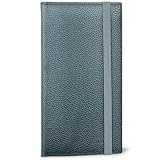
- Premium Material: We chose high-quality microfiber synthetic leather for the Casmonal checkbook cover, ensuring it is both durable and soft to the touch.
- Elastic Band: Tired of your checkbook not closing properly? This elastic band design effectively addresses that issue, ensuring the security of your checkbook, register, cash, and other important identification documents.
- Slim Compact Size: Measuring 7.0 x 3.74 x 0.47 inches, this checkbook cover is perfectly sized for standard American checks and registers. It fits easily in briefcases or crossbody bags without taking up too much space, making it ideal for everyday use.
- Multifunctional Design: The left and right sides securely hold standard-sized top and side-tear checks. It features two compartments for your register, cash, or receipts, a central pen holder, and a clear PVC divider to protect the carbon copies of your checks while you fill them out.
- Versatile Usage Scenarios: This checkbook cover is perfect for storing credit cards, cash, receipts, checks, and other everyday documents, making it ideal for your daily travel needs.
Which number is the account number?
It is the group that identifies the specific checking account. It is commonly the middle group along the bottom, but its length and position vary by bank. The debit-card number is not the checking-account number.
Is the check number the same as the account number?
No. The check number identifies one individual check, while the account number identifies the checking account. The check number commonly appears in the upper-right corner and may also appear in the MICR line.
Are the bottom numbers always in the same order?
No. Routing number, account number, and check serial number commonly appear in that order, but check formats can place the account and serial information differently or include additional processing data. Use the bank’s labels or sample.
What is the MICR line?
It is the machine-readable line near the bottom of the check. MICR means Magnetic Ink Character Recognition. The line commonly contains routing, account, and check-serial information and may contain other processing information.
Windows Errors? Fix Them Before They Spread
Repair common Windows errors and clear accumulated junk for a smoother, more stable PC - no reinstall needed.Free scan · no reinstallOutdated Drivers Are Slowing You Down
One free scan finds every outdated or missing driver and matches the right update for your exact hardware.Free scan · exact hardware matchWhat is the fractional routing number?
It is an older or alternative routing-number format sometimes printed near the upper right of a check. The nine-digit routing number in the MICR line is the form most commonly used for modern processing.
Do the written words or the numerals control if they disagree?
The general UCC rule gives priority to the written words, but a discrepancy can cause a dispute or rejection. Do not deposit a mismatched check without contacting the issuer; the writer should void it and issue a replacement.
Can a bank cash a postdated check early?
Possibly. A future date does not automatically stop early processing. Notice to the bank, bank procedures, and state law can affect the result. Ask the bank what steps are required if the date matters.
How long is a check good for?
There is no single universal answer that makes every check invalid after six months. UCC rules, bank policies, the type of check, and the circumstances matter. An old check may be refused, so ask the issuer for a replacement.
What’s actually slowing this PC down?
Pick the symptom - the matching free tool is one click away.
Can I deposit a check by mobile phone?
Usually, if your bank offers mobile deposit and the check is eligible. Endorse it exactly as the app instructs, submit clear images, keep the paper until posting and any applicable hold or retention period ends, and never deposit the same check through another channel.
Should I write For mobile deposit only?
Only if your bank’s app or deposit agreement requires that wording. Requirements differ among financial institutions. Follow the exact instructions shown by your bank.
Is it safe to give someone a voided check?
A voided check is not intended for ordinary payment, but its image can still expose your name, routing number, account number, and check number. Give one only through a trusted, secure channel and redact information that the recipient does not need. Do not post it publicly.
Can someone steal money with my routing and account numbers?
Those numbers alone do not guarantee that a withdrawal will succeed, but they are sensitive information and can facilitate unauthorized checks or electronic debits. Share them only with a legitimate recipient through a secure channel and monitor the account afterward.
Why are funds available if the check later turns out to be fake?
Funds availability is a regulated crediting and hold process, not a guarantee of authenticity or final collection. The paying bank may discover a counterfeit or unauthorized check later, after the depositary bank has made some funds available.
What should I do if a check is altered or forged?
Stop using or depositing the suspicious item, contact your bank promptly through an official channel, preserve the check image and related messages, and report unauthorized activity as soon as possible. Reporting deadlines and available protections can matter.
Bottom line
On most U.S. personal checks, the routing number points to the financial institution, the account number points to the checking account, and the check number identifies the individual item. But no check layout should be decoded by position alone.
- Name a specific payee.
- Complete both amount fields and make them match.
- Never sign a blank check.
- Use the bank-provided routing number for the exact type of electronic payment.
- Endorse a check only when you are ready to deposit or cash it.
- Treat available funds as provisional until the transaction is genuinely resolved.
- Protect check images and report suspicious or unauthorized activity quickly.
Frequently Asked Questions
What is the fastest way to identify the three main numbers on a check?
Find the nine-digit group, which is generally the routing number; compare the number in the upper-right corner with a serial number in the MICR line, which identifies the check; the remaining account-related group is generally the account number. Confirm the layout with the bank rather than relying only on position.
Do these 3 things before closing this tab:
1Scan for outdated or missing drivers - takes under a minute2Repair Windows errors before they cause bigger problems3Fix the driver behind crashes, sound loss and screen glitchesIs the routing number on a personal check valid for a wire transfer?
Not necessarily. Banks may use separate routing numbers for paper checks, ACH or direct deposit, and domestic wires. Use the routing number supplied by the bank for the specific transfer.
Does writing a future date stop a check from being cashed?
No. A postdated check may be processed early unless applicable notice and bank procedures require otherwise. Contact the bank and payee if payment timing is important.
Does a check automatically expire after six months?
No universal rule makes every check automatically void after six months. Bank policies and applicable UCC rules matter, and a bank may refuse an old check. Ask the issuer for a replacement.
Can a check be fake even when the money appears in my account?
Yes. Funds may be made available before the check is fully verified and collected. Do not send money back or spend an unexpected overpayment until you have independently confirmed the transaction and understand the bank’s process.
What should I write on the back for a mobile deposit?
Follow your bank’s app and deposit-agreement instructions exactly. Some institutions request wording such as “For mobile deposit only,” but that wording is not universal.
Quick Recap
Product prices and availability are accurate as of the date/time indicated and are subject to change. Any price and availability information displayed on Amazon at the time of purchase will apply.




