Do these 3 things before closing this tab:
1Fix the driver behind crashes, sound loss and screen glitches2Repair Windows errors before they cause bigger problems3Scan for outdated or missing drivers - takes under a minuteFor the safest four-year purchase, choose a Windows 11 laptop with an Intel or AMD x86-64 processor, 32GB of RAM, a 1TB NVMe SSD, and a discrete NVIDIA GeForce RTX GPU with at least 6GB–8GB of VRAM. The Lenovo Legion 5i Gen 10 with a Core Ultra 7 255HX, RTX 5060, 32GB RAM, and 1TB SSD is the strongest default for most U.S. engineering students. The Framework Laptop 16 is the better long-term choice if repairability and upgrades matter; the ThinkPad P16 Gen 3 or Dell Pro Max 16 Plus makes more sense when professional workstation certification is required; and the MacBook Pro with M5 Pro is excellent for programming-heavy courses only after the department confirms macOS compatibility.
There is no single best engineering laptop. SolidWorks, Revit, and Ansys can make Windows and a discrete GPU essential, while a software-engineering student using Python, MATLAB, Git, and Docker may reasonably prioritize battery life and portability. Before buying, check your university’s written requirements and whether it provides a remote Windows laboratory.
Quick verdict
| Pick | Recommended configuration | Best for | Main drawback |
|---|---|---|---|
| Best overall Lenovo Legion 5i Gen 10 |
Core Ultra 7 255HX, RTX 5060 8GB, 32GB RAM, 1TB SSD | Most mechanical, civil, aerospace, architectural, and general Windows engineering students | Heavy charger and poor battery life in independent testing |
| Best upgrade path Framework Laptop 16 |
Ryzen AI 7 350 or Ryzen AI 9 HX 370, RTX 5070, 32GB RAM, 1TB SSD | Students who want replaceable memory, storage, ports, and graphics | Expensive for its performance and not a certified workstation |
| Best professional workstation Lenovo ThinkPad P16 Gen 3 |
RTX PRO graphics, 32GB–64GB RAM, 1TB or larger SSD | Large CAD assemblies, BIM, Ansys, and departments requiring ISV-certified hardware | Very expensive and heavy for ordinary undergraduate work |
| Workstation alternative Dell Pro Max 16 Plus |
Core Ultra HX processor, RTX PRO 1000–5000, 32GB–64GB RAM | Professional engineering applications and desktop-class sustained performance | Model-family prices and capabilities vary dramatically by GPU |
| Best lower-cost option Lenovo LOQ 15 Gen 10 AMD |
Ryzen 7-class CPU, RTX 5060, 32GB RAM, 1TB SSD | Students seeking dedicated graphics at a lower price | Display, construction, RAM, and GPU power limit vary by SKU |
| Best Mac 14-inch MacBook Pro with M5 Pro |
M5 Pro, preferably 48GB or 64GB unified memory, 1TB SSD | Software engineering, computer science, MATLAB, Python, and Unix development | Not a safe choice for SolidWorks, full Revit, Ansys, or Windows-only lab tools |
| Best portable Windows option Dell XPS 14 |
At least 32GB RAM and 1TB SSD; integrated graphics acceptable only for lighter work | Programming, MATLAB, reports, and remote engineering labs | Base 16GB/512GB integrated-graphics configuration is not universal for engineering |
| Premium thin performance Razer Blade 16 |
Core Ultra 9 386H, RTX 5070 Ti or better, 32GB–64GB RAM | Students wanting high performance in a relatively thin chassis | Soldered memory and a very high price |
Price bands and configurations change frequently. Compare the actual CPU, GPU, VRAM, RAM, storage, display, operating system, warranty, and power limit—not just the laptop family name.
As an Amazon Associate I earn from qualifying purchases.
First question: does your engineering program require Windows?
Operating-system compatibility is a buying decision, not a detail to investigate after choosing a laptop. Windows 11 on an Intel or AMD x86-64 processor is the safest platform for students who may use a broad range of engineering software.
Windows is the conservative choice if your degree may involve:
#1 Best Overall
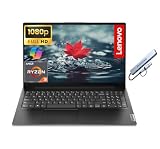
- 【Powerful AMD Ryzen 7 Performance】AMD Ryzen 3 7320 combines four cores, 8 threads, speeds up to 4.1GHz and 4MB total cache for multitasking, demanding business workloads and content creation. AMD Radeon graphics deliver smooth visuals.
- 【Outstanding 15.6" Display】1920 x 1080 high resolution LED screen provides you with a sharp and clear text and images. The ratio expands the vertical space of the screen, showing more content, providing a comfortable visual experience and greater efficiency when browsing web pages or documents.
- 【Exceptional Storage Space】Equipped with 16GB LPDDR5 RAM and up to 1TB Solid State Drive, runs smoothly, responds quickly, handles multi-application and multimedia workflows efficiently and quickly.
- 【Tech Specs】Stay connected with Wi-Fi and Bluetooth and variety of ports. The Lenovo V15 G4 laptop features 1 x USB-C, 2 x USB-A, 1 x Ethernet Port, 1 x HDMI, 1 x Headphone/Microphone Combo Jack, allowing you to connect a variety of peripherals and devices for enhanced productivity.
- 【Designed for the Office】With AMD Radeon Graphics, Numeric Keypad, Camera Privacy Shutter, Integrated Stereo Speakers, it ensures a stylish and innovative look, excellent portability, and is suitable for daily work and play. It is a great choice for businesses, offices, or students.
- SolidWorks or other Windows-centered mechanical CAD software.
- Revit, BIM, or specialized Autodesk toolsets.
- Ansys or other local simulation packages.
- Altium Designer, FPGA development tools, PLC software, robotics utilities, or instrumentation drivers.
- Department-specific applications that may not be listed in the first-year syllabus.
SOLIDWORKS 2026 lists 64-bit Windows 10 and Windows 11 client support and x86-64 Intel or AMD processors. Revit 2026 is primarily specified for 64-bit Windows, although Autodesk documents a Parallels-based configuration for Apple silicon Macs. The referenced Ansys Windows installation documentation specifies x64 Windows platforms and says Windows Home editions are unsupported for that product environment. If Ansys is part of your curriculum, check whether you need Windows Pro; do not assume every Windows edition is equivalent.
When a Mac is reasonable
A MacBook can be a good engineering-student computer when the workload is primarily programming, data analysis, MATLAB, Python, Java, C/C++, Git, Docker, databases, and web development. It is also more defensible when the university officially supports macOS or supplies a reliable remote Windows workstation.
The Tool Desk
Outbyte PC Repair FREERepair Windows errors before they cause bigger problemsFix Now →Outbyte Driver Updater FREEFix the driver behind crashes, sound loss and screen glitchesFind Drivers →For example, the University of Iowa permits Windows, macOS, and Linux while providing remote access to Windows engineering software. That policy makes a Mac or integrated-graphics Windows laptop more practical than it would be at a school requiring local Windows CAD. By contrast, Virginia Tech’s 2026–27 guidance does not support macOS or ARM systems for its entering engineering students, and James Madison University says its supported systems are Intel-based Windows x86-64 machines.
Do not confuse “the application can launch” with “the department officially supports the entire workflow.” Revit’s documented Mac approach uses Windows through Parallels, and Autodesk does not recommend accelerated graphics in that documented virtual-machine configuration. SOLIDWORKS lists Windows client support rather than native macOS support. A Mac may therefore be technically usable but still inconvenient, unsupported, or dependent on a remote lab.
The Windows-on-ARM warning
Windows-on-ARM laptops can have excellent battery life, but they are not a universal substitute for x86 Windows laptops. MATLAB R2026a runs on Windows ARM through Microsoft’s Prism emulation, while MathWorks notes that some capabilities are unsupported. Drivers, plugins, virtualization, older engineering applications, and lab hardware can introduce additional problems. Virginia Tech explicitly excludes Snapdragon and ARM processors from its current engineering requirement.
Default rule: unless your department has confirmed ARM support in writing, buy an Intel- or AMD-based Windows laptop for mechanical, civil, architectural, aerospace, manufacturing, and many electrical-engineering programs.
Free tools Windows power users keep installed
One-click scans. No signup required.
How much performance does an engineering student need?
CPU: favor modern H, HS, or HX processors
For a four-year purchase, target an Intel Core Ultra 7 or 9 H/HX processor or an AMD Ryzen 7 or 9 HS/HX processor. These are more appropriate for sustained CAD, compilation, rendering, simulation, and multitasking than low-power entry-level chips.
CPU priorities depend on the software:
- Single-core performance matters for responsive CAD sketching, modeling, Revit interaction, and many everyday engineering tasks.
- More cores help with rendering, compilation, multithreaded simulation, video and 3D work, virtual machines, and large data processing.
Autodesk says Revit benefits from the highest single-core base clock while also using multiple cores for many tasks. MathWorks recommends a four-logical-core AVX2-capable Intel or AMD processor for MATLAB on x86-64 systems. Those are software requirements, not reasons to buy the cheapest supported processor: a student’s laptop must also handle browsers, PDFs, code, Teams or Zoom, and multiple engineering applications at the same time.
RAM: 32GB is the sensible default in 2026
| Memory | Who it suits |
|---|---|
| 16GB | Programming, reports, MATLAB fundamentals, basic CAD, and remote virtual labs. Acceptable when the laptop has an upgrade path or the school has modest requirements. |
| 32GB | The preferred starting point for most new engineering laptops. It is better for CAD, Revit, multitasking, local development environments, and a four-year ownership horizon. |
| 64GB | Large Revit models, complex assemblies, local virtual machines, simulation, data science, machine learning, and running several engineering applications together. |
Autodesk’s Revit 2026 guidance lists 16GB for entry-level work, 32GB for balanced price/performance, and 64GB for large, complex models. SOLIDWORKS 2026 lists 16GB and recommends 32GB. Several universities now prefer or require 32GB; Virginia Tech’s 2026–27 engineering requirement is one example.
Upgradeable memory is particularly valuable. The Framework Laptop 16 has two SODIMM slots and supports up to 96GB of DDR5-5600 memory. The Legion 5i Gen 10 also has two SODIMM slots. A 16GB laptop that can be upgraded to 32GB or 64GB is a better long-term financial decision than a 16GB model whose memory is permanently soldered.
Quick wins for a faster PC:
Scan for outdated or missing drivers - takes under a minuteDriver Scan →Repair Windows errors before they cause bigger problemsFix Now →Fix the driver behind crashes, sound loss and screen glitchesFind Drivers →GPU and VRAM: the key dividing line between majors
Integrated graphics are generally sufficient for programming, office work, MATLAB fundamentals, basic Python analysis, lightweight 2D CAD, remote desktops, and cloud workstations.
A discrete GPU is strongly preferred for SolidWorks assemblies, Revit and BIM, 3D CAD, rendering, GPU-accelerated simulation, computer vision, machine learning, Blender, and game development. Revit 2026 recommends at least 4GB of video memory for entry-level work, 6GB for its balanced configuration, and 8GB for large or complex models.
| Workload | Practical target |
|---|---|
| Programming, reports, MATLAB basics, remote labs | Integrated graphics may be sufficient |
| Light CAD and student 3D work | RTX 4050/5050-class or better |
| General mechanical, civil, aerospace, or architectural coursework | RTX 5060-class with 8GB VRAM |
| Large assemblies, rendering, or local simulation | RTX 5070/5070 Ti-class or RTX PRO 1000/2000-class, depending on software |
| Professional workstation workloads | RTX PRO graphics with verified application certification |
GPU names alone do not tell the whole story. Laptop performance varies with power limits, cooling, memory, and chassis design. For example, Framework lists its RTX 5070 Laptop GPU at up to 100W, while Lenovo lists the Legion 5i Gen 10 RTX 5060 at 115W including boost. Check the exact GPU, VRAM, and total graphics power when comparing laptops.
GeForce RTX or RTX PRO?
GeForce RTX is usually the better value for a student who wants strong raw performance, gaming capability, CUDA and AI experimentation, and a wide range of discounted laptops.
Rank #2

- 【EFFICIENT INTEL CORE i3 PERFORMANCE】 Powered by the Intel Core i3-N305 processor featuring 8 cores, 8 threads, and speeds up to 3.8GHz. Designed to handle multitasking, business applications, video conferencing, online learning, and productivity workloads with smooth responsiveness and reliable efficiency throughout the day.
- 【EXPANSIVE 17.3" FULL HD IPS DISPLAY】 Enjoy a larger workspace on the 17.3-inch Full HD (1920 x 1080) IPS anti-glare display. The micro-edge bezel design and wide 178° viewing angles deliver crisp visuals, vibrant colors, and comfortable viewing for spreadsheets, presentations, streaming, and everyday computing.
- 【AI-ENHANCED PRODUCTIVITY WITH COPILOT】 Boost efficiency with the dedicated Copilot AI Key, providing instant access to intelligent assistance for content creation, email drafting, research, and workflow management. Combined with high-speed DDR4 memory and fast SSD storage, it delivers seamless multitasking performance.
- 【FAST CONNECTIVITY & MULTIPLE PORTS】 Stay connected with ultra-fast Wi-Fi 6 and Bluetooth 5.4 technology for reliable wireless performance. Equipped with USB-C, USB-A, HDMI, and additional connectivity options to support external monitors, accessories, and high-speed data transfers for a complete workstation setup.
- 【BUSINESS-READY WINDOWS 11 PRO】 Pre-installed with Windows 11 Pro for enhanced security, productivity, and professional-grade management features. Includes HP Fast Charge technology that restores up to 50% battery in approximately 45 minutes, plus a full-size keyboard with numeric keypad for efficient data entry and everyday
RTX PRO is preferable when the student needs ISV certification, professional drivers, vendor support, validated stability, higher VRAM capacities, or a platform explicitly accepted by a department or employer. NVIDIA describes its RTX PRO ISV certification program as covering engineering, scientific, CAD, simulation, and 3D-design workflows. Lenovo promotes the ThinkPad P16 Gen 3 as ISV-certified for applications including Ansys, SOLIDWORKS, and AutoCAD.
Certification does not automatically make an RTX PRO laptop faster than a cheaper GeForce laptop in every student application. You are paying for driver validation, application certification, support, and predictability as well as hardware.
Storage: buy 1TB unless your budget is extremely tight
- 512GB SSD: practical minimum, particularly if the school supplies remote storage.
- 1TB NVMe SSD: preferred for most engineering students.
- 2TB SSD: useful for virtual machines, local datasets, CAD libraries, simulation files, games, or Linux experimentation.
Revit 2026 lists 30GB for installation and recommends 100GB of free space for temporary files. Autodesk also says cloud worksharing can require storage equal to three times the space consumed by equivalent project files. MATLAB R2026a lists 5GB–8GB for a typical installation and 25GB for an all-products installation, with an SSD strongly recommended. Storage can be expanded with an external SSD or cloud service more easily than RAM or GPU capability, so do not sacrifice memory or graphics merely to obtain a larger internal drive.
Best laptops by category
1. Lenovo Legion 5i Gen 10: best overall for most Windows engineering students
Target configuration: Intel Core Ultra 7 255HX, NVIDIA GeForce RTX 5060 with 8GB GDDR7, 32GB DDR5 RAM, 1TB SSD, and the 15.1-inch 2560×1600 OLED display.
The Legion 5i is the most sensible default because it combines a high-performance CPU, discrete graphics, a useful 16:10-class high-resolution display, and upgradeable components without the price of a professional workstation. Lenovo lists two SODIMM slots, support for up to two M.2 PCIe SSDs, an 80Wh battery, and RTX 5050, 5060, and 5070 options. The RTX 5060 version is listed with 8GB of GDDR7 and a 115W power specification.
It fits mechanical, civil, aerospace, architectural, manufacturing, and general engineering students who need local CAD or 3D work. It can also serve as a gaming computer, which may improve its value for students who would otherwise buy two machines.
Limitations: it is a gaming laptop rather than an ISV-certified workstation. The 245W power adapter is inconvenient to carry, and Tom’s Guide measured approximately 4 hours 30 minutes on a tested Legion 5i Gen 10 configuration. That review used a specific configuration, including a Core i7-13650HX, so the result should not be treated as a guarantee for every current Core Ultra model. OLED provides excellent contrast but can be glossy and less practical in bright classrooms than a matte panel.
Buy it if: you need a strong Windows laptop for local CAD and want the best balance of capability and cost. Skip it if: you prioritize all-day unplugged use, a light charger, or certified professional drivers.
2. Framework Laptop 16: best for repairability and upgrades
Target configuration: Ryzen AI 7 350 or Ryzen AI 9 HX 370, optional RTX 5070 with up to 12GB GDDR7, 32GB RAM, and at least a 1TB SSD.
The Framework Laptop 16 is unusual because the owner can replace or upgrade the memory, storage, keyboard modules, ports, and graphics module. Framework lists two SODIMM slots supporting up to 96GB of DDR5-5600 memory, as well as primary and secondary SSD options. Six Expansion Card slots can be configured for HDMI, Ethernet, USB-A, USB-C, SD, microSD, or additional storage. With the graphics module installed, the laptop weighs about 2.40kg.
That flexibility can reduce the financial risk of buying early in a degree: you can start with 32GB and add memory later, or replace storage without replacing the entire computer. Framework lists the current platform from $1,249, but that is a starting price and should not be compared with a fully configured RTX, 32GB, 1TB engineering system.
Limitations: the graphics module adds weight and depth, and the laptop is not automatically a substitute for a certified mobile workstation. Tom’s Guide selected the Framework Laptop 16 as its overall engineering pick, praising its upgradeability while noting display brightness, module stability, and moderate battery life; its tested battery result was approximately 8 hours 20 minutes.
What’s actually slowing this PC down?
Pick the symptom - the matching free tool is one click away.
Buy it if: repairability, reduced e-waste, and the ability to upgrade during school are worth paying for. Skip it if: you need the lowest performance-per-dollar or your department specifically requires certified workstation hardware.
3. Lenovo ThinkPad P16 Gen 3: best professional mobile workstation
Target configuration: 32GB–64GB RAM, a current Core Ultra HX processor, RTX PRO graphics, and at least a 1TB SSD.
Rank #3
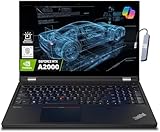
- A lightweight 15.6" mobile workstation designed on the Intel vPro platform, it is like a more powerful ThinkPad T16 or T15 which comes with NVIDIA Quadro graphics. Epic Battery life. Real workstation power on the go. Great for students, engineers, and designers. Intel Octa Core i7-11850H (8 cores, 16 threads, 2.50 GHz base up to 4.80 GHz max, 24MB cache); 64GB DDR4 3200 MHz Memory, 2TB PCIe NVMe M.2 SSD.
- 15.6" FHD (1920 x 1080) IPS, Anti-glare, 300nits Display; NVIDIA RTX A2000 4GB Dedicated Graphics - Support to expandable with 3 monitors via HDMI or Thunderbolt 4 Ports. Maximum supported resolution of 4k (3840*2160) @60Hz; Enjoy enhanced connectivity with the bundled IST Computers 7-in-1 Hub, featuring HDMI (4K@30Hz), USB-C 2.0, two USB 2.0 ports, Type-C Power Delivery, and an SD/TF card reader.
- 2 x USB 3.2 Gen 1 (one Always On), USB-C 3.2 Gen 2 (support data transfer, Power Delivery 3.0 and DisplayPort 1.4), 2 x Thunderbolt 4 / USB4 40Gbps (support data transfer, Power Delivery 3.0 and DisplayPort 1.4a), HDMI, SD card reader, Ethernet (2.5GbE RJ-45), Headphone / microphone combo jack; Intel Wi-Fi 6E AX210, 11ax 2x2 + Bluetooth 5.1; Fingerprint Reader; Backlit Keyboard.
- Windows 11 Professional 64-bit; Certifications from Independent Software Vendors (ISVs) ensure your most critical applications will run reliably on this workstation laptop: 3DEXPERIENCE, ANSYS, ArcGIS, AutoCAD, Creo, MicroStation, NXx, Revit, Solid Edge, MATLAB and SOLIDWORKS.
- Brand New Computer has been resealed to upgrade the Memory or SSD. One-year warranty from the manufacturer. Three-year warranty for upgraded Memory/SSD for Issaquah Highlands Tech customers.
The ThinkPad P16 Gen 3 is designed for students whose work resembles professional engineering rather than ordinary introductory coursework. Lenovo lists RTX PRO 4000 and RTX PRO 5000 Blackwell options, with the RTX PRO 5000 configuration offering 24GB of GDDR7. Lenovo’s specifications also list up to 12TB of M.2 PCIe Gen 5 NVMe storage and promote ISV certification for Ansys, SOLIDWORKS, AutoCAD, BIM, and other professional applications.
Choose it for large assemblies, complex BIM projects, local Ansys work, advanced visualization, or a department that specifically requires certified hardware. It may also be a sensible investment for a graduate student or a student who expects to use the machine in an engineering internship.
Outdated Drivers Are Slowing You Down
One free scan finds every outdated or missing driver and matches the right update for your exact hardware.Free scan · exact hardware matchPC Slower Than It Used to Be?
A free scan shows the junk files, broken settings and background clutter dragging Windows down - then fixes them in one click.Free scan · Windows 10 & 11Limitations: it is expensive, heavy, and excessive for a student who mostly writes code, uses MATLAB, or connects to a campus virtual lab. A GeForce RTX laptop can offer better raw performance per dollar for many nonprofessional workloads.
Buy it if: certification, professional drivers, support, or unusually large projects matter. Skip it if: your budget is below roughly $1,500 or daily portability is a priority.
4. Dell Pro Max 16 Plus: workstation alternative
Target configuration: Core Ultra HX processor, 32GB–64GB of upgradeable memory, and an explicitly selected RTX PRO 1000, 2000, 3000, 4000, or 5000 GPU.
Dell’s Pro Max 16 Plus offers Windows 11 Pro, Core Ultra HX processors, upgradeable memory options, and RTX PRO Blackwell graphics. It is an alternative to the ThinkPad P16 for professional CAD, simulation, and visualization workloads. TechRadar praised its desktop-class performance and somewhat better portability than the ThinkPad while criticizing its cost, weight, and display brightness.
Recommended Free Tools
Configuration warning: a Pro Max 16 Plus with integrated graphics is not equivalent to an RTX PRO-equipped configuration. Dell’s product pages show major price differences between integrated-graphics and professional-GPU versions. Identify the exact GPU before deciding that the machine meets your program’s requirements.
5. Lenovo LOQ 15 Gen 10 AMD: best lower-cost dedicated-GPU option
Target configuration: Ryzen 7-class processor, RTX 5060, 32GB RAM if upgradeable, 1TB SSD, and a display with at least 100% sRGB if color and visual design work matter.
The LOQ 15 AMD platform supports up to an RTX 5060. TechRadar describes it as a budget-oriented engineering and gaming laptop with an H-series processor, dedicated graphics, a MUX switch, and a comfortable keyboard. It is a strong candidate when the budget is closer to $1,000–$1,500 and the student still needs local 3D capability.
Limitations: exact display brightness, color coverage, memory configuration, GPU power limit, and construction vary by SKU. Do not buy an unusually cheap version simply because the model name appears on a recommendation list. A discounted previous-generation RTX 4060 or RTX 4070 laptop may be a better deal than a new entry-level RTX 50-series configuration.
6. Apple MacBook Pro with M5 Pro: best Mac for compatible workloads
Target configuration: 14-inch MacBook Pro with M5 Pro, preferably 48GB or 64GB of unified memory and a 1TB SSD. Students running especially demanding local workloads may consider more memory, but capacity cannot be upgraded after purchase.
The M5 Pro MacBook Pro is attractive for software engineering and computer science because it combines strong CPU performance, long battery life, quiet operation, a high-quality display, and a Unix-based development environment. It is well suited to programming, MATLAB, Python, Java, C/C++, Git, Docker, databases, and general technical work when the department supports macOS.
Apple announced U.S. launch pricing of $2,199 for the 14-inch M5 Pro and $2,699 for the 16-inch M5 Pro on March 3, 2026, with education prices of $2,049 and $2,499 respectively. Retail prices and education discounts can change, and adding memory or storage increases the cost. Apple advertises up to 24 hours of battery life under its test conditions; Tom’s Guide measured approximately 21 hours 10 minutes on its tested 16-inch MacBook Pro configuration. These figures are not directly comparable with a gaming laptop unless the test method and configuration are the same.
Do not choose it as the default for mechanical engineering centered on SolidWorks, civil or architectural engineering centered on Revit, Ansys-heavy programs, Windows-only hardware tools, or a department that prohibits virtualized Windows. MathWorks’ platform roadmap also says new MATLAB releases from R2026a end support for Intel-based Macs, so a new Mac purchase should be Apple silicon rather than an older Intel model.
7. Dell XPS 14: best portability-first Windows choice
Target configuration: at least 32GB RAM and 1TB SSD, with integrated graphics only when the student has light workloads or reliable remote GPU access.
Rank #4

- ⚡ Powerful AMD Ryzen 5 7530U Multitasking Performance – Equipped with advanced AMD Ryzen 5 7530U 6-core 12-thread processor, this HP touchscreen laptop delivers ultra-fast and lag-free computing performance. It effortlessly handles heavy daily office tasks, complex Excel spreadsheets, multi-tab web browsing, document editing, and lightweight creative work, ensuring stable and high-efficiency workflow operation for home, study and business office scenarios.
- 🖥️ 15.6 Inch FHD IPS Responsive Touchscreen Display – Features a 1920 x 1080 Full HD IPS touch screen with ultra-high color accuracy and wide viewing angle, presenting sharp, vivid and detailed visual effects. The highly sensitive touch control function supports precise tap, swipe and drag operations, bringing intuitive and smooth interactive experience compared with traditional non-touch laptops, ideal for presentation demonstration, creative design and daily entertainment.
- 🚀 32GB RAM + 1TB PCIe NVMe SSD Large Storage Combo – Upgraded with 32GB high-bandwidth DDR4 RAM, which greatly improves multi-tasking processing capability, allowing simultaneous operation of dozens of browser tabs and heavy application software without stuttering. Built-in 1TB high-speed PCIe NVMe solid state drive realizes instant boot-up, ultra-fast file reading and writing and data transmission, providing sufficient storage space for massive office files, videos, pictures and software, effectively solving storage and running lag problems of traditional laptops.
- ⌨️ Backlit Keyboard & Dedicated Numpad for High Productivity – Designed with a full-size backlit keyboard and independent numeric keypad, adapting to various complex use environments. The soft backlight enables comfortable and accurate typing in dim light or night conditions; the professional numpad greatly improves the efficiency of data statistics, accounting calculation and spreadsheet management, perfectly matching the work needs of financial personnel, office workers and students.
- 🛡️ Ultra-Stable Connection & Smart AI Office System – Adopts next-generation Wi-Fi 6 and Bluetooth 5.4 dual high-speed connection technology, realizing faster, more stable network transmission and low-latency wireless peripheral pairing, even in crowded network environments. Pre-installed genuine Windows 11 Pro system, built-in Copilot AI intelligent office assistant, intelligently optimizes daily workflow, simplifies complex operation steps, and comprehensively upgrades office and study efficiency.
Dell’s 2026 XPS 14 is a thin Windows laptop built for mobility. The base configuration shown by Dell uses 16GB memory, 512GB storage, and integrated Intel graphics. That configuration is appropriate for programming, reports, MATLAB, browser-heavy coursework, and remote engineering applications, but it is not a safe universal CAD recommendation.
Buy it if: you are in software engineering or computer engineering without heavy local CAD, or your university supplies a virtual Windows workstation. Skip the integrated-graphics version if: your program requires a discrete NVIDIA GPU or you expect to run Revit, SolidWorks, or local GPU-accelerated simulation.
8. Razer Blade 16: premium thin performance
Target configuration: Intel Core Ultra 9 386H, RTX 5070 Ti or better, 32GB–64GB of memory, and at least a 1TB SSD.
What’s actually slowing this PC down?
Pick the symptom - the matching free tool is one click away.
The 2026 Razer Blade 16 combines RTX 50-series graphics, a QHD+ 240Hz OLED display, Thunderbolt 5, Wi-Fi 7, and Bluetooth 6 in a relatively thin chassis. Tom’s Guide measured approximately 12 hours 46 minutes on its tested configuration, substantially longer than its tested Legion 5i. That makes it appealing to a student who wants performance without accepting the battery behavior of a typical gaming laptop.
Limitations: Razer states that the LPDDR5X memory is soldered and cannot be upgraded. PC Gamer reported that RTX 5070 Ti versions remained expensive at around $3,500 in its review context. Treat both the battery result and price as configuration-specific observations, not universal promises.
Buy it if: you have a large budget and value thin performance. Skip it if: upgradeability and value matter more than chassis design.
Best laptop by engineering major
| Major or path | Default advice |
|---|---|
| Mechanical engineering | Windows 11 x86-64, 32GB RAM, 1TB SSD, and RTX 5060 or better. SolidWorks and CAD compatibility come first. |
| Civil engineering | Windows, 32GB RAM, and 6GB–8GB of VRAM for Revit and BIM. Consider 64GB for large models. |
| Architectural engineering | Windows is safest; choose 32GB and an RTX 5060/5070-class GPU for 3D modeling and visualization. |
| Aerospace engineering | Use a strong CPU, 32GB RAM, and a discrete GPU; verify Ansys and other simulation requirements. |
| Electrical engineering | Windows is safer for Altium, FPGA, PLC, robotics, and vendor tools. A Mac can work for coding-heavy programs after confirmation. |
| Computer engineering | 32GB is preferred. A discrete GPU is useful for CUDA, AI, computer vision, and local virtual machines, but not essential for every curriculum. |
| Software engineering | 16GB is workable and 32GB preferred. Prioritize battery life, keyboard quality, portability, Unix/Linux tooling, and a good warranty. |
| Chemical or materials engineering | Prioritize CPU performance and RAM; the GPU depends on the specific simulation and modeling packages. |
| Industrial or manufacturing engineering | Choose Windows and CAD compatibility first; add a discrete GPU for 3D tools and visualization. |
| Undecided or general engineering | Buy the conservative Windows configuration: x86-64 CPU, 32GB RAM, 1TB SSD, and RTX 5060-class graphics. |
How much should you spend?
Use these as U.S. pre-tax planning bands rather than permanent prices. Sales, student discounts, memory upgrades, warranty coverage, and retailer configurations can change the final amount.
Under $1,000
Choose this range only when the workload is mainly programming, reports, MATLAB, and web tools, or when the school provides virtual CAD and simulation machines. Look for at least 16GB RAM and a 512GB SSD. Understand that integrated graphics may exclude some courses.
About $1,000–$1,500
Target the Lenovo LOQ 15, a discounted Legion 5i, or a previous-generation RTX 4060/4070 laptop. Try to obtain 32GB RAM and 1TB storage, either installed or through a clearly documented upgrade path.
About $1,500–$2,200
This is the useful range for RTX 5060/5070 laptops, Framework Laptop 16 configurations, better cooling, and stronger upgrade paths. Entry-level professional workstations may appear here during sales, but verify the exact GPU and certification.
Above $2,200
Consider a MacBook Pro M5 Pro for confirmed macOS-compatible work, a ThinkPad P16 Gen 3 or Dell Pro Max 16 Plus for professional workstation requirements, or a Razer Blade 16 for premium thin performance. Higher spending is justified by a specific need for memory, VRAM, certification, battery life, or repairability—not simply by a larger model number.
For context, Framework lists its Laptop 16 platform from $1,249, but the starting price is not equivalent to an RTX/32GB/1TB configuration. Dell’s Pro Max 16 Plus pages likewise demonstrate how much prices can change between integrated-graphics and RTX PRO-equipped systems. Always price the configuration you can actually use for school.
The financial case for buying the right configuration
The cheapest laptop is not always the lowest-cost laptop. A machine that cannot run a required course application may force you to pay for a second computer, a remote service, a replacement laptop, or rushed upgrades.
When comparing total cost, include:
- The laptop and operating-system edition.
- Immediate RAM and SSD upgrades.
- A four-year warranty and accidental-damage coverage if required.
- A dock, Ethernet adapter, external monitor, or backup drive.
- The cost of carrying a large charger every day.
- Any software or cloud-computing fees not covered by the university.
Do not finance an unnecessarily expensive workstation merely because it is “future-proof.” Instead, pay for concrete headroom: 32GB rather than 16GB, 1TB rather than 512GB, an upgradeable platform, a suitable GPU, or a warranty that matches the school’s requirements.
Best Value

- Powerful 13th Gen Intel Performance – Intel Core i5-13420H processor (8-core, 12-thread, up to 4.6 GHz turbo) delivers responsive multitasking for productivity apps, video calls, and streaming. Handle browser tabs, documents, spreadsheets, and business software with ease. Perfect for work, study, and entertainment whether at home or on the go. Copilot AI integration enhances productivity and learning efficiency for students, professionals, and remote workers.
- Immersive 16" WUXGA Display with Privacy Protection – 1920x1200 IPS anti-glare screen with 300 nits brightness provides clear visuals with extra vertical space compared to standard 1080p, ideal for documents, spreadsheets, and media. Built-in HD 720p webcam with privacy shutter keeps you secure during Zoom/Teams/Meet video calls, online classes, virtual learning, job interviews, and client meetings. 60 Hz refresh rate ensures smooth visual performance.
- Fast Multitasking with DDR5 Technology – 16GB DDR5 RAM (4800 MHz) ensures smooth operation of multiple applications simultaneously, running 5-10 browser tabs, video calls with screen sharing, and light multitasking. 512GB PCIe NVMe SSD provides lightning-fast boot times under 10 seconds, quick application launches, and rapid file access. Expandable up to 40 GB RAM for future upgrades. Store essential files, programs, and documents with reliable solid-state performance.
- Modern Connectivity Suite for Professionals – WiFi 6 (802.11ax) and Bluetooth 5.2 for fast wireless connections. Versatile ports include 2x USB-A 3.2 Gen 1, 1x USB-C with Power Delivery and DisplayPort 1.2, HDMI 1.4, SD card reader, and headphone jack for all your devices and accessories. Connect external displays, multiple peripherals, and transfer files quickly. 65W fast charging supports long continuous use without frequent plugging in, ideal for mobile professionals.
- Sleek Design Built for Productivity – Luna Grey finish with full-size keyboard and numeric keypad perfect for fast data entry, accounting, spreadsheets, invoicing, bookkeeping, financial calculations, and inventory management. Lightweight at 3.70 lbs with slim 0.67-0.70 inch profile for easy portability. Windows 11 Home with Office 365 included. Ideal for students, professionals, small business owners, remote workers, online classes, and video conferencing. TPM 2.0 security chip included.
Portability, battery, and the charger
Performance laptops need larger cooling systems and higher-wattage adapters. A 15- or 16-inch engineering laptop may be technically portable but uncomfortable to carry alongside textbooks, and it may need to remain plugged in for full performance.
Recommended Free Tools
- 14-inch: best for commuting, coding, and general coursework.
- 15- or 16-inch: better for CAD, diagrams, split-screen work, and large assemblies.
- 18-inch: a desktop replacement; choose only if it will rarely leave a desk.
Independent battery testing illustrates the trade-off. Tom’s Guide reported approximately 4 hours 30 minutes for its tested Legion 5i Gen 10, 8 hours 20 minutes for its tested Framework Laptop 16, 12 hours 46 minutes for its tested Razer Blade 16, and 21 hours 10 minutes for its tested 16-inch MacBook Pro. These are results from particular configurations and test methods, not universal battery promises. Manufacturer estimates should not be mixed with independent results without labeling them.
Check the charger dimensions and weight in addition to the laptop. Also consider classroom outlets, whether you will commute by foot or public transit, and whether you need the GPU’s full performance away from a power socket.
What to check before ordering
- Read the university’s engineering-computing page. Requirements can be stricter than software-vendor minimums. Virginia Tech’s 2026–27 checklist, for example, specifies Windows 11, a processor released in 2024 or later, 32GB RAM, a 500GB-or-larger SSD, and a discrete NVIDIA GPU with at least 4GB of dedicated VRAM. It also requires a four-year warranty with accidental-damage protection. JMU specifies Intel-based Windows systems and recommends different RTX VRAM tiers. These are school-specific rules, not universal U.S. requirements.
- Audit the full degree plan. Ask about sophomore, junior, senior, laboratory, and elective software—not only first-year courses.
- Confirm remote-lab access. Find out whether the virtual workstation is available off campus, whether it supports Mac and Linux clients, and whether the connection is reliable enough for 3D graphics.
- Confirm architecture. Unless the school approves ARM, select an Intel or AMD x86-64 processor.
- Check the exact RAM and storage. Make 32GB and 1TB the target, and verify whether either can be upgraded.
- Check GPU model, VRAM, and power limit. An RTX 5070 in a thin, low-power design is not necessarily equivalent to one in a larger chassis.
- Check the display. A 1600p 16:10 screen is a useful balance. 4K is not necessary for most engineering coursework, while a matte finish may work better in bright classrooms.
- Check warranty and return terms. Confirm accidental-damage coverage, parts availability, campus repair options, and the return period before opening the machine.
- Include the charger in your budget and carrying plan. A 230W–330W adapter can change the practical portability of a gaming laptop.
- Compare a usable configuration, not a starting price. A low advertised price may represent 8GB RAM, 256GB storage, integrated graphics, or no operating system.
Common buying mistakes
Buying a Mac because MATLAB works on macOS
MATLAB compatibility does not prove that SolidWorks, Revit, Ansys, Altium, FPGA tools, or a department-specific driver will work. Audit the complete degree and obtain written confirmation from the department.
Buying ARM Windows for battery life
ARM emulation can work for some applications, but university policies and engineering plugins may not support it. Choose x86 unless confirmed otherwise.
Crashes, No Sound, or Screen Glitches?
Random freezes, missing sound and display glitches usually trace back to one bad driver. Find and replace yours safely.Free scan · under a minuteWindows Errors? Fix Them Before They Spread
Repair common Windows errors and clear accumulated junk for a smoother, more stable PC - no reinstall needed.Free scan · no reinstallBuying 16GB because it is the software minimum
Minimum requirements describe a starting point, not comfortable multitasking. Revit’s own guidance moves to 32GB for balanced use and 64GB for large models.
Trusting an RTX number without checking power and VRAM
Compare the exact laptop GPU, VRAM, cooling system, and listed power limit.
Buying a workstation for every major
Professional certification has value, but a ThinkPad P16 or Pro Max 16 Plus can waste money and carrying capacity for a student who mainly codes or uses a virtual lab.
Ignoring the warranty
Warranty expectations vary by school. Virginia Tech’s four-year accidental-damage requirement is a reminder to check your own program’s policy before purchase.
The Tool Desk
Outbyte Driver Updater FREEScan for outdated or missing drivers - takes under a minuteDriver Scan →Outbyte PC Repair FREEClear out junk files and repair common Windows errorsFree Scan →Bottom-line decision tree
- Need SolidWorks, Revit, Ansys, or local 3D work with no dependable virtual lab? Buy Windows 11 x86-64 with 32GB RAM, 1TB SSD, and RTX graphics. The Legion 5i Gen 10 is the default value choice.
- Want to repair and upgrade the laptop during college? Choose the Framework Laptop 16, understanding its higher configured price and lack of automatic workstation certification.
- Need ISV-certified professional software support? Choose a properly configured ThinkPad P16 Gen 3 or Dell Pro Max 16 Plus with RTX PRO graphics.
- Mostly code, use MATLAB, and value battery life? Choose a MacBook Pro M5 Pro or a premium Windows laptop after confirming macOS and course-tool support.
- Need the lowest reasonable price with local dedicated graphics? Look for a discounted Lenovo LOQ 15 or Legion 5i with 32GB RAM and 1TB storage.
- Still unsure of your major? Buy the conservative Windows x86-64 configuration with a Core Ultra 7 or Ryzen 7/9 H/HX processor, 32GB RAM, 1TB SSD, and an RTX 5060-class GPU.
For application requirements, consult the Revit 2026 requirements, SOLIDWORKS 2026 requirements, MATLAB R2026a requirements, and the relevant NVIDIA ISV certification information. Your university’s policy remains the final authority.
Frequently Asked Questions
Can engineering students use a MacBook in 2026?
Yes, for programming-heavy courses, MATLAB, Python, Unix tools, and departments that officially support macOS or provide remote Windows workstations. A Mac is not the safest universal choice for SolidWorks, full Revit, Ansys, Windows-only drivers, or department-specific laboratory software. Confirm the complete four-year course plan before buying.
Is 16GB RAM enough for an engineering student?
It can be enough for programming, reports, MATLAB fundamentals, basic CAD, and remote labs. For a new laptop intended to last through 2026 and beyond, 32GB is the better default. Choose 64GB for large Revit models, complex assemblies, local virtual machines, simulation, or data science.
Do all engineering students need a dedicated GPU?
No. Integrated graphics can handle programming, office work, MATLAB fundamentals, lightweight 2D CAD, and remote workstations. A discrete NVIDIA GPU is strongly preferred for SolidWorks assemblies, Revit/BIM, 3D CAD, rendering, computer vision, machine learning, and local simulation.
Is a gaming laptop suitable for engineering school?
Often, yes. A model such as the Lenovo Legion 5i or LOQ can provide strong CPU and GeForce RTX performance at a lower price than a certified workstation. The trade-offs are weight, charger size, battery life, gaming-oriented styling, and the absence of ISV certification.
Should an engineering student buy an RTX PRO workstation?
Only when the program or workload benefits from ISV certification, professional drivers, vendor support, high VRAM, or validated CAD and simulation compatibility. For ordinary undergraduate coursework, a GeForce RTX laptop usually provides better performance per dollar.
The Bottom Line
The best default engineering laptop in 2026 is a Windows 11 x86-64 system with 32GB RAM, a 1TB SSD, and an RTX 5060-class GPU. Buy the Lenovo Legion 5i Gen 10 for value, the Framework Laptop 16 for upgradeability, or a ThinkPad P16 Gen 3/Dell Pro Max 16 Plus for certified professional workloads. Choose a MacBook Pro M5 Pro only after your department confirms that every important application and remote-workflow requirement is covered.
The financially responsible purchase is not necessarily the cheapest laptop. It is the least expensive configuration that satisfies the school’s requirements, has enough memory and graphics headroom for the likely coursework, and will not force a second computer or an early replacement.
Quick Recap
Product prices and availability are accurate as of the date/time indicated and are subject to change. Any price and availability information displayed on Amazon at the time of purchase will apply.




