The Tool Desk
Outbyte Driver Updater FREEFix the driver behind crashes, sound loss and screen glitchesFind Drivers →Outbyte PC Repair FREEClear out junk files and repair common Windows errorsFree Scan →Behavioral economics brings evidence about how people think, feel, and respond to one another into economic analysis. For personal finance, it helps explain why saving, spending, and financial choices may depart from the neat, fully informed decisions assumed by simple models. It is not one unified theory, and its lessons are conditional: an intervention that changes behavior in one setting may not work the same way for another person or place.
What behavioral economics studies
Economics has always studied human behavior. Behavioral economics is better understood as an evolving set of research programs that systematically incorporates psychology and related disciplines into economic analysis. The National Academies’ 2023 consensus report says this integration became more prominent in the second half of the twentieth century; there is no single agreed founding moment or boundary for the field.


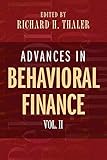

Rather than assume people always have complete information, unlimited attention, stable preferences, and perfect self-control, behavioral economists investigate how actual decisions can differ from those assumptions—and what follows for individuals, markets, and policy. These are organizing questions, not a claim that everyone behaves irrationally in every situation.
How the field developed
From psychological evidence to economic analysis
The field developed through multiple strands of work, including research on judgment, choice, and experiments. The National Academies describes the history as a growing integration of psychological findings with economics, rather than a replacement of economics by psychology.
#1 Best Overall
Recognition and influence
In 2002, Daniel Kahneman shared the economics prize for integrating psychological insights into economic science, while Vernon Smith shared it for contributions to experimental economics. Richard Thaler’s 2017 Nobel recognition was another institutional milestone. The Royal Swedish Academy of Sciences, in its account reproduced by NBER, said Thaler “has incorporated psychologically realistic assumptions into analyses of economic decision-making.” The Academy pointed to his work on limited rationality, social preferences, and self-control, and to consequences for both individual choices and market outcomes.
The NBER’s account of the 2017 award describes applications including household saving, financial-market price formation, fairness in wages and prices, and nudges intended to influence consumer behavior. These examples show the field’s reach; they do not establish that a particular intervention will improve every household’s finances.
Five useful ideas for understanding financial choices
The National Academies identifies five principles that organize substantial areas of behavioral economics. Each can help frame a question about money, but none is a diagnosis that applies automatically to every person.
- Limited attention and cognition: People have finite capacity to notice, process, and compare information. A complicated financial choice may therefore be difficult even when the relevant details are available.
- Inaccurate beliefs: Decisions can depend on beliefs that do not match reality. This makes it important to ask not only what information is presented, but what people understand and expect.
- Present bias: Immediate costs and benefits can carry more weight than future ones. This is one lens for studying choices involving current spending and longer-term saving, not proof that any individual lacks discipline.
- Reference dependence and framing: People can evaluate an outcome relative to a reference point, and the way a choice is presented can matter. The framing of a financial option is therefore relevant to how it is assessed.
- Social preferences and norms: Decisions may reflect concern for fairness, other people, or what seems normal in a group, as well as direct personal gain.
Where behavioral economics is used today
Behavioral research now draws on cognitive science, economics, psychology, sociology, neuroscience, and decision sciences. The OECD’s current behavioral-science overview describes applications in areas including climate, health, public communication, sustainable tourism, and misinformation. It lists randomized controlled trials, A/B tests, field experiments, and qualitative studies among the methods practitioners use.
Windows Errors? Fix Them Before They Spread
Repair common Windows errors and clear accumulated junk for a smoother, more stable PC - no reinstall needed.Free scan · no reinstallOutdated Drivers Are Slowing You Down
One free scan finds every outdated or missing driver and matches the right update for your exact hardware.Free scan · exact hardware matchRank #3
The OECD’s current topic page says the first behavioral insights unit was established in 2010 and that there are now over 300 such teams worldwide; it does not state a publication year for that team count. The page also describes an OECD network representing over 100 government officials from more than 50 countries, likewise without stating a publication year for that figure. These numbers indicate institutional activity, not the effectiveness of any one policy.
Policy applications and a context-specific energy result
An OECD 2019 report covers behavioral work on competition, consumer protection, energy use, and safety. In a Canadian experiment described in that report, in-home displays that provided real-time electricity-use feedback were associated with household electricity consumption about 3% lower. The reduction was observed for at least five months and mainly reflected one-time actions, such as changing device settings or investing in more efficient appliances. That result belongs to that intervention and setting; it is not a general estimate of what feedback will save in other households.
Rank #4
The same OECD report discusses experiments involving online advertising, disclosures, personalized pricing, cartel deterrence, and safety regulation. The breadth of these cases matters: behavioral tools can be applied to different problems, but the target, design, and evidence need to be examined separately.
Evidence on misinformation
The OECD’s current topic page describes a study conducted with Canada and France involving 1,872 people. Participants shown digital media literacy tips had a 21% average decrease in intentions to share fake news compared with the control group. The page does not state its publication date in the information available here, and the result concerns stated sharing intentions in that study—not observed behavior across all populations.
Best Value
How to judge a behavioral intervention
Before treating an intervention as a useful answer to a financial or policy problem, first establish what is driving the behavior. A barrier caused by confusing information may call for a different response from one caused by limited resources, incentives, or access. Then assess the evidence and the trade-offs rather than relying on the label “behavioral.”
- Target and diagnosis: What behavior is meant to change, and is the identified barrier actually behavioral?
- Effect size and duration: How large is the measured change, and how long was it observed?
- Transfer: Does the evidence apply to the relevant population, country, institution, and decision?
- Study design: Was the intervention tested with an appropriate method, and what limitations could affect interpretation?
- Practical value: Can it be scaled, and are its benefits worth its costs?
- Ethics: Is the intervention transparent, and what does it mean for people’s autonomy?
The OECD recommends scoping the problem before testing solutions and using rigorous approaches, including cross-country and cross-cultural experiments where relevant. It also points to organizational behavior as an area needing more attention. Null or statistically limited findings should be reported and interpreted: they help identify where an approach may not work, rather than serving as evidence to conceal.
What should shape the field’s future
The next step is not simply to produce more nudges. It is to learn more reliably when an approach helps, for whom, for how long, and at what cost or ethical trade-off. The OECD identifies persistence, variation in departures from rationality assumptions, and differences across countries and groups as open questions.
For personal-finance readers, the practical takeaway is to use behavioral economics as a way to ask better questions about financial decisions—not as a promise that a small change in presentation will solve a household’s financial constraints. The field’s usefulness depends on linking a well-defined problem to evidence that fits the people and circumstances involved.
What’s actually slowing this PC down?
Pick the symptom - the matching free tool is one click away.
Readers who want a broader account of the field’s development, policy impact, and future directions can consult the National Academies Press 2023 consensus report, Behavioral Economics: Policy Impact and Future Directions.
Quick Recap
Product prices and availability are accurate as of the date/time indicated and are subject to change. Any price and availability information displayed on Amazon at the time of purchase will apply.




