Windows Errors? Fix Them Before They Spread
Repair common Windows errors and clear accumulated junk for a smoother, more stable PC - no reinstall needed.Free scan · no reinstallOutdated Drivers Are Slowing You Down
One free scan finds every outdated or missing driver and matches the right update for your exact hardware.Free scan · exact hardware matchOracle sold its stake in Arm-based chip designer Ampere Computing because Larry Ellison said owning a chip-design path was no longer strategic for Oracle’s cloud business. The replacement strategy is “chip neutrality”: working with multiple CPU and GPU suppliers instead of tying Oracle’s infrastructure plans to one semiconductor company or architecture.
That does not prove Ampere’s technology failed, nor does it establish that Oracle has stopped using Ampere processors. It means Oracle is trading ownership and influence over one chip supplier for greater flexibility as AI hardware changes quickly.
As an Amazon Associate I earn from qualifying purchases.
What Oracle sold
Oracle sold its equity interest in Ampere Computing as part of SoftBank’s agreement to acquire Ampere for $6.5 billion in cash. The transaction was announced on March 20, 2025, Japan time, or March 19 in the United States. Sellers included Carlyle, Oracle and Arm-related interests. SoftBank described the deal as a way to strengthen its AI-infrastructure strategy.
Recommended Free Tools
Oracle’s February 2025 Form 10-Q described its Ampere investment as approximately 29% of the company. SoftBank’s transaction materials separately listed Oracle Project Denver Holdings LLC as holding 32.27% of voting equity interests at the transaction date. Those figures refer to different dates and ownership calculations; they should not be treated as a contradiction or averaged together.
#1 Best Overall

- COMPATIBILITY: Development board supporting multiple wireless protocols including Bluetooth
- Thread, Matter, Zigbee, ANT, and NFC at 2.4GHz frequency
- PROCESSOR: Features the advanced nRF54L15 transceiver chip from Nordic Semiconductor for reliable wireless communications
- WIRELESS STANDARDS: Implements IEEE 802.15.4 protocol support for Matter, Thread, and Zigbee networking applications
- DEVELOPMENT PLATFORM: Comprehensive evaluation board designed for testing and prototyping wireless connectivity solutions
Ampere designed high-performance, energy-efficient processors based on the Arm architecture for cloud and AI workloads. It was principally a chip-design company, not a semiconductor manufacturer operating its own leading-edge fabrication plant. SoftBank said Ampere had approximately 1,000 semiconductor engineers.
Ellison’s stated reason for the sale
In Oracle’s fiscal 2026 second-quarter earnings release, Ellison said Oracle no longer considered it strategic to continue “designing, manufacturing and using our own chips in our cloud data centers.” He said Oracle instead wanted to remain neutral and work with all CPU and GPU suppliers.
In practical terms, Oracle’s position is that it would rather select processors according to customer demand and workload requirements than own part of a company whose roadmap could become central to its cloud infrastructure.
That rationale is narrower than saying Oracle has abandoned all custom hardware. The public evidence shows that Oracle sold its Ampere ownership position and adopted a chip-neutral strategy. It does not show that Oracle will never co-design hardware, optimize systems around particular processors or use specialized silicon.
What “chip neutrality” means
“Chip neutrality” is Oracle’s strategic description, not a formal industry standard or a promise to treat every vendor identically. It generally means preserving the ability to qualify, buy and deploy chips from several suppliers.
- Customer choice: Different customers may prefer different CPU architectures, accelerators or software environments.
- Workload fit: AI training, inference, general-purpose computing and networking can have different hardware requirements.
- Less roadmap concentration: Oracle is less dependent on Ampere—or any single supplier—to meet future needs.
- Negotiating flexibility: Multiple qualified suppliers can reduce dependence on one vendor’s pricing, availability and delivery schedule.
- Faster adaptation: Oracle can respond as performance, memory, networking and energy-efficiency priorities change.
Ellison specifically said Oracle would continue buying the latest NVIDIA GPUs. Oracle has also announced plans involving AMD Instinct MI450 GPUs, but an announced future deployment should not be confused with confirmed production availability.
Rank #2
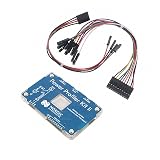
- POWER MONITORING: Professional-grade current monitoring and power management evaluation board for precise power consumption analysis
- COMPATIBILITY: Designed specifically for Nordic Semiconductor development and testing applications
- MEASUREMENT CAPABILITIES: Enables real-time current measurement and power profiling for embedded system development
- DATA ANALYSIS: Features comprehensive power consumption data collection and visualization capabilities
- DEVELOPMENT TOOL: Essential evaluation board for optimizing power efficiency in embedded system projects and prototypes
Neutrality does not mean Oracle will support every chip equally or deploy every supplier at scale. Oracle still has to choose platforms, test them, integrate software, secure supply and operate them reliably.
Free tools Windows power users keep installed
One-click scans. No signup required.
Why this matters more in AI infrastructure
AI data centers use several kinds of processors. CPUs remain important for general-purpose computing and orchestration, while GPUs and other accelerators handle many AI training and inference workloads. The best choice can vary by model, software stack, latency target, power budget and customer requirements.
Owning a chip designer can provide influence over product direction and potentially create differentiated hardware. It can also concentrate risk around one development roadmap. A neutral sourcing model gives up some ownership and influence in exchange for optionality.
That is an analytical trade-off, not a claim Oracle made in every detail. Oracle’s explicit claim was that designing, manufacturing and using its own chips was no longer strategic. The likely business implications are greater supplier flexibility and the ability to focus capital and engineering on data centers, cloud services, networking, systems integration and customer delivery.
Oracle’s approach versus other hyperscalers
AWS, Google and Microsoft have all pursued forms of in-house silicon. AWS has developed custom CPUs and AI accelerators, Google has its TPU program, and Microsoft has also invested in custom processors.
Do these 3 things before closing this tab:
1Repair Windows errors before they cause bigger problems2Fix the driver behind crashes, sound loss and screen glitches3Clear out junk files and repair common Windows errorsThe difference is best understood as a difference in emphasis:
Rank #3

- 【Easy to install】An excellent DIY kit for electronic enthusiasts in semiconductor refrigeration applications,Completely assembled,you have no need to use your hands,save time. Positive red and negative black,easy to install.
- 【High quality and Durable】The complete sealing structure isolates the moisture in the air,Using high-quality aluminum + TEC1-12706 semiconductor cooling plate, durable.
- 【High cooling efficiency】 This semi-conductor cooler includes a large radiator, 2 cooling fans, 2 large fans and 2 cold-end modules.easily cooling down within a few minutes. no noise, no vibration, no refrigerant required.Power Supply: DC 12V.Max Power:144W.
- 【Mini size design】Easy to install,Save space, can be installed anywhere,compact size (200 * 120 * 95mm / 7.87 x 4.72 x 3.74 inches) DIY Peltier Kit include TEC1-12706 semiconductor cooler and other accessories.
- 【 Best assistant for small space cooling】Suitable for computer heatsink ,small splace cooling. Also used for pet bed cooling,plate cooling,test bench,cardboard box, Pantry,wine cellar,ect
| Model | Main idea | Potential advantage | Potential cost |
|---|---|---|---|
| In-house silicon | Develop processors primarily for internal cloud workloads | More control over performance, cost and integration | Large engineering investment and roadmap risk |
| Strategic investment | Own part of an external chip designer, as Oracle did with Ampere | Influence and economic exposure without building the company from scratch | Exposure to the investment’s financial and technology risks |
| Chip-neutral platform | Source processors and accelerators from multiple suppliers | Flexibility and customer choice | More integration complexity and less ownership of the roadmap |
These categories are not mutually exclusive. A cloud provider can use merchant chips, develop custom silicon and collaborate with suppliers at the same time. Oracle’s sale shows a shift away from owning this particular chip-design investment, not necessarily a refusal to customize its entire infrastructure.
Why SoftBank wanted Ampere
SoftBank’s rationale was different from Oracle’s. SoftBank said Ampere would strengthen its AI-infrastructure capabilities and complement Arm’s ecosystem. SoftBank was already Arm’s majority shareholder, while an Arm affiliate held an Ampere interest. Buying Ampere gave SoftBank direct ownership of an Arm-based server-CPU designer.
This explains why the same asset could be less strategic to Oracle but valuable to SoftBank. Oracle’s priority was supplier optionality across its cloud business. SoftBank saw potential strategic value in combining Arm’s broader ecosystem with Ampere’s processor-design expertise.
What’s actually slowing this PC down?
Pick the symptom - the matching free tool is one click away.
The transaction therefore does not establish that Oracle judged Ampere to be worthless or that SoftBank “proved” Oracle wrong. The two companies had different goals, resources and positions in the semiconductor market.
The financial context
Oracle reported a $2.7 billion pre-tax gain from selling its Ampere interest. The gain affected both GAAP and non-GAAP earnings per share, according to Oracle’s earnings release.
That is a significant financial consequence, but it should not be described as ordinary cloud revenue or recurring operating profit. A pre-tax gain from selling an investment is different from cash generated by selling cloud capacity, software or support.
Rank #4

- DEVELOPMENT KIT: Nordic Semiconductor NRF5340-AUDIO-DK designed for audio application development with nRF5340 dual-core Bluetooth LE SOC
- VERSATILE CONNECTIVITY: Features multiple interface options including I2S, SPI, UART, and USB for comprehensive development capabilities
- POWER SPECIFICATIONS: Operates with flexible power supply range of 1.7V to 5V, suitable for various development scenarios
- TEMPERATURE RANGE: Capable of operating in environments up to +105°C, ensuring reliable performance across diverse conditions
- AI COMPATIBILITY: Supports Edge Impulse platform integration, enabling advanced machine learning and AI development capabilities
Nor does the reported gain prove that Oracle sold Ampere primarily to capture a profit. Oracle’s public explanation emphasized strategy. The gain was the accounting and financial result disclosed alongside that strategic decision.
SoftBank’s transaction materials also reported that Ampere had 2024 revenue of $16.46 million, an operating loss of $510.623 million and a net loss of $580.767 million. Those figures indicate that Ampere was consuming substantial resources relative to its revenue, or was in a heavy investment phase. They provide important context, but they do not prove that Ampere’s financial performance was Oracle’s decisive reason for selling.
Oracle’s earlier filing also disclosed put and call arrangements involving co-investors, with values ranging from approximately $450 million to $1.5 billion and exercise periods extending through January 2027. Those arrangements show that Oracle’s holding was not a simple passive investment, but the cited filings do not establish that the options themselves caused the sale.
What the transaction does—and does not—mean
It means:
- Oracle exited its ownership position in Ampere as part of SoftBank’s acquisition.
- Oracle publicly favors flexibility across CPU and GPU suppliers.
- Oracle no longer considers its former strategy of designing, manufacturing and using its own chips to be strategic for its cloud data centers.
- Oracle expects to continue buying NVIDIA GPUs while retaining the ability to use other suppliers.
It does not necessarily mean:
- Oracle has stopped using Ampere processors.
- Ampere’s technology failed or was unsuitable for every workload.
- Oracle will never participate in hardware co-design or use specialized silicon.
- Oracle has abandoned all infrastructure differentiation.
- The $2.7 billion gain was the main reason for the sale.
The trade-off Oracle is making
Chip neutrality can help Oracle serve customers with varied hardware preferences and avoid committing too heavily to one processor roadmap. It may also allow the company to direct more resources toward cloud capacity, software and data-center operations.
The cost is that a multi-supplier environment can be harder to operate. Oracle must maintain software compatibility, compilers, drivers, provisioning systems, testing processes and support for different platforms. It may also lose some influence over Ampere’s roadmap and give up a potential source of hardware differentiation.
The Tool Desk
Outbyte PC Repair FREEClear out junk files and repair common Windows errorsFree Scan →Outbyte Driver Updater FREEFix the driver behind crashes, sound loss and screen glitchesFind Drivers →In other words, Oracle is not eliminating semiconductor dependence. It is changing the form of that dependence—from owning a significant stake in one chip designer to sourcing from several external suppliers.
Best Value

- 30+ Guided Electronics Projects: Start with LEDs and build toward LCD1602 displays, RFID access, motion detection, distance sensing, motor control and environmental monitoring for STEM learning, coding clubs, classrooms and hobby projects
- 200+ Components Across 63 Types: Includes an ELEGOO UNO R3 controller, LCD1602, RC522 RFID, RTC, HC-SR501 PIR sensor, ultrasonic sensor, DHT11, GY-521, MAX7219, keypad, joystick, relay, SG90 servo, stepper motor, breadboard and more
- Begin Without Soldering: Pre-soldered modules, a solderless breadboard, organized storage case and small-parts box reduce setup time and help beginners move from lesson to lesson while keeping LEDs, ICs, wires and sensors easy to find
- Learn, Modify and Create: Program the ELEGOO UNO R3 board with Arduino IDE using the included PDF tutorial and example code, then adjust sensor thresholds, timing, display text and motor behavior to turn guided lessons into original projects
- Flexible Power and Project Setup: Includes a 9 V, 1 A power supply, breadboard power module, 9 V battery and USB cable to support controller, breadboard and module experiments without sourcing basic setup accessories separately
Bottom line
Oracle sold its Ampere stake because Ellison said ownership of a chip-design path was no longer strategic to the company’s cloud data centers. Oracle’s new “chip neutrality” approach prioritizes the freedom to use the processors and accelerators that best match customer demand and changing AI workloads.
The decision should not be read as proof that Ampere failed or that Oracle has abandoned every form of custom hardware. It is a strategic exchange: less ownership and control over one semiconductor asset in return for more supplier optionality. The long-term question is whether that flexibility outweighs the cost of integrating and depending on multiple external chip roadmaps.
Frequently Asked Questions
Did Oracle stop using Ampere chips after selling its stake?
The available public statements confirm that Oracle sold its ownership interest, but they do not establish that Oracle stopped purchasing or using Ampere processors.
What was Ampere’s role in the semiconductor industry?
Ampere designed Arm-based, high-performance and energy-efficient processors for cloud and AI workloads. It relied on external semiconductor manufacturers for fabrication rather than operating a leading-edge chip foundry.
How much did Oracle gain from selling its Ampere investment?
Oracle reported a $2.7 billion pre-tax gain, which affected GAAP and non-GAAP earnings per share. That was an investment-sale gain, not recurring cloud revenue.
Quick Recap
Product prices and availability are accurate as of the date/time indicated and are subject to change. Any price and availability information displayed on Amazon at the time of purchase will apply.




