Quick wins for a faster PC:
Fix the driver behind crashes, sound loss and screen glitchesFind Drivers →Repair Windows errors before they cause bigger problemsFix Now →Scan for outdated or missing drivers - takes under a minuteDriver Scan →Google’s sale of its radio-advertising assets to WideOrbit in 2009 ended a three-year effort to bring automated, measurable buying to terrestrial radio. The sale was the final step in a shutdown Google had announced in February—not evidence that it sold radio stations or that every kind of offline advertising had failed.
What Google sold—and when
On August 5, 2009, WideOrbit acquired assets from Google’s radio-advertising business in a transaction whose price was not disclosed. The assets included Google Radio Automation and related systems identified in contemporary reporting as SS32 and Maestro. WideOrbit also took on employees associated with the operation. Contemporary reports said the business had about 3,600 customers and roughly 40 employees, but those figures were reported estimates, not a published transaction schedule. The Guardian’s sale report and PaidContent’s report carried by CBS describe the deal.

As an Amazon Associate I earn from qualifying purchases.
These were advertising and broadcast-operations technologies, not radio stations or broadcast licenses. Nor was the August sale a sudden reversal: Google had announced its exit from broadcast radio in February and sought a buyer for its automation software.
Outdated Drivers Are Slowing You Down
One free scan finds every outdated or missing driver and matches the right update for your exact hardware.Free scan · exact hardware matchPC Slower Than It Used to Be?
A free scan shows the junk files, broken settings and background clutter dragging Windows down - then fixes them in one click.Free scan · Windows 10 & 11Google’s bet on radio began with dMarc
Google announced its agreement to acquire dMarc Broadcasting on January 17, 2006. The Newport Beach company had technology for connecting advertisers with radio stations and automating parts of ad sales, scheduling, delivery, and reporting. Google’s SEC-filed announcement set the upfront cash consideration at $102 million, with up to $1.136 billion in additional payments over three years if specified product-integration, revenue, and inventory targets were met. The larger figure was contingent, not a guaranteed purchase price. The SEC filing sets out the terms.
#1 Best Overall

- Used Book in Good Condition
The strategic idea was to use Google’s advertiser relationships and automated buying tools alongside dMarc’s radio infrastructure. In principle, an advertiser could use a more centralized process to place radio ads, while stations could automate operational tasks and receive campaign reporting. Google was trying to extend a marketplace model familiar from online ads into a medium with different inventory owners, sales relationships, and audience measurement.
Radio was one part of a broader advertising push
Google’s 2008 Form 10-K described several efforts to sell advertising beyond its core web properties. The filing distinguishes their roles:
Rank #2

- Used Book in Good Condition
- Google Audio Ads was an automated platform for placing ads in radio programming.
- Google Radio Automation was software intended to automate broadcast programming and ad operations.
- Google Print Ads offered a marketplace for placing advertisements in print media.
- Google TV Ads supported buying, scheduling, delivering, and measuring television advertising.
That portfolio matters when interpreting the radio exit. Google was testing whether its advertising systems could span multiple media, not simply adding another online format. Radio, print, and television nevertheless had distinct business models and should not be treated as interchangeable experiments.
Free tools Windows power users keep installed
One-click scans. No signup required.
Why Google’s radio marketplace struggled
Google said it had not made the impact it hoped for in broadcast radio. Contemporary accounts and later scholarship suggest several connected obstacles, but the public record does not establish one definitive cause.
Rank #3
Inventory and adoption were not sufficient
A marketplace needs enough inventory from sellers and enough demand from buyers. Contemporary reporting said Google did not secure enough radio inventory from stations to create a substantial marketplace, while the service did not attract sufficient traction. TechCrunch’s coverage at the time discussed inventory and adoption as central problems. Automating the process could not by itself make stations supply inventory or convince advertisers to shift budgets.
Radio was harder to measure in Google’s preferred way
Radio operations could be automated, but that was not the same as making audience response as directly observable as a click or search ad. Broadcast audience estimates and campaign attribution are less immediate and granular than online interaction data. Google’s February announcement emphasized that radio had not delivered the impact it wanted and said it would focus on advertising products offering measurability. That is the company’s stated rationale, not proof that measurement alone caused the withdrawal.
Rank #4
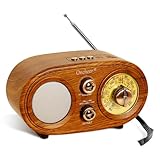
- ♫【Crystal Sound & Loud Sound】: The bluetooth speaker radio has a good quality amplifer and bring nice sound quality. The loud sound can easily spread across your room. Not matter small or large volume voice, the radio speaker sound is impressive and clear. With this cute bluetooth speaker radio, you can enjoy listening to radio program and music.
- ♫【Classic Retro Design】: With cute and classtic retro appearance design, this retro radio speaker can be placed in anywhere in your home as nice retro decoration. Small size and the bluetooth radio is portable with a handing cord. Turning on the radio, it seems bring you back to the old time.
- ♫【Multi-Functions Speaker】: This Oncheer 2076BT bluetooth speaker radio is a combination of 3 band FM/AM/SW radio and stereo wireless bluetooth speaker. Build-in adjustable 360° rotating antenna and premium reception radio chip, the FM radio have nice radio listening experience. You also can connect radio to your mobile phone to play music via bluetooth, or pluging TF card/ USB drive easily to play music as a MP3 Player.
- ♫【Long Running Time】: Build-in 1200mAh rechargeable battery, the bluetooth speaker radio lasts for over 12 hours (based on the loudness of the sound). Using the DC 5V charging port to charge the radio, it will take 4-5 hours to charge to full capacity. You also can plug the charging cable to the radio all the time, your music never stop.
- ♫【Best Gift Choice】: No need to worry about sending gifts to friends, family, boy/girl friend for Chrismas, Birthday, Father's Day, Mother's Day, Thanks Giving Day. The classic looking bluetooth speaker radio will be your nice choice and place order with gift package. Sending this gifts and spending music time together.
Industry workflows and incentives mattered
Stations controlled their own inventory and operated through established sales, traffic, scheduling, and production workflows. A later New Media & Society study interprets Google’s effort as underestimating the institutional and cultural friction involved in entering American commercial radio, including consolidation and differences between Silicon Valley platform assumptions and radio-industry norms. This is retrospective scholarly analysis, not a contemporaneous company explanation. The study provides that broader context.
The downturn added pressure, but is not a complete explanation
Google withdrew during the 2008–2009 advertising downturn and a period of cost-cutting. Contemporary coverage connected the decision to belt-tightening, but the evidence does not show that the recession alone caused the radio effort to fail. The Los Angeles Times covered both the retreat and the wider business context.
Best Value

- Used Book in Good Condition
February shutdown, then August asset sale
On February 12, 2009, Google announced that it would leave broadcast radio, phase out Google Audio Ads and AdSense for Audio, and seek a buyer for Google Radio Automation. It said advertisers and broadcasters could use the service through May 31, 2009, and that as many as 40 employees might not find other roles. The company said it would explore advertising in online streaming audio and continue investing in television advertising. Google’s announcement gives its timing and stated plans.
The later WideOrbit deal transferred technology and operating assets after the planned service wind-down. WideOrbit’s acquisition suggests the software and customer relationships could still have operational value to an established media-software vendor, even though Google did not build the radio advertising marketplace it sought.
Was the dMarc acquisition a billion-dollar loss?
No such conclusion follows from the announced terms. Google paid $102 million upfront; the additional $1.136 billion was a maximum tied to targets. Contemporary reporting said those targets were not met, meaning the maximum was not the amount Google necessarily paid. The later sale price was undisclosed. The defensible conclusion is that Google’s radio expansion failed to meet the thresholds for the large contingent payments and that the assets were subsequently sold for an unknown amount. The Los Angeles Times’ contemporaneous account discusses the performance targets.
What’s actually slowing this PC down?
Pick the symptom - the matching free tool is one click away.
What the episode says about Google’s offline strategy
The radio retreat came after Google had shut down Print Ads in January 2009, a move that contemporary coverage treated as part of a pullback from traditional-media ambitions. But Google’s own February statement did not say it was abandoning all advertising outside web search: it pointed to streaming audio and continued television investment. Its 2008 filing also described TV Ads as an active product effort.
The narrower lesson is about fit. Google’s online advantage relied on abundant, machine-readable inventory, scalable buying and delivery, and relatively direct response signals. Radio inventory and workflows were controlled by broadcasters, while audience measurement and attribution did not offer the same feedback loop. Automating bookings could improve operations, but it could not create marketplace liquidity unless stations, advertisers, and Google all had sufficient incentives to participate.
So the sale is a meaningful sign that Google’s attempt to transplant its online-ad model into broadcast radio fell short. It is not proof that radio advertising was worthless, that the acquired technology had no use, or that all offline advertising was inherently unviable. The distinct outcomes of radio, print, television, and streaming audio matter more than a single label such as “offline.”
Quick Recap
Product prices and availability are accurate as of the date/time indicated and are subject to change. Any price and availability information displayed on Amazon at the time of purchase will apply.
Recommended Free Tools




