Quick wins for a faster PC:
Fix the driver behind crashes, sound loss and screen glitchesFind Drivers →Repair Windows errors before they cause bigger problemsFix Now →The Swiss franc often strengthens when markets become unsettled because investors regard it as a safe-haven currency. That is a tendency, not a guarantee: the response varies with the source of uncertainty, interest-rate conditions and Swiss National Bank (SNB) policy.
Why investors turn to the franc
When volatility rises or equity markets fall, investors may seek currencies and assets they consider relatively reliable. The International Monetary Fund (IMF) identifies the Swiss franc, US dollar and Japanese yen as currencies that have tended to appreciate in such risk-off episodes. This describes an observed pattern over past decades, not a promise about what the franc will do in any particular bout of market stress. The IMF’s 2026 assessment also notes that the strength of safe-haven flows can change.

How franc demand can show up
Deposits, not just purchases of Swiss assets
Safe-haven demand does not necessarily mean a wave of investors buying Swiss government bonds or moving new capital into Switzerland. The IMF notes that Switzerland’s government debt market is relatively small and less liquid than major government debt markets in the United States and Japan. Historically, demand for francs has often appeared as higher franc deposits, including deposits at Swiss banks’ overseas offices. The IMF’s 2026 report describes this distinction.
Information and expectations
The franc can move in response to how investors interpret events and revise expectations, not only to recorded cross-border investment. An SNB working paper published in 2016 found a robust relationship between global or regional uncertainty measures and franc movements in the paper’s sample. It found that capital-flow variables did not necessarily move in step with the franc and identified an information channel as more closely associated with its behavior. That study’s finding is specific to its analysis; it does not establish that capital flows never affect the currency. The SNB working paper explains its results.
#1 Best Overall
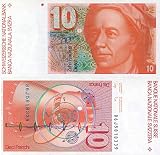
- AMAZING HIGH QUALITY IMAGES- All Images Are Printed On Photo Paper To Ensure The Highest Quality Images Available For Your Home Or Office. You'll Love The Crispness, Detail And Clarity Of Each And Every Image We Offer.
- FULLY LAMINATED-Our Photos And Posters Are Fully Laminated To Protect Them From Dust, Liquids And Other Forms Of Environmental Damage. Each Image Remains As Fresh And Beautiful As The Day You Placed It On Your Wall.
- LARGE POSTERS-Our Laminated Posters Are Carefully Curated, So They Will Add To The Character Of Any Room They Are Placed In, And Add Vivid Colors And Imagery To Any Home Or Office Space.
- CAREFULLY PACKAGED -Our Posters are Securely Placed In A Box To Ensure That Your New Posters Arrive At Your Home Or Office In Perfect Condition And Ready To Hang.
- 20 By 30 INCH IMAGE SIZE-The 20 Inch By 30 Inch Size Of Our Images Guarantee That They Will Have A Significant Visual Impact In Any Room You Place It In. Our Standard 20 By 30 INCH Size Also Makes It Easy For You To Choose From A Wide Variety Of Frames And Styles To Complete The Presentation.
Why the franc does not always rise
Safe-haven status is a historical pattern whose strength depends on conditions. Interest-rate differences can change the relative appeal of currencies, while the type and scale of market stress can affect where investors seek shelter. In its 2026 assessment, the IMF described a period in which relatively high US interest rates, lower Swiss policy rates and dollar weakness affected the relative appeal of safe-haven positions. It reported more limited inflows and reduced trade-weighted appreciation, which also limited the SNB’s intervention. These observations concern the conditions described in that assessment; they are not a forecast for every future episode.
Accordingly, rising uncertainty does not mechanically produce franc appreciation. The useful question is whether uncertainty is increasing demand for francs under the prevailing monetary and market conditions.
What the SNB can do
The SNB considers the exchange rate as part of monetary policy and has intervened in foreign-exchange markets in some circumstances. In a 2009 speech during the financial-market crisis, then-Governing Board member Thomas Jordan wrote: “The Swiss National Bank (SNB) takes the exchange rate into account in its monetary policy although it does not normally exert any direct influence on it.” The statement reflects the context of that speech; it should not be read as a description of today’s precise policy settings. Jordan’s 2009 speech also discussed exceptional intervention.
Intervention can influence currency-market outcomes, but it does not mean Switzerland maintains a permanent franc peg or an unconditional exchange-rate floor. The IMF reported that the SNB made CHF 5.2 billion in net foreign-exchange purchases in 2025, equivalent to 0.6% of GDP. This is a figure for that year, not a measure of intervention in every episode of uncertainty. The report also gives CHF 853 billion in official reserve assets, including gold, at end-2025; reserves are not themselves a direct measure of current franc demand. Both figures are reported in the IMF’s 2026 Switzerland Article IV materials.
Do these 3 things before closing this tab:
1Fix the driver behind crashes, sound loss and screen glitches2Clear out junk files and repair common Windows errors3Scan for outdated or missing drivers - takes under a minuteRank #3
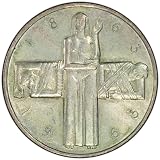
- Issued And Monetized By The Government Of Switzerland.
- In 1967, the price of silver soared steeply, reaching 260 francs per kilogram in August and 350 francs per kilogram in March 1968. At this time, the melt value of the 1/2 franc pieces was circa 0.73 francs. Switzerland started to experience a severe shortage of cash, especially in the north, where people were illegally exporting coins to Germany to be melted. In spite of strict measures against hoarding and melting coins, it is estimated that around 100 tonnes of silver in Swiss francs melted
- The obverse of the coin includes the Latin script with the inscription "5 FR CONFOEDERATIO HELVETICA B," designed by Max Weber. The reverse features a woman standing with her left hand raised and holding a bowl in her right hand, with two wounded soldiers lying behind her, forming a cross with the three figures. The inscriptions "1863 1963" and "WEBER" are also present. The edge of the coin has embossed lettering.
- Image is a sample product you will recieve will vary
What a stronger franc means for Switzerland
A stronger franc has opposing effects. It can lower the cost of imported goods and help restrain inflation, while making Swiss products more expensive for foreign buyers and weighing on export price competitiveness. In its June 2026 staff statement, the IMF said the strong franc had mitigated upward inflation pressure from energy prices. That is a specific assessment of the period discussed, not a claim that appreciation always offsets inflation or benefits every Swiss business.
Quick Recap
Best Value

- Premium Quality with Durable Rubber Backing provides strong grip and stability, preventing sliding while offering a softer, more secure feel than standard rugs. Built for lasting everyday use.
- Featuring detailed imagery of world currencies, this collection celebrates international culture, history, and financial symbolism adding a bold, conversation-starting statement piece to any space.
- Durable leather based non slip backing enhances floor grip and stability, helping keep the rug securely in place on hardwood, tile, laminate, and other smooth surfaces.
- Designed for every room with versatile size options available, allowing you to select the ideal fit for living rooms, bedrooms, kitchens, nurseries, or entryways.
- Thin profile with a soft and comfortable surface offers a smooth feel underfoot while remaining lightweight, flexible, and practical for daily use.
How to read claims about franc strength
- Look for the time period. Safe-haven correlations can vary; a historical tendency does not settle what happened in a specific market episode.
- Separate currency demand from capital flows. Franc movements do not necessarily coincide with measured flows into Switzerland.
- Distinguish intervention from a peg. SNB purchases or sales can affect the market without establishing a permanent exchange-rate target.
- Keep reported figures in context. The IMF reported average net private inflows of -1.1% of GDP during 2014–24 and an average annual increase in SNB reserves of 4.5% of GDP over the same period. These are period-specific accounting measures, not a direct reading of franc demand in every uncertainty episode. The IMF’s 2026 report provides that historical context.
Product prices and availability are accurate as of the date/time indicated and are subject to change. Any price and availability information displayed on Amazon at the time of purchase will apply.




