Quick wins for a faster PC:
Clear out junk files and repair common Windows errorsFree Scan →Scan for outdated or missing drivers - takes under a minuteDriver Scan →Repair Windows errors before they cause bigger problemsFix Now →The announced UPI change is a selective merchant discount rate (MDR), not a blanket charge on every UPI user. The Ministry of Finance says person-to-person (P2P) transfers will remain free, individual consumers will not be charged, and qualifying small merchants will continue to pay zero MDR. Under the Ministry’s 15 September 2026 FAQ, the framework is scheduled to take effect on 15 October 2026. That is an announced schedule: the implementing notification or circular was not available among the official materials reviewed here, so its legal publication and operational details have not been independently verified.
What changes—and what does not
The change shifts part of UPI acceptance and upkeep funding from government incentives toward fees within the merchant-payment ecosystem. MDR is paid on covered person-to-merchant (P2M) payments; it is not described by the Ministry as a government tax or a fee charged to consumers.
- P2P transfers: The Ministry says transfers between individuals remain free regardless of amount.
- P2M purchases: The announced MDR applies selectively to specified merchant transactions, chiefly those above ₹2,000. P2M transactions up to ₹2,000 remain free of MDR.
- P2PM small merchants: Merchants classified under the P2PM category and receiving up to ₹1 lakh per month through UPI QR codes retain zero MDR. That depends on the account and category treatment described by the Ministry; it is not an automatic exemption for every shop a customer might consider small.
The Ministry says banks have been advised to ensure merchants do not pass MDR on to customers. That is the stated policy; the available materials do not establish how consistently it will be followed or estimate any effect on prices.
What rates are announced for covered merchant payments?
The 15 September 2026 Ministry of Finance FAQ sets out the following rates. They apply to specified categories, not to every payment above the relevant amount.
#1 Best Overall

- Use the, easy-to-use, and customizable POS to get started.
- Accept contactless payments, chip cards, Apple Pay, and Google Pay from anywhere, with improved connectivity, extended battery life, and enhanced security. Pay one low rate for every tap or dip.
- No long-term commitments or contracts, no monthly fees- and with offline payments, keep taking payments for up to 24 hours.
- Safely and securely accepts payments anywhere. Plus, get data security, 24/7 fraud prevention, and payment-dispute management at no extra cost.
- Use the, easy-to-use, and customizable POS to get started.
| Payment category | Announced MDR | How the threshold or cap works |
|---|---|---|
| Specified standard P2M transactions | 0.4% | For transactions above ₹2,000; capped at ₹300 for transactions of ₹75,000 or more. |
| Specified essential-sector transactions | Flat ₹5 | For transactions above ₹2,000 in sectors including railways, telecom, insurance and fuel. The 8 August PIB release also lists agricultural inputs. |
| Capital-market transactions | 0.02% | Capped at ₹300, as stated in the Ministry FAQ. |
| Qualifying P2PM merchants | 0% | Merchants categorized as P2PM and receiving up to ₹1 lakh per month through UPI QR codes, subject to the FAQ’s account and category treatment. |
The precise classification of a transaction matters: the FAQ describes specified sectors and categories, so a merchant should confirm how its acquiring bank or payment provider classifies its payments rather than assume one rate applies to every sale.
Why change the funding model?
For years, government incentives helped fund participation in the UPI ecosystem while MDR remained zero under the relevant schemes. The Government of India’s FY 2024–25 scheme, announced 24 March 2025, had an estimated outlay of ₹1,500 crore. It offered eligible small merchants a 0.15% incentive for UPI P2M transactions up to ₹2,000. That incentive was support for eligible transactions, not an MDR charged to the merchant.
Rank #2

- Pay one transparent rate per swipe for Visa, Mastercard, Discover and American Express.
- Works in conjunction with most downloadable Square point-of-sale apps on your device. Customers can pay, tip and sign directly on your device. Track payments in cash, gift cards and more. Also lets you send receipts via e-mail or text message, makes it easy to apply discounts, keeps a data and sales history log and more.
- Accepts magstripe credit card payments, including those from Visa, Mastercard, Discover and American Express (fees apply).
- App sends deposits to your bank account within 1 to 2 business days, or enjoy instant deposits (fees apply).
Earlier payouts show the public-funding role: the Prime Minister’s Office lists government payments of ₹1,389 crore for FY2021–22, ₹2,210 crore for FY2022–23 and ₹3,631 crore for FY2023–24. Those figures describe payouts in those financial years, not an annual cost forecast for the new framework.
The Ministry says MDR revenue will support infrastructure resilience, cybersecurity, innovation and customer service, and argues that depending on government incentives alone is not a durable long-term funding model. These are the policy rationale and intended uses stated by the government; the cited materials do not independently demonstrate future spending or operating outcomes.
Windows Errors? Fix Them Before They Spread
Repair common Windows errors and clear accumulated junk for a smoother, more stable PC - no reinstall needed.Free scan · no reinstallCrashes, No Sound, or Screen Glitches?
Random freezes, missing sound and display glitches usually trace back to one bad driver. Find and replace yours safely.Free scan · under a minuteRank #3

- Accept all major credit and debit cards and pay one low rate
- No hidden fees and no long-term contracts
- Mobile card reader that accepts payments anywhere & anytime
- Use the free SumUp App on your smartphone or tablet to start accepting transactions
- Simply pay 2.6% +10 per in-person transaction
How the announced arrangement changes the economics
| Question | Earlier incentive arrangement | Announced selective MDR arrangement |
|---|---|---|
| Who provides support? | Government incentives supported ecosystem participants; the FY 2024–25 scheme had an estimated ₹1,500 crore outlay. | Fees on specified merchant-side transactions are intended to contribute within the UPI ecosystem. |
| Which transactions are relevant? | The FY 2024–25 scheme offered an incentive for eligible small-merchant P2M transactions up to ₹2,000. | Specified P2M transactions above ₹2,000 carry category-specific rates; qualifying P2PM merchants remain at zero MDR. |
| How is a merchant’s cost set? | The cited scheme describes an incentive rate for eligible transactions, rather than an MDR charge. | The announced cost varies by transaction category: a percentage with a cap, a flat essential-sector charge, or a lower capital-market percentage with a cap. |
| Who is meant to be protected? | The incentive scheme supported eligible small-merchant transactions. | The Ministry says consumers are not to be charged, P2P remains free, low-value P2M payments are not subject to MDR, and qualifying P2PM merchants pay zero MDR. |
The sources do not quantify the net operating cost of UPI, merchant margin effects, demand changes or how much of any MDR merchants might absorb. A merchant’s fee is therefore not, by itself, evidence that consumer prices will rise. The Ministry FAQ estimates that about 96% of P2M transactions will remain unaffected under the announced framework; that is the Ministry’s estimate, not an independently verified measurement here.
What the dates and transaction figures mean
The policy moved from a conditional announcement to a more specific published schedule. A Lok Sabha answer in August 2025 said there was then “no such proposal to impose transaction charges on UPI” under the provisions and notification it discussed. That was the position stated at that time; it predates the 2026 announcements.
Rank #4
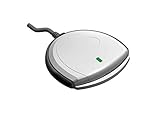
- Fully Compliant - Complies With All Major Industry Standards, Including Iso/Iec 7816, Usb Ccid, Pc/Sc, And Microsoft Whql. As Well As, Emv 2011 Ver 4.3 Level 1 And Gsa Fips 201.
- Seamless Integration - With Identiv-Specific Smartos You’Ll Get Easy, Complete Support Of All Major Contact Smart Card Ics And Technologies In One Simple Reader.
- Universal Compatibility - Works With Virtually All Contact Chip Cards And Pc Operating Systems, Including Windows, Macos, Linux And Android.
- Fast And Convenient- Shorten Your Transaction Time With A Reader That’S Optimized For Speed. It’S Ultra-Compact And Robust Design Is Streamlined For Mobile Operation, Making This Reader The Best Choice For Convenience, Security And Reliability.
- Ergonomic and cost efficient design
On 8 August 2026, the Ministry’s PIB release described an enabling amendment and said a committee would decide MDR if it were introduced. The Ministry’s 15 September 2026 FAQ later specified rates and a 15 October 2026 effective date. The framework should therefore be described as scheduled, while noting that the implementing notification or circular was not among the materials reviewed and its legal publication and operational details have not been independently verified.
Official UPI volume figures also vary by publication date: a Ministry of Finance/PIB release in July 2026 reported 2,366 crore transactions worth ₹29.9 lakh crore, while the August 2026 Ministry FAQ reported 2,451 crore transactions worth ₹29.9 lakh crore. These are dated snapshots, not contradictory totals for the same period.
Best Value

- An intuitive interface to easily accept payments and manage your sales.
- Strong, reliable Wi-Fi connection. Free SIM card and mobile data so you can process payments anywhere.
- Great battery capability with an additional charging station.
- A truly portable device. Stay in control of your business, wherever you go.
- Support when you need it. Get in touch with our US-based support through phone, email and chat.
What merchants need to do
The Ministry FAQ says existing UPI QR stands will continue working and do not need replacement or re-registration. The policy itself does not require a merchant to buy new QR hardware.
For cost planning, a merchant can check its P2PM classification and monthly QR receipts, identify which of its transactions fall into specified categories above ₹2,000, and ask its bank or payment provider how the announced rates will be applied once implementation details are confirmed. The Ministry FAQ does not establish provider-specific operational procedures or compliance outcomes.
Quick Recap
Product prices and availability are accurate as of the date/time indicated and are subject to change. Any price and availability information displayed on Amazon at the time of purchase will apply.




