Most laptops are not designed and assembled entirely by the company on the lid. A small group of specialist manufacturers—known as original design manufacturers (ODMs)—builds a large share of the world’s notebooks. The consumer brand usually controls the product brief, appearance, software, certification, pricing, warranty and support, while an ODM may engineer the platform, source components and run final assembly.
That is less a scandal than a standard electronics supply chain. The important questions are who controls each layer, how transparent the arrangement is, and what it means for quality, repairability and accountability.
“Who makes a laptop?” has five different answers
The word manufacturer collapses several jobs that may be performed by different companies:
- Product owner: defines the target customer, price, features and launch schedule.
- Industrial designer and system engineer: specifies the chassis, keyboard, ports, battery, cooling, motherboard changes and display requirements.
- Component suppliers: produce processors, memory, storage, screens, batteries and other parts.
- Assembler and tester: installs components, loads firmware and software, tests the machine and packs it for shipment.
- Customer-facing brand: sells the computer, provides updates, honors the warranty and operates the repair network.
One company can perform several roles, but the logo is not reliable proof of who performed final assembly.
#1 Best Overall

- FULL HD IPS DISPLAY - Enjoy vibrant, crystal-clear images with 178-degree wide-viewing angles
- AMD RYZEN 3 30 PROCESSOR - Everyday performance you can count on; Multitask, stream, game casually, and edit photos smoothly with responsive power and vibrant HDR visuals
- ENJOY UP TO 14 HOURS AND 15 MINUTES OF BATTERY LIFE - HP Fast Charge restores battery from 0 to 50% in approximately 45 minutes
- AMD RADEON 610M GRAPHICS - Experience smooth entertainment; Built for streaming and multitasking, enjoy realistic visuals and efficient performance for work and play
- STORAGE AND MEMORY - 512 GB PCIe NVMe M.2 SSD offers fast speed and efficient storage; and 8 GB LPDDR5 RAM memory boosts performance with higher bandwidth
The ODM model behind mainstream notebooks
An original design manufacturer develops reusable laptop platforms for brand customers. Its work can include motherboard reference designs, chassis tooling, hinge and display integration, thermal systems, BIOS support, compliance testing, component purchasing, assembly and logistics. The brand may request major changes—or use much of the platform as supplied.
Contract electronics manufacturers (often called EMS providers) primarily build to a customer’s design, although the boundary is fluid: large suppliers can provide both engineering and assembly. White-label and barebone suppliers sell more standardized systems that a reseller configures with a processor, graphics chip, memory, storage, display and firmware.
Why the terminology causes confusion
“OEM” is used inconsistently. In everyday retail language it often means the brand selling the finished product; in supply-chain discussions it can mean the original designer or manufacturer. The safer practice is to name the exact role—brand, ODM, contract assembler or component supplier.
The companies that build much of the world’s laptops
Quanta, Compal, Wistron and Inventec are major Taiwanese notebook ODMs. Compal’s 2024 annual report describes a mature notebook market and discusses development and production relationships involving major PC brands including Dell, HP, Lenovo, Acer and ASUS (Compal 2024 annual report). Pegatron also performs notebook design and manufacturing work; its 2025 annual report presents notebook ODM market and shipment figures as reported market-research data rather than necessarily audited company totals (Pegatron 2025 annual report).
Rank #2

- Intel Celeron N4120: 4 Cores & Threads, 1.1GHz Base Clock, Up to 2.6GHz Boost Clock, 4MB Cache, Intel UHD Graphics 600. The perfect combination of performance, power consumption, and value helps your device handle multitasking smoothly and reliably with four processing cores to divide up the work.
- 14" HD Display: 14.0-inch diagonal, HD (1366 x 768), micro-edge, anti-glare. See your digital world in a whole new way. Enjoy movies and photos with the great image quality and high-definition detail of 1 million pixels.
- Memory & Storage: 4 GB LPDDR4x & 64 GB eMMC Storage. Adequate high-bandwidth RAM to smoothly run multiple applications and browser tabs all at once. An embedded multimedia card provides reliable flash-based storage.
- Ports:2 x USB 3.0 Type-A,1 x USB 3.0 Type-C,1 x HDMI,1 x Headphone Jack
- Chrome OS: Chromebook is a computer for the way the modern world works, with thousands of apps. Enjoy the seamless simplicity that comes with Google Chrome and Android apps, all integrated into one laptop. It’s fast, simple, and secure.
| Supplier | Typical role | Public reference |
|---|---|---|
| Quanta Computer | Large-scale notebook ODM and broader systems manufacturing | quantatw.com |
| Compal Electronics | Notebook platform development, integration and production | compal.com |
| Wistron | Design and manufacturing services; originated from Acer’s former operations | Wistron annual reports |
| Inventec | Electronics design and ODM manufacturing | inventec.com |
| Pegatron | Design, contract manufacturing and notebook ODM work | pegatroncorp.com |
| Clevo and Tongfang | Barebone and semi-custom platforms used by boutique gaming and workstation brands | Clevo; Tongfang |
An ODM relationship does not automatically indicate low quality. Scale can provide stronger purchasing leverage, mature testing and large engineering teams. The finished result still depends on the customer’s requirements, component choices, validation and support.
What the brand still controls
Outsourcing physical production does not mean outsourcing all meaningful design. A brand may specify the user experience and require custom engineering even when an ODM owns the factory and much of the platform.
| Layer | ODM may provide | Brand may control |
|---|---|---|
| Chassis | Tooling, structure and assembly engineering | Materials, dimensions, styling and finish |
| Motherboard | Reference layout and platform integration | Ports, board changes, security and power limits |
| Cooling | Baseline thermal design | Heat-pipe changes, fan curves, noise and performance targets |
| Display and input | Panel sourcing and mechanical integration | Brightness, color, refresh rate, keyboard and touchpad requirements |
| Firmware and software | BIOS framework, drivers and factory-image support | Security settings, utilities, update policy and operating-system image |
| Ownership experience | Parts logistics and repair execution | Warranty, documentation, replacement policy, pricing and support quality |
Apple’s supply-chain explanation separates “Design and Source,” “Make,” “Package and Ship,” “Use” and “Recover,” illustrating why product authorship cannot be reduced to the assembly plant (Apple supply chain).
Are laptops from different brands secretly the same?
Sometimes products share a platform, but “same factory” does not mean “same laptop.” Commonality can range from an identical barebone chassis to a shared motherboard reference design, cooling layout, display supplier or keyboard. A brand may use different materials, batteries, screens, firmware, power limits and quality-control requirements.
Do these 3 things before closing this tab:
1Fix the driver behind crashes, sound loss and screen glitches2Repair Windows errors before they cause bigger problems3Scan for outdated or missing drivers - takes under a minuteRank #3

- Stunning 15.6" FHD IPS Display: Experience crisp 1920x1080 resolution on this 15.6 inch laptop with an IPS panel that delivers wide viewing angles and vivid colors. The narrow-bezel design maximizes screen real estate for comfortable viewing on this Win 11 laptop, whether you're studying or working.
- Celeron J4105 Processor & 256GB SSD: Powered by a reliable Celeron J4105 processor paired with 12GB DDR4 memory and a fast 256GB M.2 SSD. This laptop computer supports SSD expansion up to 2TB and TF card expansion up to 1TB, so your storage grows with your needs. Delivers smooth multitasking for daily productivity.
- AI-Powered Win 11 Laptop: Built-in AI features enhance your productivity with smart assistance for writing, summarizing, and task management. Pre-installed with Win 11 and includes Office 365 subscription. This student laptop is backed by 1-year warranty and 24/7 customer support.
- All-Day 7000mAh Battery & 180° Hinge: The high-capacity 7000mAh battery keeps this laptop powered through long classes or meetings. The 180-degree lay-flat hinge lets you share your screen effortlessly during presentations. This durable laptop computer adapts to your dynamic workflow.
- Versatile Connectivity Hub: Equipped with USB 3.2, Type-C, Mini HDMI, and 3.5mm audio jack to connect all your peripherals. Stay online anywhere with high-speed 5G WiFi and Bluetooth 4.2. This college laptop keeps you connected at home, in the library, or on the go.
Possible clues include FCC filings, regulatory model numbers, teardown photographs, BIOS identifiers, service manuals, Linux hardware reports, parts catalogs and identical dimensions or screw layouts. These clues are evidence, not proof: similar appearance can result from common components, and one ODM can manufacture genuinely different designs for competing customers.
Where laptops are actually made
A laptop is a chain, not a country. Semiconductor fabrication, memory, storage, display panels and battery cells may come from different nations. Motherboard assembly can occur in one region, final assembly in another, and regional configuration, distribution or repair somewhere else.
Apple’s supplier list identifies Quanta and manufacturing locations including Chongqing and Shanghai in mainland China, Chon Buri in Thailand and Nam Dinh in Vietnam (Apple supplier list). Apple says its wider supply chain includes thousands of supplier facilities in more than 60 countries (Apple supply-chain reporting). That does not mean every Mac uses every listed site, nor that a supplier list reveals every sub-tier component source.
“Assembled in China,” Vietnam, Thailand, Taiwan, India, Mexico or the United States describes a stage of production—not the nationality of the brand, the origin of every component or the location of design work.
Rank #4
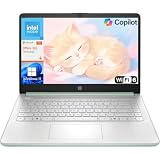
- Efficient Performance for Everyday Computing: Powered by Intel N150 processor with up to 3.6 GHz Intel Turbo Boost Technology, 6 MB L3 cache, 4 cores, and 4 threads, this HP laptop delivers responsive performance for web browsing, streaming, document editing, and multitasking. Paired with 4GB LPDDR5 RAM and 128GB UFS storage, it handles daily tasks smoothly. Includes 1-year Microsoft 365 Personal subscription for Word, Excel, PowerPoint, and cloud storage to maximize your productivity.
- 14-Inch HD Micro-Edge Display:Enjoy clear visuals on the 14-inch HD (1366 x 768) anti-glare screen with 250-nit brightness and 62.5% sRGB coverage. The micro-edge bezel delivers a 79% screen-to-body ratio in a compact design. An HP True Vision 720p HD camera with noise reduction and dual-array microphones supports clear video calls, remote work, and online learning.
- Modern Connectivity and Wireless Technology: Stay connected with Wi-Fi 6 (2x2) for faster wireless speeds and Bluetooth 5.4 for seamless pairing with accessories. Versatile port selection includes 1 USB Type-C 10Gbps with DisplayPort 1.2 for external displays, 2 USB Type-A 5Gbps ports for peripherals, 1 HDMI 1.4b port, 1 headphone/microphone combo jack, and 1 multi-format SD media card reader. Connect monitors, transfer files quickly, and expand your workspace with ease.
- All-Day Battery Life and Portable Design: Enjoy up to 11 hours of video playback, 7.5 hours of mixed usage, or 7.5 hours of wireless streaming on a single charge, perfect for students and professionals on the go. Weighing just 3.24 lb and measuring 12.76" x 8.86" x 0.71", this lightweight laptop fits easily in backpacks and bags. The stylish willow green top cover with matte finish and natural silver keyboard deck with vertical brushing pattern offer a modern, professional look.
- AI-Enhanced Productivity: Access Microsoft Copilot instantly with the dedicated Copilot key for faster assistance. AI Noise Reduction filters background sounds and improves voice clarity during calls. Dual speakers provide clear audio, while the full-size natural silver keyboard and HP Imagepad support comfortable typing and navigation.
Why brands use outside manufacturers
- Factories, tooling and specialized lines require enormous investment.
- ODM purchasing volume lowers component and logistics costs.
- Experienced suppliers already have testing, certification and manufacturing engineering.
- Shared capacity lets brands scale for seasonal demand without owning idle plants.
- Engineering talent and component ecosystems are concentrated in East Asia.
- Multiple production countries provide capacity and geopolitical flexibility.
This division is economically rational. The brand can invest in product strategy, software, industrial design and customer relationships while a specialist manages repeatable high-volume production.
Independent reader supportYour contribution helps us test, update, and keep practical guides available for everyone.The real risks: transparency, labor and environmental impact
The consequential issue is not that outsourcing exists; it is how responsibility is distributed across a long, difficult-to-audit chain. Risks can include excessive seasonal overtime, recruitment fees, forced-labor exposure, chemical and workplace hazards, mineral traceability problems, emissions from materials and shipping, short product cycles and electronic waste.
Apple reports supplier assessments, unannounced visits and worker-rights training, including 895 facility assessments and training for more than 2.4 million supplier employees in its 2025 reporting. Those are company-reported controls, not independent proof that every risk has been eliminated (Apple supply chain). Lenovo says its supplier and ODM requirements cover labor, environment, health and safety, ethics and responsible minerals (Lenovo supplier standards). Dell publishes supply-chain, environmental, chemical-management and modern-slavery materials (Dell reports and resources).
Supplier codes and audits show stated controls. They do not guarantee perfect compliance across every tier.
Best Value

- Designed for mobility with a slim 0.71-inch profile and lightweight, making it easy to carry between home, office
- 【Versatile Connectivity】Stay connected with multiple ports including USB 3.0 Type-C, USB 3.0 Type-A, HDMI, and a headphone/mic combo jack, with Wi-Fi and Bluetooth for seamless wireless networking.
Manufacturing structure and repairability
Outsourcing does not cause poor repairability. Repairability is primarily a product-design, parts, documentation, software-locking and business-policy decision. Soldered memory can prevent upgrades; proprietary batteries and displays can raise repair costs; scarce parts and short firmware support can shorten useful life. Conversely, integration can improve thinness, weight, rigidity and battery efficiency.
Framework is a notable counterexample: it relies on outside manufacturing and global suppliers while emphasizing modular parts and published repair information (Framework; Framework repair guides). That strategy may involve trade-offs in price, availability, portability or configuration.
How to investigate a specific laptop before buying
- Identify the exact model and generation. ODM relationships can change by product line, region and year.
- Check upgradeability. Confirm whether memory, storage, battery, keyboard and display are replaceable—not merely removable.
- Look for documentation. Search the manufacturer’s service manual, parts catalog and firmware-support statements.
- Verify service economics. Check official parts availability, labor options, warranty exclusions and turnaround procedures.
- Assess the design, not the logo. Compare display quality, cooling behavior, ports, build, software support and documented reliability.
- Review transparency. Supplier disclosures and sustainability reports are useful signals, but treat corporate claims as claims rather than guarantees.
- Consider used enterprise hardware. A refurbished business laptop with available parts can outlast a new consumer model, provided battery health and remaining firmware support are acceptable.
What this means for major brands and smaller sellers
Apple, Dell, HP, Lenovo, Acer and ASUS use outside manufacturing for at least some products, but the exact ODM, factory and degree of customization vary by model. Microsoft Surface, Razer, Framework and boutique gaming brands likewise should be evaluated model by model. Barebone resellers may offer more component choice, while support quality depends heavily on the reseller’s warranty and parts operation.
A familiar brand is not inferior merely because it uses Quanta, Compal, Wistron, Inventec or Pegatron. Nor is a boutique machine automatically original because its logo is less familiar. The buyer’s practical experience is determined by the complete product and support system.
Free tools Windows power users keep installed
One-click scans. No signup required.
The Bottom Line
The laptop industry’s “dirty little secret” is really a division of labor: specialist ODMs often design platforms and assemble machines, while brands add product direction, customization, software, support and accountability. Judge a laptop by its exact design, serviceability, warranty and transparency—not by assumptions about the logo or assembly country.
Quick Recap
Product prices and availability are accurate as of the date/time indicated and are subject to change. Any price and availability information displayed on Amazon at the time of purchase will apply.




