Recommended Free Tools
Ruth Handler is the person most reliably credited with Barbie’s original idea and with pushing it through Mattel. Jack Ryan, the engineer and designer her company partnered with, has a documented role in shaping the doll. His daughter, Ann P. Ryan, now argues that he was the inventor who made Barbie a manufactured product and that his contribution has been under-credited. Independent sources do not settle that claim either way, so the accurate answer is that Barbie had more than one creator, and the dispute is mainly about which contribution counts as “creating” the doll.
Barbie debuted on March 9, 1959, at the International Toy Fair in New York, according to the archival guide from The Strong National Museum of Play. Mattel’s own account gives the debut as the New York Toy Fair in 1959.
| # | Preview | Product | Price | |
|---|---|---|---|---|
| 1 |

|
Barbie Fashionistas Style Doll #249 | $10.49 | Buy on Amazon |
| 2 |

|
Barbie Pop Star Doll | Buy on Amazon | |
| 3 |

|
Barbie Mermaid Doll with Pink and Lilac Fantasy Hair and Accessory | $10.97 | Buy on Amazon |
| 4 |

|
Barbie Gymnastics Doll & Accessories Playset | $25.99 | Buy on Amazon |
| 5 |
|
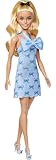
Barbie Style Fashionistas Doll and Accessory #237 | $11.99 | Buy on Amazon |
Four different things people mean by “creating” Barbie
Most of the confusion comes from treating four separate contributions as one. A product like Barbie involves at least these stages, and different people contributed to each:
- The concept: identifying a doll for adult fashion and an audience that existing toys were not serving.
- Executive advocacy: getting a company to commit money and risk to an idea that others doubted.
- Design and engineering: turning a reference doll and sketches into a body, a face, joints and a fashion system that could be mass-produced.
- Corporate attribution: who gets named as the creator in histories, patents, lawsuits and marketing.
Ruth Handler is credited mainly with the first two. Jack Ryan’s family claims the third and parts of the fourth. Mattel, as the company that manufactured and launched the doll, is the entity that owns the product’s history.
#1 Best Overall
- Designed to reflect the world kids see today, this diverse line of Barbie Fashionistas dolls showcases bright and trendy styles that inspire endless storytelling possibilities.
- Barbie doll wears a pink paisley skirt and pink paisley top. Her look features fun details that make her personality pop, like her white platform sandals and statement barrette.
- Her long blonde hair is styled with a sleek side part. A fun hair accessory adds a pop of pink.
- With such a versatile and stylish look, this Barbie doll is ready for any adventure that kids dream up!
- Kids 3 years and up can collect other Barbie Fashionistas dolls for even more fun with friends and fashion at playtime!
What each side contributed
| Contribution | Ruth Handler | Jack Ryan | Mattel |
|---|---|---|---|
| Initial concept and audience | Mattel’s account and The Strong’s archival guide credit her with noticing that her daughter Barbara played with paper dolls and that an adult fashion doll was missing from the market. | Ann P. Ryan’s website describes her father as the inventor, but no independent source confirms he conceived the idea. | Not applicable as a person; the company adopted and marketed the concept. |
| Executive advocacy | Mattel’s account says she brought the idea to the company. The Strong notes that the company’s directors were initially unenthusiastic about an adult-bodied fashion doll. | Not stated in the sources reviewed beyond the partnership described below. | Approved and launched the product. |
| Bild Lilli adaptation | The Strong says she brought back a German Bild Lilli doll from Europe. | The Strong says she partnered with him to reimagine the design. | Vanity Fair reports a 1961 lawsuit over similarities to Bild Lilli, a 1963 settlement, and Mattel’s 1964 purchase of the Lilli license. |
| Engineering and manufacturability | Not stated. | Described by Ann P. Ryan as chief engineer; this is her account and has not been independently verified. | Manufactured the doll at scale. |
| Patent | Not stated. | Vanity Fair reports a Barbie patent filed July 24, 1959 that lists J.W. Ryan. | Not stated. |
| Name | The Strong attributes the name to her daughter Barbara. | Ann P. Ryan says her father chose the name. | Not stated. |
The table shows where the evidence is firm and where it rests on one party’s account. The concept and the Bild Lilli reference are documented by the archive. The engineering role and the naming claim come mostly from the Ryan family.
The Handler account
Mattel’s company history, published in May 2024 as part of its Barbie 65th anniversary coverage, presents Ruth Handler as the source of the idea. In that telling, she watched her daughter play with paper dolls, imagined a grown-up fashion doll, and carried the concept to Mattel. The Strong’s 2024 guide to the Barbie fashion designer papers adds that she brought back a Bild Lilli doll from Europe and then partnered with Jack Ryan to reimagine the design.
Rank #2
- Dream big with Barbie career dolls!
- Barbie pop star doll is ready for the stage in an outfit that will help her shine -a sparkly silvery top, iridescent skirt, trendy purple shoes and long pink hair.
- This musician doll can rock a performance with her microphone stand and removable microphone.
- Barbie pop star doll makes a perfect toy for young music lovers and musicians.
- Explore all the Barbie career dolls and playsets because when a girl plays with Barbie, she imagines everything she can become (each sold separately, subject to availability).
Both accounts come from institutions with an interest in the story. Mattel’s narrative is the company’s own history. The Strong is an archival repository that works from the papers it holds, and its guide is a modern synthesis rather than a 1950s design record.
The Ryan claim
What Ann P. Ryan argues
Ann P. Ryan, Jack Ryan’s daughter, has published a biography titled Dad, Barbie & Me: An Insider Biography of Jack Ryan, and her website summarizes her position in one line: “Ruth Handler is often credited with the original concept, but Jack Ryan was the inventor who brought Barbie to life as a manufactured product.” Her case rests on her father’s engineering work and on family correspondence and interviews. Her website is first-party advocacy, so it is the clearest statement of the family’s view but not a neutral finding. You can read her position directly at annryanofficial.com.
Rank #3
- Explore a magical undersea world at playtime with this colorful collection of Barbie mermaid dolls!
- Barbie mermaid doll has a stunning shell bodice, as well as a lavender tail with an ombre fin!
- An ocean-inspired headband adds a pop of signature sea style to her pastel pink and purple highlighted hair.
- Kids can discover other mermaids in the collection to inspire friendship stories and imagine fantastical worlds!
- From mermaids and unicorns to royals and more, Barbie fairytale dolls make an enchanting toy for kids!
What the 1980 lawsuit shows
Vanity Fair reports that Jack Ryan sued Mattel in 1980 after claiming that he, not Handler, had created Barbie and that he had named the doll after his wife. The reporting is secondary. The court record and the outcome of that case are not described in the sources reviewed for this article, so the lawsuit establishes that the claim was made, not that it was upheld. The Vanity Fair piece is at vanityfair.com.
Timeline
- 1950s, development: Handler’s concept takes shape, with the Bild Lilli doll as a reference point. The Strong notes that directors were initially unenthusiastic about the adult-bodied design.
- March 9, 1959: The Strong records Barbie’s official debut at the International Toy Fair. Mattel’s account gives the New York Toy Fair in 1959.
- July 24, 1959: The filing date of the Barbie patent that Vanity Fair reports lists J.W. Ryan. The patent text itself is not reproduced in the reporting, so what it covers should be checked against the filing directly.
- 1961: A lawsuit over similarities to Bild Lilli, as reported by Vanity Fair.
- 1963: A settlement of that lawsuit, as reported by Vanity Fair.
- 1964: Mattel’s purchase of the Lilli license, as reported by Vanity Fair.
- 1980: Jack Ryan’s lawsuit against Mattel, as reported by Vanity Fair.
The 1961–1964 sequence comes from secondary reporting. It is useful context for how Mattel handled the Bild Lilli question, but it does not by itself show who originated each feature of the doll.
Rank #4
- Kids will flip out imagining a career in gymnastics with Barbie doll and her balance beam -- the playset includes 10+ themed pieces to inspire winning stories!
- Snap Barbie doll's waist into the c-clip and use to help her perform cartwheels, flips, leaps and more!!
- Dance a rockin' floor routine with a pair of hoops or batons -- they have handles so her hands can really hold them!!
- Tell stories before and after routines with additional accessories that include a trophy, medal, water bottle and snack!!
- Barbie gymnast doll wears a colorful iridescent leotard with her blonde hair in a ponytail and has a warm-up suit, sneakers and gym bag to let imaginations travel!!
Why the patent does not settle it
A patent names inventors for specific claimed inventions. It does not automatically establish who had the original idea, who designed the appearance, or who chose the name. Vanity Fair’s report that a 1959 patent lists J.W. Ryan is the strongest documentary point in the Ryan family’s favor. Using it to conclude that Jack Ryan created Barbie would go beyond what the reporting says. The claims in the patent would need to be read to know what was protected.
The naming question
The name is one of the points where the sources diverge. The Strong attributes the name to Ruth Handler’s daughter Barbara. Ann P. Ryan says her father chose it, and Vanity Fair reports that claim. Neither account is backed by a contemporaneous document in the material reviewed, so the naming question should be presented as contested.
Quick wins for a faster PC:
Repair Windows errors before they cause bigger problemsFix Now →Scan for outdated or missing drivers - takes under a minuteDriver Scan →Best Value
- Designed to reflect the world kids see today, this diverse line of Barbie Fashionistas dolls showcases bright and trendy styles that inspire endless storytelling possibilities.
- Barbie doll wears her long blonde hair in a bouncy ponytail! It's topped by a black hair bow accessory that expresses her sweet personality.
- Her baby blue halter dress not only sports a bow at the neckline but is printed with a bow pattern, too! Matching blue heels add the perfect finishing touch to her outfit.
- In her versatile and stylish look, this Barbie doll is ready for any adventure that kids dream up -- from throwing a birthday party to spending a day exploring the city!
- Kids 3 years and up can collect other Barbie Fashionistas dolls for even more fun with friends and fashion at playtime!
How to weigh the competing claims
- Separate the stages. Ask whether a claim concerns the concept, the design, the engineering, the patent, or the name. Most disagreements are about different stages.
- Identify the source. Mattel’s history is the company’s narrative. Ann P. Ryan’s website is a family’s advocacy. The Strong is an archive working from its own holdings. Vanity Fair is secondary reporting.
- Check the primary document. For the patent, read the filing itself. For the lawsuits, look for court records. Secondary reports are a reasonable starting point but not proof.
- Treat the market figure as an attributed claim. The Strong’s 2024 guide says Mattel reports more than one billion Barbie dolls sold worldwide. That is a company figure, not an independently checked count.
On the evidence available, Ruth Handler is the documented originator of the concept and the executive who championed it. Jack Ryan’s design and engineering role is real and documented in part, and his family’s claim that he was the inventor is serious but not independently confirmed. Anyone who says one person created Barbie outright is stating a conclusion the sources do not establish.
Quick Recap
.
Product prices and availability are accurate as of the date/time indicated and are subject to change. Any price and availability information displayed on Amazon at the time of purchase will apply.




