Free tools Windows power users keep installed
One-click scans. No signup required.
In July 2024, qualifying battery-electric vehicles, plug-in hybrids, and fuel-cell vehicles could be eligible for the federal New Clean Vehicle Credit—but a make and model alone was not enough to establish eligibility. The official DOE list on FuelEconomy.gov was a starting point; the IRS said buyers should confirm the specific vehicle through IRS Energy Credits Online at purchase. The full dated July 2024 model-and-trim roster is not available here, so this guide explains how eligibility worked rather than presenting an unverified list as complete.
Which kinds of vehicles were eligible?
The IRS directed buyers to the Department of Energy’s FuelEconomy.gov list of potentially eligible vehicles. It covered three categories:
- Battery-electric vehicles (BEVs)
- Plug-in hybrid electric vehicles (PHEVs)
- Fuel-cell vehicles
To qualify, a vehicle generally had to be new, have a battery capacity of at least 7 kilowatt-hours, have a gross vehicle weight rating below 14,000 pounds, be made by a qualified manufacturer, and have final assembly in North America. It also had to satisfy applicable critical-mineral and battery-component rules, and the seller had to report the sale to the IRS. These criteria are summarized in the IRS’s 2024 New Clean Vehicle Credit FAQs and Fact Sheet 2024-26, updated July 26, 2024.
The DOE list was a candidate list, not a guarantee that every vehicle with a listed name or badge qualified in every configuration. Eligibility could turn on model year, trim, MSRP classification, battery sourcing, and VIN-level information. The IRS’s Topic A FAQ, updated July 26, 2024, said: “Final confirmation of vehicle qualification should be done in IRS Energy Credits Online at time of purchase.”
Recommended Free Tools
#1 Best Overall

- Road-Trip Ready & Apartment-Friendly: Comes with a 20ft heavy-duty cable that easily spans a standard parking space, plus a NEMA 5-15 adapter for plug and play convenience. Whether you're charging at home or hitting the highway, this portable EV Charger is your ultimate travel companion for weekend getaways and camping trips
- Delay Timer & Adjustable Current: Use the built-in timer to delay your start by 1-12 hours and easily harvest off-peak energy savings. Then pick from 6/8/10/12/16A (Level 2) to match your garage grid. It automatically locks in your favorite setting and never forces you to re-adjust. No complicated apps or Wi-Fi needed, just straightforward, reliable control
- Tactile Buttons & LED Screen: No glitchy smartphone apps or finicky touchscreens that lag, freeze, and misfire in winter. Our EV charger is engineered with a high-definition LED display that tracks critical real-time data, including live voltage and current. Tactile buttons deliver direct, satisfying click feedback that remains highly responsive even when wearing heavy winter gloves or operating in torrential downpours—conditions where standard touchscreens completely fail
- ETL Certified Safety & IP65 All-Weather Shield: ETL certified to meet US safety standards for charging. Engineered with a certified IP65 dust-and-waterproof enclosure and a heavy-duty TPE cable that operates reliably across a wide -22°F to 130°F range. An intelligent multi-protection defense system (GFCI, over-voltage, over-current, surge, short-circuit, and over-temp) keeps a 24/7 watch for 100% safe, unattended overnight charging in any weather
- J1772 Compatible + Dual-Level Charging: Works with all J1772 EVs (Tesla requires a separate J1772 adapter). Level 2: built-in NEMA 6-20 plug. Level 1: included NEMA 5-15 adapter fits any standard outlet. Please confirm your outlet is NEMA 6-20 or 5-15 before purchase
Why this is not a complete July 2024 make-and-trim list
The official DOE/FuelEconomy.gov roster is dynamic, and a dated copy of the complete July 2024 model-and-trim list is not available here. A current list cannot safely be treated as the July 2024 roster: manufacturers could submit updates, and eligibility could differ between trims or individual vehicles. For that reason, examples below explain the rules but should not be read as a complete list of eligible vehicles.
For a vehicle purchased in July 2024, the practical check was to find its make, model year, and trim on FuelEconomy.gov, then confirm the specific VIN in IRS Energy Credits Online at the time of purchase. If those records do not establish the vehicle’s status for the transaction date, the model name by itself is not enough to claim eligibility.
Rank #2

- Flex Level 1 EV Charger - The EVDANCE Level 1 electric car charger is compatible with J1772 electric vehicles and plug-in hybrid vehicles (North American Standard). *Tesla requires a SAE J1772 adapter.
- Convenient to Use - This charger has both NEMA 6-20 plug for 16A 240V charging (3.68kW, 10-12 mi/h) and a NEMA 6-20 to 5-15 plug adapter for 12A 120V charging (1.44kW, 2-5 mi/h). The included bag makes it easier to carry on the go. It also has a 25ft cable length, you can use it flexibly from anywhere in the garage or driveway.
- Check Your Outlet Type -This charger works with standard 120V NEMA 5-15/5-20 outlets (2-5 mph charging speed) and 240V NEMA 6-20 outlets (10-12 mph) . It's not compatible with NEMA 6-15/10-30/14-30/14-50/6-50 outlets – you'll need a NEMA 14-50/14-30/10-30/6-50 to 6-20 adapter (sold separately) to connect.
- Compatible EV Models -This EV charger works with most major electric vehicles, including Ford, Chevrolet, Hyundai, Audi, Nissan Ariya, Rivian R1S, Kia, and others. However, it's not compatible with Mini Cooper Electric Hardtop,Toyota Prus Prime/Z4X/RAV4Prime, Porsche Taycan Base/4S/Turbo/Turbo S or Tesla models (Tesla requires a J1772 to Tesla Adapter, sold separately). For a full list of compatible models, check out the Full Compatibility List on our product page.
- Indication Displays - LED display that can tell you the status as well as indicate errors while charging your electric vehicle.
How much credit could an eligible vehicle receive?
For a qualifying vehicle placed in service on or after April 18, 2023, the 2024 maximum was up to $7,500. The IRS divided that maximum into two separate $3,750 portions. A listed vehicle was not automatically eligible for the full amount; it could qualify for one portion, both, or neither.
| Battery requirement met | Potential credit in 2024 |
|---|---|
| Critical-mineral requirement only | $3,750 |
| Battery-component requirement only | $3,750 |
| Both requirements | Up to $7,500 |
| Neither requirement | $0 under this credit structure |
The two sourcing requirements were assessed separately under the IRS rules; the vehicle’s final amount depended on which requirements it met. The IRS’s 2024 New Clean Vehicle Credit guidance describes the amounts and conditions.
What’s actually slowing this PC down?
Pick the symptom - the matching free tool is one click away.
Rank #3
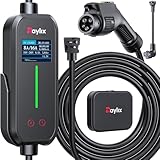
- [2026 INTELLIGENT CHARGING UPGRADE — PRECISION CONTROL MEETS SMART SCHEDULING] After surveying 100K+ U.S. EV owners, the Raylix R&D team found that nearly all drivers recognized the necessity of adjustable current and scheduled charging. Our upgraded J1772 charger features 4-level adjustable current (8A/10A/12A/16A) and a 1–12 hour smart delay timer. Whether you're charging overnight or during off-peak hours, enjoy smarter energy use, lower costs, and total convenience—on your schedule.
- [ONE CHARGER, ALL J1772 EVs/PHEVs READY!] Compatible with all SAE J1772 electric vehicles and plug-in hybrids—whether it’s Ford, GM, Nissan, Audi, BMW, Kia, Hyundai, Honda, Chevy, or more. Perfect for home or on-the-road charging, our 16A Level 1 & 2 charger ensures your EV is always powered and ready for any journey.
- [CHARGE 4× FASTER — NO MORE WAITING] In a rush? Our 16A Level 1 & 2 charger delivers charging speeds up to 4× faster than standard 8A Charger Level 1. Whether it's an early commute, a spontaneous trip, or last-minute errands, your EV will be ready when you are.
- [LEVEL 1 & 2 PORTABLE CHARGER — CHARGE ANYWHERE, ANYTIME] Designed for maximum flexibility, Raylix Level 1 & 2 EV charger features both 5-15 and 6-20 plug compatibility. Whether you're charging in your garage, at a friend's house, or at a roadside motel. NEMA 6-20 plug for Level 2 ev charging (240V, 16A, 3.68kW, 9-12 miles/hr) and a NEMA 5-15 adapter for Level 1 ev charging (120V, 12A, 1.44kW, 3-5 miles/hr) NOTE: In compliance with North American electrical safety standards, the charger automatically limits current to 12A when using a 5-15 outlet—protecting both your vehicle and your home’s electrical system.
- [AT-A-GLANCE CHARGING COMMAND: TOTAL CONTROL, INSTANTLY] While most ev chargers solutions confine vital data to in-car screens, the Raylix tesla charger breaks free with its enhanced TFT color display. This Raylix-exclusive feature delivers crystal-clear, real-time updates—voltage, current, power load, AND critical charging temperature—directly on the unit. Just one glance gives you complete charging insight. It’s not just information; it's the empowering peace of mind and satisfying control that transforms every charge into a masterfully managed experience.
What MSRP limit applied?
The vehicle’s MSRP could not exceed the applicable ceiling below. The IRS’s 2024 Topic B FAQ set out the limits and explained that the vehicle classification on its fuel-economy label or its EPA size class on FuelEconomy.gov controlled.
| Vehicle classification | Maximum MSRP |
|---|---|
| SUVs, vans, and pickup trucks | $80,000 |
| Other vehicles | $55,000 |
For the ceiling, MSRP meant the manufacturer’s suggested retail price plus manufacturer-suggested prices of accessories and options physically attached to the vehicle when delivered to the dealer. Destination charges, dealer-added options, taxes, fees, and the buyer’s negotiated sale price did not determine whether the MSRP limit was met.
Rank #4

- SAE J1772 Standard Charger: Compatible with all North American electric vehicles and plug-in hybrids, including Ford, Chevrolet, Nissan, BMW, Volkswagen, Hyundai, Kia, Audi, Mercedes-Benz, Rivian, Porsche, Toyota, Honda, Jeep, and GMC. Tesla vehicles can be charged with a separate SAE J1772 adapter (sold separately).
- Adjustable Current: Choose from 8A, 10A, 13A, or 16A to match your vehicle’s charging needs.Dual Plug Compatibility,NEMA 6-20 Plug (220/240V): Delivers up to 3.84 kW/h, providing approximately 15.36 MPH charging speed at 16A.NEMA 5-15 Plug (110/120V): Supports 10A charging at 120V, offering 1.2 kW/h (around 4.4 MPH). Customizable Charging: Easily adjust current to suit different charging scenarios, giving you maximum flexibility at home or on the go
- Hassle-Free Installation: Forget complicated setups—just plug in and go. Equipped with NEMA 5-15 and NEMA 6-20 (220V/240V) connectors, it works with any standard 110V–240V outlet. The 25-foot cable gives you the freedom to reach vehicles parked at a distance, making charging convenient anywhere.
- Intelligent Charging: Featuring a 2.8-inch touch display, you can easily select the charging current (8A / 10A / 13A / 16A) and schedule charging with a 1–12 hour delayed start. Perfect for maximizing off-peak hours and cutting electricity costs. (Example: Set a 2-hour delay, and charging begins automatically after 2 hours.)
- Comprehensive Safety: Designed to meet CE and FCC safety standards, this charger offers multiple layers of protection, including overvoltage, overload, short-circuit, grounding, and leakage safeguards. The durable IP65-rated waterproof housing and reinforced cable ensure reliable charging in all weather conditions, keeping your vehicle safe year-round.
Classification could change which ceiling applied
Some vehicles that had initially been limited to the $55,000 category were reclassified as SUVs for purposes of the credit. IRS examples included the 2023 Cadillac Lyriq, 2022–2023 Ford Mustang Mach-E, certain 2022–2023 Tesla Model Y variants, certain 2022–2023 Volkswagen ID.4 variants, and the 2022–2023 Ford Escape Plug-In Hybrid. These examples illustrate the classification rule; they do not establish that every listed model year or trim qualified for a credit.
Independent reader supportYour contribution helps us test, update, and keep practical guides available for everyone.Who could claim the credit?
Vehicle eligibility was only one part of the test. In 2024, the buyer generally had to purchase the new vehicle for personal use, not resale, and use it primarily in the United States. The buyer’s modified adjusted gross income (MAGI) also had to be within the applicable limit.
Quick wins for a faster PC:
Repair Windows errors before they cause bigger problemsFix Now →Scan for outdated or missing drivers - takes under a minuteDriver Scan →Clear out junk files and repair common Windows errorsFree Scan →Best Value
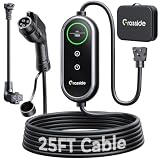
- Universal J1772 Compatibility: Designed with a standard J1772 connector, this J1772 charger works with most J1772 electric vehicles and PHEVs, including BMW, Mercedes-Benz, Hyundai, Kia, Nissan, Rivian, Ford, Chevy, Volkswagen, Toyota and more. Note: Tesla vehicles require a J1772 to Tesla adapter (not included)
- Flexible Outlet Compatibility: This portable EV charger comes with a NEMA 6-20 plug and a NEMA 5-15/5-20 to 6-20 adapter. Supports Level 1 (8–12A) and Level 2 (16A). Max 12A (1.44kW) on 120V NEMA 5-15/5-20 outlets, and full 16A (3.84kW) with a 240V NEMA 6-20 outlet. One charger is designed to cover home, garage, and travel charging needs with reliable performance
- Adjustable Smart Charging Control: Customize charging safely with adjustable current settings (8A/10A/12A/16A) to match different circuits. The 0–12 hour delay timer helps schedule overnight charging during lower electricity rates. Integrated LCD display shows real-time voltage, current, power, and charging status for clear monitoring without apps. Note: Press 'A' or 'T' for 3s to set and confirm.
- Home Charging & Travel Backup: For daily home use while remaining fully portable for travel. This level 1 ev charger includes a durable 25FT ev charging cord, providing flexible reach for garage or driveway charging. Charge overnight to take advantage of lower utility rates—potentially saving up to $500 annually on electricity costs. The included carrying case makes storage easy and keeps a dependable backup charger available in your trunk for road trips or visiting friends
- Engineered For Safety & Durability: Built for dependable daily use, this electric car charger features an IP65 waterproof rating for all weather operation. Equipped with a UL-listed cable, fully rubberized connector, and advanced protection against overcurrent, overheating, and electrical faults. Designed to ensure safe, stable, and long-term charging performance in demanding environments
| Filing status | MAGI limit |
|---|---|
| Married filing jointly or surviving spouse | $300,000 |
| Head of household | $225,000 |
| Other filers | $150,000 |
Under the IRS’s 2024 guidance, a buyer could use MAGI for the year the vehicle was delivered or the preceding year, whichever was lower. These are the 2024 limits, not current eligibility thresholds.
What should a 2024 buyer have checked and kept?
- Identify the exact vehicle. Match the model year and trim on FuelEconomy.gov, and check the MSRP ceiling using the applicable EPA/fuel-economy classification.
- Confirm the VIN at purchase. Use IRS Energy Credits Online to check the specific vehicle’s qualification and the amount available for that transaction.
- Check the buyer requirements. Confirm the vehicle was new, intended for personal use rather than resale, used primarily in the United States, and that the buyer met the applicable MAGI limit.
- Get the seller’s time-of-sale report. For a 2024 sale, the seller had to submit the report through IRS Energy Credits Online within three calendar days and provide the buyer with the report and submission confirmation. Keep both.
- Keep the VIN for tax filing. A buyer claiming the credit on a tax return needed the VIN and the seller’s report when filing Form 8936. The credit could also be transferred to a registered dealer at the time of sale under the 2024 rules.
Is the federal EV credit still available?
This is a historical guide to the rules and verification process in July 2024. The IRS now says the new, used, and commercial clean vehicle credits are unavailable for vehicles acquired after September 30, 2025. That later end date does not change what the rules were for a qualifying purchase in July 2024.
Quick Recap
Product prices and availability are accurate as of the date/time indicated and are subject to change. Any price and availability information displayed on Amazon at the time of purchase will apply.




