Free tools Windows power users keep installed
One-click scans. No signup required.
There is no single worldwide deadline. The applicable country or territory sets the rules, and the deadline depends on the type of event and when the reporting clock starts. For example, under federal OSHA in the United States, a work-related employee death must generally be reported within 8 hours, while certain serious injuries must be reported within 24 hours. In Great Britain, specified incidents are generally reported without delay, with a 10-day receipt limit; some injuries causing more than seven days’ incapacity have a 15-day deadline.
How to determine the deadline
Start by identifying the jurisdiction and the authority responsible for workplace safety where the incident occurred. Then establish which reporting category applies and the event that starts its clock. National rules may set different requirements for deaths, serious injuries, inpatient hospitalization, dangerous occurrences, occupational diseases, or injuries that cause a defined period of absence.
The International Labour Organization’s Convention No. 155 calls for authorities to establish procedures for employer notification of occupational accidents and diseases, but Article 11(c) does not set a universal number of hours or days. The 2002 Protocol to the Convention says national procedures should determine employer responsibility, notification criteria, and time limits. Its typical notification details include the enterprise, establishment and employer; the injured person and injury or disease; and the workplace and circumstances of the event. ILO Convention No. 155; Protocol of 2002 to Convention No. 155.
What are the deadlines in the United States under federal OSHA?
Under federal OSHA, employers within its jurisdiction must report a work-related employee death within 8 hours. A work-related inpatient hospitalization, amputation, or loss of an eye must be reported within 24 hours. These are regulator-notification deadlines, not general deadlines for every workplace injury. OSHA’s Recordkeeping page.
#1 Best Overall

- OSHA Compliant Emergency Kit: Includes adhesive fabric and plastic bandages, antibiotic ointments, BZK antiseptic towelettes, burn cream packets, gauze roll and pads, gloves, scissors, tweezers, and other multi-use first aid items
- Convenient Packaging: An ideal office first aid kit, home first aid kit, or car first aid kit, this set of safety-oriented office essentials comes in a durable wall mountable plastic case complete with easy slide latches
- Easy Access: This convenient and versatile work, home and car emergency kit features a clear cover and individual compartments that keep supplies neatly organized and easy to locate
- Dimensions: This home, office, and car emergency kit measures 3.25 x 11.5 x 13 inches, compact enough to store easily while keeping you well-stocked on emergency supplies
- 100-Person First Aid Kit: This versatile kit contains enough supplies to address minor emergencies for up to 100 people, making it ideal for home, school, office, vehicle, and construction sites; Please note that the color of this case may vary
Check the event and the clock
The detailed rule, 29 CFR 1904.39, applies event windows: a fatality is reportable if it occurs within 30 days of the work-related incident, while an inpatient hospitalization, amputation, or loss of an eye is reportable if it occurs within 24 hours of the incident. If the employer or its agent does not learn of a reportable event when it happens, the reporting period runs from when the employer or agent learns of it. The regulation also contains exceptions, so consult the complete rule for the specific circumstances. 29 CFR 1904.39.
These deadlines describe federal OSHA. A state-plan jurisdiction or another applicable reporting duty may have additional or different requirements. Confirm the rules with the authority responsible for the worksite.
Rank #2

- ESSENTIALS FOR EMERGENCIES: Be prepared for unexpected situations with this 400-piece first aid kit featuring a wide variety of essential supplies. The kit includes assorted bandages, gauze pads, burn gel, an instant cold pack, first aid tape, gloves, and more. Designed for convenient everyday preparedness, it keeps essential supplies organized and ready for home, work, travel, and outdoor activities.
- SMART & EFFICIENT ORGANIZATION - Features a multi-compartment design with tiered shelves and a transparent lid. This intelligent layout allows for efficient organization and enables you to locate any item quickly during a critical moment, saving precious time.
- DURABLE & COMPACT STORAGE SOLUTION - Housed in a durable, wall-mountable plastic case with easy-slide latches. It can be securely mounted out of the way or folded compactly for storage, making it an ideal first aid kit for the home, office, car, or on-the-go.
- PORTABLE FOR ON-THE-GO PROTECTION - Measuring 12.2" x 4.13" x 13.4" and weighing only 3.4 lbs, this kit is designed for portability. Easily carry it on outdoor adventures, road trips, or to sports games to ensure prompt first aid is always available for your family.
- VERSATILE GUARDIAN FOR ANY SCENARIO - A reliable emergency-ready solution for any space, including homes, offices, classrooms, and vehicles. Essential for families who enjoy hiking, camping, and sports.
What are the deadlines in Great Britain under RIDDOR?
Under Great Britain’s Reporting of Injuries, Diseases and Dangerous Occurrences Regulations (RIDDOR), deaths, specified injuries to workers, qualifying accidents involving non-workers who need hospital treatment, and dangerous occurrences generally must be notified to the enforcing authority without delay. For these incident types, the report must be received within 10 days. If a worker is incapacitated for more than seven days because of an accident, the report must be received within 15 days. Occupational disease has separate diagnosis-related reporting rules. Health and Safety Executive guidance on reportable incidents.
This example applies to Great Britain; do not assume it covers every UK reporting context. Check the relevant authority’s current guidance for the location and event.
Do these 3 things before closing this tab:
1Clear out junk files and repair common Windows errors2Scan for outdated or missing drivers - takes under a minute3Repair Windows errors before they cause bigger problemsRank #3
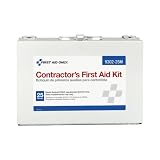
- Contractor First Aid Kit: Emergency kit includes adhesive fabric and plastic bandages, antibiotic ointments, BZK antiseptic towelettes, burn cream packets, gauze roll and pads, gloves, scissors, tweezers, and other multi-use first aid items
- Convenient Packaging: An ideal jobsite and office first aid kit, home first aid kit, or car first aid kit, this set comes in a durable wall mountable metal case with an easy-to-carry handle for transporting first aid kit supplies
- Easy Access: This construction first aid kit features an easy-to-release latch that make accessing first aid supplies quick and easy
- Versatile: Ideal for homes, offices, construction sites, construction vehicles, and more, this home and workplace first aid box helps you stay prepared for potential emergencies
- HSA Eligible and FSA Eligible First Aid Kit: Stay prepared and prioritize your safety with this convenient FSA and HSA eligible first aid kit
Do all workplace accidents have to be reported?
No. The cited rules apply to defined reportable categories, rather than every injury or near miss. Whether an incident must be notified depends on the jurisdiction’s criteria and the facts—for example, the injury’s severity, whether there was inpatient admission, how long a worker was incapacitated, or whether the event was a specified dangerous occurrence. Internal incident records, an accident-book entry, workers’ compensation paperwork, or an insurer notification should not be assumed to satisfy a separate duty to notify the competent authority. Check the applicable law.
Independent reader supportYour contribution helps us test, update, and keep practical guides available for everyone.What information may a report need?
Requirements and forms vary by jurisdiction. The ILO’s 2002 Protocol identifies common information categories: the employer and establishment, the injured person and injury or disease where relevant, and where and how the event occurred. Follow the local authority’s instructions and use its prescribed reporting channel and form when required.
Quick Recap
Best Value

- 350 Piece First Aid Kit with Essential Supplies: Includes bandages, gauze pads, antiseptic wipes, dressings, wraps, gloves, and tools to handle cuts, scrapes, burns, and minor injuries.
- Wall Mount Hard Case with Dual Layers: Mount in offices, warehouses, classrooms, garages, or job sites for visibility and fast access. Swing-out compartments keep supplies organized and protected.
- Designed for Workplace and Facility Use: Suitable for offices, construction sites, retail stores, warehouses, fleet vehicles, and commercial spaces requiring organized safety supplies.
- Supports Workplace Injury Response: Supplies designed for common incidents including cuts, burns, wounds, and sprains in high-traffic environments.
- Organized Emergency Storage Solution: Durable case keeps medical supplies secure, visible, and easy to locate during urgent situations.
Rank #4

- This essential emergency kit comes packaged in a compact plastic case, making it the ideal first aid kit for a wall mount, or to keep in a vehicle glove compartment.
- The 10 person first aid kit is OSHA compliant, meets ANSI standards and is Type 3, class A. Designed for business, commercial, contractor, and home use.
- This comprehensive kit contains 111 essential first aid supplies, from a wide assortment of gauzes and bandages to burn cream, cotton applicators, gloves, alcohol prep pads, triple antibiotic cream, eye wash, and more
- The first aid kit comes in a durable plastic case with two latches and a comfortable handle with quick and easy emergency access. The case also includes wall mounting tabs for use as a wall mounted first aid kit or on either horizontal or vertical surfaces.
- This OSHA approved first aid kit includes a manual and guide, and can be used indoors and outdoors.
What to do if an incident has happened
- Identify the country or territory and the workplace-safety authority with jurisdiction.
- Compare the incident facts with that jurisdiction’s reportable categories, including any rules for delayed discovery, diagnosis, or event windows.
- Confirm when the reporting clock begins and whether the rule sets an hours-or-days deadline, a “without delay” requirement, or both.
- Notify the authority through the method it specifies, and verify whether the report must be received by a stated date.
- Keep any required internal, insurance, or compensation records separately unless the applicable rules expressly say they also meet the authority-notification duty.
Product prices and availability are accurate as of the date/time indicated and are subject to change. Any price and availability information displayed on Amazon at the time of purchase will apply.




