What’s actually slowing this PC down?
Pick the symptom - the matching free tool is one click away.
In a July 17, 2024, interview with GeekWire, longtime Silicon Valley investor Kyle Lui named founder ambition as Seattle’s biggest startup-ecosystem challenge. His view: founders may aim for a more modest acquisition when they could instead build toward global leadership in a market. That is an investor’s assessment, not a measured consensus about Seattle startups.
What challenge did Lui identify?
“I think the biggest challenge to the Seattle ecosystem is the breadth of ambition of the founders here,” Lui told GeekWire. He contrasted founders who might consider a more modest merger or acquisition a successful outcome with Bay Area founders who, in his characterization, tend to pursue global leadership in their industries.


The distinction is about the scale of the business founders set out to build and the outcomes they pursue—not whether Seattle has startup activity. Lui described its scene as collaborative but under-invested. His comments do not establish that Seattle founders generally lack ambition, or that ambition alone explains differences in company outcomes between regions.
How does this investor lens shape the comparison?
Lui’s perspective reflects the kind of companies Bling Capital seeks: venture-scale opportunities with the potential for substantial growth. In the GeekWire report, Bling was described as allocating about two-thirds of its cash to B2B enterprise software startups; that approximate share was reported in 2024, not as a current allocation.
#1 Best Overall
Lui said Bling evaluates whether a founder’s market and business model could support major growth by asking about gross-profit potential, customer counts, and market share:
“We always ask the founder: what’s the path to getting to $100 million and $500 million in gross profit? How many customers do you need paying you? What percentage of the market does that represent?”
Rank #2
Sale Zero to One: Notes on Startups, or How to Build the Future
- If you want to build a better future, you must believe in secrets.
- The great secret of our time is that there are still uncharted frontiers to explore and new inventions to create. In Zero to One, legendary entrepreneur and investor Peter Thiel shows how we can find singular ways to create those new things.
Those $100 million and $500 million figures are screening milestones in Lui’s example, not reported results or a forecast for any particular company. The questions show how an investor can test whether an ambitious pitch is backed by a plausible market and operating plan.
What is the case for a more cautious approach?
A more muted, realistic outlook may help founders manage downturns and avoid taking risks the business cannot support. The trade-off, as the GeekWire article framed it, is that a cautious approach could also limit the pursuit of companies capable of reaching billion-dollar scale. Neither approach guarantees success: a large vision needs a credible path to customers and profits, while a modest target may leave growth opportunities unexplored.
Pitch style is part of the discussion, too. Leslie Feinzaig, founder of Graham & Walker, said at a Technology Alliance event the previous month that Seattle founders “need a little bit more sizzle” in their pitches. That is a call for stronger presentation, not evidence that every Seattle pitch is understated or that a more dramatic pitch makes a business stronger.
Who is Kyle Lui, and what did he say about Seattle’s potential?
The July 2024 report described Lui as a Bling Capital general partner who had recently moved to Seattle. Before joining Bling in 2022, he worked at Salesforce and DCM Ventures. His company ChoicePass, a corporate perks and employee-rewards platform, was acquired by Salesforce in 2012. Bling Capital was founded by Ben Ling in 2018; the firm had been focused mainly on the Bay Area and New York while investing across North America, including Seattle.
GeekWire reported that Bling was backing early-stage startups from a $212 million fund in 2024. Lui also pointed to a recent investment in Seattle-based Loti, which helps public figures find deepfakes, and said he wanted to do more deals in Seattle. He described a growing willingness among local founders to start companies rather than pursue executive roles at large technology firms. These details show why an investor might see opportunity in the region alongside the challenge he identified; they do not show how representative his view is across Seattle’s startup community.
Independent reader supportYour contribution helps us test, update, and keep practical guides available for everyone.How much should readers generalize from the claim?
Lui’s diagnosis is a dated, attributed opinion from a venture investor whose firm looks for venture-scale returns. The GeekWire report did not provide an ecosystem-wide measure of founder ambition or a quantified comparison of Seattle with the Bay Area or New York. The comments are useful as a way to understand one investor’s criteria and the debate over risk and growth, but they do not establish that the same conditions persist today.
Quick Recap
Best Value
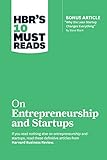
- HBR's 10 Must Reads on Entrepreneurship and Startups
- Harvard Business Review Press
- ABIS BOOK
Product prices and availability are accurate as of the date/time indicated and are subject to change. Any price and availability information displayed on Amazon at the time of purchase will apply.




