Forex—short for foreign exchange—is the market where one currency is exchanged for another. A transaction involving EUR/USD, for example, exchanges euros and U.S. dollars. If the quote is EUR/USD = 1.1000, one euro costs $1.10.
Businesses use forex to pay overseas suppliers, receive foreign-currency revenue, and manage exchange-rate risk. Banks, funds, governments, and individual traders also use it. Retail traders generally speculate on whether one currency will rise or fall relative to another, often using leverage that can magnify both gains and losses.


How a forex quote works
Every forex pair has two currencies:
- Base currency: the first currency in the pair.
- Quote currency: the second currency.
In EUR/USD = 1.1000, the euro is the base currency and the U.S. dollar is the quote currency. The quote means:
€1 = $1.10Buying EUR/USD means buying euros and selling dollars. Selling EUR/USD means selling euros and buying dollars. The direction is important: USD/JPY is not the same quote as JPY/USD, and spot and futures markets can use different quotation conventions.
Bid, ask, and spread
A dealer usually displays two prices:
| Term | Meaning |
|---|---|
| Bid | The price at which you can sell the pair. |
| Ask | The price at which you can buy the pair. |
| Spread | The difference between the ask and bid. |
Suppose a platform displays EUR/USD as:
Bid: 1.0998
Ask: 1.1000
A trader opening a long position normally buys at 1.1000, while a trader opening a short position sells at 1.0998. That 0.0002 difference is the spread. The trade must overcome the spread, plus any commission, financing charge, conversion fee, and slippage, before it produces a net profit.
Spreads are not fixed everywhere. They can vary by broker, pair, account type, time of day, market liquidity, and the release of major economic news.
How a retail forex trade works
- Deposit funds. The trader places money with a broker or dealer.
- Choose a currency pair. Examples include EUR/USD, GBP/USD, USD/JPY, and AUD/USD.
- Select a position size. The larger the position, the larger the potential dollar gain or loss from a given price move.
- Review the bid and ask. The trader also needs to check margin, spread, commission, and financing terms.
- Place a buy or sell order. A buy position benefits if the base currency rises relative to the quote currency. A sell position benefits if it falls.
- Monitor the position. Its unrealized profit or loss changes as the exchange rate moves.
- Close the position. The final result reflects the entry and exit prices and all applicable costs.
For example:
Buy EUR/USD at 1.1000
Sell EUR/USD at 1.1050
Ignoring the spread, position size, commissions, and financing, this trade benefits from a rise in the euro against the dollar. If EUR/USD falls instead, the position loses value.
A correct market forecast does not guarantee a profitable trade. A small expected price gain can be consumed by transaction costs, while excessive position size can turn a modest adverse move into a large account loss.
Where forex trading takes place
Most spot forex trading is over the counter (OTC). It does not take place on one central exchange with one official global order book. Instead, banks, dealers, electronic liquidity providers, corporations, funds, and other institutions trade through a distributed network.
In U.S. retail OTC forex, the dealer may be the customer’s direct counterparty. In practical terms, you may be trading against the dealer rather than submitting an order to a centralized exchange. The dealer can control the prices and trading environment shown on its platform, subject to applicable rules and its customer agreement. This creates counterparty and execution risks that differ from those of an exchange-traded product.
Not all currency products are OTC. Currency futures and some currency options trade on regulated exchanges such as CME Group. These products have standardized contract terms and central clearing. They are different instruments from a retail spot-forex account, even when they reference the same currencies.
Rank #2
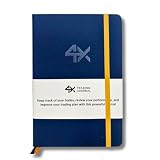
- BUILT FOR YOUR MARKET, FUTURES, STOCKS, FOREX, OPTIONS & CRYPTO: 4X is a mindset and process journal, not a strategy tool tied to one instrument. The plan, the trade log, the deep dive and the weekly review work the same whether you trade ES, EURUSD, SPY or BTC. Traders use it across all five markets every day.
- THE 2026 EDITION, REBUILT FROM TRADER FEEDBACK: Same trusted system, better in every way. An extra daily page for more room to log the session. Weekly reviews now grouped with each week's trades, so no more flipping back and forth. Crisp, darker print that's easy on the eyes after hours on a screen. A Quick-Start QR that scans straight to step-by-step instructions.
- NOT A NOTEBOOK, A COMPLETE 12-WEEK SYSTEM: Start with a one-time 9-part Trading Plan (your market, setups, risk rules and discipline checklist). Then twelve identical weeks: five Daily Logs, five Deep Dive trade pages, and a two-page Weekly Review. 189 guided pages, roughly 80 trades. Guided prompts walk you through every step. You never stare at a blank page.
- RATE YOUR EXECUTION, NOT YOUR RESULT: Your platform tracks the P&L. Nothing tracks the why. Log energy, sleep and mindset before the open; grade every trade A to F on whether you followed your plan, not on whether it won; then face the pattern every weekend with START / STOP / IMPROVE / CONTINUE. That review habit is the edge. You're 42% more likely to hit a goal you've written down.
- BUILT TO LAST, ARRIVES GIFT-READY: Vegan-leather hardcover, 100gsm bleed-resistant paper, two ribbon markers and an elastic closure band. Bound to lay flat so you're not fighting the spine while you write. 189 pages, 5.75" x 8.5", carries in a bag. Ships in a premium gift box: the gift every trader in your life actually wants.
Main types of forex instruments
Spot forex
A spot transaction sets an exchange rate for near-term delivery. In institutional market conventions, settlement is generally within two business days, although the exact convention depends on the currency pair.
Free tools Windows power users keep installed
One-click scans. No signup required.
Retail platforms commonly allow traders to keep positions open instead of taking physical delivery. The dealer typically rolls or rebooks the position under its terms and applies an overnight financing or rollover charge or credit.
Outright forwards
An FX forward is an agreement to exchange specified currencies on a future date at a rate agreed today. A company expecting to pay a supplier in euros, for example, might use a forward to set the dollar cost in advance.
Forwards are usually customized OTC contracts rather than standardized exchange-traded products. Their terms can reflect the amount, currencies, settlement date, and credit relationship between the parties.
FX swaps
An FX swap combines an exchange of currencies on one date with an agreement to reverse that exchange later. Banks and institutions use them for short-term funding, liquidity management, and hedging.
An institutional FX swap is not the same as the “swap” or “rollover” amount shown on many retail trading platforms. Retail rollover pricing may reflect currency-financing economics, but the products and contractual arrangements are different.
Currency swaps
A currency swap is generally a longer-term agreement involving principal and interest payments in different currencies. It is distinct from an FX swap, which normally focuses on exchanging principal on an initial leg and reversing it on a later leg.
Currency futures and options
Currency futures are standardized contracts traded on an exchange. A currency option gives its buyer the right, but not the obligation, to buy or sell currency under specified terms. Futures and options have their own contract sizes, expiration dates, margin rules, settlement methods, and pricing conventions.
Leverage and margin
Margin is the collateral required to open or maintain a leveraged position. Leverage lets a trader control a larger notional amount than the cash deposited in the account.
For example, a 2% margin requirement could allow a trader to control a $100,000 position with $2,000 of required margin. The trader is still exposed to the price movement of the full $100,000 position. Margin does not make the underlying exposure smaller.
If the position moves against the trader, account equity can fall toward the broker’s maintenance or liquidation threshold. The broker may automatically close positions, sometimes without waiting for a phone call or an additional deposit. Depending on the account agreement and applicable law, losses can exceed the initial deposit.
U.S. retail forex margin floors
For U.S. retail forex transactions, CFTC Regulation 5.9 sets minimum security-deposit floors of:
- 2% of notional value for major currency pairs—approximately 50:1 maximum leverage.
- 5% of notional value for other currency pairs—approximately 20:1 maximum leverage.
These are regulatory floors, not a promise that every broker offers exactly those leverage levels. A broker can impose stricter limits, including pair-specific or account-specific limits.
What’s actually slowing this PC down?
Pick the symptom - the matching free tool is one click away.
What moves currency prices?
An exchange rate reflects the market’s changing assessment of one currency relative to another. Common influences include:
- Interest rates and expectations for future interest-rate changes.
- Inflation and expected inflation.
- Economic growth, employment, and consumer data.
- Central-bank decisions and communications.
- Government debt, fiscal policy, and political risk.
- Trade and investment flows.
- Commodity prices, particularly for commodity-linked economies.
- Geopolitical events and changes in investor risk appetite.
- Market positioning, liquidity, and technical factors.
There is no single reliable trigger for every move. A strong economic report can cause a currency to fall if traders expected an even stronger result, or if a central-bank announcement and a broader risk shock matter more.
Costs and risks that are easy to miss
| Cost or risk | How it affects a trade |
|---|---|
| Spread | Creates an immediate cost when a position is opened. |
| Commission | May be charged separately or incorporated into the broker’s pricing. |
| Overnight financing | Can be charged or credited when a position remains open. |
| Slippage | An order may execute at a different price from the displayed or requested price. |
| Widening spreads | Fast markets, holidays, and thin liquidity can make entry and exit more expensive. |
| Gaps | The next available price after a weekend or holiday closure may differ materially from the previous quote. |
| Leverage | A relatively small currency move can consume available margin. |
| Counterparty risk | In OTC trading, the dealer’s financial condition and contractual obligations matter. |
Stop orders also have limits. A stop may trigger during a fast move but execute at a worse price than the stop level. A displayed quote is not necessarily a guaranteed execution price.
Automated trading creates additional failure modes. Incorrect parameters, stale data, software errors, connectivity problems, or an unintended position size can cause a system to trade more quickly than the user can intervene.
Quick wins for a faster PC:
Fix the driver behind crashes, sound loss and screen glitchesFind Drivers →Clear out junk files and repair common Windows errorsFree Scan →How large is the forex market?
The finalized BIS 2025 Triennial Survey measured average global OTC forex turnover in April 2025 at approximately $9.51 trillion per day. This is turnover—the value of transactions conducted—not the amount of money deposited by traders and not a measure of profits.
| Instrument | Approximate daily turnover |
|---|---|
| Spot transactions | $2.95 trillion |
| Outright forwards | $1.75 trillion |
| FX swaps | $4.02 trillion |
| Currency swaps | $164 billion |
| FX options | $632 billion |
The U.S. dollar was on one side of approximately 89% of all FX trades in the preliminary 2025 BIS results. Currency percentages add to more than 100% because every forex transaction involves two currencies. Retail-driven turnover was approximately $242 billion per day—large in absolute terms, but a small share of the total market.
Who uses forex?
- Banks and dealers provide liquidity and facilitate transactions.
- Importers and exporters convert currencies to pay suppliers or collect overseas revenue.
- Asset managers and hedge funds trade or hedge currency exposure.
- Central banks and official institutions manage reserves and may conduct currency-market operations.
- Corporations and financial institutions use forwards, swaps, options, and other products to manage funding and exchange-rate risk.
- Retail traders generally speculate on currency movements through a broker or dealer.
What to check before using a forex broker
Forex is not a single standardized retail product. Before depositing money, check the exact entity offering the account, its regulator, leverage limits, fees, order-execution policy, rollover terms, liquidation rules, and procedures for withdrawals and disputes.
In the United States, a firm acting as the counterparty to certain leveraged, off-exchange retail forex transactions generally must register as a Retail Foreign Exchange Dealer (RFED), unless an exemption applies. Registered RFEDs must also be NFA Members and designated Forex Dealer Members. An introducing broker may solicit or accept orders without being the carrying counterparty, while an FCM may offer retail forex subject to applicable rules.
The Tool Desk
Outbyte PC Repair FREERepair Windows errors before they cause bigger problemsFix Now →Outbyte Driver Updater FREEScan for outdated or missing drivers - takes under a minuteDriver Scan →Best Value

- My Trading Journal for Stock Market, Forex, and Crypto: Precisely track and analyze every trade. This log book is essential for improving your trading performance and decision-making skills.
- Comprehensive Day Trading Planner: Record and review 80 guided trades with 8 review sections, perfect for traders aiming to refine their strategies and maximize profits.
- Customizable Trading Setup: Tailor your trading approach by documenting your setups, analyzing results, and adjusting strategies based on market conditions.
- For All Types of Traders: Whether you're trading stocks, forex, or crypto, My Trading Journal supports your unique trading style and helps you achieve consistent success.
- Premium Quality and Durability: Made with high-quality materials, this A5-sized journal is perfect for daily use and designed to withstand the rigors of active trading.
Use the NFA directory and CFTC resources to check registration and disciplinary history. A website, trading app, or social-media account does not prove that a firm is authorized to serve customers in the United States. Regulation reduces some risks; it does not make forex profitable or eliminate the possibility of loss.
Forex myths worth ignoring
- “Forex is open 24/7.” Trading follows business-week schedules, with weekend, holiday, rollover, and broker-specific closures.
- “There is one official forex price.” OTC dealers and liquidity venues can display slightly different prices.
- “Forex is only speculation.” International businesses and financial institutions use it for payments, funding, investment, and hedging.
- “A pip always has the same cash value.” Pip value depends on the pair, quote precision, position size, and account currency.
- “High liquidity prevents losses beyond the deposit.” Leverage, gaps, slippage, financing costs, and the account agreement still matter.
- “The latest loss rate is two out of three traders.” That CFTC figure refers to account disclosures from the second quarter of 2021 through the first quarter of 2022, not a current universal result for every trader or jurisdiction.
FAQ
Is forex the same as buying foreign currency for a trip?
The underlying exchange is related, but the purpose and product are different. A traveler typically converts money for spending. A retail forex trader usually opens a leveraged financial position and may not take delivery of the currencies.
Can you make money trading forex?
It is possible to profit from a favorable currency move, but profits are uncertain and costs reduce returns. Leverage can magnify losses, and a dealer may liquidate a position when account equity falls below its requirements.
What is the best currency pair for beginners?
There is no universally best pair. Compare the spread, liquidity, volatility, trading hours, financing terms, and the risks you understand. A major pair may have tighter pricing, but it can still produce substantial losses when traded with leverage.
PC Slower Than It Used to Be?
A free scan shows the junk files, broken settings and background clutter dragging Windows down - then fixes them in one click.Free scan · Windows 10 & 11Outdated Drivers Are Slowing You Down
One free scan finds every outdated or missing driver and matches the right update for your exact hardware.Free scan · exact hardware matchHow much money do I need to start forex trading?
The platform’s minimum deposit is not the same as a prudent trading amount. The required margin depends on the position’s notional value and broker rules, while the potential loss depends on the full position exposure. Never infer safety from a low minimum deposit.
Is forex regulated?
Rules depend on the product and country. In the United States, certain retail OTC forex counterparties must register as RFEDs or meet another applicable regulatory framework. Exchange-traded currency futures and options have different rules from OTC retail forex.
What is the difference between forex and currency futures?
Retail OTC forex is commonly offered through a dealer and can have dealer-specific pricing and terms. Currency futures are standardized contracts traded on an exchange with contract specifications and central clearing. Their prices and settlement mechanics are not identical.
The Bottom Line
Forex is a market for exchanging currencies, quoted in pairs such as EUR/USD. A trader buys one currency and sells another, then gains or loses as the exchange rate changes. The result is also affected by spreads, commissions, financing, slippage, and position size.
Do these 3 things before closing this tab:
1Clear out junk files and repair common Windows errors2Fix the driver behind crashes, sound loss and screen glitches3Repair Windows errors before they cause bigger problemsThe market supports real commercial hedging and global finance, but retail OTC forex adds leverage and counterparty risks. Understand the quote, calculate exposure from the full notional position—not just the margin—and verify the broker’s regulatory status before committing money.
Quick Recap
Product prices and availability are accurate as of the date/time indicated and are subject to change. Any price and availability information displayed on Amazon at the time of purchase will apply.




