Outdated Drivers Are Slowing You Down
One free scan finds every outdated or missing driver and matches the right update for your exact hardware.Free scan · exact hardware matchWindows Errors? Fix Them Before They Spread
Repair common Windows errors and clear accumulated junk for a smoother, more stable PC - no reinstall needed.Free scan · no reinstallCreative thinking is the ability to generate ideas, judge whether they fit a problem, and improve promising ones into original, effective solutions. It is not limited to art or sudden inspiration: it can also help with ordinary tasks, including finding a workable way to manage a household budget.
What creative thinking means
The OECD defines creative thinking as “the competence to engage productively in the generation, evaluation and improvement of ideas that can result in original and effective solutions, advances in knowledge and impactful expressions of imagination.” In plain terms, it is both a way of working through possibilities and a way of developing the best ones. The OECD PISA 2022 framework treats creative thinking as a capacity that can be developed through practice.
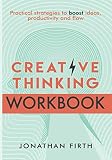


Creative thinking is related to creativity, but the terms are not identical in every context. Thinking refers to the processes used to do creative work; broader judgments about creativity may also consider the value of the result in society. The process can lead to an expressive work, a functional solution, or a new way to investigate a question.
How divergent and convergent thinking work together
Creative problem-solving uses both open-ended idea generation and focused evaluation. Divergent thinking helps produce different possibilities; convergent thinking helps understand the problem and decide which possibilities are relevant and effective. They are complementary, not competing styles.
What’s actually slowing this PC down?
Pick the symptom - the matching free tool is one click away.
| Process | What it does | Example: reducing a household expense |
|---|---|---|
| Divergent thinking | Explores multiple approaches and makes flexible or surprising connections. | List distinct options, such as changing a service plan, adjusting a recurring purchase, or reorganizing how an existing resource is used. |
| Convergent thinking | Reasons about the problem and assesses which ideas are relevant and workable. | Compare the options against the actual expense, household needs, constraints, and likely effort before choosing one to investigate. |
The OECD’s PISA 2022 assessment groups creative thinking into three processes: generating diverse ideas, generating creative ideas, and evaluating and improving ideas. These processes can inform one another; assessment categories are a useful framework, not a fixed sequence every person or project must follow. PISA’s framework and assessment are designed around 15-year-old students and everyday contexts, so they should not be treated as a complete account of every theory of creativity or every adult setting.
Originality matters, but usefulness matters too
An idea is not effective merely because it is unusual. The OECD framework emphasizes ideas that are both novel and useful, with usefulness judged in relation to the problem and context. For a household budget, an unconventional suggestion that cannot be carried out or does not address the relevant expense is not a good solution simply because it is original.
Rank #2

- Nature in Action: Ocean Life, Rain, Rain, Sunshine, Snow Day!, Earthquake and Volcanoes, Giant Squids, Bears, Dinosaurs
Subject knowledge can help people make ideas more relevant and workable: understanding the constraints gives them something meaningful to build on. But familiarity can also encourage fixation on established routines, so expertise does not guarantee fresh ideas.
Examples of creative thinking in everyday life
The OECD calls ordinary, everyday forms of creativity “little-c” creativity, distinguishing them from major achievements that may require deep expertise. Examples include finding a new way to solve a daily problem, combining ingredients into a meal, or arranging photographs. Creativity is not restricted to the arts; it can also appear in functional problem-solving and investigation. The OECD’s description of the PISA 2022 assessment explains these everyday contexts.
Rank #3
In personal finance, a person might rethink how to organize bill reminders, look for a different way to plan meals around what is already on hand, or generate several approaches to a recurring expense before deciding what to examine. These are examples of applying the idea-generation process, not financial recommendations or guarantees of savings.
How to practise creative thinking
- Define the real question. State the problem and its constraints clearly. For example: “How might I make this monthly expense easier to manage without losing something my household needs?”
- Generate meaningfully different options. Write down several distinct approaches before selecting one. The goal is variety, not simply a longer list of near-identical suggestions.
- Change the angle. Reframe the question, consider another person’s perspective, or try a different method to avoid defaulting to the first familiar answer.
- Build relevant knowledge. Learn enough about the subject to understand its needs and limits, then connect that knowledge with ideas or experience from elsewhere.
- Let ideas incubate when useful. Reflection, time away from a problem, or a relaxing or automatic activity may help quiet focused attention and support new ideas. These are possible strategies, not guaranteed techniques.
- Evaluate and improve a promising idea. Ask who it helps, whether it addresses the actual need, what could prevent it from working, and what change might make it more useful. Test or refine it where appropriate, learn any skills needed to develop it, and use setbacks and reflection to guide another attempt.
Free writing or sketching can provide a simple surface for working through possibilities. The British Columbia curriculum’s Creative Thinking guidance describes learning about a topic, reflecting, allowing time for incubation, and using strategies such as these. A blank sketchbook is optional; the source supports sketching as a strategy, not a requirement or a proven enhancer of creative thinking.
Rank #4
A practical way to compare ideas
When deciding which ideas deserve further development, consider these questions:
- Variety: Do the options differ meaningfully, or are they mostly versions of the same approach?
- Originality: Is an idea new or unusual in the context where it would be used?
- Usefulness: Does it address the actual need and constraints?
- Development: Can it be tested, improved, or made workable with available knowledge and skills?
These questions synthesize the OECD framework’s emphasis on diverse ideas, originality, evaluation, and improvement. They are a practical reflection aid, not a validated test or scoring system.
Recommended Free Tools
Quick Recap
Best Value
Product prices and availability are accurate as of the date/time indicated and are subject to change. Any price and availability information displayed on Amazon at the time of purchase will apply.




