Form W-9 is the IRS Request for Taxpayer Identification Number and Certification. A requester gives it to a U.S. person to obtain the person’s taxpayer identification number (TIN) and required certifications for information reporting. Give the completed form to the requester—not the IRS.
U.S. citizens, resident aliens, and certain U.S. entities may use a W-9 when a requester needs their TIN. Foreign persons generally use an appropriate Form W-8 or, in relevant personal-services cases, Form 8233 instead. The correct entries depend on the filer’s tax status and the payment involved.
What is a W-9 form?
A W-9 provides a requester with a payee’s name, address, TIN, federal tax classification, and applicable certifications. A requester may need that information to file an information return, such as a Form 1099, or for other reportable situations including real estate transactions, mortgage interest, canceled debt, or IRA contributions.
A W-9 is not an income tax return and does not itself report income or calculate tax. The requester keeps the completed form and uses its information for applicable reporting. The IRS Form W-9 (revision March 2024) says not to send the form to the IRS.
The Tool Desk
Outbyte PC Repair FREERepair Windows errors before they cause bigger problemsFix Now →Outbyte Driver Updater FREEScan for outdated or missing drivers - takes under a minuteDriver Scan →#1 Best Overall
Who can file a W-9?
Use Form W-9 if you are a U.S. person and a requester needs your TIN. IRS examples of U.S. persons include U.S. citizens and resident aliens, U.S.-organized partnerships and corporations, domestic trusts, and non-foreign estates. A resident alien who cannot obtain an SSN may need an ITIN if eligible.
Common requesters include businesses and financial institutions with information-reporting obligations. A W-9 may be requested for reportable income, real estate transactions, mortgage interest, canceled debt, or IRA contributions. Being asked for a W-9 does not mean that the requester will necessarily issue a Form 1099 or that you automatically owe a particular amount of tax.
| Your status | Form generally used |
|---|---|
| U.S. person whose TIN is requested | Form W-9 |
| Foreign person | Applicable Form W-8; Form 8233 may apply in relevant personal-services cases |
A disregarded entity generally provides its owner’s name and TIN; the U.S. owner provides the W-9 to establish non-foreign status. Check the IRS instructions or consult a qualified tax professional if your status or the right form is unclear.
Rank #2

- W2-C Format is ideal for making corrections to various W-2 forms
- Compatible with laser or inkjet printers.
- Use to Correct Errors on: W-2s, W2AS, W2CM, W2GU and W2VI
- Meets all government and IRS filing requirements
- Made in the USA.
How do I fill out a W-9?
- Line 1 — Name: Enter the name that matches the applicable tax return. A sole proprietor uses the owner’s individual name. For a disregarded entity, enter the owner’s name, not the entity’s name. An entity that is not disregarded generally enters its tax-return name.
- Line 2 — Business or disregarded entity name: Enter a business, trade, DBA, or disregarded-entity name if it differs from line 1.
- Line 3a — Federal tax classification: Check the applicable classification. A disregarded LLC checks the box for its owner’s classification. A non-disregarded LLC checks LLC and enters C, S, or P for its federal tax classification.
- Line 3b — Certain flow-through entities: A partnership, trust, or estate, including an LLC taxed as a partnership, checks this box only when the form’s stated conditions apply: it has foreign partners, owners, or beneficiaries and provides the form to a partnership, trust, or estate in which it holds an ownership interest.
- Line 4 — Exemptions: Enter an exempt-payee code or FATCA exemption code only if it applies. These codes apply to certain entities, not individuals; do not guess.
- Lines 5–6 — Address: Enter the requested address, city, state, and ZIP code. The requester’s name and address and any account numbers are optional fields on the form.
- Part I — TIN: Enter the appropriate TIN in the SSN or EIN area. TIN types include SSN, ITIN, ATIN, and EIN. The right TIN depends on your circumstances; use the IRS instructions if uncertain.
- Part II — Certification and signature: Sign and date when the certification is required. The certification covers TIN accuracy, backup-withholding status, U.S.-person status, and any FATCA code entered. Signature requirements depend partly on the payment type.
If the IRS has notified you that you are currently subject to backup withholding for underreported interest or dividends, the form instructs you to cross out certification item 2. For certain payments—including mortgage interest, canceled debt, IRA contributions, and generally payments other than interest and dividends—the payee is not required to sign the certification but must still provide the correct TIN. Real estate transactions have a separate certification instruction. Follow the requester’s directions for the transaction.
Do these 3 things before closing this tab:
1Scan for outdated or missing drivers - takes under a minute2Repair Windows errors before they cause bigger problems3Fix the driver behind crashes, sound loss and screen glitchesHow do LLCs and other entities complete a W-9?
| Filer type | Line 1 and classification guidance |
|---|---|
| Sole proprietor | Owner’s name on line 1; business or DBA name, if different, on line 2; select the individual/sole proprietor classification. |
| Disregarded LLC | Owner’s name on line 1 and LLC name, if different, on line 2; select the owner’s classification. |
| LLC taxed as a corporation or partnership | Use the entity’s tax-return name and select LLC with its applicable C, S, or P classification. |
| Other entity not disregarded | Generally use the name on its tax return and select the applicable federal tax classification. |
Do not assume every LLC uses the same classification or TIN entry. The W-9 instructions explain the line entries; consult them or a qualified tax professional when the entity’s treatment is uncertain.
Do I send a W-9 to the IRS?
No. Give the completed W-9 to the requester. The requester keeps it and uses the information for applicable reporting. Do not mail the form to the IRS.
Rank #3

- Perfectly fits your computer printed 1099 MISC forms from QuickBooks or similar accounting software. Your 1099 COPY B and COPY C forms will slide in with ease. NOT FOR QUICKBOOKS ONLINE.
- Recipient and return address will show perfectly in our unique double window design. No need to worry about your personal tax identical number or other personal information showing through the envelope windows
- Provides complete tax form security: your 1099-MISC forms will be hidden with our black security tint design
- Your contents will stay sealed during transit with your strong gummed adhesive and unique tapered gummed flap design.
- Maintains professional look and feel throughout transit with our durable 24 LB white wove envelope paper
Requesters may provide an electronic submission system under IRS requirements. Use the requester’s approved method and take care to protect your TIN; do not post it publicly or send it to an unverified requester.
What happens if I don’t fill out a W-9?
If a requester needs your TIN and you fail to provide it, provide an incorrect TIN, or fail to give a required certification, backup withholding may apply to covered payments. The IRS Form W-9 states a backup withholding rate of 24% (Internal Revenue Service, 2024). This is not a universal tax on everyone who receives a W-9 request; withholding applies when a specified legal trigger applies.
Other listed triggers include an IRS notice that a TIN is incorrect and certain IRS notices about underreported interest or dividends. The IRS requester instructions state: “A properly completed and signed Form W-9 can be relied upon to avoid backup withholding to a payee” (Internal Revenue Service, Instructions for the Requester of Form W-9, March 2024).
Rank #4
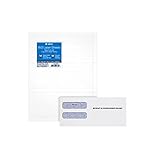
- Get blank W-2 forms and peel & seal envelopes for 50 employees in a 3-up format with stub for QuickBooks Desktop users; pack has 50 perforated sheets with blank fronts & copy B & C instructions on back
- Use these blank W-2 kits to print and mail your employees' W-2 copies on IRS-approved blank perforated paper; detailed instructions for the recipient are printed on back
- White W2 forms print 3 to a page on 50 micro perforated sheets with copies B & C; one sheet for each employee
- Inkjet and laser printer compatible; forms work with QuickBooks and other accounting software, and the new Adams Tax Forms Helper, still the fast & easy way to file; access not included
- Mail or eFile your 2023 W-2 forms to the SSA and furnish copies to your employees by January 31, 2024; new IRS eFile law! If you're filing 10 or more returns, you must eFile
FAQ
What is a W-9 form?
It is the IRS Request for Taxpayer Identification Number and Certification. A requester uses it to collect a U.S. person’s TIN and applicable certifications for information reporting.
Who can file a W-9?
A U.S. person, including a U.S. citizen or resident alien and certain U.S. entities, can complete a W-9 when a requester needs their TIN. Foreign persons generally use an appropriate W-8 form or, in relevant personal-services cases, Form 8233.
How do I fill out a W-9?
Enter the tax-return name, applicable business or entity name, federal tax classification, address, and appropriate TIN. Complete any applicable exemption fields and follow the form’s certification and signature instructions for your payment type.
Crashes, No Sound, or Screen Glitches?
Random freezes, missing sound and display glitches usually trace back to one bad driver. Find and replace yours safely.Free scan · under a minutePC Slower Than It Used to Be?
A free scan shows the junk files, broken settings and background clutter dragging Windows down - then fixes them in one click.Free scan · Windows 10 & 11Best Value
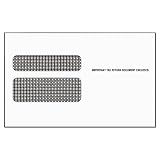
- Envelope For W2 Form, Double Window, 9-1/2"x5-5/8", 24/PK
Do I send a W-9 to the IRS?
No. Give it to the requester; do not send it to the IRS.
What happens if I don’t fill out a W-9?
If you fail to provide a TIN or required certification, or provide an incorrect TIN, backup withholding may apply to covered payments. The IRS form states the rate as 24% (Internal Revenue Service, 2024); it does not apply automatically to every W-9 request.
Sources
Internal Revenue Service, Form W-9 (revision March 2024)
Internal Revenue Service, Instructions for the Requester of Form W-9 (March 2024)
Quick Recap
Internal Revenue Service, About Form W-9
Product prices and availability are accurate as of the date/time indicated and are subject to change. Any price and availability information displayed on Amazon at the time of purchase will apply.




