Quick wins for a faster PC:
Repair Windows errors before they cause bigger problemsFix Now →Fix the driver behind crashes, sound loss and screen glitchesFind Drivers →Communities can evaluate a proposed data center by checking whether it fits local plans, requiring project-specific evidence about utility and public-service demands, weighing environmental and quality-of-life effects against fiscal benefits and costs, and putting any negotiated promises into measurable, enforceable terms. Start with the actual application and local decision process: the relevant approvals and agency reviews vary by jurisdiction, site, design, and operations.
Start by finding out what is proposed and who decides
Before weighing benefits or impacts, establish the proposal’s scope and the decisions that are still open. A data center may be proposed in phases, and a later expansion can change its demands. Gather the site location, developer, any disclosed operator or anchor tenant, project schedule, current phase, requested approvals, zoning status, and application materials.
Then map the decision process. Identify which local body handles land use and zoning, what public meetings or comment periods are scheduled, and which state or federal agencies may review matters such as water, air emissions, wetlands, wastewater, electricity service, or construction. Ask officials which approvals are required for this specific site and design rather than assuming that every project follows the same path.
Pennsylvania’s local-government planning toolkit is one example of a process that runs from initial inquiry through zoning, permitting, and longer-term planning. It covers subjects including power, water, broadband, land use, fiscal impacts, public services, and legal considerations. Michigan’s project overview likewise emphasizes that applicable reviews depend on site and design. These are useful models, not statements of authority or requirements in every state.
What’s actually slowing this PC down?
Pick the symptom - the matching free tool is one click away.
#1 Best Overall
![Center Console Organizer for Tesla Model Y Juniper Premium & Performance 2025 2026 and All Model 3 Highland Accessories [Double-Layer Storage, Smooth Sliding] Cup Holder Armrest Hidden Storage Box](https://m.media-amazon.com/images/I/41ZY-qUo9pL._SL160_.jpg)
- 【Custom Fit for Tesla Model Y Juniper & Model 3 Highland】Designed specifically for Tesla Model Y Juniper 2025-2026 and Model 3 Highland 2024-2025/2026, this 4PCS tesla center console organizer set is precision molded using 1:1 OEM data for a seamless factory fit. Perfectly compatible with the original sliding cover and center console layout without affecting daily use
- 【4PCS Complete Tesla Storage Organizer Set】Includes hidden privacy storage box, center console organizer tray, armrest storage box, and silicone cup holder insert. This Tesla Model Y Juniper accessories kit maximizes console storage space with smart compartment organization for phones, sunglasses, wallets, cards, charging cables, coins, keys, and other daily essentials. Keep your Tesla interior clean, organized, and clutter-free
- 【Premium PC Material & Anti-Slip Silicone Liner】Made from durable high-quality PC material combined with soft liquid silicone liners, this Tesla center console organizer delivers long-lasting durability, heat resistance, and a premium OEM-style appearance. The anti-slip silicone padding effectively prevents items from sliding, rattling, scratching, or shifting during driving, creating a quieter and more refined cabin experience
- 【Hidden Storage Box & Stable Cup Holder Insert】The concealed armrest storage compartment provides extra private storage space for valuables while maintaining Tesla’s minimalist interior design. The precision-fit silicone cup holder insert securely stabilizes cups and water bottles to reduce spills, vibrations, and condensation buildup. An essential Tesla Model Y Juniper and Model 3 Highland accessory for everyday driving convenience
- 【Easy Installation & Easy to Clean】Tool-free installation allows every Tesla organizer tray and liner to fit securely in seconds with no residue or damage. Waterproof silicone liners are removable, washable, and easy to wipe clean, helping protect the original console from dust, crumbs, stains, and wear while keeping your Tesla interior looking brand new
Build a public record
- Keep a dated list of applications, public notices, meeting materials, staff reports, and agency filings.
- Record unanswered questions, the official or provider responsible for answering them, and any promised response date.
- Ask how changes to the site plan, equipment, demand forecasts, or project phases will be disclosed and reviewed.
Does the site fit local plans and nearby uses?
Compare the proposed use and site with the comprehensive or master plan, zoning, redevelopment plans, transportation access, neighboring uses, and stated community priorities. A project may comply with one land-use rule while still raising questions about its fit with adopted plans or the character and needs of the surrounding area.
Ask for the full campus footprint and phasing, including buildings, substations or other utility facilities, access roads, construction areas, buffers, lighting, and any planned backup-power equipment. Clarify whether later phases or expansions would require new approvals and another public review. New Jersey’s baseline community-benefit guidance calls for considering master-plan conformance and engaging the community before finalizing agreement terms.
What infrastructure and service demands should be documented?
Request a written, project-specific impact assessment with its assumptions—not just a presentation summary. Review it across municipal engineering and public works, electric and water or sewer providers, fire districts, and emergency services. Separate the project’s construction needs from its expected operating needs, and distinguish average demand from peak demand.
Electricity, grid upgrades, and bills
Ask the developer and electric utility for projected electric load, peak demand, the timing of demand as phases come online, and the status of interconnection. Seek the assumptions behind those forecasts, including expected operating conditions and any on-site generation. Ask what transmission or other grid upgrades may be needed, who would pay for them, and whether a large-load tariff or other rate treatment applies.
Rank #2

- Perfect Fitment: Designed with 3D laser scan data to ensure a precise fit for your Tesla Model Y Juniper. Includes an upper front console tray, armrest tray, cup holder insert, wireless charger mat, and hidden armrest storage box. Please note: this does not fit Standard
- High-Quality Material: Our trays are made of premium material to make them sturdy, wear-resistant and easy to clean. The console trays come with two sets of PVC Insert Mats(black+white) that are anti-slip and waterproof, preventing your items from rattling and sliding while driving
- Function: Maximizes storage space and keeps items like your purse, napkin case, and other daily essentials organized. Reduces rattling and enhances driving safety
- Easy to Install: No tools needed. Simply put it in the right places according to the product images
- Service: We are committed to providing customers with great products and services. If you have any problem with our product, please feel free to contact us at any time and we will try our best to guarantee that you are 100% satisfied
A data center’s load does not, by itself, establish what local customers’ bills will do. Ask the utility or relevant regulator to explain the applicable rates and cost allocation, including how project-related upgrades and service costs would be assigned. New Jersey’s Municipal Resource Hub offers municipal help understanding grid and interconnection filings and who typically bears grid-upgrade costs; rate questions in New Jersey can also be directed to the Board of Public Utilities.
Water, cooling, and wastewater
Request projected average and peak-day water use, the proposed water source, cooling technology, and any plans for conservation or reuse. Also ask about wastewater or other discharge needs and the treatment system that would receive them. Have the relevant providers assess whether existing systems have capacity and what upgrades would be needed. Peak-day use and cooling assumptions are particularly important when reviewing a project’s demand, as the New Jersey Economic Development Authority (NJEDA) Municipal Resource Hub notes.
Roads and emergency readiness
Review road and bridge capacity, construction traffic, site access, and any public infrastructure improvements needed for the project. Emergency planning should cover water supply for firefighting, communications, response procedures, and the fire department’s ability to address hazards associated with generators, fuel storage, batteries, and uninterruptible power supply installations.
Ask the fire district and emergency services what equipment, training, access, or other improvements they would need, and whether those needs are funded. NJEDA recommends that relevant municipal staff and utilities work through these questions and encourages developer funding where public response improvements are needed. Actual requirements and authority depend on the location and applicable rules.
Rank #3

- 🏎️『Applicable Models』: The Central Control Dashboard Cover is customized with the original car data, suitable for Tesla Model 3 2021-2023 (Gen2.0) / Tesla Model Y 2020-2024. Please check compatible models and years before purchasing.
- 🏎️『High Quality Material』: The interior accessories Door Wrap Cap Panel Trim is made of high quality ABS to ensure the highest quality. Good texture in appearance and touch. Hard and wear-resistant, can provide effective protection, not easy to deform and break.
- 🏎️『Features』: The Central Control Dashboard Panel Trim will decorate your car in a unique and stylish way. It does not affect the use of original functions, but also improves the monotonous appearance of your interior. Prevent car surface from scratches, dust, dirt. It covers original imperfections (scratches, dirt, discoloration, cracks) and keeps it looking like new.
- 🏎️『Easy Installation』: The Center Console Molding Panel Cover has self-adhesive 3M double-sided adhesive, there is no harm to your car, and it can be easily installed on the car without peeling off the original car accessories. In order to achieve better effect, Please Clean the place where you need to paste and keep Dry. tear off the sticker, Alignment the position and then paste (pressing 20-30 seconds).
- 🏎️『Qiosreui Best Service』: Qiosreui provides 24-month guaranteed service. Customers' feelings are always our top priority, and our products support lifetime quality service. If you have any other questions, please contact us, we will reply you within 24 hours.
How can residents assess environmental and quality-of-life effects?
First determine which environmental reviews and permits apply to the site and design. Michigan’s overview identifies possible areas of review such as water withdrawals, wetlands, lakes and streams, stormwater, wastewater, air emissions, drinking water, and contaminated sites. It also cautions that not every project requires every permit.
Noise, light, and construction activity
Ask for a noise assessment that states where and when measurements were taken, the existing sound baseline, expected operating conditions, and how low-frequency sound and backup-generator testing are addressed. Ask what limits the developer proposes, how compliance would be measured, and what complaint and response process would apply. Also seek plans for lighting, construction traffic, and operating hours. NJEDA identifies noise and light pollution as impacts communities may seek to mitigate.
Residents can use a consumer sound meter to record informal observations consistently, including the location and time. Those readings are not a substitute for an expert acoustic study or a legally compliant measurement.
Ask the right environmental questions of the right reviewers
For a New Jersey project, NJEDA directs municipalities to the New Jersey Department of Environmental Protection for environmental questions such as water, air permitting, noise, and environmental justice. Elsewhere, identify the current agency responsible for each issue. Do not infer that a permit is required—or that a concern has been resolved—without checking the project’s actual application record and the relevant agency’s process.
Rank #4

- Perfect Fit: The center console wrap kit is specifically designed for Model 3 (2021-2023) and Model Y (2021-2024). Not compatible with New Model 3 Highland 2024-2025 and Model Y Juniper 2025.
- High Quality Material: Made from high-quality, scratch-resistant silicone to safeguard your console from daily wear and tear. Ultra-thin design ensures seamless opening and closing of the console, without affecting key card operation.
- High-End Design: Featuring a silicone pattern, it aesthetically adorns the center console and enhances the overall class. The clear tactile texture further enhances its appeal.
- Easy Installation: electrostatic adsorption, no adhesive backing repuried, Simply put it on and it will absorb without damaging the original car.
- Essential Interior Accessory: The wrap cover kit keeps your Tesla console clean and organized, enhance your vehicle's interior appearance.
Does the fiscal case account for costs as well as benefits?
Request a transparent fiscal analysis that sets out expected revenues and public costs over time. It should identify tax revenue, abatements or other incentives, public infrastructure expenses, added service costs, construction impacts, and employment assumptions. Ask how long each revenue stream or obligation is expected to last and which assumptions are uncertain.
Employment claims should distinguish construction work from permanent positions and explain the assumptions behind each projection. Ask what happens if the project is delayed, investment or job projections are missed, or the facility expands. An independent review can help test the assumptions and compare them with relevant peers. NJEDA’s hub points municipal reviewers to fiscal-impact assumptions, peer comparisons, and protections if projected revenue does not materialize.
For electricity-bill questions, rely on the utility or regulator’s explanation of rates and cost allocation rather than treating a projected load as proof of a particular bill increase or decrease. Keep that rate analysis distinct from a municipal fiscal analysis: they address different costs and decision-makers.
Independent reader supportYour contribution helps us test, update, and keep practical guides available for everyone.How should a community compare proposals or design options?
If officials are considering more than one proposal, site, or design, ask for the same categories of information for each. Otherwise, a comparison may reflect different assumptions rather than meaningful differences between projects.
Crashes, No Sound, or Screen Glitches?
Random freezes, missing sound and display glitches usually trace back to one bad driver. Find and replace yours safely.Free scan · under a minutePC Slower Than It Used to Be?
A free scan shows the junk files, broken settings and background clutter dragging Windows down - then fixes them in one click.Free scan · Windows 10 & 11Best Value
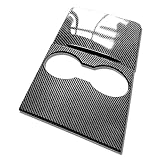
- Tailored Fitment: Fits 2021-2023 Tesla Model 3 & 2021-2024 Tesla Model Y. Designed to meet OEM specifications for perfect fit.
- High Quality ABS Plastic: The center console wrap is made of high-grade ABS with carbon fiber texture, which is not only lightweight, but also durable and anti-scratch. It can be used for a long time without abrasion and scratch.
- Excellent Functional: The center console cover provides effective protection for your car cup holder panel, to avoid daily use micro scratching and fingerprints.
- Personalized Decoration: IKON MOTORSPORTS cup holder cover protection offers elegant surface and exquisite workmanship, not only makes interior more luxurious and high end magnificent feel, but also always shows your charm.
- Hassle-free Installation: Each center console wrap cover kit is precisely cut and 100% meet original specifications, just clean the cup holder panel, peel the traceless tape off and press, super easy to install, and remove without any smudge.
- Land use: plan and zoning compatibility, footprint, phases, buffers, and proximity to other uses.
- Utilities: peak and annual electricity demand, grid upgrades and cost responsibility, water source and peak-day demand, cooling, and wastewater.
- Impacts and services: air, noise, and lighting effects; road and bridge needs; and emergency-service requirements.
- Public finances and jobs: incentives, expected revenue, infrastructure and service costs, and construction versus permanent employment assumptions.
- Accountability: which commitments are enforceable, how operations will be monitored, and how expansions or missed projections will be handled.
Project size, design, and location can materially affect the comparison. Record where estimates use different assumptions, and request a consistent basis before drawing conclusions.
How can negotiated benefits become accountable commitments?
A community-benefit agreement (CBA) can be a legally binding contract between a developer and a host municipality or community group. NJEDA describes CBAs as a way to address specific impacts, combine financial and non-financial benefits, and set transparent expectations. Whether a municipality or group can require or enter into a particular term depends on its legal authority and the agreement’s structure; local counsel should review it.
Possible subjects include funded road, water, or sewer improvements; fire and emergency-service upgrades; noise and light mitigation; workforce training and apprenticeships; community investment; and operational reporting. A general promise is difficult to verify. For each negotiated commitment, specify:
- Who is responsible for delivering it, including whether the obligation binds a successor or operator where appropriate.
- What will be delivered, with a dollar amount, measurable standard, or defined scope.
- When it is due, and for how long an ongoing obligation applies.
- How performance will be reported, including the recipient, schedule, and access to relevant information.
- What happens if it is missed, using a remedy and enforcement route reviewed by counsel.
New Jersey’s baseline CBA guidance emphasizes engagement before terms are finalized. Communities should involve affected residents and workers early enough to identify priorities, understand trade-offs, and assess whether proposed benefits address the impacts they face.
What should residents do next?
- Obtain the record: Ask the local planning or permitting office for the application, site plans, requested approvals, review schedule, and public-comment instructions.
- Identify reviewers: Ask which local departments, utilities, emergency services, and state or federal agencies will assess each issue.
- Request evidence in writing: Seek demand forecasts and assumptions, infrastructure assessments, environmental studies, and a fiscal analysis—not only headline projections.
- Submit focused questions: Direct each question to the responsible body or provider, ask that its answer be placed in the public record, and track unresolved issues through the relevant review.
- Review commitments before approval: Have local counsel assess proposed agreement terms and the community’s authority, then define reporting and remedies before relying on a promise.
New Jersey municipalities can request technical assistance through the NJEDA Municipal Resource Hub. Its contacts and programs are specific to New Jersey; communities elsewhere should confirm current local and state procedures and obtain advice suited to their jurisdiction.
Quick Recap
Product prices and availability are accurate as of the date/time indicated and are subject to change. Any price and availability information displayed on Amazon at the time of purchase will apply.




