Quick wins for a faster PC:
Scan for outdated or missing drivers - takes under a minuteDriver Scan →Repair Windows errors before they cause bigger problemsFix Now →Fix the driver behind crashes, sound loss and screen glitchesFind Drivers →A token standard is a shared technical interface and set of behavioral rules for creating, transferring, tracking and integrating digital assets on a blockchain. It tells wallets, exchanges, marketplaces, decentralized applications and smart contracts how to interact with a token without requiring a completely custom integration for every asset.
ERC-20 is only one example. The right standard depends on whether the asset is interchangeable, individually identifiable, issued in multiple classes, backed by a vault position or subject to transfer controls. A standard improves compatibility, but it does not guarantee safety, value, legal ownership, decentralization or permanent metadata.


As an Amazon Associate I earn from qualifying purchases.
What Is a Blockchain Token?
A blockchain token is a digital representation of value, access, ownership, rights, credentials or an item recorded by a blockchain system. Tokens can represent currency units, governance power, loyalty points, in-game inventory, memberships, shares, debt, tickets or claims on another asset.
Do these 3 things before closing this tab:
1Repair Windows errors before they cause bigger problems2Fix the driver behind crashes, sound loss and screen glitches3Clear out junk files and repair common Windows errorsNot every token is a cryptocurrency, and a token does not necessarily contain the physical or legal asset it references. Depending on the project, the asset may be fully on-chain, partly on-chain or dependent on off-chain metadata, a custodian, a legal agreement or an external service.
#1 Best Overall
The technical standard describes how the token operates. It does not, by itself, establish that the token is legitimate, scarce, redeemable, legally enforceable or backed by anything.
Coin, token, blockchain and token contract
- Blockchain: The network that records transactions and state.
- Native coin: The built-in asset of a network, such as ETH on Ethereum or SOL on Solana.
- Token: An asset created within or on top of a blockchain.
- Token standard: The interface and behavioral rules used by the token.
- Token contract or program: The deployed code or system that implements the standard.
For example, Ethereum is a blockchain, ETH is its native coin, ERC-20 is a token interface, and a particular stablecoin contract is an implementation of that interface.
What Does a Token Standard Define?
A standard commonly specifies:
- How balances or ownership are recorded.
- How tokens are transferred.
- How approvals and delegated spending work.
- How supply is created, destroyed or capped.
- How wallets and applications discover balances.
- Which events are emitted for indexing and accounting.
- How metadata is represented or referenced.
- How contracts identify supported interfaces.
- Whether transfers can trigger callbacks or custom logic.
- Whether issuer permissions can pause, freeze, mint, burn, claw back or restrict transfers.
Standards can contain required, optional and recommended elements. A token may advertise compatibility while adding unusual fees, permissions or transfer behavior. Integration teams must inspect the implementation rather than relying only on the standard’s name.
Outdated Drivers Are Slowing You Down
One free scan finds every outdated or missing driver and matches the right update for your exact hardware.Free scan · exact hardware matchWindows Errors? Fix Them Before They Spread
Repair common Windows errors and clear accumulated junk for a smoother, more stable PC - no reinstall needed.Free scan · no reinstallFungible, Non-Fungible and Semi-Fungible Tokens
| Asset type | Meaning | Examples |
|---|---|---|
| Fungible | Every unit is interchangeable with another unit of the same token. | ERC-20, Solana SPL Token |
| Non-fungible | Each token has a distinct identity, usually represented by a token ID. | ERC-721 |
| Semi-fungible or multi-token | One system can represent quantities of item IDs, unique items or both. | ERC-1155 |
| Vault or wrapper token | The token represents a position or shares in another system. | ERC-4626 |
| Programmable or compliance-enabled | Transfer controls, hooks, permissions or restrictions are built into the design. | Token-2022, ERC-1400 family |
“Semi-fungible” is a useful description, but it is not used as a formal category in exactly the same way across every blockchain ecosystem.
Ethereum and EVM Token Standards
Ethereum standards are commonly proposed and documented through Ethereum Improvement Proposals, or EIPs. The Ethereum standards documentation and the ERC registry are the best places to check specifications and proposal status. EVM-compatible networks may support the same interfaces, but practical wallet, exchange and application support can differ by chain.
ERC-20: Fungible Tokens
ERC-20 is the baseline interface for fungible tokens on Ethereum. It provides common methods for transferring tokens, checking balances and total supply, and approving another address to spend tokens.
function totalSupply() external view returns (uint256);
function balanceOf(address account) external view returns (uint256);
function transfer(address to, uint256 amount) external returns (bool);
function allowance(address owner, address spender)
    external view returns (uint256);
function approve(address spender, uint256 amount)
    external returns (bool);
function transferFrom(address from, address to, uint256 amount)
    external returns (bool);
Common events include Transfer and Approval. Optional metadata functions usually include name(), symbol() and decimals().
The Tool Desk
Outbyte PC Repair FREEClear out junk files and repair common Windows errorsFree Scan →Outbyte Driver Updater FREEFix the driver behind crashes, sound loss and screen glitchesFind Drivers →decimals() controls display formatting; underlying accounting still uses integers. A token showing 18 decimals is not automatically safer or more valuable than one using another precision. Names, symbols and logos are also not proof that a contract is authentic.
Rank #2
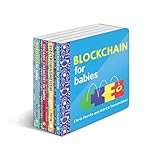
- Educational STEM Set: Introduces scientific principles to toddlers in a fun, engaging way
- Four-Book Set: Covers Organic Chemistry, Blockchain, Electromagnetism, and Robotics
- Modern Style & Blockchain Theme: Perfect for stylish nurseries and little tech enthusiasts
- Touch Control: Easy for tiny hands to navigate through pages
- Ideal Gift: A wonderful newborn baby gift for future geniuses and STEM-minded boss babies
ERC-20 integration hazards
- Allowance management can expose users to risks when they approve unlimited spending or interact with an untrusted contract.
- Some tokens charge transfer fees, reject particular recipients or impose blacklist and pause controls.
- Rebasing tokens can change balances without a conventional transfer between users.
- Some implementations return
falseinstead of reverting on failure, which can break integrations that assume failure always generates a revert. - The standard does not guarantee fixed supply, redemption, decentralization or the absence of issuer controls.
ERC-721: Non-Fungible Tokens
ERC-721, specified in EIP-721, represents individually identifiable tokens. Applications can query ownership of a token ID, transfer it, approve another address and check an owner’s token balance.
The tokenId identifies a token within a particular contract. Ownership and metadata are separate: a token may point to JSON, an image, video or other content through a URI. That metadata can be mutable, centralized, unavailable or dependent on an external service even if the token contract itself is difficult to change.
An NFT proves blockchain-recorded ownership of a token ID. It does not automatically transfer copyright, trademark rights, physical possession or legal title to the referenced work or object. Those rights depend on the project’s terms and applicable law.
Integrations should handle safe transfers, approvals, nonexistent or burned token IDs, non-sequential IDs and collection-level versus item-level metadata.
ERC-1155: Multi-Token Assets
ERC-1155 allows one contract to manage multiple token IDs. An ID can represent many interchangeable units or a single unique item, so the same system can support currencies, tickets, game inventory and collectibles.
Its batch-transfer functionality can reduce repeated transaction calls compared with deploying and managing a separate contract for every asset type. Actual transaction costs depend on implementation, transaction size and workload, so “cheaper” is not universal.
Receiver contracts must implement the relevant acceptance interface for safe transfers. Integrations must also validate batch-array lengths, handle URI substitution correctly and avoid assuming that every ID is fungible or every ID is unique. Some marketplaces and wallets have stronger ERC-721 support than ERC-1155 support, making compatibility a practical design constraint.
Recommended Free Tools
ERC-777: Enhanced Fungible Tokens
ERC-777 introduced operator-based transfers and hooks intended to improve contract interaction and user experience. However, Ethereum’s current standards documentation labels ERC-777 “NOT RECOMMENDED.”
Rank #3
Hooks can execute receiver-side code during transfers, expanding both the attack surface and integration complexity. Existing wallets and protocols may offer more mature support for ERC-20-style behavior. ERC-777 should therefore not be treated as the default modern replacement for ERC-20.
ERC-4626: Tokenized Vaults
ERC-4626 standardizes interfaces for vaults that accept an underlying asset and issue shares representing a claim on the vault.
- Assets: The tokens held or managed by the vault.
- Shares: Units issued to depositors that represent a proportional vault position.
- Conversions: The share price can change as assets, liabilities, fees and strategies change.
Functions such as previewDeposit, previewMint, previewWithdraw and previewRedeem provide estimates. They are not guaranteed execution results because transaction ordering, fees, limits and other state changes can affect the final transaction.
Developers must analyze rounding direction, donation attacks, share-price manipulation and inflation attacks against an empty vault. ERC-4626 standardization does not guarantee profitability, safety or solvency.
Other Ethereum Standards and Extensions
- ERC-223: An alternative fungible-token design intended to improve handling of transfers to contracts.
- ERC-1363: Adds transfer-and-call and approve-and-call behavior to an ERC-20-like interface.
- ERC-2309: Supports consecutive-transfer events for certain NFT creation or transfer batches.
- ERC-2981: Communicates NFT royalty information. It does not force every marketplace or transfer to pay royalties.
- ERC-4907: Adds time-limited user or rental roles for NFTs.
- ERC-2612: Adds permit-style approvals using signatures instead of a separate approval transaction.
- ERC-3009: Provides authorization-based transfers used by some stablecoin systems.
- ERC-1400 family and ERC-3643: Address permissioned, identity-aware or compliance-focused assets.
Metadata, enumerable, voting, snapshots, pausing, minting, burning, capped-supply and access-control modules are generally extensions or implementation choices, not inherent features of every ERC-20 or NFT.
Commonly confused: ERC-4337 concerns account abstraction, not a token standard. ERC-721A is an implementation pattern, not a universal official ERC token standard.
Solana Token Standards
SPL Token Program
Solana’s model differs from Ethereum’s contract-per-token approach. The SPL Token Program manages mints, token accounts, authorities, transfers, delegates, freezing and burning.
- Mint account: Defines a token and stores supply, decimals and authority information.
- Token account: Holds a balance of a particular mint for an owner.
- Associated token account: A conventional token-account address derived from an owner and mint.
- Mint authority: Can create additional units while it remains enabled.
- Freeze authority: Can freeze supported token accounts while authorized.
- Program ID: Identifies the token program governing the mint.
SPL tokens can be functionally comparable to fungible ERC-20 assets, but they are not “Solana ERC-20 tokens.” Wallets and applications must use Solana’s account and program model.
Rank #4
Token-2022 and Token Extensions
Token-2022 adds optional extensions to Solana’s token architecture. These can support transfer fees, transfer hooks, non-transferability, metadata, pausing, confidential transfers, default account state and permanent delegates. Solana also documents tokenization patterns for stablecoins, tokenized securities and other issuance models.
The most important planning constraint is that many extensions must be selected when the mint or account is initialized and generally cannot be added afterward. Solana’s developer guide states that there is no automatic conversion between the original Token Program and Token-2022; migration may require burning old tokens and obtaining user opt-in.
Token-2022 is therefore not simply an upgrade that can always be switched on later. Issuers should decide extension requirements, test supported wallets and protocols, calculate account sizing and rent requirements, and document mint, freeze, pause, close, permanent-delegate and hook authorities before launch.
What’s actually slowing this PC down?
Pick the symptom - the matching free tool is one click away.
Token Standards on Other Blockchains
Token standards are chain-specific. Major examples include:
- TRON: TRC-20 for fungible assets and TRC-721 for non-fungible assets.
- BNB Smart Chain: BEP-20 for fungible assets and BEP-721 or BEP-1155 for NFT and multi-token designs.
- Tezos: FA1.2 and FA2 token interfaces.
- CosmWasm ecosystems: CW20 and CW721 contracts.
- Cardano: Native assets and ecosystem-specific NFT conventions.
- Bitcoin: Protocols such as Ordinals and BRC-20, which are not direct equivalents of ERC-style smart-contract token standards.
This is a bounded overview, not an exhaustive registry. Exact specifications and application support vary by network and version.
How to Choose a Token Standard
- Classify the asset. Use ERC-20 or an SPL-style fungible design for interchangeable units, ERC-721 for individually unique assets, ERC-1155 for multiple item classes and quantities, and ERC-4626 when the token represents vault shares.
- List required transfer behavior. Decide whether you need pausing, freezing, allowlists, identity checks, transfer fees, non-transferability, hooks, time locks or forced recovery.
- Check application compatibility. Confirm support from the target wallets, exchanges, marketplaces, DeFi protocols, custodians, indexers, bridges and hardware wallets. A technically valid token can still be unusable if its intended applications do not support it.
- Document authorities. Record mint, burn, pause, freeze, blacklist, upgrade and emergency permissions. Identify the controlling keys or multisig and whether each authority can be permanently revoked.
- Define supply and economics. Specify initial and maximum supply, minting rules, redemption mechanics, fees, rebasing behavior and whether the token is merely an accounting unit or a claim on another asset.
- Plan metadata. Establish whether metadata is on-chain or off-chain, whether the URI can change, who controls it and what happens if the storage or hosting service disappears.
- Assess migration. Ask whether requirements can change and whether the chosen architecture permits an upgrade or requires a new token and a user migration.
Quick decision tree
- Are all units interchangeable? Choose a fungible-token model such as ERC-20 or the relevant Solana token program.
- Does each unit need a distinct identity? Consider ERC-721.
- Do you need multiple item classes, quantities or batch transfers? Consider ERC-1155.
- Does the asset represent a deposit or managed position? Consider ERC-4626.
- Are compliance or issuer controls essential? Evaluate permissioned designs or Token-2022 extensions, accepting reduced permissionlessness and potentially weaker compatibility.
Token-Standard Security and Integration Checklist
Contract and program behavior
- Test required interface functions, events and error paths.
- Handle non-standard return values, fee-on-transfer behavior and rebasing.
- Test decimals, rounding, approvals, permits and allowance changes.
- Analyze reentrancy where callbacks or transfer hooks exist.
- Review upgradeability, implementation-admin powers and emergency procedures.
- Use fuzzing and invariant testing for high-value or complex systems.
Authority and operational controls
- Identify every mint, burn, pause, freeze, blacklist, upgrade and recovery authority.
- Use appropriate key management and multisig controls.
- Document whether authorities are retained, time-locked or revoked.
- Publish clear disclosures about fees, restrictions, supply and administrative powers.
NFT and metadata checks
- Confirm whether metadata is mutable and who can update it.
- Test missing, burned and nonexistent token IDs.
- Use safe-transfer handling for contracts.
- Do not describe royalties as guaranteed unless the specific design enforces them.
- Separate token ownership from copyright, trademark and physical ownership.
Solana checks
- Confirm the correct Token Program and token-account model.
- Test every Token-2022 extension required by the mint.
- Verify wallet and protocol support for those extensions.
- Calculate account size and rent requirements before initialization.
- Review freeze, close, permanent-delegate, transfer-hook and mint authorities.
What a Token Standard Does Not Guarantee
Two assets can use the same standard while having radically different risks. ERC-20 describes an interface, not a business model: stablecoins, governance tokens, reward points, experimental assets and fraudulent tokens can all expose similar functions.
A standard does not guarantee:
- Safety or an independent security audit.
- Legitimacy, liquidity or market value.
- Fixed supply or decentralization.
- Legal ownership of an underlying asset.
- Permanent or decentralized metadata.
- Redemption, custody or asset backing.
- Compatibility with every wallet, exchange or protocol.
When evaluating a token, inspect its deployed code or program, authorities, upgrade model, metadata controls, economics, legal terms and actual integrations. The standard is only one part of that assessment.
Free tools Windows power users keep installed
One-click scans. No signup required.
Quick Recap
Product prices and availability are accurate as of the date/time indicated and are subject to change. Any price and availability information displayed on Amazon at the time of purchase will apply.




