Capital markets connect organizations that need funding with investors willing to provide it. Governments and companies issue securities to raise money; investors buy those securities and may later trade them with other investors. The term covers both the market for new securities and the systems and venues that support their trading.
What are capital markets?
Capital markets are a segment of the financial system that channels savings to governments, companies and other organizations seeking capital. The World Bank Group’s Capital Markets Development: A Primer for Policymakers defines them as “a segment of the financial system aimed at channeling the savings of an economy to those in need of capital.” In return for providing capital, investors receive securities that carry rights and risks defined by the instrument and its issuer.
The term is broad. This article focuses on securities markets—such as markets for shares and bonds—and the institutions and processes that support them. Some definitions also include money-market assets, while others use “capital markets” more narrowly for longer-term securities. The boundary depends on context.
How do capital markets work?
The process has two distinct stages: issuing a security to raise funds and trading that security after it has been issued.
The Tool Desk
Outbyte Driver Updater FREEFix the driver behind crashes, sound loss and screen glitchesFind Drivers →Outbyte PC Repair FREEClear out junk files and repair common Windows errorsFree Scan →#1 Best Overall
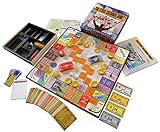
- NOW STEM.org Certified!!! Now being played in over 22+ countries and every state in the USA!!!!
- No Stock Knowledge needed to have a Great Time!!!!! Based on real stock market principles.
- 3 Levels of Play - Family Friendly, Strategy level, and Teams Play
- No financial, economics, or heavy math required. A fun way to learn about finance and money management.
- Ages 10+ to adult / 2-6 Players
Primary markets: raising new money
In a primary-market transaction, an issuer sells a new security to investors. A company might issue shares to sell ownership interests, or issue bonds to borrow. Governments also issue securities to borrow. The issuer receives the proceeds, subject to the terms and costs of the offering. The World Bank primer describes primary markets as the market for new securities.
Secondary markets: trading existing securities
In a secondary-market transaction, one investor sells an already-issued security to another. The company or government that originally issued it is generally not the seller and does not receive the proceeds from that resale. Secondary trading gives investors a way to buy or sell securities after issuance. The SEC’s glossary defines a secondary market as a market where investors buy securities from other investors, rather than from the issuer.
What is traded in capital markets?
Capital markets can involve several kinds of securities. The specific rights, payment terms and risks depend on the security and its issuer.
Rank #2

- 🎓 Educational & Fun for All Ages: Dive into financial freedom with "Paycheck to Billionaire," a strategic board game that imparts skills in cost management and smart investing from startup to empire. Ideal for family game nights and educational play, this game is engaging for adults and kids ages 8 and up. 🌟
- 🎲 Interactive Family Game Time: Bring excitement to your family gatherings and game nights with this engaging board game that offers a fun way to learn about economics without the complexity of bankruptcy or monopoly rules. Ideal for kids, teens, and adults. 🎉
- 🎉 Perfect Party Game: Light up the party with "Paycheck to Billionaire," where young entrepreneurs aged 8-12 and older can strategize and compete to build their business empire. It's a hit at parties, fostering lively interaction and competitive spirit. 🏆
- 🍎 Teacher’s Educational Pick: A must-have for educational environments, this game allows teachers to introduce financial concepts and critical thinking skills in a fun, interactive manner. It's an excellent tool for classrooms and homeschool settings, encouraging students to engage with real-world economic strategies. 📚
- 🎁 Perfect for Building Business Mind: "Paycheck to Billionaire" is the ideal gift for minds keen on entrepreneurship. This engaging board game offers a fun and educational pathway to understanding business and finance, making it a superb choice for nurturing future business leaders during family game nights or as a thoughtful present. 🌐
- Stocks or other equity: Shares represent ownership in a company. Their value can rise or fall, and shareholders can lose money. See the SEC’s stocks FAQ.
- Bonds: Bonds are debt instruments. An investor lends to the issuer under specified terms, which may include interest payments and repayment of principal.
- Securitized assets: Mortgage-backed securities are an example of securities created from pools of underlying assets.
- Collective investment interests: Mutual funds and other collective investment schemes offer interests in a pooled investment vehicle.
The World Bank primer discusses these examples, including company equity, government and non-government bonds, securitized assets and collective investment schemes. They are not interchangeable: their claims, payment structures and risks differ.
What’s actually slowing this PC down?
Pick the symptom - the matching free tool is one click away.
Who makes capital markets work?
Issuers seek funding, and investors provide capital while taking on investment risk. Other participants and institutions help securities move from issuance to trading and settlement.
- Brokers and other intermediaries help investors and issuers access markets and arrange transactions.
- Exchanges and other trading venues provide mechanisms for buying and selling securities.
- Clearing agencies help determine the obligations of parties after a trade.
- Depositories and settlement systems support the transfer and recording of securities and payments.
- Regulators oversee markets under rules that vary by jurisdiction and by the type of security or activity.
These roles and infrastructure are described in the World Bank primer and, for the U.S. securities context, Investor.gov’s overview of market participants. The details are not universal: market structures and regulatory responsibilities differ across countries and instruments.
Rank #3
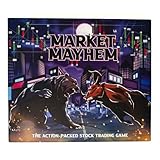
- BECOME A SAVVY INVESTOR: Market Mayhem is a board game that combines the thrill of the stock market with strategic decision-making. You'll navigate a dynamic market, buying low and selling high to build your wealth.
- UNLEASH MARKET MAYHEM!: Land on exciting spaces that trigger unpredictable events, from special dividends to market crashes! These events keep the game dynamic and full of surprises.
- CHALLENGE YOUR FELLOW INVESTORS: Think you can outmaneuver your opponents? Market Mayhem features interactive spaces that allow you to directly impact their financial fortunes. Devise clever strategies to gain the upper hand!
- TRACK THE MARKET: The Pit Board keeps you informed of current stock prices across different industries. Use this information to make informed investment decisions and maximize your profits!
- BASE GAME CONTENTS: Game board, Gold Bar game token, 36 Market Mayhem cards, Pit Board, Pit Board stand, play money, 2 dry erase markers, 4 pencils, sharpener, 4 calculators and 2 Silver Nugget dice.
Where are securities traded?
Securities may trade on exchanges or through over-the-counter (OTC) arrangements. An exchange organizes trading under institutional rules and disseminates market information. OTC trading takes place outside an exchange’s centralized trading mechanism, although the arrangements can vary substantially by market. The IMF explains this distinction in its overview of financial markets.
A trade is not necessarily complete when buyer and seller agree. Clearing processes establish what each party owes, and settlement completes the transfer of securities and funds. How these processes work depends on the market infrastructure and applicable rules.
How are capital markets different from money markets?
The terms are not always used with the same boundary. Some definitions of capital markets include money-market assets, while others reserve “capital markets” for longer-term securities such as shares and bonds. It is safest to check how a particular source or institution defines the term rather than assume that every use draws the line in the same place.
What risks do investors face?
Capital-market securities are investments, not guaranteed bank deposits. A security can lose value, and an investor may lose some or all of the money invested. The nature and extent of risk depend on factors such as the issuer, the instrument’s terms and market conditions. For example, stocks can fall in price; bond and securitized-asset risks have their own features. Investors should understand the security and its risks rather than assume that market trading or an issuer’s name guarantees a return.
Quick Recap
Product prices and availability are accurate as of the date/time indicated and are subject to change. Any price and availability information displayed on Amazon at the time of purchase will apply.




