As of October 8, 2026, the latest surfaced USDA outlook does not forecast smaller U.S. production for all three crops. USDA’s September outlook lowered its corn production expectation, raised its 2026/27 soybean forecast to 4.5 billion bushels, and the latest completed-crop data show 2026 wheat production down 23% from 2025. The October WASDE report was scheduled for October 9, so these figures do not include that report.
What the latest USDA figures say
The figures below describe different things: a forward-looking corn outlook revision, a soybean forecast for the 2026/27 marketing year, and a completed 2026 wheat crop reported by USDA’s National Agricultural Statistics Service (NASS). They should not be read as a same-date, apples-to-apples forecast for three crops.
| Crop | Geography and year | Metric | Latest figure and comparison | Report date and source |
|---|---|---|---|---|
| Corn | United States; 2026/27 outlook | Production revision | U.S. corn production expectation reduced by 5.4 million metric tons for the month; the final production total is not stated in the cited summary. | September 18, 2026; USDA ERS, Corn and Other Feedgrains |
| Soybeans | United States; 2026/27 | Production forecast | 4.5 billion bushels, up 16 million bushels from the prior estimate. | September 18, 2026; USDA ERS, Oil Crops Outlook |
| Wheat | United States; 2026 crop | Production reported after harvest | 1.53 billion bushels, down 23% from revised 2025 production. | September 30, 2026; USDA NASS, Small Grains Annual Summary |
Is USDA predicting a smaller corn crop?
The September 18 USDA Economic Research Service (ERS) outlook lowered projected U.S. corn production by 5.4 million metric tons for the month. That reduction was the main reason projected global 2026/27 coarse-grains production fell by 5.1 million metric tons. Coarse grains are a broader category than U.S. corn; changes in foreign production partly offset the U.S. reduction. Global coarse-grain ending stocks also fell by 1.6 million metric tons for the month. Those global totals are not U.S. corn figures.
The cited ERS summary establishes a downward revision, not the final U.S. crop total. It also does not make production interchangeable with supply, domestic use, exports, or ending stocks.
Recommended Free Tools
#1 Best Overall
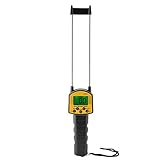
- MEASURING RANGE: 7.5-44% (Rapeseed, Sesame, Soymeal, Seed Cotton), 10-50% (Soybean, Peanut), 11-50% (Barley, Rice, Sorghum, Watermelon Seed), 11-55% (Paddy, Wheat), 11.5-50% (Corn, Feed).
- DISPLAY: LCD backlight display, convenient to read measuring data at darkness.
- LOW BATTERY INDICATION: Yes. High rod steel probe, Ergonomically design non-slip handle fits the palm well.
- MAIN FUNTION: This meter can quickly measure the water content of 14 varieties of such as wheat corn rice peanut soybean and more.
- SETTING MEMORY FUNCTION: Yes. Designed with a speaker on the back of the meter, which can report the measuring reading.
Did USDA cut the soybean forecast?
No. In its September 18 outlook, USDA raised its U.S. 2026/27 soybean production forecast by 16 million bushels to 4.5 billion bushels. NASS raised the projected national average yield from 52.7 to 52.8 bushels per acre. Planted acreage increased by 0.1 million acres to 86.9 million, and harvested acreage rose by 0.1 million to 85.9 million.
USDA also raised its soybean export forecast by 25 million bushels to 1.69 billion. The export revision is a use-and-trade estimate, not a measure of crop production.
Rank #2

- [High Precision Automatic Counter] Automaticly count kinds of grain by setting number, when it reaches to the setting number the instrument stop work.
- [Adjustable Counting Speed] Can adjust by the Speed Knob. Turn the knob clockwise, the grain particles go faster. Max counting speed reach1000pcs/3min.
- [Microcomputer Automatic Control] This seeds counter control by the microcomputer chip, matches by membrane pressed key operation.
- [Wide Application] This instrument is wildly used in institute of Agricultural Sciences, the Agriculture Universities, Colleges and Institutes, the Grain Department.
- NOTE: ?This machine can't count irregular shape particles. The Max size like corn, Min size like Wheat. Please contact us and tell us which items you plan to count with this machine, so that we can confirm whether it?s suitable for you!!!!!
How much smaller was the 2026 wheat crop?
NASS reported 2026 all-wheat production of 1.53 billion bushels, 23% below the revised 2025 total. This is an annual summary of the crop produced, not the same kind of forward-looking projection as a WASDE forecast. NASS reported harvested area of 31.9 million acres, down 15%, and yield of 48.1 bushels per acre, down 10%.
| Wheat class | 2026 production | Change from 2025 |
|---|---|---|
| Winter wheat | 1.02 billion bushels | Down 27% |
| Other spring wheat | 450 million bushels | Down 10% |
| Durum | 64.8 million bushels | Down 24% |
Why crop size and grain stocks can point in different directions
Crop production measures what is grown during a crop year. Stocks measure inventory on hand at a particular date, including grain from the prior crop. NASS reported September 1, 2026 stocks of 2.10 billion bushels of corn, 35% above a year earlier. Soybean stocks were 3% lower and all-wheat stocks 14% lower year over year.
Do these 3 things before closing this tab:
1Fix the driver behind crashes, sound loss and screen glitches2Clear out junk files and repair common Windows errors3Scan for outdated or missing drivers - takes under a minuteRank #3

- PRODUCT FEATURE: The corn humidity meter has LCD backlight display that ensures clear visibility of readings, making it suitable for use in both dark conditions and direct sunlight. Features a built-in speaker that provides real-time voice reporting of measured values
- MEASURING RANGE: This humidity detector has a wide measuring range, 7.5-44% (Rapeseed, Sesame, Soymeal, Seed Cotton), 10-50% (Soybean, Peanut), 11-50% (Barley, Rice, Sorghum, Watermelon Seed), 11-55% (Paddy, Wheat), 11.5-50% (Corn, Feed)
- EXCELLENT DESIGN: Constructed with a quality steel probe, this humidity tester offers durable performance resistance to wear. The ABS protective sleeve ensures safe operation, while the ergonomic slip proof handle fits the palm well
- PACKAGING INFORMATION: Ships with one model AR991 corn humidity meter and one manual, with batteries not included. This device is designed for agricultural use, to support farming needs effectively
- APPLICABLE OBJECTS: This humidity tester probe can quickly measure the water content of 14 varieties of items such as wheat corn rice peanut soybean and more. Easy handling for agricultural humidity assessments
Higher old-crop corn stocks do not contradict a lower new-crop production expectation: the measures cover different dates and crop supplies. Stocks are not the same as the coming harvest or a forecast of total production.
Independent reader supportYour contribution helps us test, update, and keep practical guides available for everyone.Which USDA report is newest?
USDA publishes the World Agricultural Supply and Demand Estimates (WASDE) monthly. The official schedule listed the October 2026 report for October 9 at 12:00 p.m. ET. As of October 8, that release had not yet occurred, so the September outlook and September 30 NASS annual wheat summary are the latest figures used here. The September WASDE was listed as released September 11, but its detailed tables are not reproduced in the cited summaries above.
Rank #4

- Your hunt is in the bag - we deliver more quality seed for your money!
- Certified seed for maximum growth and attractant
- 1 bag (5 lbs) plants approximately 1/10 acre
- High protein and highly preferred forage for deer
- Non-GMO - ideal for mixing with other food plot seeds
For readers following revisions, the distinction matters: WASDE summarizes supply and use estimates, while NASS Crop Production reports acreage, area harvested, yield, and production. A forecast revision is not a final harvest result, and a completed-crop estimate should not be presented as though it were a new-season forecast. See USDA’s WASDE schedule and reports and NASS’s 2026 Small Grains Annual Summary.
Quick Recap
Best Value
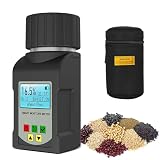
- 【SUPPORT 25 GRAINS】: The grain moisture tester is specifically designed to measure the moisture content of 25 different grains, including soya beans, voffee, lentils, grass seed rye grass, and more. Get accurate measurement results to help you make better agricultural practice decisions.
- 【PRECISE MEASUREMENT】: The smart grain moisture meter has a built-in high-precision sensor. Achieve accurate grain moisture readings with an industry-leading accuracy of ±0.5%, even under diverse environmental conditions. Ensure every measurement is reliable, demonstrating excellent reliability and accuracy, giving you full confidence in the quality of your grains.
- 【AUTOMATIC TEMPERATURE COMPENSATION】: This moisture meter for seeds comes equipped with automatic temperature compensation, which ensures consistent and accurate measurements regardless of changes in ambient temperature, making it ideal for indoor and outdoor use.
- 【BACKLIT DIGITAL DISPLAY】: Using backlight liquid crystal display technology, clear display and low power consumption, fast measurement speed, showing clear content in different lights. Whether for field or lab use, this moisture tester offers simplicity and efficiency, streamlining moisture measurement processes.
- 【VOICE BROADCAST】During measurement, it precisely announces the moisture value, enabling you to get key data without staring at the screen. If the lid isn't closed securely, the voice function gives a prompt, averting measurement errors from lid problems
Product prices and availability are accurate as of the date/time indicated and are subject to change. Any price and availability information displayed on Amazon at the time of purchase will apply.




