The Tool Desk
Outbyte Driver Updater FREEFix the driver behind crashes, sound loss and screen glitchesFind Drivers →Outbyte PC Repair FREEClear out junk files and repair common Windows errorsFree Scan →Universal basic income (UBI) could address income insecurity for people doing gig work, but cash payments alone would not settle questions about worker status, benefits, pay practices, or platform decisions. A more complete policy approach would pair income support with portable benefits, a baseline of labor rights, and rules for transparent and accountable platform management. That combination is a policy proposal, not a proven package: the available sources do not establish its effects or fiscal cost.
Why consider UBI and gig-work protections together?
Income support and workplace rules address different problems. A predictable cash floor could help people manage changing earnings, while labor protections address how work is classified, paid, managed, and made safe. One cannot automatically substitute for the other: a payment does not establish employment status, provide collective bargaining rights, set standards for paid time, or create a process to challenge a disputed platform decision.

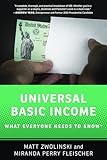



“UBI” is the specific income-support proposal in this discussion, not a synonym for every possible safety-net policy. The sources considered here do not compare it with targeted transfers, wage supplements, or negative income tax designs, and they do not specify an appropriate payment or financing model. Those choices would depend on the jurisdiction and the policy objective.
Gig work is broader than app-based platform work
There is no single definition of a gig. The Federal Reserve’s 2025 report on U.S. household economic well-being draws on a 2024 survey and counts a range of activities, including selling or renting items and doing short-term tasks. Its broad gig-activity measure should not be mistaken for a count of platform workers.
#1 Best Overall
| Measure in the Federal Reserve’s 2024 U.S. survey | Share of U.S. adults | What it includes |
|---|---|---|
| Any gig activity in the prior month | 20% | Broad category that includes resale and rental activity as well as services |
| Sold items | 13% | A gig activity that need not involve a labor platform |
| Performed short-term tasks | 9% | Tasks such as delivery, rides, or short-term handyman work |
| Did platform tasks | 4% | Short-term tasks arranged through an app or website |
The categories overlap: the figures describe different kinds of activity, not separate groups that can be added together. The report also found that 96% of gig respondents usually spent under 35 hours a week on gig activities, while 70% spent under five hours. The figures therefore include supplemental activity as well as work a respondent may regard as a job.
What workers say they value—and what they want to change
In the same U.S. survey, flexibility and income or benefit concerns appeared together. These are survey responses, not proof that every worker has the same experience or that one policy would resolve the concerns.
Rank #2
| Respondents who said… | All gig-activity respondents | Platform-task respondents |
|---|---|---|
| Gigs let them work flexible hours | 55% | 78% |
| They wished the pay were more consistent | 49% | 61% |
| They wished they had benefits such as health insurance | 28% | 42% |
These descriptive results suggest why a policy debate should consider both income reliability and worker control. Canada’s federal consultation, published in 2023 and summarizing stakeholder and public input from 2021, recorded concerns about misclassification, low pay, unpaid waiting or search time, late or missing payment, unpredictable earnings and schedules, safety, and limited dispute resolution. It also recorded that some participants valued choosing when and where to work. Consultation findings are not a representative prevalence survey, and they should not be read as a statement of current Canadian law.
What a combined policy approach could include
UN DESA’s 2026 policy brief identifies several levers for digitally managed labor markets. They can be considered alongside income support, but they are policy recommendations rather than evidence that a UBI-plus-protections package has worked.
Rank #3
| Policy lever | Question it addresses | What policymakers would need to decide |
|---|---|---|
| Income floor | How can people maintain basic income security as earnings and work arrangements change? | Whether support is universal or targeted, its adequacy and predictability, how it interacts with earnings and existing programs, and how it is financed |
| Classification and accountability | When does a platform relationship trigger employment status or other protections, and who is responsible? | How legal tests apply across work arrangements and which entity must meet each obligation |
| Baseline labor rights | Which protections should apply regardless of contractual status? | Whether and how to establish rights such as non-discrimination, occupational safety and health, and collective bargaining, consistent with local law |
| Portable benefits and contributions | How can protections follow a person across platforms, clients, or jobs? | How workers enroll, how contributions are shared and collected, and how coverage remains usable across work arrangements |
| Platform transparency and due process | How should workers understand and challenge consequential decisions? | What explanations, notice, and meaningful human review are required when automated systems affect pay, task access, scheduling, or continued access to a platform |
| Worker voice and flexibility | Can workers retain meaningful control while facing clearer pay practices and more predictable protections? | How workers can raise concerns and participate in decisions without assuming that flexibility is the same for every task or worker |
| Administration and enforcement | Can the rules work across multiple platforms, jobs, and authorities? | How agencies coordinate, enforce obligations, and fund administration within the jurisdiction’s capacity |
Classification matters because it can determine access to labor protections and employment-linked social protection. Portable benefits and simplified contribution mechanisms are possible ways to address gaps for people whose work spans multiple arrangements; they do not, by themselves, decide who is legally an employee.
How to assess a proposal without assuming it works
A government considering this approach can compare policy designs against a common set of questions rather than relying on a numerical ranking unsupported by local evidence:
- Income adequacy and stability: Would support make a meaningful difference to household security, and how would it change when earnings rise or fall?
- Coverage and enforceability: Which workers and platforms are covered, and can the rules be enforced in practice?
- Portability: Can benefits and contributions follow a person across clients and platforms?
- Worker control: Does the design preserve meaningful choice over when and how to work while addressing unpredictability?
- Platform accountability: Are pay, scheduling, and access decisions understandable and open to review?
- Administration and financing: Which institutions would administer the policies, how would they coordinate, and what would the full cost be?
The sources available do not provide a recommended UBI amount, a jurisdiction-specific financing model, or a combined-policy cost estimate. Those figures would depend on eligibility, payment level, taxes, interaction with existing programs, and local administrative arrangements.
Independent reader supportYour contribution helps us test, update, and keep practical guides available for everyone.What current policy examples do—and do not—show
Asia and the Pacific
UNDP’s report, published June 19, 2026, frames gig-economy governance in Asia and the Pacific as a systems issue spanning labor regulation, social protection, digital governance, and fiscal reform. It describes potential opportunities such as flexible work as well as risks including rising costs, volatility, fraudulent platforms, and limited social protection. This regional framework is not proof that a particular UBI design works.
Best Value
Singapore
Singapore offers an example of platform-worker governance rather than UBI. The Ministry of Manpower says the Platform Workers Act was implemented from January 1, 2025. A ministry release dated September 11, 2025, describes recommendations from a trilateral group involving government, platform operators, and worker associations, with implementation planned in phases. This example does not establish that Singapore adopted the combined policy discussed here.
Global scale estimates
UN DESA attributes a wide estimate of 154 million to 435 million people participating in platform or online gig work globally to a 2023 World Bank estimate. The range is a secondary attribution in the 2026 UN DESA brief, not a new UN measurement, and it should not be treated as a precise headcount.
What the evidence can support
The available sources establish that gig and platform work raise distinct questions about income security, benefits, labor rights, classification, and digitally managed decisions. They also document that some workers value flexibility while reporting concerns about income consistency and benefits. They do not test UBI and gig-specific protections together as one intervention, demonstrate the package’s causal effects, or establish its fiscal cost. Any proposal should therefore be presented as a policy design to evaluate—not as a proven solution.
Quick Recap
Product prices and availability are accurate as of the date/time indicated and are subject to change. Any price and availability information displayed on Amazon at the time of purchase will apply.
Do these 3 things before closing this tab:
1Fix the driver behind crashes, sound loss and screen glitches2Repair Windows errors before they cause bigger problems3Scan for outdated or missing drivers - takes under a minute



