Free tools Windows power users keep installed
One-click scans. No signup required.
Neither underground nor open-pit mining is always cheaper, safer, or better for the environment. Open pits often suit shallow deposits and high-volume production, while underground methods commonly reach deeper or differently shaped ore bodies. The choice depends on geology, grade, waste removal, operating conditions, and the mine’s design; a deposit that extends to depth may be mined by both methods over time.
How the methods differ
Open-pit mining
Open-pit mining is a surface method: workers remove soil and rock overburden to expose ore, then excavate it in benches. Large shovels and trucks can operate without the size constraints of underground openings. That allows high-volume production, but also creates substantial surface excavation and material that must be reused, processed, or managed as waste.
Underground mining
Underground mines reach ore through shafts, adits, or inclined passages, then excavate workings within the deposit. The method can access deep or narrow deposits without removing all the overlying rock. It requires access development, ground support, and systems such as ventilation and water management.
Which is cheaper?
Open-pit mining generally has lower mining costs per unit when a deposit is accessible from the surface and its waste-removal burden is manageable. The ability to use larger equipment can increase production and lower unit costs. But those advantages can be offset by the amount of overburden that must be moved, the cost of managing waste, and site-specific conditions. The U.S. Environmental Protection Agency’s mining EIA guidance describes the stripping ratio as the tonnage of waste removed relative to ore: a lower ratio generally means less waste removal and lower operating costs.
What’s actually slowing this PC down?
Pick the symptom - the matching free tool is one click away.
#1 Best Overall
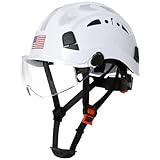
- Hard Hats Construction Osha Approved:AOLAMEGS safety helmet made of high impact penetration resistant ABS materials,lightweight,strong and comfortable. A good choice to protect heads against falling objects, impacts, bumps, and scrapes.AOLAMEGS safety hard hats meet ANSI Z89.1-2014 Type I Class C standards,visors meet ANSI Z87.1-2015 standards
- Package Including :1pc White Reflective Construction Hard Hats with Clear Visor + 1 Pack Hi-Viz Reflective Stickers .The construction hard hat Kit help complete comprehensive above-the-neck safety systems
- More Humanized Design:Rapid-Dial ratcheting headgear,one-handed adjustment design allows workers to modify fit without removing work helmet.Helmet size range from 53-63cm/ 20.86-24.80 inch.Sliding vent holes allow easy opening and closing based on weather conditions .Universal slots design ensures that safety hardhats to install attachments.And the safety helmet has Hi-Viz design on the front-rear-and sides of the helmet allows the user increased visibility under low light conditions
- Adjustable & Comfort Fit:Adjustable 6-point suspension system for improved shock absorption and overall comfort.Comfortable and convenient soft cup style chinstrap for extra security and stability, remove freely.Equipped with a pack of hard hat reflctive stickers ,provide a safe protection on dark outdoor work .Easy flip-up clear visor provides eye protection in debris protection
- Applicable Environment:Safety helmet with the clear visor,Suitable for construction,tree climbing work,woodworking,mechanics, forestry,manufacturing,height and scaffolding work, in any trade that requiring general head protection
Underground mining tends to cost more because it requires access openings and specialized infrastructure, including support, ventilation, hoisting, and pumping. It may nevertheless be the practical choice for deep, high-grade veins or deposits whose geometry is poorly suited to a surface pit. There is no established, universal dollar figure or percentage difference that applies across commodities and mines.
Depth is a guide, not a cutoff
The U.S. Geological Survey says deposits more than 1,000 feet (300 m) below the surface are generally mined underground. This is a broad rule of thumb, not a boundary that determines the method for every deposit. The USGS also identifies deposit location and shape, rock strength, ore grade, mining costs, and current commodity price as selection factors in its overview of mineral extraction.
Rank #2

- 【Comfortable Fit】: SAFEBUILDER Work Hard Hat with 6-points suspension, Good at Shock Impact when workers work in danger, Protection For Head. Y-Type Chinstrap to keep Hard Hat Fixed on the head and Adjustable to be good feeling. Head size adjustable range is 53-63cm/ 20.87-24.80 inch.
- 【Humanized Design】: SAFEBUILDER Work Hard Hat design is humanized, with multiple adjusting devices, which can adjust the size and depth of the Hat shell according to the size and contour of the workers' head, so that the Hat fits the workers' head more closely and improves the comfort and stability of wearing.
- 【Quality Material】:SAFEBUILDER Work Hard Hat is made of high strength ABS (Acrylonitrile butadiene Styrene) material, which can provide reliable protection for workers in dangerous operating environments.
- 【Certificates Approved】: SAFEBUILDER Work Hard Hat meet ANSI Z89.1-2014 ,Type 1 Class C Standards, Also meet CE EN397-2012 ,-20℃. Can be used in Construction, Industrial,Decoration, Outdoor Work ,Rescue,Electricity, Mining and other places To get Head Protection, Improve the work safety Level and workers Get Happy daily working time.
- 【Accessories of SAFEBUILDER】SAFEBUILDER Brand Safety Hard Hats Support Ear Muffs mounted to get Hearing Protection, Safety Visor installed Inside & Outside of Hat Shell ,Clear visor & Tinted Visor for choices help workers get Clear vision In Daily work or at Night. Choose Safebuilder Choose a full set Head Protection.
Which method is safer?
The hazards differ, and the available sources do not establish a current, normalized injury- or fatality-rate comparison between the methods. A historical U.S. Bureau of Mines handbook describes open-pit work as generally offering better working conditions, while also identifying weather exposure and slope failure as hazards. The same handbook notes underground risks such as rock bursts, heat, humidity, dust, and the need for ground support, hoists, and pumps. These descriptions explain exposure types; they should not be read as current safety statistics.
Actual risk depends on mine design, geology, equipment, work practices, and the regulations that apply in the jurisdiction. Underground ventilation helps manage the working environment, while surface operations must manage slope stability and other hazards associated with large excavations.
Rank #3
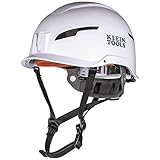
- LOW PROFILE: Compact, lightweight safety helmet design for at-height and confined space applications
- PROTECTION: ANSI Z89.1-2014(R2019) CLASS E, TYPE-2 Safety Helmet protects against top, front, back, and side impacts and provides up to 20kV protection
- PATENTED ACCESSORY MOUNTS: Mounts designed for quick click-in on and off attachment of Klein accessories; no straps needed
- ALL DAY COMFORT: Breathable padded sweat-wicking sweatband, and top pad are machine washable
- STABLE AND SECURE FIT: 6-Point suspension and chin strap improve stability and comfort, even when tilting your head
Which has less environmental impact?
Neither method is impact-free, and the sources available do not establish a general winner for total environmental performance. An open pit disturbs a broad surface area and generates overburden and waste rock. Depending on site conditions, surface mining can also bring dust, noise, blasting vibration, and groundwater-management or dewatering demands. The EPA’s older uranium-specific assessment discusses topsoil stockpiling for reclamation and backfilling completed sections where feasible; these are possible practices, not guarantees for every mine.
Underground mining generally avoids the same broad surface excavation, but still produces waste rock, needs surface facilities and water management, and can cause subsidence in some geological settings. The cited environmental material does not provide a modern, general-purpose comparison of greenhouse-gas emissions, water use, biodiversity effects, or tailings intensity by method. It is therefore not accurate to call underground mining inherently greener.
Rank #4

- 【Comfortable Fit】: SAFEBUILDER Work Hard Hat with 6-points suspension, Good at Shock Impact when workers work in danger, Protection For Head. Y-Type Chinstrap to keep Hard Hat Fixed on the head and Adjustable to be good feeling. Head size adjustable range is 53-63cm/ 20.87-24.80 inch.
- 【Humanized Design】: SAFEBUILDER Work Hard Hat design is humanized, with multiple adjusting devices, which can adjust the size and depth of the Hat shell according to the size and contour of the workers' head, so that the Hat fits the workers' head more closely and improves the comfort and stability of wearing.
- 【Quality Material】:SAFEBUILDER Work Hard Hat is made of high strength ABS (Acrylonitrile butadiene Styrene) material, which can provide reliable protection for workers in dangerous operating environments.
- 【Certificates Approved】: SAFEBUILDER Work Hard Hat meet ANSI Z89.1-2014 ,Type 1 Class C Standards, Also meet CE EN397-2012 ,-20℃. Can be used in Construction, Industrial,Decoration, Outdoor Work ,Rescue,Electricity, Mining and other places To get Head Protection, Improve the work safety Level and workers Get Happy daily working time.
- 【Accessories of SAFEBUILDER】SAFEBUILDER Brand Safety Hard Hats Support Ear Muffs mounted to get Hearing Protection, Safety Visor installed Inside & Outside of Hat Shell ,Clear visor & Tinted Visor for choices help workers get Clear vision In Daily work or at Night. Choose Safebuilder Choose a full set Head Protection.
Why a mine may use both methods
A deposit may extend from near the surface to greater depth. In that case, a project can mine the shallower portion by open pit and later develop underground workings to reach deeper ore. The EPA’s older uranium assessment describes combined surface and underground recovery in this context. The sequence depends on the deposit, economics, engineering, and environmental and regulatory conditions.
What determines the choice for a particular mine?
Engineers and mine operators assess the deposit and the full costs and risks of reaching it rather than choosing by a single rule. Relevant factors include:
Best Value

- Superior Quality: Our durable construction helmet for men and women are fully compliant with OSHA, ANSI/ISEA Z89.1-2014, Type I (top impact), Class C standards.
- Reliable Protection: Unlike ABS, HDPE and other materials, the LANON hard hat is made of premium, flame retardant FRP. Lightweight, sturdy, provides adequate protection.
- Comfortable Fit: This helmet features a 4-point adjustable ratchet suspension system, plus the replaceable soft brow pad for superior comfort and a semi-custom fit.
- Unique Design: Our full brim hard hat with a Classic Carbon Fiber Texture design meets your safety and fashion requirements.
- Multipurpose: Intended for general industrial use, such as in steel mills, welding, construction, safety and rescue, open-pit mining, oil/gas/petrochemical refineries, and more.
- Depth and geometry: where the ore lies, its shape and size, and whether surface or underground access can reach it effectively.
- Grade and recoverability: how much valuable material the ore contains and how much can be recovered economically.
- Waste burden: the stripping ratio, waste volumes, and the cost and feasibility of managing the material.
- Rock and water conditions: rock strength, slope or ground stability, groundwater, and the need for pumping or ventilation.
- Scale and economics: the production rate and equipment a method can support, development and operating costs, and the current commodity price.
- Environmental and regulatory context: land disturbance, water management, reclamation, surface infrastructure, and applicable rules.
For any individual project, the method decision requires a deposit-specific economic and engineering evaluation. A general comparison can explain the tradeoffs, but it cannot determine which option is viable at a particular site.
Quick Recap
Product prices and availability are accurate as of the date/time indicated and are subject to change. Any price and availability information displayed on Amazon at the time of purchase will apply.




