What’s actually slowing this PC down?
Pick the symptom - the matching free tool is one click away.
U.S. sanctions on Pakistan have shifted from conditional limits on assistance and broad penalties after nuclear tests to targeted measures against entities the U.S. government says support Pakistan’s long-range ballistic missile program. At the same time, U.S. officials have regarded Pakistan’s location and other strategic interests as important. That record shows a relationship shaped by competing priorities; the available sources do not establish that sanctions changed Pakistan’s strategic choices or created a durable alignment.
What “strategic indisposition” means in this context
“Strategic indisposition” is a framing for an uneasy, conditional relationship, not a legal term used in the cited sources. U.S. policy has combined nonproliferation restrictions with periods of engagement and with judgments about national security and diplomacy. The State Department’s historical account of the Clinton years described Pakistan’s location in South Asia, near Central Asia and the Persian Gulf, as one reason it mattered to U.S. interests, while also recording concerns about proliferation and democracy. The State Department’s account is historical context, not evidence of a permanent alliance or of Pakistan’s present view of the relationship.
How the main U.S. measures differ
These measures were not one continuous sanctions package. They differed in legal basis, scope, targets and available relief.
| Period and measure | Legal basis and trigger | Scope and relief |
|---|---|---|
| Pressler restrictions, 1985–1995 | The Pressler Amendment, added to the Foreign Assistance Act of 1961, conditioned assistance on presidential determinations concerning Pakistan’s possession of a nuclear explosive device and whether proposed assistance would reduce the risk of Pakistan obtaining one. President George H. W. Bush did not make the required finding in 1990. CRS, 2003 | Failure to certify constrained assistance. In 1995, Congress narrowed the requirement to military assistance, leaving Pakistan eligible for other assistance under this provision. CRS, 2003 |
| Nuclear-test sanctions, from May 1998 | India and Pakistan each tested nuclear explosive devices in May 1998. Provisions of the Arms Export Control Act and Export-Import Bank Act triggered measures against both countries. CRS, 2003 | The package reached non-humanitarian foreign assistance, defense sales and financing, certain government-backed credits, U.S. support for some international financial institution lending, bank-backed loans, export licensing and Export-Import Bank support. Congress subsequently created exemptions and waiver authority; the President lifted all nuclear-test-related economic sanctions against both countries on September 22, 2001. CRS, 2003 |
| Targeted procurement and proliferation measures, 2024 actions reported in 2026 | The measures summarized by Treasury include Commerce Entity List actions and commodity controls, as well as State Department designations under Executive Order 13382 connected to alleged support for Pakistan’s long-range missile development. Treasury, 2026 | Rather than the broad country-level restrictions of 1998, the cited account describes named entities and export controls aimed at procurement and diversion risks. The 2026 assessment says the United States continues monitoring individuals and entities that may act on Pakistan’s behalf in illicit procurement. Treasury, 2026 |
Pressler: assistance tied to annual certification
The Pressler provision predates Pakistan’s 1998 nuclear tests. It made U.S. assistance conditional on a presidential determination related to Pakistan’s nuclear program. The President made the required annual determination through 1989 but not in 1990, and the resulting restriction constrained assistance. The 1995 change narrowed the provision’s reach to military assistance; it did not make the separate 1998 measures unnecessary or erase later controls. CRS’s account of the statutory history sets out that sequence.
Recommended Free Tools
#1 Best Overall

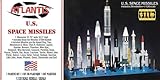
- This plastic model requires assembly and painting. Adhesives, tools, paints, etc., sold separately
- 1/40 scale unpainted plastic model assembly kit
- Re-release kit released from the level in 1957
- Mold Color: White, Olive Drab
- Atlantis Modelive (USA) Imported Plastic Model
The 1998 package and its easing
The May 1998 tests by India and Pakistan triggered a broader set of statutory sanctions on both countries. The measures extended beyond military aid to categories of credit, lending, exports and financing, so they were materially different from the conditional assistance restriction under Pressler. Congress provided relief and waiver mechanisms in 1998 and 1999, including temporary waivers and later permanent waiver authority subject to statutory criteria and certification. On September 22, 2001, the President lifted all nuclear-test-related economic sanctions against India and Pakistan, citing a finding that denying licenses and assistance was not in U.S. national security interests. That action concerned the nuclear-test-related economic sanctions; it did not abolish every distinct restriction or preclude later targeted measures. CRS, 2003
What the 2026 Treasury assessment says about recent measures
Treasury’s March 2026 National Proliferation Financing Risk Assessment recounts U.S. actions taken during 2024 and says the United States continues to monitor possible illicit procurement linked to Pakistan’s long-range ballistic missile program. The assessment describes government actions and allegations; it is not an independent adjudication of the conduct attributed to those targeted.
Rank #2
- Opening Hood with Detailed Engine
Commerce Entity List and commodity controls
Treasury reports that Commerce added 16 Pakistan-linked entities to the Entity List in October 2024 and imposed new commodity controls on exports to Pakistan to address diversion concerns. According to Treasury, nine of the 16 were added for acting as Pakistan-based front companies and procurement agents for the Advanced Engineering Research Organization; the other seven were added for contributions to Pakistan’s ballistic missile program. These counts describe Commerce’s actions as reported by Treasury, not a measure of sanctions’ economic or strategic effect. Treasury, 2026
State Department designations
Treasury also reports that the United States designated nine entities during 2024 in connection with support for Pakistan’s long-range missile development under Executive Order 13382. The entities were based in Belarus, China and Pakistan; Treasury identifies the National Development Complex among them and describes it as responsible for Pakistan’s ballistic missile program. This group of nine is distinct from the 16 entities Commerce added to its Entity List. Treasury, 2026
PC Slower Than It Used to Be?
A free scan shows the junk files, broken settings and background clutter dragging Windows down - then fixes them in one click.Free scan · Windows 10 & 11Outdated Drivers Are Slowing You Down
One free scan finds every outdated or missing driver and matches the right update for your exact hardware.Free scan · exact hardware matchRank #3

- Modeling Skills Helpful if under 10 years of age
- Tripod Included for Dismounted Tow Display
- Part of the Military Miniature Series
- Paint and glue required, but NOT INCLUDED
Why engagement and sanctions can coexist
Sanctions do not necessarily mean a country has ceased to matter strategically. The State Department’s Clinton-era history describes U.S. interest in Pakistan partly through its geography, while also documenting policy concerns. Separately, the CRS chronology shows that national-security and diplomatic judgments informed the statutory relief and waiver process and the 2001 decision to lift nuclear-test-related economic sanctions. Together, these sources document policy trade-offs across particular periods—not a single, uninterrupted U.S. strategy. State Department historical account; CRS, 2003
What the sanctions record can—and cannot—show
The cited sources establish the sequence of restrictions, waivers and targeted actions, along with official rationales. They do not provide an attributable estimate of the sanctions’ economic cost or a causal assessment of whether the measures changed Pakistan’s nuclear or missile decisions. Counts of listed or designated entities document government actions; by themselves, they do not demonstrate effectiveness. Any claim that sanctions succeeded, failed, or produced lasting strategic alignment would require evidence beyond this sanctions history.
Quick Recap
Rank #4

- This plastic model requires assembly and painting. Adhesives, tools, paints, etc., sold separately
- 1/56 scale unpainted plastic assembly kit
- Released kits from the level in 1959
- Completed :9" total length
- Comes with 3 different decals
Product prices and availability are accurate as of the date/time indicated and are subject to change. Any price and availability information displayed on Amazon at the time of purchase will apply.




