What’s actually slowing this PC down?
Pick the symptom - the matching free tool is one click away.
Motorola’s handset business fell because it lost ground in key parts of a changing market: the company said it had too few competitive products in 3G smartphones and very low-tier phones as smartphone portfolios became more important. Its worldwide handset share dropped from about 22% in 2006 to 8% in 2008, while its shipments fell even as the overall handset market grew. The decline was not the disappearance of every Motorola business: in 2011, the phone and home businesses separated from the former parent, which became Motorola Solutions.
How fast did Motorola’s handset business decline?
Motorola’s own filings show a steep loss of worldwide handset share over three years:
| Year | Motorola’s worldwide handset market share |
|---|---|
| 2006 | Approximately 22%, as reported by Motorola, Inc. in its 2008 annual report |
| 2007 | Approximately 14%, as reported by Motorola, Inc. in its 2008 annual report |
| 2008 | Approximately 8%, as reported by Motorola, Inc. in its 2008 annual report |
The shipment figures make the scale of the 2008 setback clearer. Motorola reported shipping 100.1 million handsets worldwide that year, down 37% from 159.1 million in 2007. The company said the worldwide handset market grew about 5% in 2008. These are estimates and figures reported by Motorola, not smartphone-only market shares.
What went wrong with Motorola’s products?
Gaps in important market segments
Motorola identified its product lineup as a primary cause of its 2008 share loss. The company said limited offerings in critical segments—particularly 3G products, including smartphones, and very low-tier phones—primarily drove the decline. That points to a portfolio problem across more than one price and product category, rather than a single failed model.
Do these 3 things before closing this tab:
1Scan for outdated or missing drivers - takes under a minute2Clear out junk files and repair common Windows errors3Fix the driver behind crashes, sound loss and screen glitches#1 Best Overall

- Fluid 120Hz Display: Features a large 6.7-inch HD+ display with a 120Hz refresh rate and Corning Gorilla Glass 3 for smooth scrolling and added durability.
The distinction matters: low-tier phones and 3G smartphones served different buyers, but both were areas where Motorola said its selection was limited. Its shipments fell while the overall market expanded, so a general contraction in handset demand does not explain the company’s reported results for that year.
The market was moving toward smartphones
In its 2008 annual report, Motorola stated, “Smartphones emerged as a major product in the wireless handset market during 2008.” It also observed that manufacturers with strong smartphone portfolios benefited. Motorola planned to center upcoming smartphone development on Android and Windows Mobile.
Rank #2
- Unlocked: Compatible with all major U.S. carriers, including Verizon, AT&T, T-Mobile and other major carriers.
- Super-bright 6.7" display + Bass Boost: Take your entertainment to the next level with a fast-refreshing 120Hz display* and stereo sound with more powerful bass****.
- 50MP** Quad Pixel camera system: Capture sharper photos day or night with 4x the light sensitivity—and share beautiful selfies with a 16MP front camera.
- Superfast 5G performance*****: Unleash your entertainment at 5G speed with the MediaTek Dimensity 6300 chipset and up to 12GB of RAM with RAM Boost.******
- Long-lasting battery + TurboPower charging***: Work and play all day with a 5000mAh battery, then get hours of power in just minutes.
That plan shows Motorola recognized the shift; recognition alone did not immediately restore its competitive position. Later, Motorola Mobility disclosed risks tied to relying on Android and outside development of operating systems and application ecosystems. Delayed updates or stronger competing Android phones could put it at a disadvantage. Those risks show the trade-off in depending on an external platform, but they do not establish that adopting Android was itself a mistake.
Was the RAZR responsible for the fall?
The RAZR was a major part of Motorola’s handset story, but the available company evidence does not establish that the RAZR itself caused the decline. In 2007, Motorola described the RAZR2 V8 as part of a refreshed flagship RAZR franchise. By 2008, the company was identifying broader gaps in 3G smartphones and low-tier products.
Free tools Windows power users keep installed
One-click scans. No signup required.
Rank #3
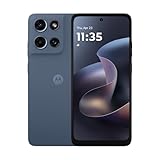
- Universal unlocked. Compatible with all major U.S. carriers, including Verizon, AT&T, T-Mobile and other prepaid carriers.
- Super-bright, super-smooth 6.7" display. See your screen clearly even outdoors in sunlight, and enjoy seamless views with a fast-refreshing 120Hz display.*
- AI-powered camera system. Take stunning photos in any light with the 50MP camera**, look your best with a 32MP selfie cam*****, and capture extreme close-ups.
- Superfast 5G performance. Unleash your entertainment at 5G speed*** with the MediaTek Dimensity 6300 chipset and up to 12GB of RAM with RAM Boost****.
- Long-lasting battery + TurboPower charging. Power through day after day with a 5200mAh battery, then get hours of power in just minutes.****
A more defensible interpretation is that a successful product franchise could not, by itself, cover the range of segments and capabilities the market increasingly demanded. Motorola’s filings support the portfolio and market-transition explanation; they do not quantify the contribution of any one model, executive decision, or leadership failure.
What did Motorola’s financial results show before the separation?
Motorola Mobility’s 2010 filing reported $11.5 billion in revenue, $76 million in operating earnings, and an $86 million net loss. It also reported shipping 37.3 million handsets in 2010, down 32% year over year. Operating earnings and net income are different accounting measures, so the positive operating figure and net loss are not contradictory.
Rank #4

- NEW built-in stylus. Jot notes, edit photos, sketch artwork, and navigate effortlessly with an improved stylus and updated software.
- 6.7" pOLED display and Dolby Atmos. Experience cinema-quality entertainment with over a billion shades of color and multidimensional sound*.
- 50MP Ultra Pixel camera + OIS. Capture sharper low-light photos and smoother videos with an unshakable camera system featuring Optical Image Stabilization.
- 30W TurboPower charging + over a day battery. Get hours of power in just minutes of charging, then work and play with unbelievable battery life**.
- Standout design. Make a statement with its stunning look, modern color, and soft, vegan leather finish.
These results describe Motorola Mobility’s business in 2010, after the separation from Motorola, Inc. They should not be read as financial results for Motorola Solutions, the company that emerged from the former parent.
Independent reader supportYour contribution helps us test, update, and keep practical guides available for everyone.What happened to Motorola after the 2011 split?
On January 4, 2011, Motorola Mobility separated from Motorola, Inc., taking the former company’s Mobile Devices and Home businesses. The remaining parent changed its name to Motorola Solutions. The separation is why “Motorola” after 2011 can refer to distinct companies: the handset history continued under Motorola Mobility, while Motorola Solutions was a separate business.
Windows Errors? Fix Them Before They Spread
Repair common Windows errors and clear accumulated junk for a smoother, more stable PC - no reinstall needed.Free scan · no reinstallCrashes, No Sound, or Screen Glitches?
Random freezes, missing sound and display glitches usually trace back to one bad driver. Find and replace yours safely.Free scan · under a minuteBest Value

- Blazing-fast Qualcomm performance. Get the speed you need for great entertainment with a Snapdragon 680 processor and 4GB**** of RAM.
- Fluid display + immersive stereo sound. Bring your entertainment to life with an ultrawide 6.5" 90Hz* HD+ display plus stereo speakers, Dolby Atmos, and Hi-Res Audio**.
- 50MP*** Quad Pixel camera. Capture sharper, more vibrant photos day or night with 4x the light sensitivity.
- 64GB**** built-in storage. Get plenty of room for photos, movies, songs, and apps—and add up to 1TB more with a microSD card*****.
- Unbelievable battery life. Work and play nonstop with a long-lasting 5000mAh battery.*****
Google acquired Motorola Mobility, then sold it to Lenovo
- May 22, 2012: Google announced that its acquisition of Motorola Mobility had closed. Google CEO Larry Page called Motorola “an incredibly valuable partner to Google,” noting Motorola’s early bet on Android.
- October 30, 2014: Lenovo announced that it had completed its acquisition of Motorola Mobility from Google for approximately $2.91 billion. Google retained most of Motorola Mobility’s patents; Motorola kept its brand and trademarks and more than 2,000 patent assets.
These transactions changed ownership of the phone business; they did not mean Motorola Solutions had been acquired as part of the same deal.
What is the fairest explanation of Motorola’s rise and fall?
Motorola’s handset decline is best understood as a sharp loss of competitiveness during a market transition. The company’s own filings connect its falling share to limited offerings in crucial segments, while describing smartphones as a major and increasingly consequential handset category. The RAZR remains an important part of the story, but the evidence points to a broader portfolio challenge—not a single-phone explanation.
Quick Recap
Product prices and availability are accurate as of the date/time indicated and are subject to change. Any price and availability information displayed on Amazon at the time of purchase will apply.




