Free tools Windows power users keep installed
One-click scans. No signup required.
Heinz became a ketchup icon through more than its recipe: a visible quality signal, a memorable brand mark, advertising, product and packaging changes, and decades of expansion all helped build recognition. Company histories date Henry J. Heinz’s first horseradish product to 1869 and Heinz Tomato Ketchup’s U.S. debut to 1876. The story below draws on Heinz and Kraft Heinz accounts, which document the company’s chronology and its own explanations—not independent proof of exactly why consumers embraced the brand.
How Heinz began: a product customers could see
In its official history, Heinz says Henry J. Heinz began selling grated horseradish in Pittsburgh in 1869, using a recipe from his mother. The company says he packaged it in clear glass so buyers could see its purity and quality, contrasting that choice with competitors’ brown bottles. That explanation is Heinz’s account of its early branding, rather than an independently established account of competitors’ packaging or motives. Heinz’s official history presents the bottle as an early way to make a product attribute visible.
| # | Preview | Product | Price | |
|---|---|---|---|---|
| 1 |

|
Heinz Tomato Ketchup, 32 oz Bottle | $4.78 | Buy on Amazon |
| 2 |

|
Heinz Tomato Ketchup, 2 ct Pack, 50.5 oz Bottles | $11.98 | Buy on Amazon |
| 3 |

|
Heinz Tomato Ketchup, 20 oz Bottle | $3.83 | Buy on Amazon |
| 4 |
|
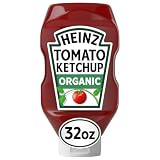
Heinz Organic Tomato Ketchup, 32 oz Bottle | $7.48 | Buy on Amazon |
| 5 |

|
Heinz Tomato Ketchup, 14 oz Bottle | $3.28 | Buy on Amazon |
Why Heinz ketchup dates to 1876
Heinz dates the first U.S. appearance of its Tomato Ketchup to 1876, when the product was initially called “Catsup.” The company describes the early version as a five-ingredient recipe that included sun-ripened tomatoes. That is a description of the early product, not evidence that the recipe remained unchanged; it should not be confused with the present-day formula.
Heinz’s history also says Henry soon took the product internationally and sold it to London retailer Fortnum & Mason. This is the company’s account of its early reach, not an independently verified sales ledger. Even so, the sequence shows how the brand’s story moved beyond a single Pittsburgh product: it paired a named tomato condiment with expansion into another market.
#1 Best Overall
- HEINZ TOMATO KETCHUP: One 32 oz inverted squeeze bottle expertly crafted from vine-ripened tomatoes
- MADE FROM RED RIPE TOMATOES: Heinz Ketchup tomatoes are perfectly ripe when they leave the field to capture optimal freshness and flavor
- THICK TEXTURE AND RICH TASTE: Enjoy on burgers, hot dogs, fries and eggs
- GROWN NOT MADE: Every bottle of Heinz Ketchup only uses tomatoes grown from Heinz seeds
- KOSHER KETCHUP: Prepared with kosher preferences in mind
How “57 varieties” became a lasting brand mark
By 1896, Heinz says it had more than 60 products. Its “57 varieties” slogan therefore was not a literal count of everything it sold. The company’s history says Henry drew inspiration from an advertisement for a shoe company offering 21 styles, then devised Heinz’s “57 varieties” line. Heinz also acknowledges that “No one knows for sure” why he chose 57; a family lucky-number explanation appears in the company’s account, but remains uncertain.
The mark’s value was its memorability, not its precision: a short, distinctive number could identify a widening range of foods. That is a reasonable interpretation of the branding choice, rather than a measured claim about how much the slogan changed sales.
Rank #2
- HEINZ TOMATO KETCHUP: Two 50.5 oz squeeze bottles expertly crafted from vine-ripened tomatoes
- MADE FROM RED RIPE TOMATOES: Heinz Ketchup tomatoes are perfectly ripe when they leave the field to capture optimal freshness and flavor
- THICK TEXTURE AND RICH TASTE: Enjoy on burgers, hot dogs, fries and eggs
- GROWN NOT MADE: Every bottle of Heinz Ketchup only uses tomatoes grown from Heinz seeds
- GLUTEN-FREE KETCHUP: Gluten-free and certified kosher by the OU
From ketchup to a broader food brand
Heinz’s history describes later growth into canned foods and baked beans in the United Kingdom. The company identifies “Beanz Meanz Heinz” as a 1960s advertising line and credits its creation to copywriter Maurice Drake, who, according to the company, came up with it in a London pub. The account makes the slogan part of Heinz’s brand history; it does not quantify the campaign’s effect on sales or customer preference.
This expansion matters to the ketchup story because it placed the name across more products and occasions. Heinz was no longer represented only by a single condiment: its branding could travel with a broader food range, while advertising reinforced recognition in particular markets.
Rank #3
- HEINZ TOMATO KETCHUP: One 20 oz inverted squeeze bottle expertly crafted from vine-ripened tomatoes
- MADE FROM RED RIPE TOMATOES: Heinz Ketchup tomatoes are perfectly ripe when they leave the field to capture optimal freshness and flavor
- THICK TEXTURE AND RICH TASTE: Enjoy on burgers, hot dogs, fries and eggs
- GROWN NOT MADE: Every bottle of Heinz Ketchup only uses tomatoes grown from Heinz seeds
- KOSHER KETCHUP: Certified Kosher by the OU
Packaging and product changes kept the brand usable
Heinz’s account points to packaging as another part of the brand’s development. It highlights an upside-down bottle as a change intended to make ketchup easier to pour. The practical aim is clear: packaging can shape the experience of using a familiar product, not just its appearance on a shelf. The company history does not establish how much that bottle change affected sales or preference.
The same account mentions organic offerings and reductions in salt and sugar as later product changes, as well as a dedicated research and development center in the Netherlands during the 2010s. These examples show adaptation in the company’s own telling, but they do not establish the contribution of any one initiative to Heinz’s icon status.
Rank #4
- HEINZ TOMATO KETCHUP: One 32 oz inverted squeeze bottle of organic tomato ketchup
- MADE FROM RED RIPE TOMATOES: Heinz Organic Ketchup tomatoes are perfectly ripe when they leave the field to capture optimal freshness and flavor
- THICK TEXTURE AND RICH TASTE: Enjoy on burgers, hot dogs, fries and eggs
- GROWN NOT MADE: Every bottle of Heinz Ketchup uses tomatoes grown from Heinz seeds
- GLUTEN-FREE ORGANIC KETCHUP: Made with certified organic tomatoes and no high-fructose corn syrup
Corporate scale and what the sales figure means
H.J. Heinz Company announced that Berkshire Hathaway and 3G Capital completed their acquisition on June 7, 2013. In 2015, Heinz and Kraft Foods Group announced a merger agreement; they completed the merger on July 2, forming The Kraft Heinz Company. The completion announcement said Heinz’s brand and business would remain headquartered in Pittsburgh, while Kraft’s would remain in the Chicago area. The 2013 acquisition announcement and the 2015 merger completion announcement document those milestones.
In a 2019 anniversary release, Kraft Heinz said approximately 650 million bottles of Heinz Ketchup were sold per year. That is a company-published figure for the period described in the 2019 release, not a verified current annual count. The same release named Organic, Simply, and honey-sweetened ketchup as examples of the portfolio at that time and said a “57” mark remained on most Heinz products; assortment and availability can vary by market and date. Kraft Heinz’s 2019 anniversary release supplies the dated figure and product examples.
Do these 3 things before closing this tab:
1Repair Windows errors before they cause bigger problems2Fix the driver behind crashes, sound loss and screen glitches3Clear out junk files and repair common Windows errorsBest Value
- One 14 oz bottle of Heinz Tomato Ketchup
- Heinz Tomato Ketchup uses sweet, juicy, red ripe tomatoes for the signature thick and rich taste of America’s Favorite Ketchup
- Thick & Rich ketchup made from red ripe tomatoes
- This tomato ketchup has a thick and rich texture
- Contains gluten free ketchup to fit your preferences
What made Heinz an icon?
The documented story is cumulative: Heinz began with a product whose clear packaging was meant to signal quality, introduced ketchup in the United States in 1876, built a durable identity around “57 varieties,” expanded its foods and advertising, and continued changing products and packaging. Acquisitions and a merger later placed the brand within a much larger corporate structure. Heinz and Kraft Heinz sources support that chronology and offer the company’s explanations; they do not isolate or prove the precise cause of consumer loyalty. The strongest answer is that Heinz’s icon status was built through repeated, recognizable encounters with the name—not through a single recipe or slogan alone.
Quick Recap
Product prices and availability are accurate as of the date/time indicated and are subject to change. Any price and availability information displayed on Amazon at the time of purchase will apply.




