What’s actually slowing this PC down?
Pick the symptom - the matching free tool is one click away.
For businesses in the United States, AT&T Business Fiber is the best overall choice where it is available. Its public fiber plans offer symmetrical upload and download speeds, unlimited data, no annual contract, included gateway equipment, and built-in 5G backup on eligible 1-Gig-and-faster plans. But there is no best provider at every address: Verizon Fios, Comcast, Spectrum, Frontier, Cox, T-Mobile, Starlink, and local providers can be better depending on availability, upload needs, contract preferences, reliability requirements, and the cost of downtime.
This comparison uses advertised pricing and plan information checked on August 10, 2026. Prices are not guaranteed quotes. Taxes, fees, promotional periods, autopay requirements, installation, equipment, bundles, static IPs, and backup service can materially change the monthly cost.
As an Amazon Associate I earn from qualifying purchases.
Quick picks
| Provider | Best for | Technology | Advertised top speed | Starting advertised price | Main drawback |
|---|---|---|---|---|---|
| AT&T Business Fiber | Best overall where available | Fiber | 5 Gbps symmetrical in limited areas | $60 for 300 Mbps | Limited fiber footprint; 5-Gig service is selective |
| Verizon Fios Business | Fiber reliability and satisfaction | Fiber | 2 Gbps symmetrical in select areas | Starts at $69 | Limited footprint; best pricing may require a two-year agreement |
| Comcast Business | Availability, bundles, and continuity features | Cable/fiber and dedicated options | 2 Gbps on public small-business plans | $70 for 300 Mbps | Ordinary broadband upload speeds are usually much lower than download speeds |
| Spectrum Business | No annual contract | Cable/fiber hybrid | 2 Gbps in select markets | $50 online-only offer for 500 Mbps | Most cable tiers have substantially slower uploads |
| Frontier Business Fiber | High-speed fiber value | Fiber | 5 Gbps publicly advertised; 7 Gig Ultra in select areas | $49.99 for 500 Mbps | Address-specific availability and two-year price-lock terms |
| T-Mobile Business Internet | Fast setup and wireless flexibility | 5G fixed wireless | Varies by signal and location | Starts at $35 for qualifying plans | Performance can vary with signal and congestion; no published standard uptime SLA |
| Cox Business | Regional cable/fiber bundles | Cable/fiber and enterprise options | 2 Gbps on small-business plans | $65 for 300 Mbps with ACH autopay | Available only in Cox markets; upload speeds vary by tier |
| Starlink Business | Remote locations or a diverse backup path | Low-Earth-orbit satellite | Plan and congestion dependent | $55 for 50 GB of priority data | Hardware cost, clear-sky requirement, variable speeds, and priority-data limits |
| Viasat Business | Rural fallback service | Satellite | Up to 100 Mbps nationwide; 150 Mbps in select areas | Varies by address and plan | Up to 4 Mbps upload and congestion-based prioritization |
These are use-case recommendations, not a nationwide performance ranking. Business internet availability and terms can change from one building, suite, or rural parcel to the next.
Best business internet providers
1. AT&T Business Fiber: best overall where available
AT&T Business Fiber is the strongest general-purpose option for a fixed business that can get it. The main reason is not simply its maximum download speed; it is the combination of symmetrical fiber capacity, unlimited data, flexible terms, and a backup option.
#1 Best Overall

- Save monthly rental fees: Model CM500 replaces your cable modem, saving you up to $168/yr in equipment rental fees.
- Speeds by carrier plans: Xfinity (up to 200Mbps), Cox (up to 150Mbps).
- Works with any wifi router: Connect any WiFi router, separate unit, to this modem's Ethernet port to support all your wireless devices.
- Ethernet connections: 1 Gigabit Ethernet port connects to your computer or separate WiFi router.
- Modem technology: Engineered with 16x4 channel bonding and DOCSIS 3.0.
- Publicly advertised tiers include 300 Mbps, 500 Mbps, 1 Gig, 2 Gig, and 5 Gig.
- The 300 Mbps plan is advertised at $60 per month, while the 5-Gig plan is advertised at $285 per month.
- Upload and download speeds are symmetrical.
- Gateway equipment, unlimited data, free online installation, and no annual contract are advertised on the fiber page.
- Eligible 1-Gig-and-faster plans can include built-in 5G backup, subject to a compatible gateway, wireless coverage, and power.
The 5-Gig tier is limited to selected areas, and AT&T says one wired device may receive up to 4.7 Gbps rather than the full advertised 5 Gbps. Reaching multi-gig speeds also requires compatible Ethernet ports, switches, cabling, firewall hardware, and network cards.
Choose it if: your business uses cloud backup, large file transfers, video production, hosted applications, remote desktops, or many simultaneous video calls.
Look elsewhere if: the address does not qualify, you need a contractual dedicated-internet SLA rather than shared fiber broadband, or another provider offers a better independently diverse backup connection.
AT&T’s built-in 5G backup is not a substitute for an uninterruptible power supply. The backup will not function during a power loss unless the gateway and relevant network equipment have separate battery protection. Read the plan and backup qualifications before treating it as a continuity solution.
2. Verizon Fios Business: best for fiber reliability and customer satisfaction
Verizon Fios Business is a strong choice in Verizon’s fiber footprint, especially for businesses that value symmetrical speeds and Verizon’s service organization. Publicly advertised plans start at $69 per month and include 300/300 Mbps, 500/500 Mbps, 1 Gig, and 2 Gig tiers in select areas.
Fios business plans advertise unlimited data and symmetrical fiber speeds. The best pricing and some rewards may require a two-year agreement, so compare the monthly discount with the cost of leaving early or relocating.
Verizon advertises 99.99% network reliability for Fios Business. That is a provider claim and should not be confused with a guaranteed, financially backed SLA covering every part of a customer’s connection. Ask what the measurement point is, what exclusions apply, and what credit is available.
Do these 3 things before closing this tab:
1Fix the driver behind crashes, sound loss and screen glitches2Repair Windows errors before they cause bigger problems3Scan for outdated or missing drivers - takes under a minuteVerizon also performed well in the 2026 J.D. Power U.S. Business Internet Satisfaction Study. Verizon ranked highest among medium businesses and large enterprises, while AT&T ranked highest among small businesses. The study surveyed 4,091 business customers from March through May 2026. Satisfaction results are useful context, but they do not prove that Verizon will be the best-performing provider at a particular address.
3. Comcast Business: best for availability, bundles, and continuity features
Comcast Business is often the practical choice when fiber is unavailable or when a company wants a broad service footprint, business support, security, and cellular backup from one provider. Its public Total Solutions Advantage pricing shows $70 for 300 Mbps, $100 for 500 Mbps, $150 for 1.25 Gbps, and $180 for 2 Gbps.
The advertised small-business packages include no data caps, 24/7 support, foundational SecurityEdge, and a 30-day guarantee. Comcast’s Wireless Connect backup is listed as an optional $35-per-month service. Exact package pricing and price-lock conditions should be confirmed in the quote.
The trade-off is upload capacity. Public comparison information lists Comcast’s ordinary broadband service at up to 2 Gbps down and roughly 40 Mbps up, but the exact upload rate depends on the local plan and network. Do not accept a download-only quote; request the upload speed in writing.
Comcast is also a serious option for larger organizations through its separate Dedicated Internet product. Comcast describes that service as a direct, unshared connection with symmetrical speeds, proactive monitoring, optional BGP, permanent IP addresses, and a 99.99% network-reliability SLA. That product should not be compared as though it were the same service as ordinary shared cable broadband. See Comcast Dedicated Internet for the distinction.
4. Spectrum Business: best no-contract provider
Spectrum Business is the clearest choice for a business that does not want an annual contract and can accept cable’s typically asymmetric upload speeds. Spectrum advertises no long-term contracts, no data caps, no throttling, and 24/7/365 U.S.-based support.
Public pricing checked for this comparison included a $50-per-month online-only offer for 500 Mbps, $95 for 750 Mbps, and $115 for 1 Gig. Spectrum advertises 2-Gig service in select markets at 2 Gbps down and 1 Gbps up. Its more common cable tiers are much more asymmetric: examples include 500/20 Mbps, 750/35 Mbps, and 1 Gig/50 Mbps.
Spectrum’s wireless backup can help keep basic operations online, but it is not equivalent to the primary circuit. The company discloses speeds of up to 10 Mbps, up to eight hours of battery backup, and support for up to four devices. Some static-IP and Business Wi-Fi functions are unavailable while failover is active. Those limitations matter for payment systems, VPNs, hosted applications, and businesses with a large number of users.
Rank #2
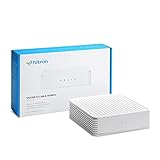
- ⚠️ COAXIAL CABLE INTERNET ONLY - NOT FIBER: This modem works ONLY with Internet delivered through coaxial cable (the round cable with screw-on connector). Even if you have Xfinity, Spectrum, or Cox service, verify you have their CABLE internet service, NOT their fiber optic service. Check your wall connection before purchasing. Will NOT work with fiber internet (Verizon FiOS, AT&T Fiber, Google Fiber), DSL, satellite, or 5G home internet. Verify your internet type BEFORE purchasing.
- ⚠️ NO WiFi, NO Voice, NO Router Features: This device ONLY connects to your cable line and provides ONE Ethernet port. It does NOT create WiFi networks, has NO phone/voice capabilities, and cannot connect multiple devices without a separate WiFi router.
- 🔧 REQUIRED FOR SETUP: (1) Cable internet service (not fiber), (2) Separate WiFi router with 2.5 Gbps port for full speeds, (3) ISP activation call. Without a router, you can connect only ONE device via the single Ethernet cable included.
- 💰POTENTIAL RENTAL FEE SAVINGS - While some providers have reduced or eliminated modem rental fees, this modem can still provide cost savings and performance benefits. Check with your provider about current rental fees before purchasing.
- DOCSIS 3.1 TECHNOLOGY - Supports cable internet speeds UP TO 1 Gbps with advanced DOCSIS 3.1 performance. Perfect for streaming, gaming, and multiple devices when paired with your WiFi router.
Choose it if: no annual contract and unlimited data are worth more to you than fiber-level uploads.
Look elsewhere if: your business frequently sends large files, relies heavily on cloud backup, or needs a contractual uptime commitment. Spectrum Enterprise, a separate product, advertises 99.9% uptime and a six-hour mean-time-to-restore commitment; do not assume that applies to ordinary Spectrum Business broadband.
5. Frontier Business Fiber: best high-speed fiber value where available
Frontier’s public business-fiber page advertises $49.99 for 500 Mbps, $69.99 for 1 Gig, $89.99 for 2 Gig, and $119.99 for 5 Gig. Frontier also advertises a 7 Gig Ultra offering in select areas. The plans are aimed at businesses that want high fiber speeds at a relatively low advertised monthly price.
Frontier advertises symmetrical fiber capability and a 2-year price lock. Autopay, equipment-return requirements, address eligibility, and the precise terms of the price lock can affect the real cost. The company also advertises 99.9% network reliability, but you should request the applicable service description before treating that number as a contractual SLA.
The Tool Desk
Outbyte PC Repair FREEClear out junk files and repair common Windows errorsFree Scan →Outbyte Driver Updater FREEScan for outdated or missing drivers - takes under a minuteDriver Scan →Frontier’s backup service has an important limitation: the company says it does not support static IP addresses. If your business uses IP allowlists, hosted services, VPN tunnels, or remote access, ask how failover will affect those systems.
Choose it if: Frontier fiber is available and its written quote beats competing fiber on total cost.
Look elsewhere if: the address qualifies only for older non-fiber service, or your continuity design depends on static IP preservation during failover.
6. T-Mobile Business Internet: best for fast deployment
T-Mobile Business Internet is the most compelling option when a business needs service quickly, cannot wait for construction, is operating from a temporary location, or wants a wireless primary or backup connection. T-Mobile says most businesses can self-install in under an hour through its app, without a construction project or technician visit.
Recommended Free Tools
Small Business Grow plans start at $35 per month, and qualifying unlimited business internet is advertised at $40 per month. The service includes a Wi-Fi 7 gateway, no annual contract, and no early-termination fee. Qualifying service also has a five-year price guarantee. A static-IP upgrade is available on select business-grade routers.
There are meaningful limitations. T-Mobile says service has no hard data cap but may experience reduced speeds after more than 1.2 TB of monthly use during congestion. Standard T-Mobile Business Internet does not have a published uptime SLA. Speeds and latency depend on signal strength, indoor placement, tower capacity, congestion, and local network conditions.
Choose it if: rapid installation and flexibility are more important than guaranteed performance.
Look elsewhere if: your business needs low, consistent latency, guaranteed upload capacity, a formal uptime commitment, or dependable service during local cellular congestion.
Free tools Windows power users keep installed
One-click scans. No signup required.
7. Cox Business: best regional cable/fiber alternative
Cox Business is worth including whenever the address is in a Cox market. Its advertised pricing includes $65 for 300 Mbps, $95 for 500 Mbps, $140 for 1 Gbps, and $190 for 2 Gbps with ACH autopay. Plans advertise unlimited data.
Cox backup internet starts at $35 per month on lower tiers and is included with 1-Gig and 2-Gig plans. Higher tiers can include security features and 24/7 IT support. Cox advertises up to 2 Gbps on small-business plans, while separate enterprise offerings can reach much higher dedicated speeds, including up to 400 Gbps for certain services.
As with Comcast and Spectrum, confirm the exact upload speed. A cable plan with a high download headline may be a poor fit for a business that sends large amounts of data. Ask whether the quote is for HFC cable, fiber to the premises, or a dedicated enterprise circuit.
Rank #3

- Ensure coaxial cable is connected securely at all times to get steady connection
8. Starlink Business: best remote or physically diverse backup
Starlink Business is often the best practical option for a remote business that cannot obtain fiber, cable, or usable fixed wireless. It can also be valuable as a backup because its satellite path is geographically different from a local wired carrier’s underground or aerial network.
Starlink’s fixed-site business page showed plans starting at $55 per month for 50 GB, $155 for 500 GB, $280 for 1 TB, and $530 for 2 TB. The page showed a separate hardware cost of $1,999. Starlink requires a clear view of the sky, sells priority data tiers, and warns that maximum speeds are not guaranteed and may slow during congestion.
Starlink should not be treated as a cheap unlimited fiber replacement. Estimate how much priority data your business uses, include the hardware in first-year cost, and test whether the connection supports your VPN, point-of-sale, voice, and cloud applications. For a primary connection, compare Starlink with local licensed fixed wireless before ordering.
9. Viasat Business: rural fallback when better options are unavailable
Viasat Business remains relevant for rural businesses that cannot receive terrestrial broadband, 5G, or low-Earth-orbit satellite service. It advertises up to 100 Mbps nationwide and 150 Mbps in select areas, but upload speeds are only up to 4 Mbps.
Viasat’s Choice Unlimited plan can place traffic behind other users after typical business use reaches 1,000 GB. That means unlimited does not necessarily mean consistently prioritized. Installation is typically advertised within three to five days, and contract options vary.
Windows Errors? Fix Them Before They Spread
Repair common Windows errors and clear accumulated junk for a smoother, more stable PC - no reinstall needed.Free scan · no reinstallCrashes, No Sound, or Screen Glitches?
Random freezes, missing sound and display glitches usually trace back to one bad driver. Find and replace yours safely.Free scan · under a minuteTraditional geostationary satellite has materially higher latency than terrestrial fiber and cable. The FCC’s Measuring Broadband America report provides historical satellite-latency context, but those older geostationary figures should not be transferred directly to Starlink, which uses low-Earth-orbit satellites.
Business broadband versus dedicated internet
Most plans marketed to small businesses are still shared broadband. The provider shares network capacity among customers, and the advertised speed is generally a maximum or plan rate rather than a dedicated, guaranteed amount available to your business at every moment.
Dedicated Internet Access is a different product. It typically provides dedicated bandwidth, proactive monitoring, formal service levels, static IP support, faster escalation, and custom installation. It is more expensive and may require a longer deployment timeline or contract.
| Choose shared business broadband when… | Consider dedicated internet when… |
|---|---|
| Your business is a small office, retail location, or professional practice. | Downtime creates substantial financial or operational risk. |
| Cloud applications and video calls are important but not mission-critical. | You need a financially backed SLA, dedicated bandwidth, or proactive monitoring. |
| You can tolerate using a backup circuit during an outage. | You operate a call center, medical practice, large e-commerce site, studio, or data-heavy operation. |
| You do not need BGP, private circuits, or complex multi-site routing. | You need BGP, SD-WAN, private connectivity, or provider-managed enterprise networking. |
Comcast’s dedicated product, for example, describes an unshared connection, symmetrical speeds, optional BGP, permanent IP addresses, proactive monitoring, and a 99.99% network-reliability SLA. AT&T Dedicated Internet advertises 99.95% reliability and dedicated monitoring, while broader AT&T materials refer to uptime guarantees or credits for qualifying dedicated services. The exact contract controls.
Quick wins for a faster PC:
Fix the driver behind crashes, sound loss and screen glitchesFind Drivers →Repair Windows errors before they cause bigger problemsFix Now →A 99.99% availability figure mathematically permits about 52.6 minutes of downtime per year before considering measurement rules, maintenance windows, exclusions, and credit provisions. It does not mean every customer will receive 52.6 minutes or less of end-to-end downtime.
Fiber, cable, 5G, fixed wireless, and satellite compared
| Technology | Best for | Main advantage | Main drawback |
|---|---|---|---|
| Fiber | Most fixed businesses | Symmetrical speeds, low latency, and scalability | Address and building availability can be limited |
| Cable/HFC | Broad availability and value | Strong downloads, bundles, and generally quick deployment | Often much slower uploads and shared capacity |
| 5G fixed wireless | Fast setup, temporary sites, and failover | No wired construction and relatively easy self-installation | Signal, tower congestion, and prioritization can change performance |
| Licensed fixed wireless | Rural or specialized locations | Can be rapidly deployed and may offer business-grade service | Site survey, line-of-sight, and local-provider limits |
| Low-Earth-orbit satellite | Remote sites and network-diverse backup | Broad geographic reach and lower latency than traditional satellite | Priority-data costs, clear-sky requirements, and variable performance |
| Geostationary satellite | Extremely remote fallback | Availability where other options fail | High latency and very limited upload capacity |
Fiber is usually the best primary connection for cloud-heavy work. Cable can be the better financial choice for email, point-of-sale systems, browsing, and moderate cloud use when fiber is unavailable. 5G is useful when speed of installation matters. Satellite is best reserved for remote access or a deliberately independent backup unless no terrestrial option exists.
How much internet speed does a business need?
Use these ranges as planning guidelines, not guarantees. The right tier depends on upload traffic, latency, Wi-Fi capacity, application behavior, and how many people are active simultaneously.
| Business profile | Reasonable starting range | What matters most |
|---|---|---|
| One to five light users | 100–300 Mbps | Reliable service, adequate upload, good Wi-Fi, and payment-system stability |
| Five to 15 typical cloud users | 300–500 Mbps | Video conferencing, cloud applications, and simultaneous activity |
| 15 to 30 users or heavy cloud/video work | 500 Mbps–1 Gbps | Upload capacity, latency, firewall throughput, and wireless design |
| Large teams, production, frequent backups, or multiple sites | 1–2 Gbps or dedicated service | Symmetry, SLA, traffic management, failover, and scalable networking |
Do not buy a gigabit plan solely because the number looks faster. A business may see little benefit if its firewall, switch, cabling, Wi-Fi 5 access points, or workstation cannot handle multi-gig speeds. The application’s server can also be the bottleneck, and 5G or satellite service may slow during congestion.
What’s actually slowing this PC down?
Pick the symptom - the matching free tool is one click away.
For many businesses, upload speed deserves at least equal weight. AT&T, Verizon, and Frontier fiber plans can provide symmetrical capacity. By contrast, common Spectrum cable tiers advertise 500/20, 750/35, and 1 Gig/50 Mbps. A slower symmetrical fiber plan can therefore feel faster than a faster cable plan when the business is uploading video, backing up data, hosting files, or supporting cloud-based workflows.
How to compare the real monthly cost
The advertised monthly price is only the starting point. Before ordering, calculate both the first-year cost and the normal monthly cost after every promotion ends.
Rank #4
![ARRIS (SB6183) -Cable Modem - Fast DOCSIS 3.0 16x4 Gigabit, [Check with your provider for compatibility], 1 Gbps Port, 400 Mbps Max Internet Speed, 2 Year Warranty](https://m.media-amazon.com/images/I/31n0TnQ2hPL._SL160_.jpg)
- Harness the power of DOCSIS 3.0 technology to bond up to 16 downstream channels and 4 upstream channels. The ARRIS SURFboard SB6183 enhances your personal media experience, at fast broadband speed.
- Get speeds up to 686 Mbps download and 131 Mbps upload (speeds based on your Cable Internet service provider). Compatible with most U.S. cable providers.
- Features DOCSIS 3.0 technology to bond up to 16 downstream channels and 4 upstream channels.
- Supports IPv4 and IPv6 Internet standard.
- Requires Cable Internet Service. If you are unsure of your service, please contact your CABLE provider to confirm.
- Promotional price: record the exact duration and eligibility requirements.
- Standard price: ask what the bill becomes after the promotion or price lock ends.
- Autopay and paperless billing: confirm whether the advertised price depends on ACH, a credit card, or electronic billing.
- Equipment: include gateway, Wi-Fi, mesh access points, firewall rental, and replacement charges.
- Installation: ask about activation, professional installation, construction, inside wiring, and expedited-install fees.
- Backup: add cellular, satellite, a second modem, failover hardware, and any data charges.
- Static IP: price IPv4 addresses, blocks, and any business-grade router requirement.
- Security and support: include managed Wi-Fi, security software, monitoring, IT support, and premium escalation.
- Contract exposure: check early-termination, relocation, equipment-return, and price-increase terms.
- Taxes and surcharges: request an all-in estimate for the service address.
Ask the provider for its FCC broadband label and a written quote. Broadband labels are designed to show pricing, introductory rates, data allowances, performance information, and fees at the point of sale. A label does not replace the contract, but it makes competing offers easier to compare.
Independent reader supportYour contribution helps us test, update, and keep practical guides available for everyone.Reliability: SLA, restoration, and service credits
Businesses should separate four different ideas:
- Network reliability claim: a provider’s broad engineering or marketing statistic.
- Service availability SLA: a contractual commitment for a specific product and location.
- Mean time to restore: the promised repair target after a qualifying outage.
- Service credit: the remedy, which may be limited and may require a claim within a deadline.
Ask whether the promise covers the provider’s core network only or also the local loop, building entry, customer-premises equipment, power, maintenance windows, and third-party facilities. Also ask how the provider measures downtime and what events are excluded.
Quick wins for a faster PC:
Repair Windows errors before they cause bigger problemsFix Now →Scan for outdated or missing drivers - takes under a minuteDriver Scan →Clear out junk files and repair common Windows errorsFree Scan →Examples in the current provider materials include Verizon’s advertised 99.99% Fios Business network reliability, Comcast Dedicated Internet’s advertised 99.99% network-reliability SLA, Spectrum Enterprise Internet’s advertised 99.9% uptime and six-hour mean-time-to-restore commitment, and AT&T’s separate dedicated-internet reliability and uptime-credit terms. These figures belong to specific products and should not be applied to every plan sold under the same brand.
Backup internet and business continuity
If a business cannot afford an outage, the important decision is not just which primary ISP to choose. It is which primary circuit to combine with which independent backup, and whether automatic failover preserves the applications the business needs.
Build a genuinely independent backup
A second service from the same provider may still share local power, the building entry point, authentication systems, support operations, or a common router. For stronger continuity, use different technologies and preferably different carriers—for example, AT&T fiber with T-Mobile 5G, or Comcast cable with Starlink.
Cellular backup is usually less expensive and easier to install. Satellite backup is more geographically diverse but can add hardware cost, latency, and data-priority charges. A second wired carrier can be excellent when its physical route is genuinely separate, but ask the provider how much infrastructure is shared.
Check the failure points
- Put the modem, gateway, firewall, switches, and Wi-Fi equipment on a UPS.
- Ask how long the provider’s backup battery lasts. Comcast, Cox, Spectrum, and other providers specify different battery or power requirements.
- Confirm whether failover is automatic or requires a manual change.
- Verify that the firewall supports both circuits and health checks.
- Test the backup quarterly by disconnecting the primary connection.
- Document which services fail over and how staff should operate during an outage.
Ask about IP and application compatibility
Failover can change the public IP address and disrupt static IPv4 allowlists, IPv6 prefixes, VPN tunnels, VoIP registration, payment terminals, remote-access rules, hosted servers, and DNS routing. T-Mobile offers static IP as an upgrade on select routers; Spectrum and Viasat offer static-IP options subject to product and customer eligibility; Comcast Dedicated Internet includes up to two permanent IP addresses per circuit, with more available for an additional charge.
Spectrum specifically warns that some static-IP and Business Wi-Fi features do not work during wireless-backup failover, while Frontier says its backup service does not support static IP addresses. Get this answer in writing before relying on a backup service.
How to check business internet availability
Neighborhood coverage is not enough. A provider may serve the street but not a particular suite, mixed-use building, new construction, rural parcel, or business address in its database. A building may also lack an internal fiber riser or usable wiring.
- Search the exact address on the FCC National Broadband Map.
- Record every fixed provider, technology, and advertised speed shown for the location.
- Run the same address through each provider’s own business-ordering tool.
- Ask whether the quoted service is fiber-to-the-premises, HFC cable, fixed wireless, 5G, satellite, or dedicated internet.
- Request the guaranteed or expected upload speed in writing.
- Ask whether construction, inside wiring, or a site survey is required.
- Confirm the installation lead time and any construction charge.
- Compare local, regional, municipal, and national providers rather than assuming a national brand is best.
The FCC map reports provider-reported availability, not actual performance, affordability, or customer experience. If the map is wrong, the FCC explains how to submit an availability challenge.
Do these 3 things before closing this tab:
1Scan for outdated or missing drivers - takes under a minute2Repair Windows errors before they cause bigger problems3Fix the driver behind crashes, sound loss and screen glitchesAvailability is a significant issue for small businesses. The SBA Office of Advocacy found that in 2024 cable reached 48.6% of small-business establishments, fiber reached 48.3%, and fixed wireless reached 39.2%; 17% were not reached by those three terrestrial technologies. The figures overlap because an establishment can have access to more than one technology. See the SBA broadband brief for the methodology.
Installation-speed comparison
| Provider or technology | Advertised installation information | What to verify |
|---|---|---|
| T-Mobile Business Internet | Most businesses can self-install in under an hour | Signal quality, gateway placement, and actual speed at the site |
| Spectrum Business | Most small-business installations occur within one or two business days | Whether inside wiring or construction changes the schedule |
| AT&T Business Fiber | Online orders can be installed in as little as three business days | Fiber qualification and whether construction is needed |
| Viasat Business | Standard satellite installation typically occurs within three to five days | Clear-sky access, site preparation, and equipment charges |
| EarthLink fixed wireless | Operational status may take seven to 14 days after site survey and installation | Whether the address requires a survey or special equipment |
These are provider or plan-page estimates, not guarantees. A new fiber build, landlord approval, trenching, a difficult roof or pole connection, or an inaccurate address record can extend the schedule.
Questions to ask before ordering
- What are the advertised and guaranteed download and upload speeds?
- Is this shared broadband or Dedicated Internet Access?
- What technology physically reaches the premises?
- Is there a data cap, prioritization threshold, or congestion policy?
- What is the standard monthly price after the promotion?
- Does the price require autopay, paperless billing, a bundle, or a contract?
- What equipment, installation, activation, and restoration fees apply?
- Is the plan month-to-month, and what happens if the business relocates?
- When does the price lock expire?
- Is a static IPv4 address or address block available, and at what cost?
- Is IPv6 available?
- Does the gateway support bridge mode or passthrough?
- Does failover preserve static IPs, IPv6, VPNs, VoIP, payment terminals, and allowlists?
- How long will the backup battery last?
- What happens during a power outage?
- What is the SLA measurement point and what events are excluded?
- What service credit applies, and how must it be claimed?
- How quickly will a technician arrive?
- Is there a 24/7 business escalation path?
Final decision guide
- Fiber is available and upload speed matters: compare AT&T Business Fiber, Verizon Fios Business, Frontier Business Fiber, and local fiber providers.
- Only cable is available: compare Comcast, Spectrum, Cox, and regional cable providers by upload speed, total cost, and backup terms.
- You need service quickly: check T-Mobile Business Internet and local fixed-wireless providers.
- You want no annual contract: start with Spectrum; T-Mobile is another month-to-month option, subject to its wireless performance and congestion rules.
- You need a backup circuit: use a different carrier and technology, then connect both to a UPS-backed firewall and test automatic failover.
- No terrestrial service works: check Starlink first, then Viasat or a local fixed-wireless provider.
- Downtime is financially serious: request Dedicated Internet Access, a written SLA, and a tested secondary circuit rather than relying on a standard broadband plan’s marketing uptime claim.
The best business internet purchase is the one that fits the exact address and the business’s actual risk. Start with the fastest reliable wired option, compare upload speed and total cost—not just download speed—and spend on a second, independent connection when an outage would cost more than the backup.
Frequently Asked Questions
Does business internet automatically include a dedicated connection or uptime guarantee?
No. Most plans sold to small businesses are shared broadband. Dedicated bandwidth, formal SLAs, proactive monitoring, BGP, and permanent IP addresses are usually separate Dedicated Internet Access or enterprise products. Ask which product is in the quote and request the SLA in writing.
Is a 1 Gbps business plan always better than a 500 Mbps plan?
No. A 1 Gbps plan may not improve performance if the business has slow uploads, outdated Wi-Fi, an underpowered firewall, incompatible cabling, or applications whose servers are the bottleneck. Compare upload speed, latency, equipment capacity, and the number of simultaneous users.
Can a business use 5G or satellite as its backup connection?
Yes, and using a different technology can make the backup more independent. Cellular backup is usually easier to install, while Starlink can provide a more geographically diverse path. Confirm power requirements, data-priority rules, IP-address changes, VPN compatibility, and automatic failover before relying on either.
The Bottom Line
Bottom line: Choose AT&T Business Fiber where available for the strongest overall combination of symmetrical speed, price flexibility, unlimited data, and eligible 5G backup. Choose Verizon or Frontier when their fiber is the better address-level offer, Comcast or Cox when availability and bundled continuity matter, Spectrum when avoiding an annual contract is the priority, T-Mobile when rapid setup matters, and Starlink or Viasat only when terrestrial service is unavailable or a satellite path is valuable as backup. For mission-critical operations, buy a dedicated circuit and test a genuinely independent secondary connection.
Quick Recap
Product prices and availability are accurate as of the date/time indicated and are subject to change. Any price and availability information displayed on Amazon at the time of purchase will apply.
Free tools Windows power users keep installed
One-click scans. No signup required.




