Do these 3 things before closing this tab:
1Fix the driver behind crashes, sound loss and screen glitches2Repair Windows errors before they cause bigger problems3Scan for outdated or missing drivers - takes under a minuteThere is no single agreed definition of “the 3 Cs of leadership.” Different writers use the phrase for different ideas. This guide uses Lt. Col. Christopher Menuey’s framework—character, connection, and credibility—because it describes observable behaviors behind earned influence. Other versions focus on service, executive presence, or the conditions a team needs to succeed.
What are the 3 Cs of leadership?
The phrase is a label for several distinct frameworks, not a universally accepted list of three essential traits. The framework you choose changes the question you are trying to answer: how a leader earns trust, serves people, presents under pressure, or creates a productive team environment.

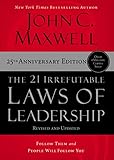
Menuey, then commander of the 90th Operations Support Squadron, wrote that leadership and influence come from “one’s character, ability to connect and credibility” in a U.S. Air Force commentary published on 15 March 2013. His model is useful for thinking about day-to-day management because each C points to behavior a team can observe.
Character, connection, and credibility: a practical framework
Character: act with honesty and respect
Character is the standard people see in how a manager treats others and handles responsibility. Menuey describes it through honesty, respect, and professionalism. A manager demonstrates it by telling the truth about problems, applying expectations consistently, and treating people respectfully even when correcting poor work.
The Tool Desk
Outbyte PC Repair FREERepair Windows errors before they cause bigger problemsFix Now →Outbyte Driver Updater FREEFix the driver behind crashes, sound loss and screen glitchesFind Drivers →#1 Best Overall
Connection: learn what people need
Connection means more than being friendly. Menuey frames it as serving people, getting to know them, helping them feel they belong, and finding and meeting their needs. In practice, a manager can ask what is blocking someone’s work, listen before prescribing a solution, and follow through on reasonable support. Connection does not mean agreeing to every request; it means understanding people well enough to respond fairly and constructively.
Credibility: know the work and deliver results
Credibility rests on job knowledge and results. A manager builds it by understanding the work well enough to make sound decisions, being clear about what they do not know, and meeting commitments. Rank or title may grant formal authority, but in Menuey’s account, influence is earned through the combination of character, connection, and credibility.
Rank #2

- we like to ship out right away
How the other “3 Cs” differ
Other sources use the same shorthand for different leadership concerns. These frameworks should be treated as alternatives, not combined into one supposedly standard list.
| Framework | What its Cs mean | Primary focus | Source and evidence context |
|---|---|---|---|
| Character, connection, credibility | Honesty, respect, and professionalism; serving and understanding people; job knowledge and results. | Trust and earned influence. | Lt. Col. Christopher Menuey, U.S. Air Force commentary, 15 March 2013. Read the commentary. |
| Competence, character, care | A service-leadership model within a broader set of behavioral dimensions, including self-reflection, people and principles orientation, resilience, social competence, problem-solving, and mentorship. | Service-oriented leadership behavior. | A 2019 paper in Frontiers in Psychology developed and validated a scale with a working sample of 4,486 undergraduates from eight publicly funded Hong Kong universities. This is not direct evidence that the model predicts success for every workplace manager. Read the paper. |
| Courage, communication, composure | Standing one’s ground under pressure; expressing a vision effectively; staying level-headed and reading a situation. | Gravitas: how leaders act, speak, and are perceived. | Manfred F. R. Kets de Vries, INSEAD Knowledge, 9 September 2015. Read the article. |
| Clarity, climate, competence | Purpose, goals, roles, and interconnection; structures, processes, stakeholder relationships, and culture; and team behaviors, attitudes, knowledge, and skills. | Conditions that help a team succeed. | Fernanda Arreola and Dan Hammond, ESSCA Knowledge, 5 January 2026. Read the article. |
Which framework should a manager use?
- Use character, connection, and credibility to reflect on the trust you earn through your conduct, relationships, and ability to deliver.
- Use competence, character, and care when examining service-oriented behaviors and development. The scale study’s participants were university undergraduates in Hong Kong, so its findings should not be generalized into a proven formula for workplace outcomes.
- Use courage, communication, and composure when focusing on how you lead under scrutiny, communicate direction, and handle pressure. Kets de Vries notes that presentation and speaking behaviors can be practiced, while deeper personal development takes sustained reflection and experience.
- Use clarity, climate, and competence to diagnose the environment around a team: whether people know their goals and roles, whether structures and relationships support the work, and whether the team has the necessary capabilities.
These models can complement one another in a manager’s reflection, but they answer different questions. Keep their meanings and evidence distinct rather than presenting a blended set as the definitive “3 Cs.”
Free tools Windows power users keep installed
One-click scans. No signup required.
Turn a framework into a management practice
- Choose the problem you want to address. For example, use Menuey’s model when you are examining trust, and the clarity–climate–competence model when the difficulty appears to involve team conditions.
- Translate each C into observable behavior. Replace “be more credible” with a specific commitment, such as explaining a decision’s basis or delivering a promised update.
- Ask for evidence from the people affected. Invite specific feedback about what you do that builds trust, improves communication, or makes roles clearer. Do not treat a framework label as proof that you are effective.
- Choose one behavior to practice and revisit. Make the change concrete, observe whether it helps, and adjust based on what happens rather than assuming that adopting a three-part model guarantees results.
What the evidence does—and does not—show
The four frameworks come from different kinds of sources: military commentary, a scale-development study, an article about gravitas, and a leadership article about team conditions. They do not establish one universal taxonomy or show that any single trio guarantees effective management.
The 2019 service-leadership paper reports a six-factor, 48-item solution in its scale work, covering self-improvement and self-reflection; people and principles orientation; resilience; social competence; problem-solving; and mentorship. It also reports internal-consistency alpha values above 0.95 for validation of an earlier 65-item scale. That statistic concerns scale reliability; it is not evidence that the framework causes better management outcomes.
For a practical starting point, Menuey’s model makes three useful questions explicit: Do people see honesty and respect in your conduct? Do you understand and respond to their needs? Do you know the work and follow through on results? Those questions are useful prompts, not a complete definition of leadership.
Quick Recap
Best Value

- You can go after the job you want—and get it!
- You can take the job you have—and improve it!
- You can take any situation—and make it work for you!
Product prices and availability are accurate as of the date/time indicated and are subject to change. Any price and availability information displayed on Amazon at the time of purchase will apply.




