Free tools Windows power users keep installed
One-click scans. No signup required.
The headline was based on a real April 30, 2024 layoff report, but it was too absolute as a description of Tesla’s lasting business. Reports said Tesla dismissed Rebecca Tinucci, the senior executive overseeing Superchargers, Daniel Ho, who led new-vehicle programs, and virtually all of Tinucci’s roughly 500-person charging organization. Tesla did not permanently shut down its charging network or abandon future vehicles. It later announced continued Supercharger investment, reportedly rehired some charging employees, and continued expanding the network.
What Tesla reportedly did on April 30, 2024
The original “everyone” claim came from reporting on an internal Elon Musk email, rather than from a detailed Tesla press release listing every affected employee. Contemporaneous reports said Tesla dismissed Rebecca Tinucci and Daniel Ho and planned sweeping cuts within their organizations.
As an Amazon Associate I earn from qualifying purchases.
Tinucci was Tesla’s senior director of EV charging. Her organization was reported to include approximately 500 employees, and reports described the company as dismissing virtually all or substantially all of that Supercharger team. That does not establish that every person involved in every charging-related function worldwide was terminated.
Quick wins for a faster PC:
Fix the driver behind crashes, sound loss and screen glitchesFind Drivers →Clear out junk files and repair common Windows errorsFree Scan →Scan for outdated or missing drivers - takes under a minuteDriver Scan →Ho led new-vehicle programs. Employees reporting to him were also reportedly affected, but public reporting did not establish a precise headcount or show that Tesla eliminated all vehicle-development work. A leadership change and large layoffs within a program organization are not the same thing as canceling every future Tesla vehicle.
#1 Best Overall

- Dual Voltage Level 1 & 2: Charge at 120V/12A (1.44kW, 2-5 miles/hr) with the included NEMA 5-15 adapter or at 240V/16A (3.84kW, 9-12 miles/hr) with the NEMA 6-20 plug. One SEGUMA portable tesla charger gives you two charging options for everyday home charging, backup charging, and travel
- EV Charger for Tesla Vehicle-Seguma 16A mobile ev charger for tesla is specifically designed for Tesla vehicles, engineered with standardized North American Charging Standard (NACS) connector, works flawlessly with Tesla Model-Y/X/3/S/Cybe truck
- Wireless Charging Door Control-The portable mobile car charger for tesla has a button on the connector that wirelessly opens the charging port door, eliminating the need for physical keys or buttons and making charging more convenient
- Intelligent Charging-The Seguma level 1 charger offers protection against leaks, grounding, voltage issues, overcharging, and overheating. It automatically shuts off when your Tesla is fully charged. Tip: Install a home circuit breaker for extra safety
- Extended 25FT Cable-The 25-foot cable allows easy tesla charging at home or public stations. The included portable storage bag lets you take the tesla home charger anywhere, making it ideal for travel, road trips, or visits. Perfect accessory for Model Y
Did Tesla shut down Superchargers?
No. The layoffs targeted much of the organization responsible for expanding and operating the network, but they did not amount to an announced shutdown. On May 1, 2024, Musk said Tesla would continue expanding Superchargers at a slower pace, with more emphasis on uptime and existing locations. Some projects already under construction were also expected to continue, according to Associated Press reporting.
The distinction is important:
- Major team reduction: Yes, according to contemporaneous reporting.
- Network shutdown: No.
- Immediate end to all construction: Not established; some projects were expected to continue.
- Permanent abandonment of Superchargers: Contradicted by Tesla’s later spending, hiring activity and network growth.
Why the layoffs alarmed the charging industry
Superchargers were a strategic asset, not merely an internal perk for Tesla owners. The network helped make long-distance EV travel more practical, while Tesla’s North American Charging System, or NACS, was being adopted by other automakers.
Tesla says NACS was opened for industry adoption and later recognized in the SAE J3400 standard. The company has also been progressively opening its North American network to other EVs. That meant the charging organization was dealing with more than Tesla-only sites, including matters such as:
- Site acquisition, permitting and construction
- Utility, landlord and contractor coordination
- Charging hardware deployment
- Software, authentication and payment systems
- Maintenance, reliability and uptime
- Interoperability with other automakers
- Customer support and federally supported charging projects
A sudden loss of personnel could therefore create practical problems even if the network itself remained online. Reuters reporting summarized by Inc. said former employees were receiving calls from vendors, contractors and utilities after the layoffs, while some projects were being closed out or reassessed.
Those reports support concerns about confusion, delays and lost institutional knowledge. They do not prove that the network suffered a broad or lasting reliability failure. Both statements can be true: the reorganization may have disrupted work in the short term while Tesla continued operating and expanding the network over time.
Why did Tesla make the cuts?
The Supercharger layoffs occurred amid a broader Tesla headcount reduction and pressure from weaker vehicle sales and narrower profit margins. Reuters reported plans affecting thousands of employees, including more than 6,700 workers across several U.S. states, with additional California reductions later reported.
Cost cutting and a broader restructuring were the reported context. Musk also appeared to be shifting the charging organization away from rapid expansion and toward maintaining existing infrastructure. However, Tesla did not publicly establish one definitive cause that explains every individual layoff, so falling sales should be treated as context—not as a confirmed sole motive.
The Tool Desk
Outbyte Driver Updater FREEScan for outdated or missing drivers - takes under a minuteDriver Scan →Outbyte PC Repair FREERepair Windows errors before they cause bigger problemsFix Now →Tesla reversed course within weeks
The most important development after the initial layoffs was the partial reversal.
Rank #2
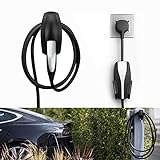
- COMPATIBLE WITH TESLA MODEL 3/MODEL Y/MODEL X/MODEL S CHARGER: Seven Sparta Charging Cable holder is a perfect holder to hang your charging cable from in the garage.
- KEEP YOUR CHARGING CABLE NEATLY AND SECURE: The cable organizer is much better than a normal hook. It does a good job of keeping the cable off of the ground, and protect your cable from falling down accidentally.
- SAFE ABS MATERIAL: The charger cable organizer is made from high quality ABS plastic, pass fireproofing grade testing. The bearing capacity can reach above 30KG at least. Prior to purchasing, we recommend confirming the product's size and material.
- EASY & SECURE INSTALLATION: The charging cable holder takes just minutes to install. The charger head fits snugly into the slot, with a notch to prevent it from sliding out.
On May 10, 2024, Musk said Tesla would spend more than $500 million on the Supercharger network during 2024 and add thousands of chargers. The reported statement was difficult to reconcile with the idea that Tesla had abandoned charging altogether.
By May 13, reports said Tesla had begun rehiring some members of the Supercharger organization. That was a rebuilding effort, not evidence that every laid-off worker returned or that the former management structure was restored unchanged. Nor does it prove that every project affected by the April cuts immediately resumed.
The network continued growing
Tesla’s own reported network figures provide the clearest long-term test of the “Tesla abandoned charging” theory:
What’s actually slowing this PC down?
Pick the symptom - the matching free tool is one click away.
| Period | Supercharger stations | Connectors |
|---|---|---|
| Q4 2023 | 5,952 | 54,892 |
| Q4 2024 | 6,975 | 65,495 |
| Q4 2025 | 8,182 | 77,682 |
| Q1 2026 | 8,463 | 79,918 |
These figures come from Tesla’s investor materials for 2024, 2025 and the first quarter of 2026. From the end of 2023 to the end of 2025, Tesla reported increases in both stations and connectors. The Q1 2026 figures were about 19% higher year over year in both categories.
Tesla’s current support page describes the global network as having more than 80,000 Superchargers. That figure should not be treated as perfectly interchangeable with every earlier “station,” “connector” or “stall” count, because Tesla uses different terms and geographic scopes in different materials. It nevertheless reinforces the central point: the network was not permanently stopped.
What happened to new-vehicle development?
The new-vehicle side of the story is easier to overstate. Daniel Ho’s dismissal and reported cuts affecting employees under him represented a significant reorganization, but they did not demonstrate that Tesla had stopped developing all new vehicles.
Reuters reporting said Tesla continued working on new models using existing platforms and production lines, a strategy intended to limit capital spending. That is different from announcing a clean-sheet vehicle program on a specific timetable, and it is also different from eliminating future vehicles as a category.
The available public evidence supports this narrower conclusion: Tesla cut leadership and staff associated with new-vehicle programs while continuing vehicle production and development activity. It does not support saying that every employee working on new vehicles was fired or that all future Tesla models were canceled.
Rank #3

- UP TO 9X FASTER CHARGING SPEED: The IYILO electric vehicle charging station delivers up to 46 miles of range per hour at 48A (11.5kW) via hardwired installation (60A breaker & licensed electrician required). Current is adjustable in 1A increments from 6A to 48A. Charges up to 9 times faster than a standard Level 1 charger
- AUTOMATIC CONNECTOR OVERHEAT PROTECTION: Worried about overheating during daily charging? The IYILO Level 2 EV Charger features an advanced NTC temperature sensor built directly into the NACS (Tesla-style) connector, enabling real-time temperature monitoring with live data displayed in the app. If the connector temperature exceeds 221°F (105°C), the system will automatically reduce charging power or completely shut off charging to prevent damage to your EV and ensure safe home charging.
- UTILITY CHARGING PROGRAM SUPPORT: IYILO is currently joining local utility EV charging programs and has been listed on several official portals, including but not limited to ComEd, PSEG (NJ), PSEG-LI, Seattle City Light, Salt River Project, Portland General Electric, Oregon DOT, and Georgia Power ect. Through these programs, you can take advantage of local policy support and incentives. Moving forward, we will continue expanding our partnerships with major utilities and public agencies.
- INTELLIGENT APP & SMART CHARGING CONTROL: The IYILO App features a smart, intuitive interface to set Time-of-Use (TOU) rates, track energy usage and cost, and manage multiple user accounts. It supports multiple charging modes, such as Scheduled charging and RFID card, while also offering OTA remote upgrades, ensuring optimal performance and longer lifespan. Note: Supports 2.4GHz WiFi only; 5GHz not supported
- COMPATIBLE WITH ALL NACS (J3400) EVS & PHEVS: The IYILO Level 2 EV Charger is designed with a native NACS connector and a 25ft heavy-duty charging cable, delivering seamless compatibility with all NACS-equipped electric vehicles and plug-in hybrid vehicles across North America. Engineered for Tesla-style charging standards, it ensures reliable daily home charging performance. Note: For J1772-equipped EVs, a compatible J1772 adapter is required (adapter not included)
What the episode meant for automakers adopting NACS
Several automakers were preparing to add NACS ports or provide adapters for Tesla’s network. Access requires more than a compatible connector. It can involve vehicle software, authentication, billing, customer support, adapters, contracts and site-by-site readiness.
Tesla’s current NACS materials list numerous participating or transitioning automakers, including Ford, Rivian, General Motors, Volvo, Polestar, Nissan, Lucid, Mercedes-Benz, Hyundai, Kia, Honda, Toyota, Volkswagen, BMW and Stellantis. Availability varies by brand, model, country, adapter and individual station. A partnership announcement does not mean every vehicle from that automaker can immediately use every Supercharger.
For automakers, the 2024 cuts created a reasonable execution risk: fewer people had to coordinate a rapidly expanding ecosystem. But Tesla’s subsequent network growth and continued interoperability materials indicate that the company maintained the broader program.
PC Slower Than It Used to Be?
A free scan shows the junk files, broken settings and background clutter dragging Windows down - then fixes them in one click.Free scan · Windows 10 & 11Crashes, No Sound, or Screen Glitches?
Random freezes, missing sound and display glitches usually trace back to one bad driver. Find and replace yours safely.Free scan · under a minuteWhat Tesla owners and other EV drivers should take from it
Tesla owners
There was no announced end to existing Supercharger access. The immediate concern was whether expansion, maintenance or uptime would be affected—not whether the entire network would disappear.
Non-Tesla EV owners
Eligibility remains conditional. A non-Tesla vehicle may need a NACS port or an approved adapter, manufacturer software integration and Tesla-app support. Some sites may not be open to every non-Tesla model.
Investors and industry observers
The episode illustrates the difference between cutting a team and abandoning a business. Tesla reduced staffing dramatically, then redirected money and personnel back toward charging. Network counts show subsequent expansion, but they do not reveal whether projects were delayed, whether uptime temporarily suffered or whether the organization was rebuilt with the same expertise.
The accurate verdict
Tesla did carry out an extraordinary April 2024 purge of its Supercharger organization and cut staff linked to new-vehicle programs. The “everyone” language came from reporting about an internal plan and should not be expanded into a verified claim that every charging-related or vehicle-development employee was terminated.
Tesla did not permanently abandon Superchargers or future vehicles. Musk said expansion would continue, later pledged more than $500 million in 2024 charging investment, and reportedly rehired some charging personnel. Tesla’s reported station and connector counts then continued to rise through Q1 2026.
The fairest description is a drastic restructuring followed by a partial reversal—not the end of Tesla charging or vehicle development.
Quick Recap
Product prices and availability are accurate as of the date/time indicated and are subject to change. Any price and availability information displayed on Amazon at the time of purchase will apply.




