On July 8, 2025, T-Mobile told FCC Chair Brendan Carr it was ending its DEI-related policies “not just in name, but in substance.” The letter was filed while two transactions were awaiting FCC review. The commission approved the Metronet transaction on July 9 and the UScellular transaction on July 11; T-Mobile later reported that both deals closed.
What T-Mobile said it changed
In a July 8 letter to Carr, T-Mobile General Counsel Mark Nelson said the company had reviewed its policies, programs and activities and was ending its DEI-related policies in substance. Nelson also said the company recognized that the federal legal and policy landscape surrounding DEI had changed, and remained committed to preventing discrimination “whether in fulfillment of DEI or any other purpose.” Ars Technica reproduced the letter and reported its contents.

The measures described in the letter included ending dedicated DEI roles and teams, reassigning a small number of Human Resources employees focused on diversity and inclusion to employee culture and engagement, and removing DEI references from company websites and employee training materials. T-Mobile filed the letter in both deal proceedings.
What were the two T-Mobile deals?
| Deal | What was being acquired | Structure and what remained |
|---|---|---|
| UScellular wireless business | Substantially all UScellular wireless operations, including customers, stores and specified spectrum assets. | T-Mobile agreed to acquire the wireless business. UScellular retained other spectrum and its towers. |
| Metronet fiber business | Metronet’s broadband infrastructure and residential fiber operations. | T-Mobile and KKR formed a joint venture to acquire the business. Metronet’s wholesale infrastructure function continued, while its residential retail operations and customers transitioned to T-Mobile. |
The deals were announced in 2024. T-Mobile and UScellular announced their agreement on May 28; T-Mobile and KKR announced the Metronet joint venture on July 24. At announcement, T-Mobile described Metronet as serving more than 2 million homes and businesses across 17 states. T-Mobile’s Metronet announcement and its UScellular announcement describe the transaction structures.
What’s actually slowing this PC down?
Pick the symptom - the matching free tool is one click away.
#1 Best Overall
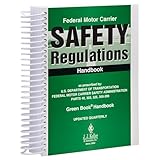
- FMCSR handbook gives drivers easy access to word-for-word Federal Motor Carrier Safety Regulations.
- Includes Parts 303, 325, 350-399, and 40 of the FMCSRs, with interpretations inserted immediately following the regulation
- Includes intermodal equipment requirements minimum periodic inspection standards, medical regulatory criteria, regulatory histories
- 8.5 x 11" English spiral bound handbook with 608 pages.
When did regulators approve the deals, and when did they close?
The FCC’s licensing review and the Justice Department’s antitrust review were separate actions. The FCC approved the Metronet transaction on July 9, 2025, and the UScellular transaction on July 11. Reuters reported on July 10 that the DOJ had approved the UScellular deal the prior day; that was not an FCC decision.
Approval was not the same as completion. T-Mobile later reported that the Metronet joint acquisition closed July 24, 2025, and that the UScellular Wireless Business acquisition closed August 1. Reuters’ July 11 report covered the FCC approvals; T-Mobile’s later Form 10-Q for the quarter ended June 30, 2026 reports the closing dates.
Rank #2

- Includes the latest HOS changes.
- FMCSR handbook gives drivers easy access to word-for-word Federal Motor Carrier Safety Regulations.
- Includes Parts 303, 325, 350-399, and 40 of the FMCSRs, with interpretations inserted immediately following the regulation
- Includes intermodal equipment requirements minimum periodic inspection standards, medical regulatory criteria, regulatory histories, and New Entrant Safety Audits regulation information
- 8.5 x 11" English perfect bound handbook with 608 pages.
The UScellular transaction’s announced and closing figures describe different stages and should not be treated as interchangeable. T-Mobile’s 2024 announcement valued the proposed acquisition at approximately $4.4 billion, including cash and up to $2.0 billion in debt assumption. Its 2026 filing reported $2.8 billion in cash transferred at closing and $1.7 billion in senior notes exchanged after closing.
Did T-Mobile end DEI to get the deals approved?
The timing and the public statements connect the policy commitment to the pending reviews: T-Mobile filed its letter in the deal proceedings, and the FCC approved Metronet the next day and UScellular two days later. Carr welcomed the change, calling it “another good step forward for equal opportunity, nondiscrimination and the public interest.” Reuters reported that Carr had pressed companies seeking mergers to end DEI programs.
Do these 3 things before closing this tab:
1Clear out junk files and repair common Windows errors2Scan for outdated or missing drivers - takes under a minute3Repair Windows errors before they cause bigger problemsRank #3

- Federal Motor Carrier Safety Administration (FMCSA) Manual: The essential resource for commercial motor vehicle (CMV) operators to ensure compliance with DOT regulations.
- Critical Topics: Explore comprehensive how-to information on compliance fundamentals, driver qualification and licensing, drug and alcohol testing, hours-of-service management, vehicle inspection and maintenance, audits and penalties, CSA program, and more.
- Simplified Compliance: Breaks down complex FMCSA regulations and compliance information into plain English, offering added context, best practices, background info, risk-management tips, a Q&A guide, and key insights for easier understanding.
- Specifications: Loose-leaf, 3-ring bound, 950+ pages.
- Published Every 6 Months: J. J. Keller ensures up-to-date compliance guidance with new releases every 6 months.
That sequence does not, by itself, prove the policy change was the sole or decisive reason for either approval. T-Mobile presented its action as a response to a changed federal legal and policy landscape. The public record described in contemporaneous reporting supports saying the commitment was part of the public-interest discussion; it does not justify turning “after” into a conclusive “because.”
Independent reader supportYour contribution helps us test, update, and keep practical guides available for everyone.Why did the FCC decision draw criticism?
FCC Commissioner Anna Gomez criticized T-Mobile’s change as a “cynical bid to win FCC regulatory approval” and said it made a mockery of the company’s stated commitment to fairness and amplifying underrepresented voices. That was Gomez’s judgment, not a finding by the commission. Carr’s favorable response and Gomez’s objection illustrate the dispute over whether a company’s policy commitments should factor into a public-interest review.
Rank #4
The precise legal reasoning and conditions of the FCC’s decisions belong to the orders themselves. The order language reported by Ars describes the FCC accepting T-Mobile’s commitment as firm and definite, but detailed claims about the commission’s legal analysis should be based on the full order text rather than a paraphrase. The broader question raised by the episode is how far a regulator’s public-interest review can reach into a company’s internal policies while evaluating a transaction.
Quick Recap
Product prices and availability are accurate as of the date/time indicated and are subject to change. Any price and availability information displayed on Amazon at the time of purchase will apply.




