Switchgrass can supply biomass for cellulosic ethanol, heat, electricity, gasification, and pyrolysis, but its potential is conditional—not a promise of easy farm income or widespread commercial use. Yields vary by region and management, while establishment, harvesting, transport, conversion, and access to a dependable buyer determine whether a crop can make economic sense.
What is switchgrass used for as an energy crop?
Switchgrass is a perennial warm-season grass native to North America. USDA Agricultural Research Service (ARS) describes it as a potential feedstock for cellulosic ethanol and for direct combustion to produce heat and electricity; it can also be processed through gasification or pyrolysis. The U.S. Department of Energy (DOE) describes ongoing work on harvesting and conversion.
| Conversion route | What the biomass can provide |
|---|---|
| Cellulosic ethanol | Liquid fuel made by converting plant material into sugars and then fuel. |
| Direct combustion | Heat or electricity from burning biomass. |
| Gasification | A gas-based intermediate that can be used for energy or further conversion. |
| Pyrolysis | Products made by heating biomass with limited oxygen. |
These are potential conversion pathways, not evidence that a plant or buyer is available in every region. A viable crop-to-energy chain also needs suitable harvesting and storage, transport to a conversion facility, and a buyer for the output.
How much switchgrass can you grow per acre?
There is no dependable single yield figure for every farm. USDA ARS guidance published in 2010 gave historical regional examples under production practices available at the time:
Outdated Drivers Are Slowing You Down
One free scan finds every outdated or missing driver and matches the right update for your exact hardware.Free scan · exact hardware matchWindows Errors? Fix Them Before They Spread
Repair common Windows errors and clear accumulated junk for a smoother, more stable PC - no reinstall needed.Free scan · no reinstall#1 Best Overall

- RESILIENT SWITCHGRASS SEED FOR DIVERSE ENVIRONMENTS: Our Switchgrass Seed (Panicum virgatum) is ideal for erosion control, livestock and deer food plot seed, and natural landscaping. This hardy, fast-growing grass seed adapts to various soils, making it an excellent choice for full sun grass seed needs in diverse landscapes.
- THRIVES IN EXTREME CONDITIONS: Known for drought and flood tolerance, Switchgrass Seed flourishes even in poor soils and full sun. This rapid grass seed for lawn requires minimal maintenance, making it perfect for those seeking fast-growing grass and heat tolerant grass seed for consistent coverage.
- EXCEPTIONAL FOR EROSION CONTROL & WILDLIFE HABITAT: With its deep roots, Switchgrass prevents erosion, stabilizing soil on slopes and riverbanks. This food plot seed is also perfect for wildlife habitat, attracting animals while providing dense cover. Ideal for deer food plots and grass cover solutions.
- FAST-GROWING, LOW-MAINTENANCE COVER: Reaching 3-5 feet in height, Switchgrass offers lush, dense cover with minimal upkeep. This deer food plot seed is ideal for pastures, large landscapes, and grass seeds for lawn full sun, adding both beauty and functionality to open areas.
- ORNAMENTAL VALUE & VERSATILE USE: Switchgrass can be used as as raw material for producing products such as paper, packaging materials and bioplastics. It’s a also a great choice among grass seed for shade and hard-to-grow areas, with golden fall foliage adding ornamental value to food plot screens and wildlife habitats in natural landscapes.
| Region in the 2010 guidance | Historical example | How to interpret it |
|---|---|---|
| Central Great Plains and Midwest | About 5 tons per acre | A historical regional example, not a current yield guarantee. |
| Much of the Southeast | About 10 tons per acre | A historical regional example, not a current yield guarantee. |
Actual output depends on locally adapted cultivars, soils, weather, establishment, weed control, fertility, harvest timing and frequency, and stand condition. The USDA figures should not be used as a farm budget forecast without local yield records and current agronomic advice.
A 2024 peer-reviewed study examined 331 genotypes at three common-garden sites and identified 84 as potentially suitable for commercial production in the southeastern United States. In the authors’ modeling, yield per area was the largest driver of minimum fuel selling price, ethanol yield per hectare, global-warming potential, and cumulative energy demand; carbohydrate content was a secondary influence. The finding highlights why improving yield and selecting material suited to a region matter, but it is not a guarantee that those genotypes are commercially available or perform similarly on every farm.
Can switchgrass grow on marginal land?
It may be considered for land less suited to some conventional crops, but “marginal” does not mean cost-free, unproductive, or environmentally neutral. Establishment still takes seed, field preparation, weed control, time, and suitable management. Land with low crop returns may also have other uses, and its prior condition affects the environmental consequences of converting it to an energy crop.
Rank #2
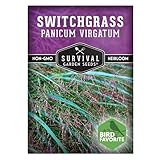
- NATIVE NORTH AMERICAN SWITCHGRASS BUNCHGRASS SEEDS: Premium non-GMO open-pollinated seeds for prairie restoration and wildlife habitat projects, with high germination rates, adapted to USDA zones 3-9
- POLLINATOR GARDEN PLANT: Host plant for skipper butterflies, essential cover for birds and beneficial insects; drought-tolerant perennial bunchgrass creates year-round habitat structure while preventing erosion with extensive 10-foot root system
- STUNNING 4-6-FOOT GOLDEN SEED PLUMES from August through winter; thrives in full sun with natural deer resistance; perfect for prairie restoration, erosion control, rain gardens, and wildlife habitat; self-seeds for expanding native grass displays
- DETAILED GROWING INFORMATION: Paper seed packets include clear planting instructions, germination tips, and seed-saving info, great for beginner or experienced gardeners growing vegetables, herbs, flowers, or native plants
- FAMILY OWNED USA SMALL BUSINESS – Heirloom non-GMO seeds from Survival Garden Seeds, a trusted American brand; always open-pollinated, untreated, and quality tested for garden success
USDA ARS guidance notes that cultivar choice and management influence establishment and productivity. Weed control during establishment is important; nitrogen needs depend on expected yield and harvest timing. The guidance describes stands as potentially long-lived and discusses renovation after about a decade, but neither longevity nor renovation timing is a universal prescription. Farm profitability and the availability of land also affect adoption.
What’s actually slowing this PC down?
Pick the symptom - the matching free tool is one click away.
- Check whether the cultivar is adapted to local climate and soil conditions.
- Account for establishment costs and the possibility of weak early stands.
- Plan weed control, fertility, harvest timing, and storage before planting.
- Compare the expected return with the land’s current use and other feasible crops.
- Confirm a buyer, conversion route, and delivery requirements before treating the crop as a commercial opportunity.
What does the evidence say about farm economics?
Switchgrass economics are driven by more than the amount harvested. A farm needs enough saleable biomass at an acceptable delivered cost, and the conversion facility needs biomass of the quality and consistency its process requires. Establishment, seed and cultivar choice, harvest equipment, storage, handling, transport distance, and market reliability all affect the financial case.
A USDA ARS publication from 2008 reported results from farm-scale trials conducted during 2000–2005. These are historical results for the studied fields and period, not current prices or a forecast for a new project:
Rank #3
- RESILIENT SWITCHGRASS SEED FOR DIVERSE ENVIRONMENTS: Our Switchgrass Seed (Panicum virgatum) is ideal for erosion control, livestock and deer food plot seed, and natural landscaping. This hardy, fast-growing grass seed adapts to various soils, making it an excellent choice for full sun grass seed needs in diverse landscapes.
- THRIVES IN EXTREME CONDITIONS: Known for drought and flood tolerance, Switchgrass Seed flourishes even in poor soils and full sun. This rapid grass seed for lawn requires minimal maintenance, making it perfect for those seeking fast-growing grass and heat tolerant grass seed for consistent coverage.
- EXCEPTIONAL FOR EROSION CONTROL & WILDLIFE HABITAT: With its deep roots, Switchgrass prevents erosion, stabilizing soil on slopes and riverbanks. This food plot seed is also perfect for wildlife habitat, attracting animals while providing dense cover. Ideal for deer food plots and grass cover solutions.
- FAST-GROWING, LOW-MAINTENANCE COVER: Reaching 3-5 feet in height, Switchgrass offers lush, dense cover with minimal upkeep. This deer food plot seed is ideal for pastures, large landscapes, and grass seeds for lawn full sun, adding both beauty and functionality to open areas.
- ORNAMENTAL VALUE & VERSATILE USE: Switchgrass can be used as as raw material for producing products such as paper, packaging materials and bioplastics. It’s a also a great choice among grass seed for shade and hard-to-grow areas, with golden fall foliage adding ornamental value to food plot screens and wildlife habitats in natural landscapes.
| Reported trial result | Scope and qualification |
|---|---|
| $50 per Mg at the farm gate | Historical farm-scale trial result reported by USDA ARS in 2008 for fields studied during 2000–2005; not a current market price. |
| $0.13 per liter ethanol equivalent | Historical result from the same reported study; not a current fuel cost or selling price. |
| 60 GJ per hectare per year net energy yield | Historical result from the same study and its trial conditions; not a sector-wide performance figure. |
| 540% more renewable energy produced than nonrenewable energy consumed | Energy balance reported for the studied production system and conditions; not a present-day industry-wide metric. |
The trial results show that an energy-positive production system was possible under those study conditions. They do not establish what a farmer can earn today: current input costs, yields, conversion performance, logistics, contracts, and local market terms would need to be assessed separately.
Why isn’t switchgrass widely used for biofuel?
The main challenge is coordinating an entire supply chain at a competitive cost. DOE identifies planting, harvesting, and transportation costs as barriers to making biofuel competitive with petroleum gasoline. A crop can be agronomically promising and still fail commercially if growers cannot finance establishment, harvesters or storage are unavailable, a plant is too far away, or buyers do not offer dependable terms.
The Tool Desk
Outbyte Driver Updater FREEFix the driver behind crashes, sound loss and screen glitchesFind Drivers →Outbyte PC Repair FREEClear out junk files and repair common Windows errorsFree Scan →USDA Economic Research Service (ERS) reported in 2017 that large-scale markets for dedicated energy crops did not then exist. That historical statement does not establish the status of every regional project in 2026, but it explains why potential acreage should not be confused with proven demand. Before planting for sale, a grower needs to understand who will purchase the biomass, what quality and delivery specifications apply, and whether a contract covers the risks and costs of production.
Rank #4
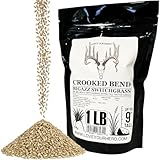
- Engineered for Wildlife Habitat: Provides dense cover ideal for deer bedding areas, travel corridors, access trails and natural screening.
- Exceptional Height & Coverage: Grows up to 9 feet tall, for creating effective natural visual barriers and thick privacy screens.
- Resilient & Low Maintenance: Thrives in diverse soil conditions with high drought tolerance, winter hardiness and minimal upkeep due to its deep fibrous root system.
- Efficient Seeding: 1 LB covers up to 1/8 (one-eighth) of an acre when broadcasting or up to 1/5 (one-fifth) of an acre when drilled.
- Trusted Quality: Pure uncoated switchgrass seeds ensure maximum germination potential and returning growth year after year.
For an individual farm, the practical question is not simply whether switchgrass can grow there. It is whether local yield, farm-gate terms, harvest and delivery costs, and market reliability leave a viable margin over the life of the stand.
Independent reader supportYour contribution helps us test, update, and keep practical guides available for everyone.Does switchgrass automatically benefit the environment?
No. Perennial cover can support soil and environmental benefits compared with annual cropping, but the outcome depends on the land’s prior use, yield, fertilizer and other inputs, harvest practices, conversion efficiency, and which energy source the resulting fuel or power displaces.
A USDA ARS review considered carbon sequestration, greenhouse gases, erosion, nutrient leaching, and runoff. It said the limited evidence then available suggested benefits compared with annual crop cultivation, while noting that similar benefits might come from other perennial crops and that more research was needed. A later landscape-modeling analysis found that land-use change and management intensity affected costs and greenhouse-gas footprints. These findings do not support a blanket claim that switchgrass is carbon neutral or improves every environmental measure.
Recommended Free Tools
Best Value
- RESILIENT SWITCHGRASS SEED FOR DIVERSE ENVIRONMENTS: Our Switchgrass Seed (Panicum virgatum) is ideal for erosion control, livestock and deer food plot seed, and natural landscaping. This hardy, fast-growing grass seed adapts to various soils, making it an excellent choice for full sun grass seed needs in diverse landscapes.
- THRIVES IN EXTREME CONDITIONS: Known for drought and flood tolerance, Switchgrass Seed flourishes even in poor soils and full sun. This rapid grass seed for lawn requires minimal maintenance, making it perfect for those seeking fast-growing grass and heat tolerant grass seed for consistent coverage.
- EXCEPTIONAL FOR EROSION CONTROL & WILDLIFE HABITAT: With its deep roots, Switchgrass prevents erosion, stabilizing soil on slopes and riverbanks. This food plot seed is also perfect for wildlife habitat, attracting animals while providing dense cover. Ideal for deer food plots and grass cover solutions.
- FAST-GROWING, LOW-MAINTENANCE COVER: Reaching 3-5 feet in height, Switchgrass offers lush, dense cover with minimal upkeep. This deer food plot seed is ideal for pastures, large landscapes, and grass seeds for lawn full sun, adding both beauty and functionality to open areas.
- ORNAMENTAL VALUE & VERSATILE USE: Switchgrass can be used as as raw material for producing products such as paper, packaging materials and bioplastics. It’s a also a great choice among grass seed for shade and hard-to-grow areas, with golden fall foliage adding ornamental value to food plot screens and wildlife habitats in natural landscapes.
What would large-scale switchgrass production mean for land use?
A USDA ERS analysis published in 2017 modeled a scenario in which switchgrass generated 250 terawatt-hours of electricity annually by 2030—an amount the report compared with then-current U.S. hydroelectric generation. The modeled scenario required about 29 million acres, or 8 percent of U.S. cropland, and projected regional shifts from other crops.
That acreage was a scenario estimate, not observed planting, a current forecast, or proof that buyers could absorb the crop. It illustrates a trade-off: scaling a dedicated energy crop can require substantial land and change what is grown in different regions. The relevant comparison includes the land’s existing use and the energy displaced, not just the biomass produced.
How should a farmer assess a switchgrass opportunity?
Evaluate it as a long-term supply-and-market decision rather than assuming that seed availability or a favorable yield estimate establishes a business case.
- Verify local suitability. Seek yield and management information for the farm’s soils and climate, and confirm that a locally adapted cultivar is available.
- Build a full establishment and operating budget. Include seed, field preparation, weed control, fertility, harvesting, storage, handling, transport, and the timing of costs and revenues.
- Confirm the buyer and conversion pathway. Get current information on whether a regional facility accepts switchgrass, its quality and delivery specifications, and whether an offtake agreement is available.
- Stress-test the margin. Check how lower yields, higher input or transport costs, harvest delays, and uncertain demand would affect returns over the stand’s useful life.
- Compare land-use and environmental trade-offs. Consider what the field produces now, what might replace it, and how management and conversion affect lifecycle impacts.
The evidence supports switchgrass as a studied, technically versatile biomass crop with potential in suitable regions. It does not establish a dependable nationwide market or a universal farm-level return; those depend on local agronomy and a functioning buyer-to-conversion chain.
Quick Recap
Product prices and availability are accurate as of the date/time indicated and are subject to change. Any price and availability information displayed on Amazon at the time of purchase will apply.




