Quick wins for a faster PC:
Scan for outdated or missing drivers - takes under a minuteDriver Scan →Clear out junk files and repair common Windows errorsFree Scan →Fix the driver behind crashes, sound loss and screen glitchesFind Drivers →Small-town opposition to AI data centers is increasingly about household finances, not just technology. Residents in Georgia, Michigan, Ohio, Pennsylvania, Wisconsin, New York, Texas and elsewhere are asking who will pay for new substations, roads, water systems, emergency services and tax incentives—and whether the promised economic benefits will reach ordinary households.
The concern is gaining national support. A Gallup survey conducted March 2–18, 2026, found that 71% of Americans opposed building AI data centers in their local area, including 48% who strongly opposed them. Opposition was particularly high in the Midwest, at 76%, and the South, at 75%.
Why data centers have become a personal-finance issue
A hyperscale data center is not simply another commercial building. A large campus can require hundreds or thousands of acres, high-voltage connections, substations, backup generators, cooling equipment, access roads and expanded water or sewer capacity.
That investment can produce substantial tax revenue and construction activity. It can also create costs that are spread across a wider group than the developer itself. Depending on local agreements and utility rules, those costs may appear in:
The Tool Desk
Outbyte Driver Updater FREEFix the driver behind crashes, sound loss and screen glitchesFind Drivers →Outbyte PC Repair FREERepair Windows errors before they cause bigger problemsFix Now →#1 Best Overall

- [2026 Pro Max Full Body Cooling with True AC System]: Experience powerful cooling with AICE LITE MAX neck air conditioner, built with a true micro AC system instead of ordinary airflow. Unlike traditional neck fans that blow cold air, this personal neck air conditioner combines strong airflow with advanced cooling plates for real temperature reduction. The Ice Triangle Circulation System boosts airflow by 80%, sending cold air above and below to cool your neck and upper body. Ideal for extreme heat, outdoor work, travel, and summer activities.
- [Drop 39°F Instant Cooling Even in 105°F Scorching Heat]: Beat extreme summer heat with a powerful personal air conditioner wearable. Powered by AICE MAX 5.0 cooling technology, this neck ac air conditioner delivers an instant temperature drop of up to 39°F in one second. The industry-leading 15,020 mm² cooling plate coverage targets key heat zones around the neck for faster, deeper cooling. Whether commuting, hiking, working outdoors, attending concerts, or traveling in hot weather, this personal cooling device keeps you cool and comfortable.
- [All-Day Cooling with Largest Battery & Pass-through Charging]: Stay cool longer with the upgraded AI-powered battery system. This portable neck fan rechargeable provides up to 30 hours of cooling on a single charge, while 15W fast charging restores power in about 2 hours. Pair it with a power bank for continuous cooling anywhere. Whether you're commuting, traveling, or working outdoors, this portable neck fan and personal fan neck ensures reliable cooling all day long.
- [AI Auto Adjustment for Smart Cooling]: Enjoy the future of personal air conditioners with our upgraded AI cooling system. This smart neck ac automatically adjusts based on ambient sensors and your body’s needs. Featuring the world’s first stepless sliding control, you can customize your comfort with 0-100 precise levels. It’s the smartest personal ac wearable that perfectly balances power and efficiency, outperforming any standard cooling neck fan or artic air device.
- [Lightweight, Quiet & Comfortable Wearable Design]: Designed for all-day wear, this wearable fan is light as air and whisper-quiet. The ergonomic cooling fan neck architecture ensures a perfect fit without pressure, while the bladeless neck cooler design prevents hair tangling. As the best personal fan neck for work or relaxation, it provides seamless cooling. Whether you need a personal fan or a professional neck fan with cooling plate, AICE LITE MAX is the safest choice for every user.
- electricity rates;
- local property taxes;
- water and sewer charges;
- road and infrastructure spending;
- fire and emergency-service budgets;
- home values and housing demand; and
- public spending on environmental monitoring or legal disputes.
The financial outcome is not automatic. A data center may pay for some infrastructure, receive tax abatements, or sign a special electricity contract. Another project may leave residents exposed to more of the cost. The relevant documents—not the project’s headline investment figure—determine the answer.
What residents are objecting to
Electricity demand and possible rate pressure
The latest Lawrence Berkeley National Laboratory estimate, published in June 2026, projects that U.S. data centers could use 11.8% of the nation’s electricity by 2030. Its reference case is 649 terawatt-hours, with a modeled range of 521 to 843 terawatt-hours.
AI facilities are unusually concentrated electricity loads. A local utility may need to build or expand substations, transmission lines, generation capacity and backup systems before the facility begins operating. Whether residents pay for those investments depends on the utility’s tariff, regulatory approvals, interconnection agreement and any special rate negotiated with the customer.
That is why two statements often made in this debate are both too broad:
What’s actually slowing this PC down?
Pick the symptom - the matching free tool is one click away.
- “The data center will pay for the grid.” It may pay for some direct interconnection work, but that does not prove it will cover every systemwide upgrade.
- “The data center will raise everyone’s bills.” That is possible in some arrangements, but it must be demonstrated through utility filings and cost-allocation rules.
For a household, the practical questions are whether the utility has requested a rate increase, whether the project receives a discounted or special rate, and who is responsible if the facility is delayed, downsized or never completed.
Water costs depend on the cooling system
Water use is another legitimate concern, but a single universal “gallons per day” number is not reliable. Consumption depends on the cooling design, climate, operating load, humidity, efficiency and water source.
Rank #2
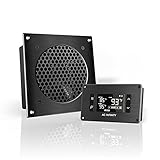
- An ultra quiet UL-certified fan system designed for cooling cabinets that requires minimal noise.
- Features an on board processor that provides a digital read-out of the cabinets temperatures.
- Programming includes thermostat control, fan speed control, and SMART energy saving mode.
- Dimensions: 6.3 x 6.3 x 1.3 in. | Airflow: 52 CFM | Noise: 18 dBA | Bearings: Dual Ball
Cooling towers can consume water through evaporation and blowdown. Air-cooled systems may use little or no water onsite, but they can require more electricity. A proposal should distinguish:
| Term | What it means | Why it matters financially |
|---|---|---|
| Withdrawal | Water taken from a river, aquifer or municipal system | Can affect utility capacity, drought planning and infrastructure costs |
| Consumption | Water not returned to the source, often because it evaporates | More directly affects long-term supply availability |
| Discharge | Water returned after treatment or use | May require treatment capacity, permits and monitoring |
| Indirect water use | Water used by power plants supplying electricity | Can make the project’s total water footprint larger than onsite figures |
The U.S. Department of Energy says cooling-water use varies with heat load, cooling-tower efficiency, climate and whether outside-air or water-side economizing is available. Residents should request the project’s annual and peak withdrawal and consumption estimates, not just a marketing claim about an efficient facility.
Tax revenue is not the same as money in a household’s pocket
Developers commonly emphasize billions of dollars in capital investment and large annual economic impacts. Those figures may include construction spending, purchases from suppliers, projected payroll, indirect activity and future tax payments. They do not necessarily represent the amount that will enter a town or county budget.
In Bolingbroke, Georgia, supporters of a proposed 900-acre, 1.1-gigawatt technology center cited $5.8 billion in economic impact and $60 million annually for Monroe County. The project had no named tenants when the planning board voted against the required rezoning in July 2025, and it was not expected to be fully operational until 2034. The planning-board vote also did not end the proposal; the county commission retained final authority.
A financially useful analysis separates the following:
- Construction jobs: temporary positions during site preparation and building.
- Permanent direct jobs: employees working at the facility after completion.
- Indirect jobs: contractor, supplier and service work attributable to the facility.
- Gross tax value: the theoretical tax base before abatements and exemptions.
- Net public benefit: tax revenue minus roads, utilities, emergency services, incentives and monitoring.
Gallup found that two-thirds of people who favored local data centers cited economic benefits. But 55% specifically mentioned jobs and just 13% mentioned tax revenue, suggesting that supporters and opponents may be evaluating different financial outcomes.
Do these 3 things before closing this tab:
1Fix the driver behind crashes, sound loss and screen glitches2Repair Windows errors before they cause bigger problems3Scan for outdated or missing drivers - takes under a minuteRank #3
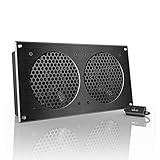
- An ultra-quiet UL-certified fan system designed for cooling cabinets that requires minimal noise.
- Features a multi-speed controller to set the fan’s speed to optimal noise and airflow levels.
- Contains a CNC machined aluminum frame with a modern brushed black finish.
- Powered by wall outlet or USB port, included Turbo Adapter increases performance by 25%.
- Dimensions: 11.69 x 6.3 x 1.3 in. | Total Airflow: 104 CFM | Total Noise: 19 dBA | Bearings: Dual Ball
What is happening in small towns
Local governments are using several different tools rather than following one national pattern.
| Place | Local response | Financial issue at stake |
|---|---|---|
| Louisa County, Virginia | Amazon withdrew a proposed 7.2-million-square-foot campus on 1,370 acres after public backlash. | Residents cited grid strain, traffic, noise and property values; the company cited $115 million in potential annual county revenue. |
| Grafton, Ohio | Adopted a five-year moratorium in May 2026. | Time to decide whether the village’s infrastructure and identity can support the development. |
| New Denmark, Wisconsin | Adopted a one-year moratorium in June 2026, with a possible six-month extension. | Review of water, electricity, infrastructure, public services, noise and farmland compatibility. |
| Manlius, New York | Approved a unanimous one-year moratorium in July 2026. | Study of utility bills, outages, water, environmental impacts, noise and zoning. |
| East Vincent Township, Pennsylvania | Unanimously rejected a proposed 1.9-million-square-foot facility in May 2026. | Concerns about the site near homes, the Schuylkill River and a veterans facility. |
| Saline Township, Michigan | Continues project oversight involving litigation, construction traffic, stormwater, wells, lighting and noise. | Monitoring obligations, road use, emergency services and compliance costs after approval. |
Other communities are choosing tighter review instead of an outright pause. In Louisa County, earlier data centers were permitted by right, while later zoning changes required a conditional-use permit. That change gave residents a formal opportunity to question the project before approval.
How a proposed facility could affect your finances
The effect on an individual household depends heavily on location and the project’s contracts. These are the main channels to examine:
1. Utility bills
Look for public utility filings covering interconnection costs, generation and transmission upgrades, special customer rates and cost recovery. A large customer may pay directly for a dedicated substation while broader upgrades are assigned differently.
2. Property values
A facility may increase values near new jobs and services, but homes beside generators, substations, heavy truck routes or industrial lighting may face a different market reaction. Do not assume either a universal windfall or an automatic decline. Ask for the site plan, noise study, lighting plan, truck routes and distance from residential parcels.
3. Local taxes
Review the tax-abatement schedule, payment-in-lieu-of-tax agreement, exemption period and treatment of school taxes. Compare the promised revenue with the cost of roads, fire protection, water, sewer, inspections and legal work.
Rank #4
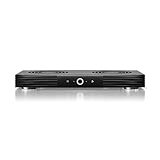
- A quiet fan system designed for cooling routers, modems, game consoles, and other AV components.
- Protects components from overheating, performance issues, and shortened lifespans.
- Programming features two thermal trigger modes and four speed control options.
- Contains two dual-ball bearing fans with PWM-controlled motors to minimize noise.
- Dimensions: 11.6 x 6.3 x 1.5 in. | Exhaust: Top | Airflow: 140 CFM | Noise: 19 dBA
4. Water and sewer charges
Find out whether the facility will use municipal water, a private well, reclaimed water or another source. Check connection fees, capacity charges, wastewater rates and drought restrictions. A new customer can help spread fixed costs, but it can also require expensive expansion.
5. Employment and local spending
Ask how many permanent employees will work onsite, how many will be on each shift, what the payroll will be, and whether the positions require specialized workers recruited from elsewhere. A large construction workforce does not guarantee a large permanent workforce.
Free tools Windows power users keep installed
One-click scans. No signup required.
A practical checklist for evaluating a local proposal
- Identify the legal status. Determine whether the project is merely rumored, filed, approved, under construction, withdrawn, denied or being litigated.
- Obtain the zoning file. Request the full application, site plan, zoning amendment, conditional-use application or overlay-district text.
- Read the utility documents. Search the state utility commission and local utility websites for interconnection filings, special contracts and rate cases.
- Separate peak from annual demand. A project’s maximum megawatt request and its expected average load answer different questions.
- Request water details. Ask for cooling technology, annual and peak withdrawal, annual consumption, discharge, source and drought-contingency plans.
- Price the public obligations. Look for road improvements, new water lines, substations, fire equipment, staffing, tax incentives and performance guarantees.
- Check the job claim. Require separate figures for construction, permanent direct, indirect and local jobs.
- Review operating impacts. Examine generator permits, fuel storage, noise limits, lighting, truck traffic, stormwater, wetlands and well monitoring.
- Attend the right meeting. A planning-board recommendation may not be the final decision. Find out whether the county commission, city council, zoning board or utility regulator has authority.
- Track deadlines and appeals. Moratoriums, public-comment periods, conditional-use hearings and court challenges can change the project’s timeline.
Residents should also be cautious with shell-company names and nondisclosure agreements. A project may be publicly described as an “advanced manufacturing” or “technology” campus before its final tenant, power requirement or cooling plan is disclosed.
Independent reader supportYour contribution helps us test, update, and keep practical guides available for everyone.Moratoriums can buy time, but they are not a financial answer by themselves
A pause gives a town time to update its zoning code and gather technical information. New Denmark cited water, electricity, public infrastructure, public services, noise, visual impacts, health and safety, and farmland preservation when it adopted its moratorium. Manlius is using its one-year pause while rewriting its zoning code and updating its comprehensive plan.
But a moratorium does not decide who ultimately pays for infrastructure or whether a project would be acceptable under permanent rules. It can also lead to legal challenges, especially where a developer argues that local officials improperly excluded a permitted use or interfered with vested rights.
Saline Township illustrates the continuing obligations after approval. Its public project page documents litigation, a consent judgment, construction traffic, stormwater and dewatering activity, generator information, well monitoring, noise and lighting complaints, and truck-routing violations. It also identifies project obligations involving farmland preservation, community investment and the fire department.
Best Value

- An ultra-quiet UL-certified fan system designed for cooling cabinets that requires minimal noise.
- Automated programming that self-adjusts cooling power in response to changing temperatures.
- Features a LCD display with an alarm system, display lock, six fan speeds, two buffer options, and memory.
- Fan and controller contain CNC machined aluminum frames with a modern brushed black finish.
- Dimensions: 17.28 x 6.3 x 1.3 in. | Airflow: 156 CFM | Noise: 21 dBA | Bearings: Dual Ball
The questions local officials should answer before approving a project
- What is the facility’s maximum and expected annual electricity demand?
- Who pays for each substation, transmission upgrade and road improvement?
- Will the customer receive a special electricity rate, tax exemption or property-tax abatement?
- What are the cooling system’s annual and peak water withdrawal and consumption figures?
- What happens during drought, grid emergencies or a prolonged outage?
- How many permanent local jobs will exist after construction?
- What guarantees secure promised tax payments and infrastructure contributions?
- Who pays if the project is abandoned after public improvements are built?
- What limits apply to noise, lighting, generator testing and truck traffic?
- Will the complete agreements and utility filings be public before the vote?
Columbus, Georgia, shows why transparency has become a central part of the conflict. Residents rallied in July 2026 after the city council voted 6–2 to create a technology overlay district. Critics said officials had moved forward despite petitions and packed meetings and questioned the effects on water, land, neighborhoods, utility costs, noise and permanent employment.
FAQ
Can a data center raise my electricity bill?
It can, but there is no universal result. The answer depends on the utility’s rate structure, interconnection agreement, special contract, regulatory approvals and who pays for generation, transmission and substation upgrades. Check state utility-commission filings rather than relying on claims from either supporters or opponents.
Do AI data centers always use huge amounts of water?
No. Water use varies by cooling technology, climate, operating load and efficiency. Cooling towers generally consume water through evaporation and blowdown, while air-cooled systems may use little onsite water but require more electricity. Ask for separate withdrawal, consumption and discharge figures.
Will a data center lower local taxes?
Not automatically. The result depends on tax abatements, exemptions, payment-in-lieu agreements, school-tax treatment and the public cost of roads, utilities, fire protection and other services. A project’s gross investment is not the same as net revenue for local governments.
PC Slower Than It Used to Be?
A free scan shows the junk files, broken settings and background clutter dragging Windows down - then fixes them in one click.Free scan · Windows 10 & 11Crashes, No Sound, or Screen Glitches?
Random freezes, missing sound and display glitches usually trace back to one bad driver. Find and replace yours safely.Free scan · under a minuteDoes a zoning-board rejection permanently stop a data center?
Not necessarily. Another government body may have final authority, the developer may revise the plan, or the dispute may go to court. For example, the Bolingbroke planning-board vote in 2025 still left the Monroe County Commission with authority over the proposal.
The Bottom Line
Small-town resistance to AI data centers is a financial debate about who receives the benefits and who carries the risk. A project can bring construction work, tax revenue and infrastructure investment, but those benefits should be measured against rate impacts, tax incentives, water capacity, public-service costs, property effects and long-term obligations.
Before supporting or opposing a proposal, follow the money: read the zoning application, utility filings, tax agreement, cooling plan, job estimates and infrastructure commitments. The most important number is rarely the advertised size of the investment. It is the net cost—or net benefit—to residents after every agreement and public expense is included.
Quick Recap
Product prices and availability are accurate as of the date/time indicated and are subject to change. Any price and availability information displayed on Amazon at the time of purchase will apply.




