SiFive announced a $400 million Series G financing on April 9, 2026, saying the round valued the company at $3.65 billion. The financing signals investor interest in customizable RISC-V processor IP for data centers—but it does not show that agentic AI has already caused a measured CPU shortage or that SiFive has won production business from x86 or Arm suppliers.
What SiFive announced
SiFive said its oversubscribed Series G was led by Atreides Management, with Apollo Global Management, NVIDIA, Point72 Turion and T. Rowe Price Investment Management, Inc. among the other participants. Prosperity7 Ventures and Sutter Hill Ventures returned as investors. The financing and valuation figures, as well as the participant list, are company-reported in SiFive’s April 9, 2026 announcement.
The headline is best read as a bet on a possible shift in data-center computing: as AI systems add more coordination and orchestration around accelerators, CPUs may matter more for those tasks. The round gives SiFive capital to pursue that opportunity; it is not evidence by itself that the opportunity has reached a particular size or that its future products will outperform competing systems.
What SiFive sells—and what it does not
SiFive sells processor and system intellectual property (IP) based on the RISC-V instruction-set architecture. Customers can license that IP and incorporate it into chips and systems they design. SiFive describes its revenue model as upfront licensing fees and royalties, and says it does not manufacture semiconductor chips itself. In this context, “SiFive CPU” generally means licensed processor IP in a customer’s chip, not a retail desktop or server processor. See SiFive’s description of its business model.
#1 Best Overall

- Flexible MCU Board: Incorporate the ESP32-C3 32-bit RISC-V chip, operating up to 160 MHz, mounted multiple development ports,
- Developer Friendly: Compatible with Arduino IDE, MicroPython, CircuitPython, PlatformIO, ESP IDF, Zephyr, Matter, ESPNow, Meshtastic, WLED, ESPHome, Home Assistant, Ubidots
- Outstanding RF performance: Complete Wi-Fi functions and Bluetooth Low Energy, while supporting communication over 100m with anFL antenna
- Elaborate Power Design: 4 working modes as low as 44 μA in deep sleep mode, while supporting lithium battery charge management
- Thumb-sized Design: 21 x 17.5mm, Seeed Studio XIAO series classic form factor
RISC-V is an open standard, but that does not mean every RISC-V processor implementation is open or free to use. Companies can license verified processor designs built on the standard; SiFive’s designs are proprietary IP. The distinction is useful for understanding the pitch: customers can choose an open ISA while licensing an implementation rather than building a processor core from scratch. RISC-V International’s 2025 annual report describes the standard’s global governance and the role of pre-verified IP in lowering verification barriers.
Why SiFive thinks agentic AI could raise CPU demand
AI accelerators perform much of the specialized numerical work in modern AI systems, but they rely on surrounding systems to coordinate tasks, manage data and run general-purpose software. SiFive argues that agentic AI—systems that plan and execute multiple steps—could increase this branchy, orchestration-heavy work. It says CPUs with suitable performance and power efficiency, and designs tailored to a customer’s workload, could become more important as data centers face power constraints.
Rank #2
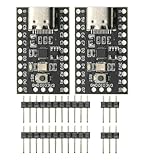
- CH32V003 Development Minimum System Board for Nano RISC-V CH32V003F4U6 Chip TYPE-C USB 22Pin
- on-board 24MHz Crystal oscillator
- Power by TYPE-C USB
That is the company’s thesis, not an independently measured forecast. SiFive Chairman and CEO Patrick Little said: “Hyperscale customers have made it very clear that it is time to accelerate the availability of open standard alternatives for the datacenter. Their consistent ask is for customizable CPU solutions in IP form, that will enable them to meaningfully differentiate their datacenter compute solutions,” in the company’s financing announcement. The passage reports SiFive’s characterization of customer feedback; it names no customers and does not establish industry-wide demand.
SiFive co-founder and chief technology officer Yunsup Lee has called the potential “agentic CPU market” a $100 billion opportunity. That figure is Lee’s assertion in a SiFive blog post, not a market estimate independently validated by the sources cited here.
The Tool Desk
Outbyte PC Repair FREEClear out junk files and repair common Windows errorsFree Scan →Outbyte Driver Updater FREEFix the driver behind crashes, sound loss and screen glitchesFind Drivers →Rank #3

- The ESP32-C3 SUPERMINI is positioned as a high-performance, low-power, cost-effective IoT mini development board, suitable for low-power IoT applications and wireless wearable applications
- It is equipped with a rich set of interfaces, including 11 digital I/Os that can be used as PWM pins and 4 analog I/Os that can be used as ADC pins.
- It supports four serial interfaces, including UART, I2C, and SPI.
- The ESP32-C3 features a 32-bit RISC-V CPU, including an FPU (Floating Point Unit) capable of 32-bit single-precision
- Package: 2PCS ESP32-C3 MINI Development Board ESP32 SuperMini ESP32 C3 WiFi Module
Where SiFive plans to put the money
SiFive says the new funding will accelerate its high-performance data-center roadmap and expand engineering. Its stated priorities are:
- Processor and system IP: research and development for scalar, vector and matrix RISC-V CPUs, accelerators and system IP.
- Software: ecosystem work building on ports for CUDA, Red Hat Enterprise Linux and Ubuntu.
- Customer enablement: collaboration around NVIDIA NVLink Fusion.
These are announced investment areas, not a claim that every planned product or integration is complete or shipping. SiFive’s announcement frames them as work to advance its roadmap and support customer designs.
Rank #4

- ESP32-C6 WiFi 6 microcontroller development board adopts ESP32-C6-WROOM-1-N8 module, which is equipped with RISC-V 32-bit single-core processor, up to 160MHz main frequency, built-in 8MB Flash
- Integrates WiFi 6, Bluetooth 5 and and IEEE 802.15.4 (Zigbee 3.0 and Thread) wireless communication, with superior RF performance
- Integrates rich peripherals including SPI, UART, I2C, I2S, LED PWM, SDIO and other interfaces, compatible with the pinout of ESP32-C6-DevKitC-1-N8 development board, more convenient to use and expand a variety of peripheral modules
- Onboard CH343 and CH334 USB HUB chips, supports USB and UART development at the same time via a USB-C port
- Comes with online examples and tutorials for ESP-IDF development environment
What the software and platform milestones establish
SiFive has described several ecosystem efforts, but they need to be separated from evidence of production deployment.
Development hardware and software ports
In an April 2026 blog, SiFive described the HiFive Premier P550 as a development board based on its Gen 1 Performance CPU IP. The company said NVIDIA committed to port CUDA to SiFive/RISC-V, Red Hat ported Red Hat Enterprise Linux 10, and Canonical ported and optimized Ubuntu for out-of-box support. These are ecosystem milestones around development hardware, not proof that the P550 is a data-center server or that a finished agentic-AI system is commercially available. See SiFive’s account of its software and platform work.
What’s actually slowing this PC down?
Pick the symptom - the matching free tool is one click away.
Best Value

- Ample PSRAM Storage – The development board offers 8MB PSRAM, providing substantial extra memory for handling more complex tasks, large data buffers, and advanced processing.
- Enhanced Multi-Tasking Capability – With the additional 8MB PSRAM, the ESP32-C5-WIFI6-KIT can efficiently manage multiple protocol stacks simultaneously, ensuring smooth operation in multi-tasking IoT environments.
- Support for Medium-Load Applications – The 8MB PSRAM allows the ESP32-C5 to handle medium-load applications more effectively, making it ideal for scenarios requiring real-time data processing or continuous communication.
- Seamless Performance – The increased memory improves the overall performance and responsiveness of the device, particularly when running applications with larger memory footprints or more demanding computations.
- Future-Proof for Complex Projects – With 8MB of PSRAM, developers are better equipped to build scalable, high-performance solutions that support both current and future IoT use cases, offering flexibility for future-proofing designs.
BigSky and ROCm
SiFive’s press archive describes BigSky as a data-center development platform for hands-on software porting, workload tuning and validation with hyperscaler customers and ecosystem partners. In a September 15, 2026 item, SiFive said it and AMD demonstrated AMD ROCm 10.0 running on BigSky. That is evidence of a software demonstration on a development platform; the archive does not establish general availability or deployment at scale. The announcement appears in SiFive’s press archive.
NVLink Fusion
A January 15, 2026 announcement in the same press archive describes NVLink Fusion connectivity between SiFive compute platforms, NVIDIA GPUs and other accelerators. It is an infrastructure-enablement announcement, not evidence on its own of a shipping customer system.
Independent reader supportYour contribution helps us test, update, and keep practical guides available for everyone.How to judge the CPU competition
The financing does not establish a performance winner. The available announcements do not provide like-for-like benchmarks comparing SiFive-based systems with x86 or Arm systems, nor do they quantify production deployments of SiFive data-center CPUs. A useful comparison needs evidence across several dimensions:
- Workload performance: results on the actual orchestration, inference-support or general-purpose tasks a buyer needs—not architecture claims alone.
- Power and efficiency: measured energy use under comparable workloads and system conditions.
- Software compatibility: operating-system, compiler, library and application support for the target deployment.
- Accelerator integration: how well the CPU platform connects to GPUs and other accelerators in a complete system.
- Customization and cost: whether licensed IP lets a customer differentiate its chip enough to justify design, verification and support work.
- Deployment evidence: customer systems in production, with scale and availability clearly stated.
SiFive said in its April 2026 blog that it had more than 500 design wins and that customers had shipped more than 10 billion SiFive-based cores. It also reported record 2025 revenue growth of more than 50% year over year. Those are company-reported indicators of business activity, but the cited blog does not supply audited revenue amounts or show how many design wins or shipped cores relate to data centers. They should not be treated as proof of a data-center CPU market share or a performance lead. See SiFive’s April 2026 blog.
Quick wins for a faster PC:
Fix the driver behind crashes, sound loss and screen glitchesFind Drivers →Repair Windows errors before they cause bigger problemsFix Now →What the round means for readers
For investors and technology buyers, the financing is a signal that SiFive and its backers see room for a customizable, RISC-V-based alternative in future data-center designs. The company is using the capital to pursue IP, software and customer-enablement work. Whether that strategy turns into widely deployed systems depends on product execution, software maturity, customer adoption and results against competing architectures—evidence the financing announcement does not yet provide.
Quick Recap
Product prices and availability are accurate as of the date/time indicated and are subject to change. Any price and availability information displayed on Amazon at the time of purchase will apply.




