Usually, neither should be your first move. A cash advance can provide cash if your card permits it, but it commonly carries a fee and starts accruing interest immediately. Trying to charge more than your available credit is not dependable: even if you opt in to over-limit transactions, the issuer can still decline the purchase. First call the issuer, confirm the account-specific terms, and ask whether it can offer a payment arrangement for the emergency.
This guidance concerns covered U.S. consumer credit-card accounts. Business cards and accounts outside the United States may be subject to different rules; check your agreement and applicable law.
As an Amazon Associate I earn from qualifying purchases.
Cash advance or over-limit purchase: what is the difference?
A cash advance is a loan drawn against your credit-card line, typically by withdrawing cash at an ATM. It is not treated like an ordinary purchase. Your card may have a separate cash-advance limit below its overall credit limit, so available purchase credit does not necessarily tell you how much cash you can withdraw. The issuer may also have account-specific requirements for how advances can be taken; check with the issuer if you do not know how your account works. The CFPB explains cash advances and their limits, fees, and interest.
Recommended Free Tools
An over-limit transaction is a purchase that would take the account balance above its credit limit or available credit. An issuer may approve it, but approval is not guaranteed. An over-limit election gives the issuer permission to consider paying certain transactions; it does not require the issuer to approve a particular charge. Regulation Z’s over-the-limit rule preserves the issuer’s discretion to decline.
#1 Best Overall
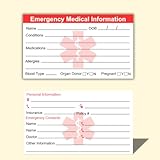
- ✅EMERGENCY MEDICAL INFORMATION: Wallet-sized ID cards designed to store critical health information including allergies, medications, medical conditions, and emergency contacts for first responders
- ✅CONVENIENT PACK OF 5: Includes 5 contact cards so you can keep one in your wallet, purse, phone case, car, and other locations for maximum accessibility during emergencies
- ✅COMPACT WALLET SIZE: Credit card dimensions fit perfectly in standard wallet slots, phone cases, and pockets without adding bulk or taking up extra space
- ✅DURABLE CARD STOCK CONSTRUCTION: Made from sturdy card stock material that resists wear and tear from daily carrying while keeping information legible and protected
- ✅MULTIPLE PLACEMENT OPTIONS: Small enough to store in wallets, purses, handbags, phone cases, pockets, or glove compartments ensuring your medical information is always within reach
These options also solve different problems. An advance provides cash, subject to the card’s cash-advance rules and available cash limit. An attempted over-limit transaction is a request to put a purchase on the card beyond available credit; it does not create cash in your hands. If the emergency payment must be made in cash, an over-limit purchase is not a substitute. If the provider accepts a card purchase, ask about authorization rather than assuming that an unused portion of your overall limit—or an opt-in—will make the charge go through.
| Decision factor | Cash advance | Attempted over-limit purchase |
|---|---|---|
| What happens | You withdraw cash against the card’s credit line, if the issuer permits it and you have cash-advance availability. | You ask the issuer to authorize a purchase that would exceed available credit. |
| Will it work? | Depends on the card’s cash-advance terms, available cash limit, and withdrawal method. | Not certain, even if you opted in; the issuer can still decline. |
| Potential cost | A cash-advance fee, possible ATM fee, and interest commonly accruing immediately at a separate APR. | A possible over-limit fee when permitted by law and account terms; the amount charged remains owed and may accrue interest. |
| What to confirm | Cash-advance amount available, transaction fee, cash-advance APR, when interest starts, and ATM operator fee. | Current balance and available credit, whether the opt-in is active, disclosed fee, and issuer authorization decision. |
Actual pricing and authorization are specific to the account. This comparison cannot predict whether a transaction will be approved or which choice will cost less. Do not compare only the possibility of an over-limit fee with an advance fee: the advance also commonly carries immediate interest, while the charge that goes over the line remains debt that may accrue interest. The amount borrowed or charged, the applicable rates and fees, and how long the balance remains unpaid all matter.
Why a cash advance can cost more than a purchase
Fees and interest
Cash advances commonly have a fee charged by the card issuer, which may be a flat amount or a percentage of the withdrawal. The ATM operator may charge an additional fee. The card’s cash-advance APR is often higher than its purchase APR, but the exact rate and fee depend on your account. Look at the cash-advance terms in your card agreement or statement and ask the issuer for the current figures.
Outdated Drivers Are Slowing You Down
One free scan finds every outdated or missing driver and matches the right update for your exact hardware.Free scan · exact hardware matchWindows Errors? Fix Them Before They Spread
Repair common Windows errors and clear accumulated junk for a smoother, more stable PC - no reinstall needed.Free scan · no reinstallInterest generally starts accruing on the withdrawal date. Ordinary purchases may qualify for a grace period, but cash advances commonly do not. The CFPB puts it plainly: “Unlike other purchases that have a grace period before they start to accrue interest, interest on a cash advance starts as soon as you withdraw your money.” The longer you carry the balance, the more the borrowing can cost. See the CFPB’s cash-advance guidance.
Rank #2

- Lightweight survival card brings together a variety of fishing and hunting tools, clever combination of multiple cards.
- Average only 0.56 oz per piece and no bigger than the size of a credit card, fits right in your wallet.
- Made of 304 stainless steel, hardened and corrosion resistant, contains a variety of emergency tools.
- WIDELY USE: This survival credit card is used for many ways: camping, hiking, fishing, hunting, training for emergency, wilderness survival, and other adventure activities.
- GOOD Gear: This survial credit card is a good gear for family member and friends.
That immediate start matters when judging whether an advance is worthwhile. The total cost is not just the amount shown at the ATM: check the issuer’s transaction fee, any ATM charge, the cash-advance APR, and the time you expect to need to repay the balance. A short-term need can still carry costs from both fees and interest; do not assume that paying it back soon makes those charges disappear. Rates, fees, amounts and repayment timing differ, so there is no single cost estimate for every card.
A separate limit may apply
Your card’s overall limit is not necessarily the amount you may take as cash. The available cash-advance limit can be lower, and the issuer may decline a withdrawal that exceeds it. Ask how much cash-advance capacity remains rather than assuming that your unused purchase credit is available as cash.
Before relying on an advance, ask for the amount currently available for cash advances—not just the card’s overall limit—and confirm that it is enough for the immediate need. If it is not, taking an advance may not resolve the emergency. Ask for the current fee and APR as well, since the figures in an agreement or a prior statement may not be the best way to confirm the terms currently applying to your account.
What opting in means for an over-limit transaction
Consent affects fees, not the approval guarantee
For covered U.S. consumer credit-card accounts, Regulation Z generally requires your affirmative consent before an issuer can charge an over-limit fee for paying a transaction that takes you over the limit. The CFPB describes the rule this way: “A card issuer cannot charge an overlimit fee unless you have opted in to permit the card issuer to allow charges that put you over your credit limit.” An issuer may pay an over-limit transaction without your consent, but it cannot charge an over-limit fee for paying that transaction without consent. Read the rule and interpretation.
Rank #3

- THE ONE THING EVERY MAN SHOULD CARRY IN THEIR WALLETS: Being a man is not just about looking great in the mirror – it’s about getting things done, being a problem solver, and being prepared to deal with anything life throws your way. That’s why there’s no other men’s accessory like a survival multitool that you always can rely on – and this survival credit card is one of the best you’ll ever find.
- 11-IN-1 MILITARY-GRADE MULTIPURPOSE TACTICAL SURVIVAL TOOL: Just by carrying this lightweight and compact mini multitool in your wallet, you gain permanent, 24/7 access to a survival knife, a bottle opener, a flat screwdriver, a ruler, various wrenches for your different needs, a saw blade, a direction auxiliary indication and more handy mini gadgets that can get you through a ton of difficult situations.
- MADE WITH VIRTUALLY INDESTRUCTIBLE STAINLESS STEEL: When it comes to survival gear and survival camping accessories, we at GUARDMAN swear by good old stainless steel. Our survival credit card wallet multitools are made with nothing but the strongest materials and put through exhaustive quality control. That way we can be certain that when you need them, they’ll always rise up to the occasion and get you out of hot water.
- GIVE HIM THE BEST GIFT EVER – THE CHANCE TO ALWAYS BE PREPARED: Are you looking for an amazing gift for your father, brother, husband, or any other of the men in your life? This multifunction card sized multitool is something every man would be thrilled to get his hands on – which you should keep in mind if there’s Father’s Day, Valentine’s Day, birthdays, graduations, or holidays coming up.
- BROUGHT TO YOU WITH GUARDMAN’S SEAL OF QUALITY & EXCELLENCE: Survival tools and gadgets should be accessories you can actually trust – that’s why we’ve done our best to create awesome tools that will make even the most hardcore crazy prepared survivalist proud. Backed up by a 1-Year No Questions Asked Warranty, you have every good reason to try them!
Opting in does not guarantee payment. Even with your consent, the issuer can decline a transaction, so do not rely on an over-limit charge as a way to ensure an urgent bill or purchase goes through. The election is not a promise that a specific merchant charge will be approved, and the rule does not require the issuer to extend credit beyond your limit. If the payment is time-sensitive, contact the issuer about the planned transaction before making the attempt, while recognizing that an answer is not a guarantee of authorization.
Fee limits and changing your election
In its consumer guidance last reviewed September 23, 2024, the CFPB says an opted-in cardholder generally may be charged up to $25 for the first over-limit occurrence and up to $35 for a second occurrence within six months. A fee cannot be more than the amount by which you went over the limit. These are regulatory limits described by the CFPB, not a prediction that your issuer will charge a fee or approve a transaction. Check your account disclosures and the current rule for your circumstances. The CFPB explains over-limit fees and opting in.
In other words, opting in changes whether the issuer may consider paying over-limit transactions and, under applicable rules, whether it may charge an over-limit fee. It does not mean a fee is automatic every time the account crosses the line, nor that your issuer will approve a transaction. Ask what your own account disclosure says about any fee and how the issuer handles authorization. The CFPB figures are maximums described in its guidance, not standard fees you should assume will appear on your bill.
Free tools Windows power users keep installed
One-click scans. No signup required.
If you have opted in and no longer want the issuer to consider over-limit transactions, the CFPB says you can revoke your consent. Contact the issuer and ask it to confirm the election has been changed. Your card’s disclosure or issuer can explain how the election works for your account. If you are considering revoking it, ask when the change takes effect and what it means for future transactions rather than assuming that the account setting changes instantly.
Rank #4

- 4 Pack Red Medical Condition And Emergency Contact Id Wallet Card Emergency Medical Information Card Medical Alert Wallet Card Pocket Size Medication List And Medical Cards for Caretakers Specifications:Pack Material:Paper Color:Bright Red Symbol Size: card approximately 3.5"x7.9" ;Card holder approximately 2.3*3.5inch Feature: The bright red symbol and large text is clear and catches your eye. Application:Perfect for adults and children, this card is an essential tool for ensuring that emergency information is readily.
- Product Size:Each cut out Tri-fold card measures approximately 3.5"x7.9" and Card holder size is approximately 2.3*3.5inch,with eight panels for listing up.
- WHAT'S INCLUDED:The 4-pack of medical alert cards includes 4 red protective sleeves, printed with a highly visible "Star of Life." Include the standard emergency contact information with Medical Condition details, with fields for the holder's Name, Date of Birth, and Address added,and Fields for drug dosage and frequency of use can be filled in (ideal for someone who doesn't carry standard ID).
- Bright Red Symbol :This medical alert card is perfect for you or a loved one who want extra protection in case of emergency. It may be used as a ID card, or any other condition you may need for an emergency contacts list, medication list, or ideal for those who cannot fit all their medical information on their engraved medical ID tag. This card can speak for you if you are unable to speak.The bright red symbol and large text is clear and catches your eye, which can be crucial in an emergency situation.
- Easily store and access critical emergency information with our printable and fillable emergency information card. Designed to be filled in either with a pen or pencil, this card contains important details. Folded in half, each card is the size of a standard credit card and can be used as a medical alert card or medical ID. Perfect for adults and children, this card is an essential tool for ensuring that emergency information is readily.
What to do before using either option
- Call the card issuer before withdrawing cash or making the purchase. Explain the emergency and ask whether it can change your payment due date, set up a payment arrangement, or offer a hardship option. The CFPB says an issuer may be willing to work with a customer facing a financial emergency, but availability and terms are not guaranteed. See the CFPB’s guidance on contacting your issuer.
- If you need cash, get the full advance terms. Ask for the cash-advance amount currently available, the fee, the cash-advance APR, when interest begins, and whether the ATM operator may charge a fee. Confirm that the card and withdrawal method will work for the amount you need.
- If you need a purchase, ask about authorization and your election. Check your current balance and available credit, whether you are opted in to over-limit transactions, and whether the issuer can tell you if the planned charge is likely to be authorized. Treat any answer as account guidance, not a guarantee that the transaction will clear.
- Compare confirmed cost and timing with the consequence of not paying. Consider the fee, interest, repayment time, chance of approval, and what happens if the emergency bill is delayed. There is no universal rule that a cash advance is cheaper than an over-limit purchase; your actual terms and circumstances determine the comparison.
To make that comparison, separate what you know from what remains uncertain. You can ask the issuer for the cash sublimit, fee, APR, and any disclosed over-limit fee or election status. You may not be able to get a guarantee that a planned charge will be approved. Likewise, no general rule can say whether a cash advance is the better choice without the amount, confirmed terms, repayment period, and consequence of delaying the expense.
When speaking with the issuer, describe whether the urgent expense requires cash or is a purchase, how soon it must be paid, and the amount involved. Then ask directly about a due-date change, payment arrangement, or hardship option. If the issue is a purchase, ask about authorization and your over-limit setting; if it is cash, ask about the available cash amount and total terms. Keep the decision tied to your account’s actual terms, not a general assumption about how cards handle emergencies.
How to decide in the emergency
- If the expense requires cash: an over-limit purchase will not provide it. A cash advance may be an option only if the card permits one and the amount falls within the available cash limit; confirm its total cost first.
- If the expense is a card purchase: an over-limit attempt may be declined, and opting in does not make approval reliable. Ask the issuer about authorization and alternatives before relying on the transaction.
- If the expense can wait briefly: use that time to contact the issuer and ask about a due-date change or payment arrangement before taking on immediate-interest cash debt or risking a declined charge.
- If neither route is workable: ask the creditor or service provider receiving payment whether it can extend the deadline or arrange installments. Do not assume the card issuer can make another company accept a late or partial payment.
The practical first move is a call, not an assumption: get the cash-advance terms or over-limit status for your own account and ask whether the issuer can help with the emergency payment.
Frequently Asked Questions
Can I go over my credit limit for an emergency?
You can ask the issuer to authorize an over-limit purchase, but it is not guaranteed to approve it, even if you have opted in. For covered U.S. consumer accounts, affirmative consent is generally required before the issuer can charge an over-limit fee for paying such a transaction. Contact the issuer about your account’s election, fee terms, and the planned purchase.
Best Value

- Lightweight survival card brings together a variety of fishing and hunting tools, clever combination of multiple cards
- Average only 0.56 oz per piece and no bigger than the size of a credit card, fits right in your wallet
- Made of 304 stainless steel, hardened and corrosion resistant, contains a variety of emergency tools
- WIDELY USE: This survival credit card is used for many ways: camping, hiking, fishing, hunting, training for emergency, wilderness survival, and other adventure activities
- GOOD Gear: This survial credit card is a good gear for family member and friends
Is a credit-card cash advance worth it if I need cash now?
It may provide cash if your card permits an advance and you have enough available under its separate cash-advance limit. It commonly involves an issuer fee, possibly an ATM fee, and interest that begins on the withdrawal date—often at an APR higher than the purchase APR. Confirm the amount available and all terms, then compare them with the cost and consequence of delaying the expense.
Will opting in make an over-limit transaction go through?
No. Opting in permits the issuer to consider paying over-limit transactions, but the issuer retains discretion to decline a particular charge. Treat an issuer’s guidance as helpful account information, not a guarantee of authorization.
Can I cancel my over-limit opt-in?
The CFPB says you can revoke your consent. Contact your card issuer and ask it to confirm the election has been changed and explain how the change works for your account.
The Bottom Line
Neither option is a sure thing or automatically the cheaper choice. A cash advance may deliver cash, but commonly brings a fee and immediate interest; an over-limit purchase may be declined even after you opt in. Call your issuer first to confirm your account’s cash-advance terms, available limit and over-limit election, and ask about a hardship or payment arrangement. Then compare the confirmed costs and timing with the consequence of not paying the emergency expense.
Quick Recap
Product prices and availability are accurate as of the date/time indicated and are subject to change. Any price and availability information displayed on Amazon at the time of purchase will apply.




