Sam Altman backed OpenResearch, the organization that ran a three-year cash-transfer experiment—not a universal basic income program. From 2020 to 2023, 1,000 selected adults received $1,000 a month and 2,000 comparison participants received $50 a month. The study found increased spending on basic needs, while recipients worked slightly less on average; it does not establish what a permanent nationwide income guarantee would do.
What did Sam Altman fund?
The story refers to OpenResearch’s Unconditional Cash Study. OpenResearch ran the randomized trial and distributed the payments. Reporting based on tax filings says Altman had loaned the organization $14 million by the end of 2021; WIRED later reported that OpenResearch owed him $14.5 million at the end of 2022. These dated reports establish him as a financial backer, not that he personally selected participants, sent them payments, or supplied every dollar of the study. TechCrunch (2023); WIRED (2024).

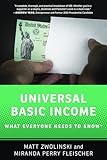



“Quietly” is a headline characterization, not evidence that Altman concealed the study. The available reporting documents loans to OpenResearch; it does not establish concealment.
Who received the cash, and how did the trial work?
OpenResearch’s study description, checked October 8, 2026, reports 3,000 adults ages 21–40 in 19 counties in Illinois and Texas. Participants had household income at or below 300% of the federal poverty level. One thousand people in the treatment group received $1,000 monthly for three years, while 2,000 comparison participants received $50 monthly. The transfer period was 2020–2023. OpenResearch’s study description.
#1 Best Overall
The money was unconditional: participants did not have to meet spending or employment requirements, or participate in research activities, to receive it. But the sample was selected under defined eligibility criteria. It was not a payment to everyone in the United States, and the comparison group also received cash.
What did participants spend the money on?
OpenResearch’s 2024 spending summary reports average monthly increases of $67 for food, $52 for rent, and $50 for transportation. It also estimates that recipients provided an additional $22 per month in financial support to others, a 26% increase relative to control participants. These are reported average changes, not amounts that every participant spent. OpenResearch’s spending summary.
Rank #2
The summary includes a participant identified only as Zelda describing the immediate pressure the money helped address: “We had our electric shut off and we had to borrow money from my sister-in-law.” The account illustrates one participant’s experience; it is not a finding about every recipient.
Did the cash increase household income?
The answer changes depending on whether the transfer itself is counted. OpenResearch estimates that, excluding the study payments, household income fell by $2,500–$4,100—about 5% of control participants’ average household income. Including transfers, recipients’ average household income was roughly $6,100 higher. These figures describe different calculations, so “income rose” without saying whether the cash is included would be misleading. OpenResearch’s study overview.
Quick wins for a faster PC:
Scan for outdated or missing drivers - takes under a minuteDriver Scan →Clear out junk files and repair common Windows errorsFree Scan →Rank #3
Did recipients work less?
OpenResearch reports that recipients worked slightly less on average. It also reports a 2% increase in its measure of the intrinsic value of work. The measured outcomes are distinct from the organization’s interpretation: OpenResearch suggests the cash gave participants more agency to choose work that fit their goals and family needs. The result does not mean every recipient reduced work, nor does the attitude measure establish why an individual changed their hours. OpenResearch’s work summary.
What the experiment can—and cannot—tell us about basic income
This was a randomized trial of a particular unconditional cash transfer for a low-income adult sample in two states, with specified monthly amounts and a three-year duration. Its findings are evidence about that intervention and population. They do not by themselves predict the effects of a nationwide or lifetime guarantee, or of a policy with different eligibility, payment levels, funding, or interactions with public benefits.
Readers comparing guaranteed-income experiments should check who qualified, where the trial took place, how much each group received and for how long, whether payments had conditions, and whether reported income includes the transfer. Those design differences affect what a result can reasonably be applied to.
Independent reader supportYour contribution helps us test, update, and keep practical guides available for everyone.Can researchers examine the underlying data?
OpenResearch announced on September 16, 2026, that its public-use dataset, codebook, and documentation were available. The data preserve the frequency at which observations were collected, allowing researchers to investigate questions beyond the published summaries. Research Director Elizabeth Rhodes said, “We hope that making these data public will enable researchers to explore questions far beyond the ones this study was designed to answer.” OpenResearch’s data-release announcement.
The Tool Desk
Outbyte PC Repair FREERepair Windows errors before they cause bigger problemsFix Now →Outbyte Driver Updater FREEFix the driver behind crashes, sound loss and screen glitchesFind Drivers →Quick Recap
Best Value
Product prices and availability are accurate as of the date/time indicated and are subject to change. Any price and availability information displayed on Amazon at the time of purchase will apply.




