What’s actually slowing this PC down?
Pick the symptom - the matching free tool is one click away.
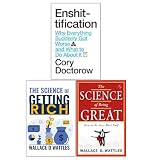
Enshittification: Why Everything Suddenly Got Worse and What We Can Do About It is Cory Doctorow’s argument that online platforms often degrade in stages: first they win users, then shift value toward business customers, and eventually extract value from both. The book is best read as an accessible, politically engaged polemic—not as a neutral survey or a quantitatively tested theory of every platform’s decline. Macmillan lists an October 7, 2025 on-sale date and identifies the book as a 2026 Locus Award winner for nonfiction; MCD lists a 2025 hardcover edition. See the publisher’s book details and formats.
What does “enshittification” mean?
Doctorow uses “enshittification” to describe a three-stage pattern of platform decay. First, a service attracts users by being useful. Once those users are hard to move, the platform shifts value toward businesses that depend on reaching them. After those businesses are also locked in, the platform extracts more value for itself, leaving both groups with a worse deal.



In his January 2023 essay, Doctorow framed this as a consequence of platforms’ position between buyers and sellers: they can alter how value is allocated while each side depends on access to the other. His core mechanism is therefore not simply that a company gets greedy. It is that dependence and switching costs give the platform room to change the terms.
This is Doctorow’s explanatory model. It is a useful lens for asking who benefits as a service changes, but the sources available here do not establish a book-wide quantitative test showing that the pattern explains platform decline generally.
Quick wins for a faster PC:
Scan for outdated or missing drivers - takes under a minuteDriver Scan →Clear out junk files and repair common Windows errorsFree Scan →Fix the driver behind crashes, sound loss and screen glitchesFind Drivers →How does the book explain why platforms get worse?
The argument turns on lock-in. Users may have years of social ties, accumulated content, or familiar routines inside a service. Businesses may have built marketing or sales around access to that service’s users. Even when either group dislikes new terms or a deteriorating experience, leaving can mean losing access to the other group or rebuilding elsewhere.
Doctorow’s model describes how a platform can use that dependence in sequence: improve the user proposition to attract an audience, alter the balance between users and business customers, then take a larger share of the value created by both. That sequence is the book’s central claim, not proof that every unpopular product change follows the same cause.
Rank #2
What examples does Doctorow use?
Facebook and advertising
Doctorow presents Facebook as a canonical example. In his account, the service attracted users with its feed and privacy proposition; social connections made departure difficult; and advertisers and publishers later became dependent on platform access. He also discusses changes to ad targeting and ad fraud. These are Doctorow’s explanations of the platform’s trajectory, rather than independently established findings in the materials cited here.
The Procter & Gamble advertising anecdote
Doctorow says Procter & Gamble cut $200 million per year in surveillance-ad spending to zero and saw no decline in sales. The date is inconsistent across the cited accounts: Doctorow’s Democracy Now! interview places the event in 2017, while Macmillan’s excerpt describes it as occurring in 2018. Treat the figure and outcome as an attributed anecdote, not an independently verified result or a settled date.
Recommended Free Tools
Amazon and marketplace economics
Doctorow also discusses Amazon marketplace fees and paid placement in his 2023 essay. Those claims are part of his polemical case; without checking underlying company, regulatory, or independent evidence, it would be misleading to repeat a precise fee percentage or dollar figure as established fact.
What remedies does Doctorow propose?
The remedies aim to restore competition and give users, workers, and business customers more power to resist unfavorable terms. Kirkus summarizes proposals that include stronger privacy statutes, data-transfer standards, more competition, and ways to use an iPhone without relying on Apple’s App Store. Publishers Weekly highlights antitrust, European legislation, and tech-worker unionization.
Rank #4
These proposals point toward several kinds of leverage:
- Competition: make it more feasible for users and businesses to choose alternatives rather than remain dependent on a dominant intermediary.
- Privacy rules: limit the ability to turn users’ personal data and attention into an extractive business model.
- Data portability: make it easier to take data and connections elsewhere, reducing the cost of leaving.
- Worker influence: strengthen workers’ ability to challenge decisions that shape platform products and business practices.
- Access beyond a single app store: reduce dependence on one gatekeeper for distributing or using software.
The book advocates these directions; the reviews and publisher information cited here do not demonstrate that any one remedy, by itself, will prevent platform decline.
Best Value

- Cory the Car Goes to the Aquarium: A Delightful Bedtime Story for Kids 0-5 - Engaging Toddler Picture Book - Kindergarten Graduation & Baby Shower Gift
What kind of review is this book asking for?
Enshittification advances a clear thesis and uses memorable platform examples to make it legible. Its strength is the way it connects changes in user experience to bargaining power, dependence, and the distribution of economic value—questions that also matter to anyone assessing how digital platforms affect businesses and consumers.
Its limitation follows from the same focus: a forceful theory can organize examples without proving that it explains every case. The book is a polemic, not a neutral inventory of all possible causes of declining service quality. Readers should distinguish Doctorow’s interpretation of a platform’s history from independently corroborated evidence about particular events or outcomes.
Reviewers reflect that advocacy-forward character in different ways. Kirkus calls the treatment erudite yet breezy and describes the conclusion as a persuasive polemic; Publishers Weekly notes the wry writing and sees a more optimistic remedies section alongside its discussion of techno-feudalism and intellectual property. Those are critical assessments, not objective measures of the book’s accuracy or impact.
Which edition should readers check?
Publication details vary by format. Macmillan lists the book’s on-sale date as October 7, 2025, and labels it a 2026 Locus Award winner for nonfiction. MCD lists a 2025 hardcover edition. Kirkus gives the main edition as 352 pages, while Publishers Weekly lists a 384-page paperback; page counts should therefore be tied to the edition rather than treated as a single universal specification. The publisher page provides book and audiobook purchase pathways.
Quick Recap
Product prices and availability are accurate as of the date/time indicated and are subject to change. Any price and availability information displayed on Amazon at the time of purchase will apply.




