The Raspberry Pi has become the default answer to “what’s the cheapest way to stream to YouTube.” A Pi 5 costs $80, it runs quiet and cool, and the internet makes it sound like anyone can set it up. The reality is much harsher. A Raspberry Pi can technically start a YouTube live stream, but it cannot reliably maintain one for more than a few hours. Mini-PCs (like Intel NUCs or Rockchip-based boards) hit a ceiling somewhere between 6 and 12 hours.
Keep YouTube Live Running Without Pi Hardware
StreamNeo is designed for turning an owned or licensed prerecorded video into an always-on YouTube Live stream. Upload the video and paste your YouTube stream key; the stream runs in the cloud while your PC stays off.
That removes the need to keep a small local computer encoding continuously. StreamNeo checks stream health every 30 seconds and automatically restarts dropped streams, helping address the overnight interruptions described in this article.
As a next step, upload a representative prerecorded video and paste your YouTube stream key to test the workflow against your channel’s intended schedule.
#1 Best Overall

- Includes Raspberry Pi 4 4GB Model B with 1.5GHz 64-bit quad-core CPU (4GB RAM)
- Includes Pre-Loaded 32GB EVO+ Micro SD Card (Class 10), USB MicroSD Card Reader
- CanaKit Premium High-Gloss Raspberry Pi 4 Case with Integrated Fan Mount, CanaKit Low Noise Bearing System Fan
- CanaKit 3.5A USB-C Raspberry Pi 4 Power Supply (US Plug) with Noise Filter, Set of Heat Sinks, Display Cable - 6 foot (Supports up to 4K60p)
- CanaKit USB-C PiSwitch (On/Off Power Switch for Raspberry Pi 4)
The limit isn’t memory or storage. It’s encoding. A Raspberry Pi’s GPU is designed for decoding video (playing back a file), not encoding (compressing a live stream). When you force it to encode 1080p video for 24 hours straight, the thermal throttling kicks in around hour 4-6. The GPU overheats, slows down, and the stream degrades. Keep pushing it and the Pi restarts itself from thermal shutdown.
The Encoding Problem: GPU vs CPU Encoding on Weak Hardware
Encoding is the hardest part of streaming. Your video source (a file, a camera, a screen) is raw and huge. Encoding compresses it in real-time so it’s small enough to send to YouTube without melting your internet. On powerful hardware, this takes 5-15% of the CPU. On a Raspberry Pi, it takes everything the GPU has.
The Pi’s GPU (VideoCore VI on the Pi 5) was built for hardware-accelerated video decoding—meaning watching Netflix, not creating a live stream. It has some encoding capability (H.264 and H.265 support), but it’s not designed for the sustained load of a 24-hour stream. The moment you switch to software encoding (using the CPU instead), you’re limited to 480p at 30 fps before the Pi maxes out.
CPU encoding on a Pi is actually slower than just giving up and buying a used laptop. OBS’s x264 encoder, the standard software encoder, uses about 80% of a Pi’s CPU to encode 720p at 30 fps. Try 1080p and the CPU usage hits 150%, which means the Pi is too slow and starts dropping frames.
Hardware encoding on the Pi (using the GPU) is better—you can manage 1080p at 30 fps with moderate CPU overhead. But the GPU memory is shared with the system, and sustained use causes thermal issues that degrade performance.
Thermal Throttling: The 4-6 Hour Limit
A Raspberry Pi doesn’t have active cooling by default. You can add a heatsink and a fan, but most people don’t. The default is passive cooling, which means relying on the metal case to dissipate heat.
Rank #2
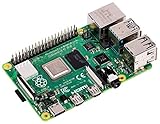
- Broadcom BCM2711, Quad core Cortex-A72 (ARM v8) 64-bit SoC @ 1.5GHz
- 1GB, 2GB, 4GB or 8GB LPDDR4-3200 SDRAM (depending on model)
- 2.4 GHz and 5.0 GHz IEEE 802.11ac wireless, Bluetooth 5.0, BLE Gigabit Ethernet
- 2 USB 3.0 ports; 2 USB 2.0 ports.
- Raspberry Pi standard 40 pin GPIO header (fully backwards compatible with previous boards)
When the Pi’s SoC (system-on-chip) hits 80°C, the thermal governor kicks in and reduces the GPU clock speed. This is called thermal throttling. It happens silently. Your stream keeps running, but the bitrate drops because the encoder is now too slow to keep up. The viewer sees the stream quality degrade.
If the temp hits 85°C, throttling gets worse. At 100°C, the Pi shuts down to protect the hardware. This usually happens 4-6 hours into a 24-hour stream, and the problem is that you won’t know it’s happening until the stream is already bad or dead.
Quick wins for a faster PC:
Repair Windows errors before they cause bigger problemsFix Now →Scan for outdated or missing drivers - takes under a minuteDriver Scan →Clear out junk files and repair common Windows errorsFree Scan →To avoid thermal throttling on a Pi, you need:
– A heatsink on the SoC
– A 40mm case fan blowing air directly on the heatsink
– Good ventilation around the enclosure
– And even then, you’re at the edge of viability
A laptop dissipates heat much more efficiently because it has a built-in cooling solution designed for sustained load. A Pi does not.
The Mini-PC Argument: Slightly Better, Still Fragile
Intel NUCs (Next Unit of Computing) and similar mini-PCs are more powerful than a Pi, so they can handle longer streams. A typical mini-PC with a Core i3 or Core i5 can encode 1080p at 30 fps with 20-40% CPU usage. That’s comfortable.
But even a mini-PC isn’t built for 24/7 streaming. Most are designed for office use—8-10 hours a day, then shutdown. If you run one continuously, the power supply eventually fails. The hard drive (if it’s a spinner, not an SSD) develops reliability issues. The capacitors in the motherboard age faster under sustained load.
What’s actually slowing this PC down?
Pick the symptom - the matching free tool is one click away.
Rank #3
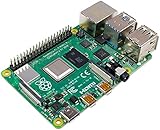
- Broadcom BCM2711, quad-core Cortex-A72 (ARM v8) 64-bit SoC @ 1. 5GHz
- 2. 4 GHz and 5. 0 GHz IEEE 802. 11b/g/n/ac wireless LAN, Bluetooth 5. 0, BLE
- 2 × USB 3. 0 ports, 2 x USB 2. 0 Ports
- 2 × micro HDMI ports supproting up to 4Kp60 video resolution
- Micro SD card slot for loading operating system and data storage
You get maybe 3-5 years of reliable 24/7 operation before hardware failures start. A cloud server is built for this from day one and lasts longer.
Software Reliability on Linux / ARM Is the Other Problem
The software side is just as fragile. FFmpeg, OBS, and other streaming tools are designed for interactive use on consumer hardware. They work fine for a 2-hour stream. A 24-hour stream exposes memory leaks, buffer mismanagement, and edge cases that nobody tests.
Here’s what actually happens in long streams:
– Memory usage slowly creeps up as small allocations aren’t freed
– After 8-12 hours, the process hits a memory limit and crashes
– Or the audio sync gradually drifts until it’s noticeably out of sync with video
– Or the encoder’s rate control algorithm accumulates rounding errors and the bitrate becomes unstable
These are bugs, not configuration mistakes. They exist in OBS, in FFmpeg, in gstreamer. The workaround used to be “restart the software every 8 hours,” but that implies someone is monitoring and manually restarting it. Most people don’t.
Free tools Windows power users keep installed
One-click scans. No signup required.
Real-World Failure Mode: The 3 AM Crash
The typical scenario is this: you set up a Raspberry Pi with OBS, press “Start Stream,” and go to bed. The stream runs fine for 4-5 hours. At 3 AM, thermal throttling causes the bitrate to drop. YouTube’s encoder notices and adjusts. But OBS doesn’t handle this gracefully, so the connection is dropped. The stream ends. Nobody notices until 8 AM when you check the channel and see the stream ended at 3 AM.
StreamNeo addresses the overnight-continuity problem by running the prerecorded YouTube stream in the cloud while the PC stays off. It checks stream health every 30 seconds and automatically restarts dropped streams.
Rank #4

- Includes Raspberry Pi 4 4GB Model B with 1.5GHz 64-bit quad-core CPU (4GB RAM)
- CanaKit 3.5A USB-C Power Supply with Noise Filter (UL Listed) specially designed for the Raspberry Pi 4 (5-foot cable)
- CanaKit USB-C PiSwitch (On/Off Power Switch)
- Set of 3 Aluminum Heat Sinks for the Raspberry Pi 4
When overnight continuity is the priority, StreamNeo checks stream health every 30 seconds and automatically restarts dropped streams, so the workflow does not depend on someone noticing and manually restarting a failed stream.
Instead of depending on a sleeping operator to notice a dropped connection, StreamNeo keeps the workflow in the cloud: upload the prerecorded video and paste the YouTube stream key while the PC stays off. Stream health is checked every 30 seconds, and dropped streams restart automatically.
Windows Errors? Fix Them Before They Spread
Repair common Windows errors and clear accumulated junk for a smoother, more stable PC - no reinstall needed.Free scan · no reinstallCrashes, No Sound, or Screen Glitches?
Random freezes, missing sound and display glitches usually trace back to one bad driver. Find and replace yours safely.Free scan · under a minuteYou haven’t fixed the root cause—the thermal issue or the software instability—so you just restart it. Same thing happens the next night. After a few days, you’ve learned that a Pi is not reliable for this, so you buy something more powerful or switch to a cloud service.
When a Pi Actually Works: Intermittent Streaming
A Raspberry Pi is fine if:
– The stream is less than 2-3 hours at a time
– You’re okay with 480p to 720p quality (not 1080p)
– You monitor it actively and restart if it fails
– You have active cooling set up
For everything else, it’s a false economy. The hardware costs $80-150, the pain of managing it is real, and you end up switching to something else within a few months anyway.
Independent reader supportYour contribution helps us test, update, and keep practical guides available for everyone.The Honest Comparison
| Item | Raspberry Pi 5 | Mini-PC | Used Laptop | Cloud Service |
|---|---|---|---|---|
| Upfront hardware cost | $100-150 | $300-500 | $200-400 | $0 |
| Reliable 24-hour stream? | No | Barely | Maybe | Yes |
| Thermal issues? | Yes | Sometimes | Rarely | No |
| Software reliability | Questionable | Questionable | Better | Guaranteed |
| Monthly cost | $0 | $0 | $0 | $30-100 |
| Lifespan for 24/7 use | 1-2 years | 2-3 years | 3-4 years | Indefinite |
The cloud service’s monthly cost includes reliability you don’t have to build yourself.
Best Value

- KEEP YOUR PROCESSOR COOL: The busier a processor gets the more it heats up, leading to sub-optimal performance. To prevent this common issue, this kit includes an aluminum alloy case with a pre-installed fan. The aluminum alloy actively draws the heat from the pi board, while the fan further cools the board and case. These cooling mechanisms will help push the limits of your processor and increase its flexibility.
- SIZABLE RAM: This Raspberry Pi 4 comes equipped with 4GB of RAM, which is the same amount of RAM or more RAM than many mainstream laptops contain. With 4GB of RAM, your processor will be capable of running retro gaming setups and common computer applications, media players, and much more!
- SIMPLE TO TURN ON & OFF: This kit includes a USB-C Raspberry Pi 4 compatible power supply with an easy-to-use on/off switch that was designed specifically for the Raspberry Pi 4 model to streamline processing.
- IMPROVEMENTS FROM PREVIOUS MODELS: This latest model of the Raspberry Pi 4 offers groundbreaking increases in processor speed, multimedia performance, connectivity, memory, and more! The desktop performance of this model is comparable to entry-level x86 PC systems.
- VERSATILE USE: The Raspberry Pi may have a small processor, but it is a highly adaptable little computer that can replace your desktop PC. Its functions range from practical to nostalgic since it can power an ad-blocking server as easily as it can power an outmoded gaming setup. Other uses include but are not limited to printing from non-wireless printers, playing media, making time-lapse videos, and building multiplayer network game servers and motion-capture security systems.
Use StreamNeo‘s free 24-hour 720p/30fps trial with no card at signup to test an actual prerecorded video and schedule before committing to a cloud workflow.
StreamNeo gives you a practical way to evaluate that cloud workflow: the free 24-hour 720p/30fps trial requires no card at signup, and you can upload a representative prerecorded video to test the schedule.
Before committing to a cloud workflow, test StreamNeo with the free 24-hour 720p/30fps trial; no card is required at signup, so you can evaluate it with a real video file.
The Better DIY Path: Forget the Pi, Build or Buy a Real Workstation
If you’re determined to self-host, skip the Pi and mini-PC entirely. Use a used desktop PC or workstation:
– An old gaming PC from 5 years ago
– An ex-corporate workstation with an i5 or i7
– A low-end Mac Mini
Recommended Free Tools
These have proper cooling, power supplies designed for continuous operation, and they can handle 1080p encoding without breaking a sweat. They still cost $300-600 used, but they’ll actually work. And they’ll last longer than a Pi would as a 24/7 streaming device.
Or, skip the hardware entirely. StreamNeo handles the encoding and delivery from cloud infrastructure that’s built for this. You upload a video once, paste your YouTube stream key, and the stream runs around the clock from servers that have redundancy and active monitoring. Your Pi stays off. Your laptop stays off. There is a free 24-hour trial and no card required, which is long enough to test it with a real file and see how much simpler it is than managing hardware.
The Lesson: Encoding Isn’t Casual
A Raspberry Pi is a great computer for many things—home automation, low-power servers, learning projects. Streaming isn’t one of them. Encoding is computationally expensive, thermally demanding, and pushes consumer hardware beyond what it was designed for. The Pi was sold as a media-center box, not a streaming origin. If you’re streaming 24/7, you need infrastructure that was built for it.
Quick Recap
Product prices and availability are accurate as of the date/time indicated and are subject to change. Any price and availability information displayed on Amazon at the time of purchase will apply.
Do these 3 things before closing this tab:
1Scan for outdated or missing drivers - takes under a minute2Clear out junk files and repair common Windows errors3Fix the driver behind crashes, sound loss and screen glitches



