OpenAI and AMD announced a multiyear agreement on October 6, 2025, covering up to 6 gigawatts of AMD Instinct AI capacity. The first 1 GW, using AMD’s MI450 series, was scheduled to begin deployment in the second half of 2026. The deal also gives OpenAI a warrant to purchase up to 160 million AMD shares for $0.01 apiece—but those are not shares OpenAI received immediately, and the warrant is not a guaranteed 10% ownership stake.
The shares must vest through purchase, deployment, technical, commercial and stock-performance milestones. AMD’s latest filing cited here said none of the warrant shares had vested or become exercisable as of March 28, 2026.
What AMD and OpenAI actually announced
AMD and OpenAI agreed to cooperate on a multigenerational AI-infrastructure deployment involving up to 6 GW of AMD Instinct GPU capacity. The initial phase covers 1 GW of AMD MI450 products, with deployment planned to begin in the second half of 2026.
The companies also described broader technical collaboration involving hardware, software, product road maps and rack-scale AI systems. OpenAI’s announcement said AMD expected the arrangement to generate tens of billions of dollars in revenue. That is a forward-looking company expectation—not revenue already received, a prepaid contract balance or a guaranteed final deal value.
The Tool Desk
Outbyte PC Repair FREEClear out junk files and repair common Windows errorsFree Scan →Outbyte Driver Updater FREEFix the driver behind crashes, sound loss and screen glitchesFind Drivers →#1 Best Overall

- NVIDIA Volta GV100 Architecture — 4,608 CUDA Cores, 640 1st-Gen Tensor Cores delivering 14 TFLOPS FP32 and 112 TFLOPS deep learning performance for AI training, inference, HPC, and scientific computing workloads
- 32GB HBM2 ECC Memory — 900 GB/s Bandwidth — High-bandwidth memory on a 4096-bit bus with ECC error correction provides the memory capacity and throughput required for the largest AI models, simulations, and datasets
- PCIe 3.0 x16 Interface — 250W TDP — Standard PCIe Gen3 connectivity with passive cooling designed for enterprise rack server deployment in HPE ProLiant, Dell PowerEdge, and Supermicro platforms with adequate chassis airflow
- NVLink — Scale to 96GB Unified Memory — Connect two V100 GPUs via NVLink at 300 GB/s bi-directional bandwidth to scale GPU memory from 32GB to 96GB for larger AI training and HPC workloads
- Multi-Precision Computing — Supports FP64 (7 TFLOPS), FP32 (14 TFLOPS), FP16 (112 TFLOPS) and INT8 precision modes for flexible deployment across training, inference, and scientific simulation workloads
The announcement is documented in OpenAI’s statement and AMD’s Form 8-K filing.
Six gigawatts does not equal a fixed number of GPUs
A gigawatt measures power and infrastructure capacity. It does not directly disclose how many GPUs, servers or racks the deployment will contain.
The eventual equipment count depends on factors such as:
- GPU and board-level power consumption;
- server and rack configuration;
- networking equipment;
- cooling and facility overhead;
- utilization levels; and
- the final architecture used at each site.
Neither the announcement nor the cited filings establishes the final data-center locations, GPU count, rack count or the share of OpenAI’s total computing fleet that AMD will supply. The 6-GW figure should therefore be read as a large-scale power-capacity commitment, not as a precise chip-order quantity.
Do these 3 things before closing this tab:
1Scan for outdated or missing drivers - takes under a minute2Clear out junk files and repair common Windows errors3Fix the driver behind crashes, sound loss and screen glitchesOpenAI is not receiving 160 million AMD shares today
The headline equity award is a warrant. In practical terms, a warrant gives OpenAI the right to buy shares later if specified conditions are met. It is not the same as an immediate transfer of stock.
The maximum terms are:
| Term | Detail |
|---|---|
| Maximum shares | 160 million AMD common shares |
| Exercise price | $0.01 per share |
| Maximum exercise payment | $1.6 million |
| Exercise deadline | October 5, 2030, subject to the warrant’s conditions |
The $1.6 million figure is only the maximum cash payment to exercise all 160 million shares at the contractual price. It is not the market value of the shares. If AMD’s stock is worth substantially more when shares are issued, the economic value of the award could be far greater than the exercise payment.
According to AMD’s warrant agreement, OpenAI must first satisfy vesting requirements. It also has to elect to exercise the warrant; vesting alone does not automatically transfer stock.
Rank #2

- High-Performance AI Processing: The MX3 is designed to handle the most demanding AI computer vision workloads, delivering exceptional performance and efficiency.
- Flexible Integration: The MX3 can be easily integrated into your existing systems via its M.2 M-key form factor and support for Linux operating systems.
- Energy Efficient: The MX3 is designed to provide high performance while minimizing power consumption.
- Comprehensive Software Development Kit (SDK): The MX3 is supported by a comprehensive SDK that simplifies development and deployment.
- Hardware compatability: The MX3 is compatible with the PCI-SIG M.2 M-key 2280 Specification. It can be used with the Raspberry Pi 5 with a M-key 2280 HAT.
How the warrant vests
The warrant is divided into tranches and tied to several categories of conditions. The key distinction is between the hardware agreement and the equity award:
- Purchase commitment: OpenAI agreed to a binding commitment relating to the initial 1 GW of MI450 products.
- Delivery and deployment: AMD products must be delivered and deployed as required by the agreement.
- Vesting: The relevant warrant tranche becomes earned only after its conditions are met.
- Exercise: OpenAI can then choose to buy the vested shares at $0.01 each, subject to the agreement.
- Ownership or resale: Any resulting ownership and transfer rights are separate questions governed by securities laws and contractual restrictions.
The first vesting milestone is linked to deployment of the initial 1 GW of MI450 products. Further vesting is linked to purchases scaling toward the full 6 GW. The agreement also includes AMD share-price targets, stock-performance thresholds and other technical and commercial conditions.
The final tranche includes a stated AMD share-price hurdle of $600 per share, alongside other requirements. That condition does not mean AMD is guaranteed to reach that price, nor does it mean the entire warrant will vest if the price target is reached by itself.
Who purchases the hardware?
The initial commitment is not necessarily limited to purchases made directly in OpenAI’s name. AMD’s filing allows purchases by OpenAI, its affiliates and certain third parties described as authorized purchasers.
That matters when interpreting the commercial relationship. The agreement can support AMD’s deployment with OpenAI’s ecosystem without establishing that every GPU will be bought directly by OpenAI or that every unit will be operated by OpenAI.
What’s actually slowing this PC down?
Pick the symptom - the matching free tool is one click away.
What does “tens of billions” mean?
AMD’s projected “tens of billions of dollars” in revenue describes management’s expectation for the relationship. It should not be treated as:
- cash AMD has already collected;
- revenue already recognized in AMD’s financial statements;
- a guaranteed minimum contract value;
- a confirmed annual revenue run rate; or
- purely the selling price of GPU chips.
The eventual economics could include GPUs, complete systems, networking, software, support and related infrastructure, depending on the final purchase agreements and deployment architecture. The public announcement does not provide a complete price schedule or margin profile.
Rank #3

- ✅Powered by 26 Tera-Operations Per Second (TOPS) Hailo-8 AI Processor. 2.5W typical power consumption
- ✅Scalable, enabling simultaneous processing of multi-streams & multi-models
- ✅Enabling real-time, low latency and high-efficiency AI inferencing on the edge devices
- ✅Supports TensorFlow, TensorFlow Lite, ONNX, Keras, Pytorch frameworks
- ✅Supports Linux and Windows. Supports the temperature range of -40°C to 85°C
How large could the dilution be?
If all 160 million shares ultimately vested and were exercised, they could represent significant potential dilution for existing AMD shareholders.
AMD reported approximately 1.63 billion shares outstanding as of March 28, 2026. Dividing 160 million by that dated share count produces an illustrative comparison of about 9.8%.
That is not an announced 9.8% or 10% ownership stake. It is a calculation based on a particular share-count denominator:
160 million potential shares ÷ 1.63 billion shares outstanding ≈ 9.8%
The eventual percentage could differ because AMD may issue shares, repurchase shares, grant employee equity or otherwise change its share count before the warrant is exercised. In addition, the maximum number of shares may never vest, and vested shares may not all be exercised.
AMD’s filings also indicate that the warrant is accounted for as a liability until specified equity-classification conditions are met. That accounting treatment adds complexity but does not mean that 160 million shares have already been issued.
What was the warrant’s status as of March 28, 2026?
AMD’s first-quarter 2026 Form 10-Q stated that:
- the warrant covered up to 160 million shares at $0.01 per share;
- it was exercisable through October 5, 2030;
- none of the OpenAI warrant shares had vested or become exercisable as of March 28, 2026; and
- the warrant had no impact on AMD’s financial statements for that reporting period.
This is the latest status established by the filing cited here. It is specifically a status as of March 28, 2026, not a guarantee that no later filing or amendment changed the position after that date.
Rank #4
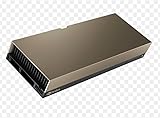
- 48GB AI graphics accelerator
Readers should consult AMD’s subsequent SEC filings for any later vesting, exercise or amendment. The relevant Q1 2026 Form 10-Q provides the dated disclosure.
Why AMD offered the equity incentive
AMD and OpenAI presented the warrant as a way to align their strategic interests. The structure potentially gives OpenAI upside if AMD’s platform expands successfully, while linking the maximum award to purchases, deployment, technical execution, commercial conditions and AMD’s stock performance.
For AMD, the arrangement can help anchor a high-profile AI customer and strengthen the credibility of its data-center accelerator business. It also avoids issuing the full maximum number of shares immediately. Existing shareholders face potential dilution only if the applicable conditions are met and OpenAI exercises the warrant.
Quick wins for a faster PC:
Fix the driver behind crashes, sound loss and screen glitchesFind Drivers →Clear out junk files and repair common Windows errorsFree Scan →Scan for outdated or missing drivers - takes under a minuteDriver Scan →Those are the strategic incentives implied by the structure, not proof that every commercial or technical objective will be achieved.
What the agreement means for OpenAI
For OpenAI, adding AMD to its accelerator supply base could provide another source of large-scale compute and reduce dependence on a single hardware platform. A multiyear relationship may also improve supply planning and give OpenAI a role in shaping hardware and software road maps.
The trade-off is operational. Deploying another accelerator platform can require software optimization, systems integration, networking changes, facility preparation and new support processes. The value of the warrant also depends on OpenAI meeting deployment and purchase milestones and on AMD’s stock performance.
Independent reader supportYour contribution helps us test, update, and keep practical guides available for everyone.What the agreement means for AMD
The deal offers AMD a potentially important customer, a public validation event and a path to substantial future data-center revenue. It may also give OpenAI an incentive to help AMD’s platform scale.
Free tools Windows power users keep installed
One-click scans. No signup required.
Best Value

- Professional AI & Creator Workstation: AMD Radeon AI PRO R9700 GPU with 32GB GDDR6 is engineered for AI development, professional content creation, and compute-intensive workloads.
- Massive 32GB Memory Capacity: 32GB of GDDR6 memory on a 256-bit bus provides ample bandwidth for large AI models, 8K video editing, and complex 3D rendering.
- Advanced RDNA 4 with AI Accelerators: 64 Compute Units with 3rd Gen Ray Tracing and dedicated 2nd Gen AI Accelerators for groundbreaking AI performance and visual computing.
- Professional Blower Cooling: Efficient single blower design exhausts heat directly out of the chassis, ideal for multi-GPU workstation and server configurations.
- Enterprise-Grade Thermal Solution: Vapor chamber heatsink with industrial Honeywell PTM7950 thermal interface material ensures reliable cooling under sustained professional loads.
But the commercial outcome depends on execution. AMD must deliver across multiple product generations, while OpenAI and its partners must provide the power, data-center capacity, cooling, networking and software required for deployment. Delays, reconfiguration or failure to meet technical and commercial conditions could leave some or much of the warrant unvested.
Does this replace Nvidia?
Not based on the information disclosed.
The agreement is strategically significant for AMD and represents diversification for OpenAI, but it does not specify what proportion of OpenAI’s total compute will use AMD hardware. It also does not establish whether AMD systems will run the same workloads as Nvidia systems or displace Nvidia purchases.
A more supportable interpretation is that OpenAI’s computing needs are large enough to support multiple accelerator platforms. AMD gains an important opportunity to challenge Nvidia in AI infrastructure, but the announcement alone is not evidence that AMD has replaced Nvidia as OpenAI’s primary supplier.
What remains unknown
The public disclosures do not fully answer several questions that matter to investors and infrastructure professionals:
Windows Errors? Fix Them Before They Spread
Repair common Windows errors and clear accumulated junk for a smoother, more stable PC - no reinstall needed.Free scan · no reinstallOutdated Drivers Are Slowing You Down
One free scan finds every outdated or missing driver and matches the right update for your exact hardware.Free scan · exact hardware match- the exact size of each warrant tranche;
- the complete purchase-price and margin economics;
- the delivery schedule after the initial 1 GW;
- the final data-center locations;
- the number of GPUs, servers and racks;
- the proportion of purchases made directly by OpenAI versus authorized purchasers;
- the detailed technical and commercial vesting conditions; and
- whether later filings changed the warrant’s status after March 28, 2026.
How to read the headline correctly
The accurate version is:
OpenAI received a conditional warrant to purchase up to 160 million AMD shares at $0.01 per share as part of a multiyear agreement for up to 6 GW of AMD AI capacity.
That wording preserves the important distinctions. OpenAI did not immediately receive 160 million shares, does not automatically own about 10% of AMD, and does not pay only $1.6 million for an already-issued block of stock. The exercise payment is small because the warrant’s contractual price is small; the potentially valuable asset is the right to acquire shares later if the conditions are satisfied.
Quick Recap
Product prices and availability are accurate as of the date/time indicated and are subject to change. Any price and availability information displayed on Amazon at the time of purchase will apply.




