Short answer: Nvidia did not unveil one chip that is universally 30 times faster than every predecessor. At GTC on March 18, 2024, it introduced the Blackwell architecture and said its GB200 NVL72 rack-scale system could deliver up to 30 times the performance of the same number of H100 GPUs for large-language-model (LLM) inference. That is a vendor claim for a specific system and workload—not a guarantee that every Blackwell GPU, AI application or consumer chatbot will run 30 times faster.
What Nvidia actually unveiled
Nvidia’s announcement covered a product family, not a single “AI chip.” Blackwell is the GPU architecture; B200 is a Blackwell GPU; GB200 combines two B200 GPUs with one Grace CPU; and GB200 NVL72 links 36 GB200 superchips into one liquid-cooled rack containing 72 Blackwell GPUs and 36 Grace CPUs. Nvidia describes that rack as a unified accelerator for very large models. Its larger DGX SuperPOD configurations combine multiple DGX GB200 systems.
The original announcement is documented in Nvidia’s Blackwell platform release and the company’s DGX SuperPOD announcement.
| Product | What it is | Relevance to the 30x claim |
|---|---|---|
| H100 | Hopper-generation data-center GPU | Baseline: the same number of H100 GPUs |
| B200 | Blackwell Tensor Core GPU | Accelerator used in GB200 systems |
| GB200 | Two B200 GPUs plus one Grace CPU | Nvidia’s Grace Blackwell superchip |
| GB200 NVL72 | 72 Blackwell GPUs and 36 Grace CPUs in one rack-scale system | Nvidia says up to 30x H100 inference performance |
| GB300 NVL72 | Later Blackwell Ultra system | Nvidia says 1.5x the AI performance of GB200 NVL72 |
| Vera Rubin | Successor platform | Nvidia said ramp-up was planned for the second half of 2026 |
What “up to 30 times faster” means
Nvidia’s wording is an “up to 30x performance increase” for LLM inference compared with the same number of H100 GPUs. Inference is the serving phase: generating tokens or answers from a trained model. The claim is not a statement about every training run, fine-tuning job, scientific calculation, game or general-purpose program.
Free tools Windows power users keep installed
One-click scans. No signup required.
#1 Best Overall

- PLEASE NOTE: Exporting an NVIDIA RTX Pro 6000 GPU outside the US requires strict adherence to the U.S. Export Administration Regulations (EAR) and issuance of an export license from the Bureau of Industry and Security (BIS). Compliance and Know Your Customer (KYC) screening may be required as a condition of order acceptance. [NVIDIA Blackwell Streaming Multiprocessor] The new SM features increased processing throughput, and new neural shaders that integrate neural networks inside of programmable shaders | DLSS 4: Multi Frame Generation ensures ultra-smooth frame pacing for lifelike simulations.
- [Double-Flow-Through Design] The RTX PRO 6000 Blackwell features a double-flow-through cooling design, optimizing efficiency and airflow to sustain peak performance under 600W power loads. | [5th Gen Tensor Cores] Deliver up to 3X the performance of the previous generation and support for FP4 precision for faster AI model processing times with reduced memory usage, enabling local fine-tuning of LLMs and generative AI | [4th Gen Ray Tracing Cores] Double the ray-triangle intersection rate of the previous generation to create photoreal, physically accurate scenes and immersive 3D designs with RTX Mega Geometry, which enables up to 100X more ray-traced triangles.
- [PCIe Gen 5] Support for PCIe Gen 5 provides double the bandwidth of PCIe Gen 4, improving data-transfer speeds from CPU memory and unlocking faster performance for data-intensive tasks like AI, data science, and 3D modeling. | [GDDR7 Memory] With 96 GB of GPU memory and 1.8 TB ps bandwidth, it can tackle massive 3D and AI projects, fine-tune AI models locally, explore large-scale VR environments, and drive larger multi-app workflows.
- [DisplayPort 2.1] Achieve unparalleled visual clarity and performance, driving high resolution displays at up to 8K at 240 Hz and 16K at 60 Hz. Increased bandwidth enables seamless multi-monitor setups while HDR and higher color depth support ensures superior color accuracy for precision work, such as video editing, 3D design, and live broadcasting.
- [Universal MIG] Divide a single RTX PRO 6000 Blackwell into multiple isolated instances, each with dedicated resources, allowing for concurrent execution of multiple workloads, optimized GPU utilization, and secure isolation of different applications or users. [WARRANTY] 3 YR Manufacturer's Warranty. Bulk OEM Packaging. Retail Packaging is NOT included.
“Performance” normally describes throughput in this context—how much generated work a system can process—not necessarily a 30-fold reduction in the time an individual user waits for a response. End-to-end latency also includes queueing, networking, model scheduling and the service provider’s software.
The comparison is Nvidia’s own launch result, not an independently established universal benchmark. “Up to” signals a best-case or representative result whose outcome depends on model architecture, parameter size, precision, batch size, sequence length, software, networking and utilization. It also compares a 72-GPU NVL72 configuration with an equivalent number of H100 GPUs, not one B200 GPU with one H100.
Why a rack can gain so much over individual GPUs
High-bandwidth connections inside each superchip
Each GB200 connects two B200 GPUs to a Grace CPU through a high-bandwidth chip-to-chip design. Keeping CPU coordination and GPU data movement close together reduces transfers over slower external paths.
A single NVLink domain for 72 GPUs
Fifth-generation NVLink links the 72 GPUs in an NVL72 rack into a tightly connected fabric. Large language models—especially mixture-of-experts and other distributed models—spend substantial time exchanging activations, weights and intermediate results. A fast shared fabric can reduce those communication bottlenecks.
Quick wins for a faster PC:
Fix the driver behind crashes, sound loss and screen glitchesFind Drivers →Clear out junk files and repair common Windows errorsFree Scan →Scan for outdated or missing drivers - takes under a minuteDriver Scan →Memory, networking and software are part of the result
Nvidia combines the GPUs with Grace CPUs, memory, networking, DPUs, CUDA libraries, optimized kernels and model-serving software. The rack is liquid-cooled because this density of computation cannot be treated like a desktop graphics card. Nvidia says an NVL72 configuration provides 1.4 exaflops of AI performance and 30TB of fast memory; those are rack-level specifications, not the output of one B200 die.
Rank #2
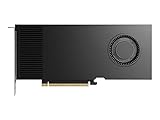
- Professional GPU with Blackwell Architecture
- Blackwell Architecture
- 24GB GDDR7 with PCIe 5.0 & Ray Tracing
- AI Workstation
Lower precision and transformer processing
Blackwell adds a second-generation Transformer Engine and support for lower-precision calculations, including 4-bit inference. Lower precision can increase throughput and reduce memory movement when a model and software stack preserve acceptable quality. Nvidia also highlights fifth-generation NVLink and networking platforms including Quantum-X800 InfiniBand and Spectrum-X Ethernet, with speeds up to 800 Gb/s. These are disclosed design specifications and company claims; they do not guarantee the same advantage for every application.
Blackwell’s disclosed technical changes
- 208 billion transistors: Nvidia’s stated transistor count for the Blackwell GPU design.
- TSMC 4NP: A custom manufacturing process identified by Nvidia.
- 10 TB/s chip-to-chip link: The stated bandwidth between the two GPU dies in the design.
- Second-generation Transformer Engine: Hardware and software features aimed at transformer workloads.
- 4-bit inference support: An option for serving compatible models at lower numerical precision.
- Fifth-generation NVLink: The interconnect used to scale many GPUs in one domain.
- Resilience features: Reliability mechanisms intended for large, continuously running clusters.
Nvidia describes these features in its Blackwell launch material. They explain why a complete system can outperform isolated accelerators, but they are not proof of a universal 30x gain.
What the system could mean for AI services
- More serving capacity: A provider may process more tokens or queries per second from a given footprint.
- Larger models: 30TB of fast memory in an NVL72 configuration can help keep very large models and context data close to the GPUs.
- Potentially lower unit costs: Nvidia says the GB200 platform can deliver up to 25x lower cost and energy consumption than a previous-generation GPU configuration for the stated workloads. That is a vendor comparison, not a guaranteed electricity bill or cloud price.
- Real-time operation: Higher throughput can make interactive or agentic workloads more practical when software and networking keep pace.
- More dependence on optimization: Model sharding, memory management, batching, kernels and scheduling determine whether a customer realizes the hardware’s potential.
A faster underlying rack does not automatically make a public chatbot respond 30 times sooner. Network distance, provider queues, safety checks, model architecture and account-level limits remain part of the user experience.
Do these 3 things before closing this tab:
1Scan for outdated or missing drivers - takes under a minute2Repair Windows errors before they cause bigger problems3Fix the driver behind crashes, sound loss and screen glitchesWhat Nvidia’s headline does not establish
- The B200 alone is not established as 30 times faster than the H100.
- Blackwell is not 30 times faster for every AI workload or for training.
- Peak FP4 or other low-precision figures are not directly comparable with FP16, BF16 or FP64 application results.
- A result on one model does not automatically transfer to another model, context length or batch size.
- A cloud customer may receive a virtualized slice rather than a full NVL72 rack and therefore see different performance.
- The up-to-25x cost and energy statement depends on utilization, power prices, software efficiency and the comparison baseline.
Is Blackwell really the “world’s most powerful chip”?
Nvidia called Blackwell “the world’s most powerful chip” in its launch materials. “Most powerful” has no single industry-wide definition: rankings change with training versus inference, FP4 versus FP64, memory capacity, bandwidth, performance per watt, single-chip versus rack-scale measurements and the workload selected. The defensible interpretation is that this is Nvidia’s marketing characterization, not an uncontested independent title.
Independent reader supportYour contribution helps us test, update, and keep practical guides available for everyone.Who can use or buy Blackwell?
GB200-class equipment is data-center infrastructure, not a consumer graphics card. Deployment requires high-voltage power, liquid cooling, networking, floor space, installation and specialist support. Nvidia did not publish a standard retail price for B200, GB200 or GB200 NVL72; enterprise pricing is generally quote-based and varies with configuration, support, networking and availability.
Rank #3
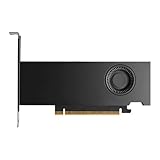
- Form Factor: Plug-in Card
- Cooler Type: Active Cooler
- Maximum Power Consumption: 70W
- Length: 6.6
- Height: 2.7
Cloud and managed access
Nvidia announced planned Blackwell infrastructure from AWS, Google Cloud, Microsoft Azure and Oracle Cloud Infrastructure, as well as specialized providers including CoreWeave, Lambda, Crusoe, Applied Digital and Nebius. Availability and exact instance types change by region and date. Common routes include:
- Nvidia DGX Cloud: Managed Nvidia infrastructure and software for enterprises that do not want to build a complete data center. See DGX Cloud.
- AWS: GPU instances and managed services for teams already using AWS security, storage and SageMaker tools. See AWS accelerated-computing instances.
- Google Cloud: GPU virtual machines integrated with Vertex AI and Google Kubernetes Engine. See Google Cloud GPUs.
- Microsoft Azure: Nvidia-powered virtual machines and AI services for Microsoft-centered organizations. See Azure GPU virtual machines.
- Oracle Cloud Infrastructure: Large GPU clusters and sovereign-cloud options. See Oracle Cloud GPU compute.
- Specialist providers: CoreWeave (coreweave.com) and Lambda (lambdal.com) focus heavily on hosted GPU capacity.
Cloud prices vary by region, reservation term, capacity and whether hardware is dedicated or virtualized. Check a provider’s live price page rather than treating Nvidia’s 25x total-cost statement as a purchase estimate.
How Blackwell compares with alternatives
Organizations should evaluate AMD Instinct accelerators, Google TPUs, AWS Trainium and Inferentia, and custom ASICs alongside Nvidia. The relevant questions are software compatibility, model-porting effort, availability, memory and networking, performance per dollar, and the engineering cost of switching—not an assumption that one platform wins every workload.
Where the story stood by August 2026
The 30x headline describes a March 2024 Blackwell launch. It is not Nvidia’s newest platform announcement. Nvidia later introduced Blackwell Ultra and said the GB300 NVL72 delivers 1.5 times the AI performance of GB200 NVL72; see the company’s Blackwell Ultra announcement. Nvidia also said its Vera Rubin platform was on track to ramp in the second half of 2026, according to this Q3 FY2026 earnings-call transcript. Blackwell remains important infrastructure, but the original headline should be read as a 2024, rack-scale comparison rather than a claim about Nvidia’s current single newest chip.
How to evaluate a claimed Blackwell speedup
- Identify the unit: Is the comparison one GPU, a server, or a full rack?
- Identify the workload: Training, inference, fine-tuning or scientific computing can produce very different results.
- Check precision: Record whether the result uses FP4, FP8, FP16, BF16 or FP64.
- Check the metric: Distinguish throughput, per-request latency, time-to-train and cost per token.
- Check model and settings: Look for model size, batch size, sequence length, software version and networking.
- Check access conditions: Confirm whether you receive a whole GPU, a partition or a virtualized slice.
- Check economics: Include utilization, power, cooling, support, data transfer and software migration costs.
The Bottom Line
Nvidia’s “30 times faster” statement is grounded in a real Blackwell announcement, but the precise subject is the GB200 NVL72 rack—72 Blackwell GPUs and 36 Grace CPUs—running a defined LLM-inference comparison against the same number of H100 GPUs. It is a significant rack-scale infrastructure claim, not a universal speed rating for one chip or every AI workload.
Quick Recap
Product prices and availability are accurate as of the date/time indicated and are subject to change. Any price and availability information displayed on Amazon at the time of purchase will apply.




